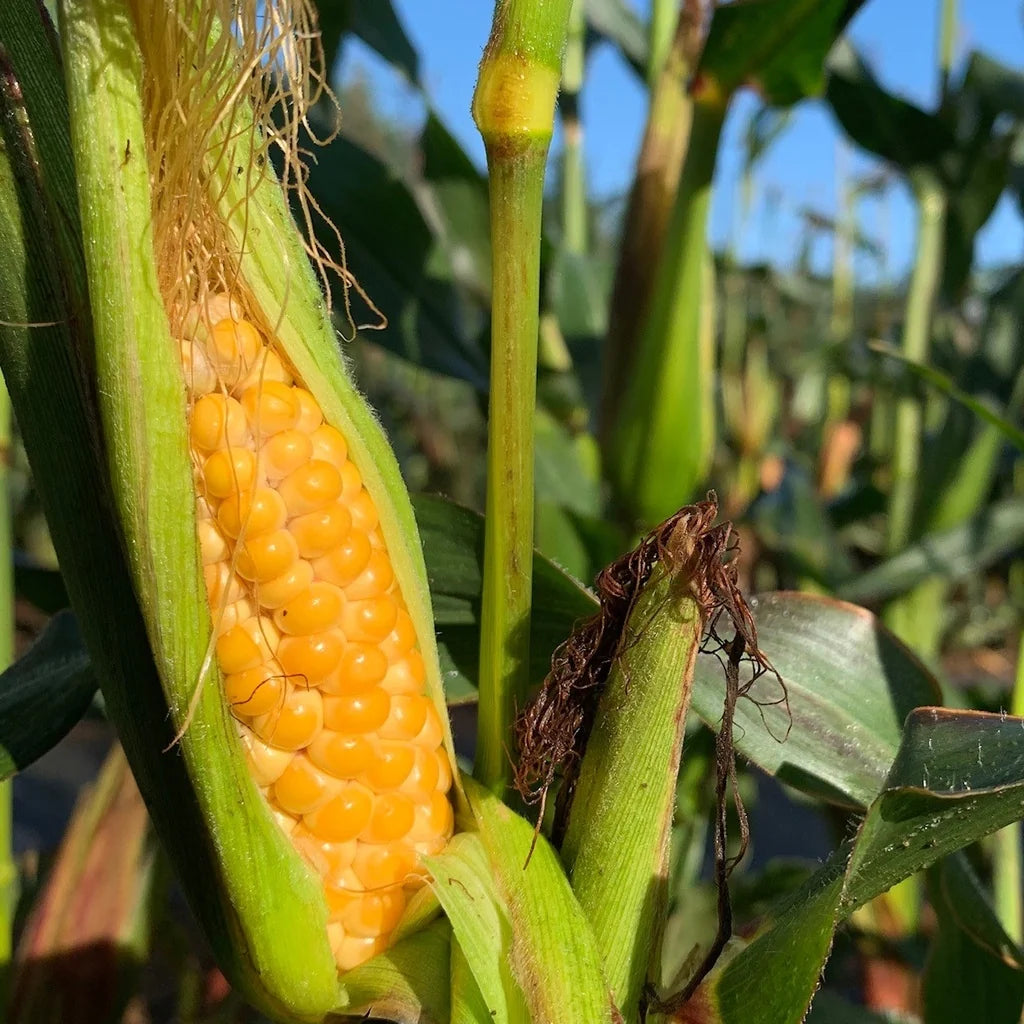
Zea mays ‘Orchard Baby’

Product code : JAREC-0285

Orchard Baby sweet corn is available in organic seeds for Quebec vegetable gardens. Early sweet corn variety with open pollination, selected for short seasons; compact plants usually have small yellow ears. The plant prefers the sun and fertile soil, fresh and well drained; variety adaptable to several textures. Allow 30 cm (12 in.) between the plants; grow in blocks to promote pollination. Harvesting takes place in the summer when the grains are at the milk stage. In the kitchen, this variety is suitable for fresh boiled ears, steamed or grilled; grains added to salads, soups and sautées. The sachet contains 40 seeds. Adapt the waterings and planting date to the real conditions of the garden.
4 49 $
Pay in 4 interest-free payments with Sezzle
Detailed plant guide
Québec product
Secure payment
Share
Quantity
40 seeds
Exposure
Full sun
Life cycle
Annual

Discover the plant

Common nameOrchard Baby Sweet Corn
FamilyPoaceae
GenusZea
SpeciesMay
CultivarOrchard Baby
TypeOrganic seeds
Botanical nameZea mays
Reproducible seedsYes
Heirloom varietyYes

Zea mays ‘Orchard Baby’ — Orchard Baby Sweet Corn. Orchard Baby sweet corn (Zea mays ‘Orchard Baby’) is a variety of early, open-pollinated sweet corn selected for short seasons; compact plants usually have small yellow ears. Keep the foliage healthy and well lit, with good air circulation, to support steady growth. Sow directly outside after the last frost, when the soil is warmed. Make several short rows forming a block rather than just one long row in order to improve wind pollination. Choose a sunny exposure and fertile, moist, well-drained soil; variety adaptable to several textures.

Sowing sweet corn seeds: sow directly outside after the last frost, when the soil is warmed. Make several short rows forming a block rather than just one long row in order to improve wind pollination. The depth to be respected is 2-3 cm. Germination usually takes 5-12 days. For germination, keep the soil at 10 to 28°C (50 to 82°F). Sow corn in blocks of several rows rather than in a single long line, to promote pollen circulation between plants. Identify the types of corn and their planting dates.

Harvest in summer, when the grains are in the milk stage and use clean tools to avoid injury to the plant. Corn forms a large vertical volume in the vegetable garden. Place the crop block so as to limit shade on vegetables that require sun. Keep a passage around the rows to observe the ears and water at the base of the plant. Avoid relying on a very isolated planting to get well-filled ears: the proximity of several plants favours wind pollination. Orchard Baby sweet corn (Zea mays ‘Orchard Baby’) is a variety of early, open-pollinated sweet corn selected for short seasons; compact plants usually have small yellow ears.

Maïs Orchard Baby. Épi jaune entrouvert sur un plant de maïs. Le cadrage permet de voir les formes, les couleurs et les détails du sujet représenté. Les contours se détachent du fond de l’image, avec des différences de teinte et de texture visibles sur les surfaces. Cette vue accompagne la présentation du produit dans la boutique.

Sowing guide

It all startswith a seed.

Sowing depth

2-3 cm

Spacing / density

30 cm (12 in.) between plants; grow in bulk to promote pollination

Germination temperature

10 to 28°C (50 to 82°F)

Germination time

5-12 days

Sowing period

Sow directly outside after the last frost, when the soil is warmed. Make several short rows forming a block rather than just one long row in order to improve wind pollination.

Propagation

From seed

Growing method

Plan the corn seedling Orchard Baby based on the date of the last frost and the heat required by the species. Sow directly outside after the last frost, when the soil is warmed. Make several short rows forming a block rather than just one long row in order to improve wind pollination. Sow 2 to 3 cm (3/4 to 1 1/4 in.) in clean draining soil. Maintain a temperature of 10 to 28°C (50 to 82°F) and a uniform humidity, never wetted. Germination normally takes 5 to 12 days. Once the seedlings appear, provide bright light and gentle air circulation. Clarify to maintain vigorous subjects. Transplant once the seedlings can be handled without damage, disturbing their roots as little as possible. Before planting, gradually acclimatize them for 7 to 10 days by increasing exposure to the sun and wind. Install them in the sun in fertile, moist, well-drained soil; variety adaptable to several textures, depending on 30 cm (12 in.) between plants; grow in bulk to promote pollination. Water thoroughly at the planting, then adjust according to the rain and drying of the soil. A mulch reduces moisture variations. Watch for slugs, aphids and foliar diseases without assuming they will be present. Harvest in summer when the grains are in the milk stage. Clean up the sick residues and rotate the botanical families the following season.

Soil and care

The right care,at the right time.

Soil pH

Acidic

Care level

Moderate

Watering

Water Orchard Baby sweet corn at the base of the plant when soil surface begins to dry. Moisten the entire root zone, then allow excess water to drain. Maintain more regular moisture during germination, establishment and formation of the harvested part. Reduce frequency in cool or rainy weather and check containers daily during warm periods. Avoid unnecessary wetting of foliage in the evening.

Soil type

Orchard Baby sweet corn prefers fertile soil, fresh and well drained; variety adaptable to several textures. Loosen the soil in the root zone and work in mature compost before planting. Good drainage should let excess water escape while maintaining consistent moisture around the roots. Avoid compacted soils and adjust watering to the soil texture, rainfall and temperature. Replenish the mulch as it breaks down, keeping it away from direct contact with the stems.

Fertilization

Before planting, work mature compost into the soil where the plants will grow. Fertilize moderately according to the strength of Orchard Baby sweet corn, without excess nitrogen. In containers, use a balanced fertilizer according to the label and water before fertilization. Cease or reduce inputs when growth is sufficient and favour observation of foliage, flowering and harvest. Avoid direct contact of concentrated fertilizer with roots.

Moisture

Moist, well-drained soil

Seasonal care

Harvest in summer, when the grains are in the milk stage and use clean tools to avoid injury to the plant. In the spring, prepare seedling material, a clean soil and a bright space. Sow directly outside after the last frost, when the soil is warmed. Make several short rows forming a block rather than just one long row in order to improve wind pollination. Observe a depth of 2 to 3 cm (3/4 to 1 1/4 in), a temperature of 10 to 28°C (50 to 82°F) and a stable humidity for 5 to 12 days generally necessary for emergence. Thin and transplant the seedlings carefully. Before outside planting, gradually acclimatize the plants and wait until local conditions are right. At the beginning of summer, place them in the sun in fertile, moist, well-drained soil; variety adaptable to several textures by respecting 30 cm (12 in.) between the plants; grow in bulk to promote pollination. Water at the base, mulch once the soil has warmed, and add support if the growth habit or crop weight requires it. During the summer, observe the back of the leaves, the vigour, the flowers and the development of the harvest. First correct watering and ventilation before adding fertilizer. Harvest in summer, when the grains are in the milk stage and remove damaged parts. In the fall, continue harvesting as long as quality is maintained, and then manage residues according to their health status.

Container growing

A garden,within reach.

Suitable for containers

Yes

Recommended pot size

Very large tank of at least 75 L (20 US gal), grown in a group
Orchard Baby sweet corn may be grown in containers if its root volume and stature are respected. Choose a very large tank of at least 75 l (20 US gal), grown in a group with several drainage holes. Use a quality soil enriched with mature compost, without filling the container with heavy soil from the garden. Place the container in a sunny position protected from drying winds, while leaving enough space for good air circulation around the foliage. Water slowly until excess moisture drains away, then wait for the surface to begin drying; in hot weather, check daily instead of watering to a fixed schedule. Fertilize slightly with a balanced product, following the label and plant strength. Respect the spacing as much as the container allows and avoid overloading the bin. Put a stake in place if the stems need support or the developing harvest becomes heavy. Turn the pot periodically so that its foliage receives light evenly from all sides. In Quebec, protect the container during cold nights and return only when appropriate to the species. Harvest regularly and remove only damaged parts. Also inspect the undersides of the leaves so that you can detect the presence of pests promptly. At the end of the season, compost the healthy waste and clean the pot before reuse.
Maïs Orchard Baby. Épi jaune entrouvert sur un plant de maïs. Le cadrage permet de voir les formes, les couleurs et les détails du sujet représenté. Les contours se détachent du fond de l’image, avec des différences de teinte et de texture visibles sur les surfaces. Cette vue accompagne la présentation du produit dans la boutique.

Bloom and dimensions

Its place,in your garden.

Mature height

About 120 cm (47 in.)

Width / spread

Approximately 30 cm (12 in.)

Foliage type

Green foliage

Growth rate

Fast

Growth habit

Upright and compact

Bloom period

The flowering of Orchard Baby sweet corn occurs after establishment, when the heat, light and maturity of the plant are sufficient. Maintain consistent moisture around the roots without allowing the soil to become waterlogged. Avoid excess nitrogen, which encourages leaf growth at the expense of the flowers or the part you intend to harvest. Protect the plants from temperatures they cannot tolerate at their current stage of growth, and maintain good air circulation around the foliage.

Fruiting

Orchard Baby sweet corn (Zea mays ‘Orchard Baby’) is a variety of early, open-pollinated sweet corn selected for short seasons; compact plants usually have small yellow ears. In Quebec, watch cool nights and adapt the calendar to the last local freeze. Use the freshly harvested ears boiled, steamed or grilled, or remove the kernels to add them to salads, soups and quickly cooked vegetable dishes.

Days to maturity

Approximately 65 days

Harvest

In summer, when the grains are in the milky stage
Maïs Orchard Baby. Épi jaune entrouvert sur un plant de maïs. Le cadrage permet de voir les formes, les couleurs et les détails du sujet représenté. Les contours se détachent du fond de l’image, avec des différences de teinte et de texture visibles sur les surfaces. Cette vue accompagne la présentation du produit dans la boutique.

Garden associations

In goodcompany.

Companion plants

Grow Orchard Baby Sweet Corn alongside crops that need similar amounts of sunlight, soil fertility and moisture. Choose neighbouring plants that will not cast shade over this crop, and maintain the recommended distance between the plants as they continue to grow. Low herbs or annual flowers can diversify the bed when space permits, but no association guarantees protection against pests. Prioritize ventilation, access to water and rotation of botanical families. Keep clear passages to observe, water and harvest without compacting the soil.

Recipe idea

From the gardento your plate.

Edible parts

Early seeds
Recipe idea using Orchard Baby Sweet Corn: sweet corn for four servings. Peel four freshly picked ears and remove the silk. Place them in a saucepan of boiling water, then cook until tender, usually five to eight minutes depending on the size of the ears and the maturity of the kernels. Drain and brush with 15 g butter mixed with 5 ml lime juice. Slightly salt. For a salad, let the corn cool, then use a knife to cut the kernels from the cob on a stable cutting board. Prepare the ingredients with clean utensils and adapt the cut to the size of your harvest. This recipe highlights freshly picked parts: remove damaged pieces before preparation. If you double the quantities, keep enough space in the dish to mix or cook evenly. Quickly place leftovers in the refrigerator in a closed container and consume them within two days. For a two-person meal, simply divide all quantities by two.

Frequently asked questions

Your questions,answered.

How do I grow Orchard Baby Sweet Corn from seed?
To successfully sow Orchard Baby sweet corn, sow directly outside after the last frost, when the soil is warmed. Make several short rows forming a block rather than just one long row in order to improve wind pollination. Place the seeds at 2 to 3 cm (3/4 to 1 1/4 in.) and hold 10 to 28°C (50 to 82°F) in fine, well drained soil. Germination usually takes 5 to 12 days. Keep the substrate uniformly moist, without standing water, and provide bright light as soon as you lift. Lighten the weak seedlings and transplant only when the roots hold the root ball. Before placing in the garden, gradually acclimatize the plants to the sun, wind and temperature variations. Transplanting too early in cold soil slows down the establishment and increases the risk of stress.
Can I grow Orchard Baby Sweet Corn in a container?
Orchard Baby sweet corn prefers sun exposure and fertile soil, fresh and well drained; variety adaptable to several textures. Water at the base when the surface begins to dry, deeply enough to moisten the root zone. Avoid repeated small waterings that only keep the surface wet, as well as saucers filled with water. Moisture varies more rapidly in the container: check the substrate every day during warm periods. Light mulch reduces evaporation after soil warming. Add mature compost before planting and fertilize moderately according to vigor. Very soft foliage and low production may indicate excess nitrogen rather than a general lack of fertilizer.
How much space does Orchard Baby Sweet Corn need?
Provide a height of about 120 cm (47 in) and a spread of about 30 cm (12 in) for Orchard Baby sweet corn. In the garden, keep 30 cm (12 in.) between the plants; grow as a block to promote pollination in order to keep good light, sufficient air circulation and easy access to the harvest. In a container, use a very large container of at least 75 l (20 US gal), grown in a group. The container must have several holes and receive a draining soil enriched with compost. Pots dry faster than full earth, but they must not remain saturated. Add a stake if wind or the weight of the crop makes the plant unstable. Avoid regrouping too many plants in an insufficient volume, as competition reduces vigour and complicates watering.
What makes Orchard Baby Sweet Corn distinctive in the garden?
Corn harvest Orchard Baby occurs in the summer when the grains are at the milk stage. The confirmed edible part is: immature grains. Use it for fresh boiled, steamed or grilled ears; grains added to salads, soups and sautées. Pick with clean hands or tools and avoid tearing the stems. Regular harvesting can maintain quality when the plant continues to produce. Rinse the edible parts under clean drinking water and remove any damaged pieces. Keep the harvest fresh according to its nature and use it quickly when its texture is delicate. Note the date and stage of harvest to better plan the next season.
How do I arrange a planting of Orchard Baby Sweet Corn?
Orchard Baby sweet corn is offered here as organic seed, with 40 seeds per sachet. Early sweet corn variety with open pollination, selected for short seasons; compact plants usually have small yellow ears. The organic designation describes how the seeds were produced and does not replace appropriate growing practices in the garden. To preserve the characteristics of an open-pollinated variety, control crosses with other compatible varieties and collect seed only from healthy plants that remain true to type. If the seed-saving status or isolation distances have not been confirmed for this exact product, do not assume that saved seed will reproduce the same characteristics. Label each batch and store the seeds in a cool, dry place away from light.