Organic Mini Pumpkin Harvest Mix Seeds

Gaia

Cucurbita spp.

Available

Pay in 4 interest-free payments withSezzle

Delivery and pickup: view conditions

Product information
Advice adapted to Canada
Secure payment
Share

From seed to harvest

HeirloomOpen-pollinated
Common namePumpkin Harvest Mix
FamilyCucurbitaceae
GenusCucurbita
Speciesspp.
TypeOrganic seeds
Botanical nameCucurbita spp.
Reproducible seedsYes
Heirloom varietytrue
Quantity per packetApproximately 20 seeds

Organic Mini Pumpkin Harvest Mix Seeds (Cucurbita spp). These harvest seeds come with practical growing details for Canadian gardens and local seasonal planning. The packet comes with practical growing details for Canadian gardens and local seasonal planning. This certified-organic mix combines orange, white, and striped mini pumpkins that are both decorative and edible. Each fruit weighs approximately 4 to 8 ounces, a convenient size for autumn displays, individual servings, and seasonal recipes. Gaia describes compact vines that fit limited spaces more readily than many full-size pumpkin varieties. The packet contains approximately 20 open-pollinated seeds from heirloom varieties. Because the mix may contain more than one species within the genus Cucurbita, the botanical name is presented at genus level instead of assigning an unconfirmed single species. For practical seed starting, growing from seed succeeds best when the verified product depth, moisture and temperature guidance is followed. For practical seed starting, growing from seed succeeds best when the verified product depth, moisture and temperature guidance is followed.

Sow approximately 1 inch deep. Start plants indoors three to four weeks before the last frost or direct sow after frost danger has passed and the soil is thoroughly warm. Gaia lists germination in 7 to 10 days between 21 and 35°C, with an optimum of 27 to 35°C. For best results, allow approximately 2 feet between plants and 6 to 8 feet between rows; vines may spread 8 to 10 feet. Choose full sun and rich, well-drained soil, then maintain even moisture during flowering and fruit development. Avoid disturbing roots when transplanting young plants. Use the product details as a clear guide on how to start seeds while keeping the growing medium evenly moist, never saturated. For indoor seed starting, count back from local conditions and frost dates to decide when to start indoor seeds. Use the product details as a clear guide on how to start seeds while keeping the growing medium evenly moist, never saturated. For indoor seed starting, count back from local conditions and frost dates to decide when to start indoor seeds.

Fruit generally reaches maturity in 90 to 120 days. Harvest when colour is fully developed and the rind resists light pressure from a fingernail. Cut each pumpkin with approximately 2 inches of stem attached, then cure it in a warm, dry, well-ventilated place before storage. Mini pumpkins can be roasted whole after removing the seeds, stuffed, or cooked for purée. Fresh, clean, unsprayed flowers are edible as well. Pollinating insects are essential for fruit set, so nearby flowering plants can encourage visits, although their presence does not by itself guarantee pollination.

Light and life cycle

In the garden

Exposure
Full sun
Life cycle
Annual
Sowing and germination

Sowing guide

Sowing & germination

Sowing depth

25 mm (1″) direct

Spacing / density

Approximately 0.6 m (2 ft) between plants and 1.8 to 2.4 m (6 to 8 ft) between rows

Germination temperature

21-35°C (69.8 to 95 °F).

Germination time

7 to 10 days (soaking and scarification recommended)

Sowing period

Start seeds indoors three to four weeks before the last frost or direct sow after frost danger has passed and the soil is thoroughly warm. Use individual pots to limit root disturbance. Harden young plants gradually before transplanting and set them out without burying the stem.

Propagation

Seed propagation

Growing method

For Pumpkin Harvest Mix, follow these sowing and growing guidelines for the variety. Sow seed 1 inch deep in rich, loose, well-drained soil. Keep the seedbed evenly moist until emergence, usually in 7 to 10 days between 21 and 35°C. Leave approximately 2 feet between plants and 6 to 8 feet between rows so air can circulate around the vines. Grow in full sun and water deeply at soil level when the soil begins to dry. Mulch after the soil warms to reduce splashing and moisture swings. Avoid moving established vines once they have rooted, and preserve flowers so pollinating insects can support fruit set. Read the packet directions before starting and keep the label so the variety remains clearly identified throughout the season. Prepare a clean, loose, well-drained growing medium and moisten it before placing the seeds so they are not displaced by the first watering. Keep the seedbed evenly moist without standing water because excess moisture reduces air around developing roots. Move seedlings into bright light as soon as they emerge and rotate containers regularly to encourage balanced growth. Where several seedlings compete for the same space, thin carefully and retain the strongest plants without disturbing their roots. Before outdoor planting, gradually acclimatize young plants to wind, sunlight, and changing temperatures over several days. This seed starting sequence supports reliable growing from seed while preserving the product-specific depth and temperature facts.
Soil and care

Soil and care

Soil & care

Care level

Moderate

Seasonal care

For Pumpkin Harvest Mix, adjust seasonal care to the plant’s actual growth cycle. In spring, protect young plants from cold and slugs while maintaining good airflow. In summer, guide vines through the available space, water deeply at soil level, and inspect leaves so insects or disease symptoms are noticed early. Keep flowers accessible to pollinators. In late summer, avoid excess nitrogen and allow fruit to develop full colour. Harvest before a hard frost, retain approximately 2 inches of stem, and cure mini pumpkins in a warm, dry, well-ventilated place. Store only sound fruit with firm, intact rinds. Read the packet directions before starting and keep the label so the variety remains clearly identified throughout the season. Prepare a clean, loose, well-drained growing medium and moisten it before placing the seeds so they are not displaced by the first watering. Keep the seedbed evenly moist without standing water because excess moisture reduces air around developing roots. Move seedlings into bright light as soon as they emerge and rotate containers regularly to encourage balanced growth. Where several seedlings compete for the same space, thin carefully and retain the strongest plants without disturbing their roots. Before outdoor planting, gradually acclimatize young plants to wind, sunlight, and changing temperatures over several days. Follow the stated spacing so air can move between plants and each plant receives adequate light, water, and nutrients. Water at soil level when the surface begins to dry, then adjust frequency for weather, drainage, and container volume.
Growing in containers

Container growing

Container growing

Growing Pumpkin Harvest Mix in a container requires suitable volume, drainage, and exposure. In-ground growing recommended; use a very large container of 40 L or more only with support and regular watering. Match the container to the plant's development and provide free drainage from planting onward. Read the packet directions before starting and keep the label so the variety remains clearly identified throughout the season. Prepare a clean, loose, well-drained growing medium and moisten it before placing the seeds so they are not displaced by the first watering. Keep the seedbed evenly moist without standing water because excess moisture reduces air around developing roots. Move seedlings into bright light as soon as they emerge and rotate containers regularly to encourage balanced growth. Where several seedlings compete for the same space, thin carefully and retain the strongest plants without disturbing their roots. Before outdoor planting, gradually acclimatize young plants to wind, sunlight, and changing temperatures over several days. Follow the stated spacing so air can move between plants and each plant receives adequate light, water, and nutrients. Water at soil level when the surface begins to dry, then adjust frequency for weather, drainage, and container volume. A light mulch can reduce splashing and moisture swings after the soil has warmed and plants are established.
Growth and harvest

Size, flowering & harvest

Mature height

Approximately 61 to 91 cm (24 to 36 in); trailing habit

Width / spread

Approximately 2.4 to 3 m (8 to 10 ft)

Foliage color

Green

Foliage type

Herbaceous

Growth rate

Moderate

Growth habit

Vining or trailing

Edible parts

Mature fruit, seeds, and fresh unsprayed flowers

Days to maturity

90 to 120 days

Harvest

Mature fruit have a rich colour & rinds are hard to dent with a fingernail. The ground spot also gets riper in colour (yellow to cream, gold to orange). Cut 2” stem to avoid stem rot. Must cure in a dry, warm place.
Garden companions

Garden associations

Companion plants & uses

Companion plants

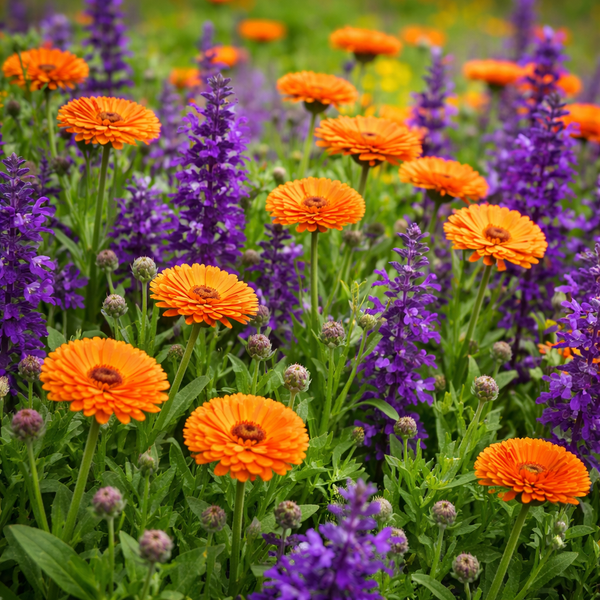
No companion plant is required for this crop to succeed. Diverse flowers near the garden can nevertheless attract pollinating insects that are essential for pumpkin fruit set. Leave enough room around the vines to provide light, airflow, and clear access to the flowers. Read the packet directions before starting and keep the label so the variety remains clearly identified throughout the season. Prepare a clean, loose, well-drained growing medium and moisten it before placing the seeds so they are not displaced by the first watering.

Plants to avoid

No enemy plant is confirmed by a reliable agronomic source for this mix. The main precaution is to prevent crowding and excessive competition for light, water, and nutrients. Rotate cucurbit crops as well to reduce the buildup of soil-borne diseases.

Garden use

This organic variety is part of Gaia's seed selection for Canadian gardens. This mix offers a trio of mini-pumpkins perfect for fall decor and delicious eating. Varieties include classic orange, white, and striped mini-pumpkins, each weighing 4 to 8 ounces. These plants grow on compact vines, making them suitable for limited spaces. Mature fruit have a rich colour & rinds are hard to dent with a fingernail. The ground spot also gets riper in colour (yellow to cream, gold to orange). Cut 2” stem to avoid stem rot. Must cure in a dry, warm place. Corn, Pole Beans, Radish, Marigold, Nasturtium, Oregano, Calendula. The packet contains 20 seeds.
Recipe and storage

Recipe idea

From garden to table

For four servings with Pumpkin Harvest Mix, harvest about 500 g of edible material at the recommended stage. Rinse under potable water, remove damaged sections, and use a clean cutting board. Cut the crop into even pieces. Warm 30 ml of oil in a skillet or preheat the oven to 200°C, then cook until tender and lightly browned. Season with 15 ml of lemon juice or mild vinegar, a small pinch of salt, pepper, and fresh herbs. Serve with a cooked grain or pulses. Adjust cooking time to the size of the pieces and the maturity of the harvest. Eat only the parts correctly identified as edible. Refrigerate leftovers in a closed container within two hours and use them promptly. Serve promptly to preserve the texture and aromas that distinguish this harvest. Taste before adding more salt so the variety’s own character remains at the centre of the dish. Use a clean board and utensils, then refrigerate promptly any portion that will not be served immediately.

Frequently asked questions

Frequently asked questions

How should I start Mini Pumpkin Harvest Mix seeds in Canada?
For Pumpkin Harvest Mix, the stated sowing period is the detailed directions in the product record. The recommended method is Seed propagation, at a depth of 25 mm (1″) direct. Follow these product-specific directions and adjust timing to the average last-frost date in your area. Moisten the growing medium before placing the seed so the first watering does not displace it. Label every container and maintain even moisture without allowing standing water. Move seedlings into bright light as soon as they emerge to encourage balanced growth. Thin carefully when several seedlings compete for the same space. For seed starting, label the cultivar and use the stated sowing depth instead of a generic estimate.
How long do Mini Pumpkin Harvest Mix seeds take to germinate?
For Pumpkin Harvest Mix, the stated germination period is 7 to 10 days (soaking and scarification recommended), with a germination temperature of 21-35°C. Keep these conditions as steady as practical while allowing excess water to drain away. The temperature of the growing medium matters more than the surrounding air during this stage. Check moisture below the surface before watering again and avoid saturating the medium. Good air circulation helps young plants remain vigorous after emergence. Wait until the normal germination window has passed before assuming a seed will not emerge. When growing from seed, keep conditions stable for the full stated germination window before disturbing the mix.

Seed-starting essentials

Click a product to build your selection.

Your selection

Total