


Sale
Sold out

Fruit
Cucurbitaceae
Organic seeds
Embroidered Melon 'd'Oka' (Cucumis melo)
Product code : JAREC-0142
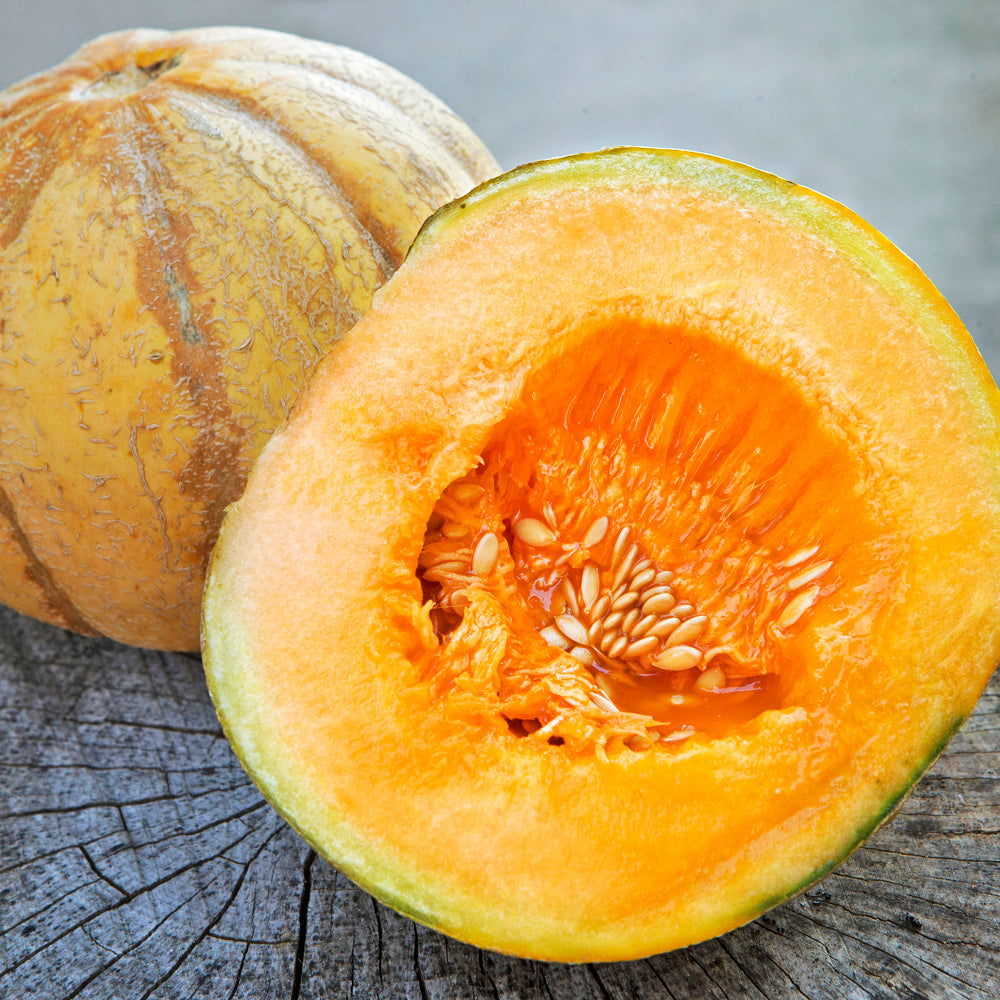
Its round fruits, with their embroidered skin that changes from dark green to orange tones when ripe, bring a warm and generous presence to the vegetable garden. Their orange, sweet, and fragrant flesh reveals fruity notes reminiscent of vanilla and pineapple, making it a particularly sought-after melon for fresh eating. Early-maturing and well-suited to drier conditions, it is admirably suited for gardeners who wish to cultivate a flavorful melon without sacrificing hardiness. In full sun, in rich and well-drained soil, it vigorously spreads its vines and quickly rewards the gardener's attention with beautiful, fragrant fruits.
- Quantity
- About 25 seeds
- Exposure
- Sun
- Life cycle
- Annual
Discover the plant
Common nameEmbroidered Melon ‘d’Oka’
FamilyCucurbitaceae
GenusCucumber
Speciesmelo
Cultivarfrom Oka
TypeFruit
Botanical nameCucumis melo
Reproducible seedsYes
Heirloom varietyYes
‘Oka’ Cantaloupe (Cucumis melo). Its round fruits, with embroidered rind that changes from dark green to orange tones when ripe, bring a warm and generous presence to the vegetable garden. Their orange, sweet, and fragrant flesh reveals fruity notes reminiscent of vanilla and pineapple, making it a particularly sought-after melon for fresh eating. Early-maturing and well-adapted to drier conditions, it is perfectly suited for gardeners who wish to cultivate a delicious melon without sacrificing hardiness. In full sun, in rich, well-drained soil, it spreads its vines vigorously and quickly rewards the gardener’s attention with beautiful, fragrant fruits.
Recommended sowing period: May to June. Depth should be 2 to 2.5 cm (0.8 to 1 in). Germination usually takes 5 to 10 days. For germination, keep the potting mix at 24 to 30 °C (75 to 86 °F). Melons require a warm season and stress-free root establishment. If starting plants indoors, use individual containers and transplant before roots become crowded. Keep the root ball intact and acclimate the foliage to the sun. Plant in warmed soil.
Reserve a sunny part of the vegetable garden for the melon where its vines can spread without smothering neighboring rows. Sideways access facilitates fruit observation and watering. Place fruits on a clean surface if the soil remains damp, maintaining their natural position. For vertical cultivation adapted to the melon type, also support the fruits with a device that distributes their weight. Its orange, sweet, and fragrant flesh reveals fruity notes reminiscent of vanilla and pineapple, making it a particularly sought-after melon for fresh eating.

Sowing guide
It all startswith a seed.
Sowing depth
0.8 to 1 in. (2 to 2.5 cm)
Germination temperature
24 to 30 °C (75 to 86 °F)
Germination time
5 to 10 days
Sowing period
May to June
Propagation
Sowing
Growing method
Recommended sowing period: May to June. The required depth is 2 to 2.5 cm (0.8 to 1 inch). Germination usually takes 5 to 10 days. For germination, maintain the potting mix at 24 to 30 °C (75 to 86 °F). Melons require a warm season and stress-free root establishment. If starting plants indoors, use individual containers and transplant before roots become crowded. Keep the root ball intact and acclimate the foliage to the sun. Plant in warmed soil. A young plant exposed to cold too early loses growth time that subsequent warmth does not always catch up on. While melons are growing, maintain consistent moisture at the base and allow the leaves to capture light. Avoid frequently moving the vines or twisting the stems. Maturity is judged by the type of melon: observe color changes, stem appearance, and variety-specific cues. Harvest carefully to avoid bruising the already ripe flesh. Leafy vegetables require harvesting adjusted to the type of plant.
Soil and care
The right care,at the right time.
Care level
Regular during establishment, then adapted to growing conditions
Watering
Regular
Soil type
Rich and well-drained
Fertilization
Fertilization supports growth and takes into account nutrients already present in the soil or potting mix. Use mature compost or a fertilizer suited to the crop, following the dosage instructions. Avoid using multiple products, especially in a container where the roots occupy a limited volume. Water as needed after application and observe leaf development before re-fertilizing.
Moisture
Keep the soil moist during germination, avoiding standing water; then adjust according to the crop.
Seasonal care
Melons require a warm season and stress-free root establishment. If starting plants indoors, use individual containers and transplant before roots become crowded. Keep the root ball intact and acclimate foliage to the sun. Plant in warmed soil. A young plant exposed to cold too early will lose growing time that subsequent warmth does not always make up for. While melons are growing, maintain consistent moisture at the base and allow leaves to capture light. Avoid frequently moving the vines or twisting the stems. Maturity is judged by the type of melon: observe color changes, stem appearance, and variety-specific cues. Harvest carefully to avoid bruising already ripe flesh. Leafy greens require harvesting adjusted to the plant type. Outer leaf harvesting preserves the heart when continued production is desired. Very old leaves are not as tender as young shoots. Rinse harvested produce just before use or dry thoroughly before a short stay in the refrigerator. Their orange, sweet, and fragrant flesh reveals fruity notes reminiscent of vanilla and pineapple, making it a particularly sought-after melon for fresh eating. It is an heirloom melon, elegant and delicious, perfect for combining memory, flavor, and abundance in the garden.
Container growing
A garden,within reach.
Suitable for containers
Yes
Recommended pot size
A container that is pierced and stable, with sufficient width for the plant to spread out and depth for the roots.
Choose this exposure: full sun. Reserve this spread around the plant: 1 to 2 m (3 to 6.5 ft). Growing a melon in a container requires a good amount of potting soil and ample space for the foliage. Choose a warm, sheltered location before planting. If the stems are trained on a support, check its stability and support the fruits as they grow. Monitor watering closely: the root ball in a sun-exposed pot can dry out much faster than garden soil. Its round fruits, with embroidered rind that changes from dark green to orange tones when ripe, bring a warm and generous presence to the garden. Their orange, sweet, and fragrant flesh reveals fruity notes reminiscent of vanilla and pineapple, making it a highly sought-after melon for fresh eating. Early and well-suited to drier conditions, it is admirably suited for gardeners who wish to grow a tasty melon without sacrificing hardiness. In full sun, in rich, well-drained soil, it vigorously spreads its stems and quickly rewards the gardener's attention with beautiful, fragrant fruits.

Bloom and dimensions
Its place,in your garden.
Mature height
12 to 20 in. (30 to 50 cm)
Width / spread
1 to 2 m (3 to 6.5 ft)
Foliage type
Seasonal foliage
Bloom period
July to August
Fruiting
Its orange flesh, sweet and fragrant, reveals fruity notes reminiscent of vanilla and pineapple, making it a particularly sought-after melon for fresh consumption. It is an old, elegant, and delicious melon, perfect for bringing together memory, flavor, and abundance in the garden. Leafy vegetables require harvesting adjusted to the type of plant. An outer harvest preserves the heart when you want to continue production.
Harvest
80 days after sowing
Garden associations
In goodcompany.
Companion plants
In a diversified plantation, you can reserve neighboring sections for the following plants: corn, beans, sunflowers. Here, the combination serves to organize space and harvests. Respect the height, light, and water needs of each plant, without crowding the foliage. Maintain an aisle for watering and picking, then remove finished crops to free up space. This organization facilitates maintenance but does not promise protection against pests. Reserve a sunny part of the vegetable garden for melons where the stems can spread over the ground without stifling neighboring rows.
Recipe idea
From the gardento your plate.
Edible parts
Ripe fruit
Cuisine Idea with ‘Oka’ Cantaloupe: Cantaloupe Salad for four servings. Prepare 600 g of ripe flesh, peeled and deseeded, and cut into cubes. Add 10 ml of lime juice and six chopped mint leaves. Mix gently, then refrigerate until serving. For a simple presentation, divide the cubes into four small bowls. Work on a clean cutting board after washing the entire fruit's rind to limit the transfer of dirt during cutting. Prepare ingredients with clean utensils and adapt the cutting to the size of your harvest. This recipe highlights freshly picked parts: remove any damaged pieces before preparation. If you double the quantities, leave enough space in the dish to mix or cook evenly. Promptly place leftovers in the refrigerator in a closed container and consume within two days. For a meal for two people, simply divide all quantities by two.
Frequently asked questions
Your questions,answered.
How to successfully sow 'Oka' Cantaloupe?
Recommended sowing period: May to June. Sow at a depth of 2 to 2.5 cm (0.8 to 1 in). Germination generally takes 5 to 10 days. For germination, maintain the soil at 24 to 30 °C (75 to 86 °F). Melons require a warm season and stress-free root establishment. If starting plants indoors, use individual containers and transplant before the roots become pot-bound. Keep the root ball intact and acclimate the foliage to the sun. Plant out when the soil has warmed up. A young plant exposed to cold too early loses growth time that subsequent warmth does not always make up for.
Can 'Oka' Embroidered Melon be grown in pots?
Exposure: full sun. Spacing around the plant: 1 to 2 m (3 to 6.5 ft). Growing a melon in a container requires a good supply of potting soil and ample space for the foliage. Choose a warm, sheltered location before planting. If the stems are trained on a support, check its anchorage and support the fruits as they grow. Monitor watering closely: the root ball of a pot exposed to the sun can dry out well before the soil in a garden bed. Its round fruits, with their netted rind that changes from dark green to orange tones when ripe, bring a warm and generous presence to the garden.
When to harvest 'Oka' Embroidered Melon?
Its orange, sweet and fragrant flesh reveals fruity notes reminiscent of vanilla and pineapple, making it a particularly sought-after melon for fresh consumption. It is an old, elegant and delicious melon, perfect for combining memory, flavour and abundance in the garden. Leafy greens require harvesting adjusted to the type of plant. Picking from the outside preserves the heart when you want to continue production. Very old leaves do not offer the same tenderness as young shoots. Rinse your harvest just before use or dry it carefully before a short stay in the refrigerator. While the melons are growing, maintain consistent moisture at the base and allow the leaves to capture light.
What distinguishes Melon Brodé ‘d’Oka’ in the garden?
Its round fruits, with embroidered rinds that transition from dark green to orange tones when ripe, bring a warm and generous presence to the vegetable garden. Their orange, sweet, and fragrant flesh reveals fruity notes reminiscent of vanilla and pineapple, making this a particularly sought-after melon for fresh eating. Early-maturing and well-suited to drier conditions, it is wonderfully suitable for gardeners who wish to cultivate a flavorful melon without sacrificing hardiness. In full sun, in rich and well-drained soil, it vigorously spreads its vines and quickly rewards the gardener's attention with beautiful, fragrant fruits.
How to organize an ‘Oka’ Cantaloupe planting?
Reserve a sunny part of the vegetable garden for melons, where the vines can spread out without smothering neighbouring rows. A side pathway makes it easier to observe the fruits and water them. Place the fruits on a clean surface if the soil remains damp, keeping them in their natural position. For vertical cultivation suited to the type of melon, also support the fruits with a device that distributes their weight. While the melons are growing, maintain consistent moisture at the base and allow the leaves to capture light. Avoid frequently moving the vines or twisting the peduncles. The stage of ripeness is judged according to the type of melon: observe changes in colour, the appearance of the peduncle, and the specific markers for the variety.
For a great start to your seeds
The right extras.Right here.
Seed Starting Soil
Shop the collectionSeed starting supplies
Shop the collection





