


Sale
Sold out

Non-organic seeds, Treated seeds, coated seeds
Fabaceae
Ornamental flowers seeds
Sensitive plant
Mimosa pudica
Product code : 64-6125-010
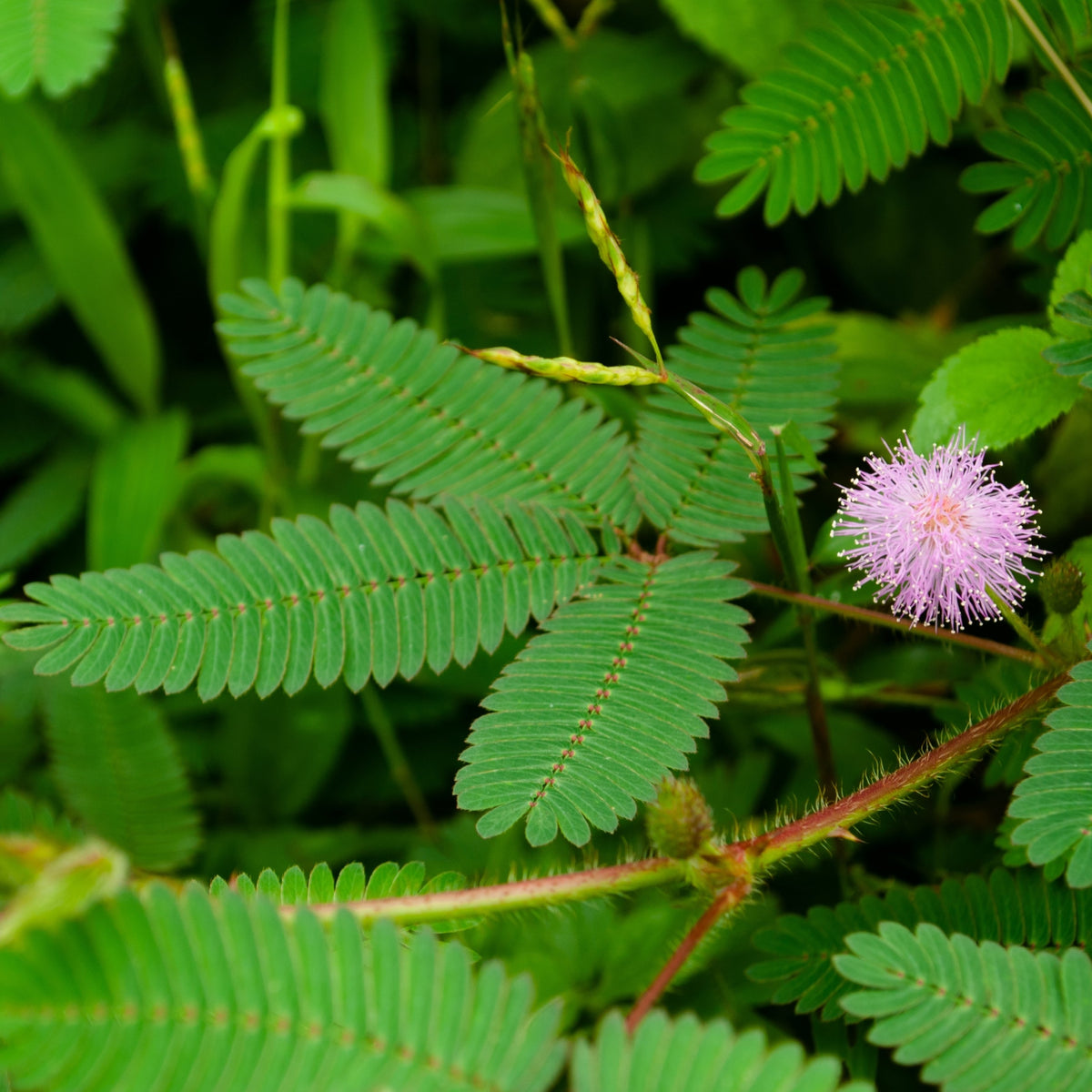
Mimosa pudica, known as sensitive plant, is a tropical botanical curiosity whose leaves fold quickly when touched. The perennial plant reaches approximately 50 cm and prefers bright indirect light with protection from scorching midday sun. The official packet contains approximately 75 bare seeds, with no coating or other treatment stated. Sow near 25 °C in porous seed-starting mix kept moist under a dome for germination in approximately 35 days. In a container, the plant appreciates slightly acidic mix, excellent drainage, high atmospheric humidity, and regular watering. Small round pink to blue-lilac flowers may appear in late summer. Its delicate habit and visible response create a remarkable botanical observation at home, especially when handled sparingly.
- Quantity
- Approximately 75 seeds per packet
- Exposure
- Bright indirect light; gentle sun is possible, avoid direct sun during hot hours
- Life cycle
- Perennial
Discover the plant
Common nameSensitive plant
FamilyFabaceae
GenusMimosa
Speciespudica
CultivarBotanical species; cultivar not stated
TypeNon-organic seeds, Treated seeds, coated seeds
Botanical nameMimosa pudica
Sensitive plant (Mimosa pudica) Sensitive plant is an ornamental flowers variety offered as seed for gardeners who want clear, practical product information. Confirmed details include height: Approximately 50 cm, spread: Exact spread not stated; leave space around the foliage, colour: pink. You can adjust care to your soil, weather, and observed growth without exceeding the plant’s actual needs. It is best to adapt care to your garden’s microclimate instead of following a fixed watering schedule in every situation. A suitable mulch can help stabilize moisture, reduce soil splash, and limit competition from weeds around established plants.
The packet contains approximately 75 seeds, and the formulation is non-organic seeds, treated seeds, coated seeds. For best results, follow the sowing, light, and spacing information associated with this variety. You can keep the labelled packet until harvest or flowering so the variety details remain easy to consult. Measured care based on the plant’s condition generally supports better balance than unnecessary routine treatments. For containers, drainage and soil volume directly influence moisture stability around the roots and the frequency of watering. In the garden, an accessible position makes observation, occasional watering, harvesting, and timely maintenance easier.
It is recommended to remove only damaged material while retaining healthy foliage needed for continued growth. Results may vary with weather, sowing date, soil quality, and the number of hours of useful light each day. This approach helps gardeners enjoy the variety’s confirmed qualities without adding more maintenance than the plant requires. For best results, check the growing medium before watering and adjust frequency to the actual conditions around the plant. You can review foliage and new growth each week to notice water stress, slowed development, or damage at an early stage.

Sowing guide
It all startswith a seed.
Sowing depth
Place on the mix, then cover with a thin layer
Spacing / density
Space seeds in the tray; transplant individually after establishment
Germination temperature
Approximately 25 °C
Germination time
Approximately 35 days
Sowing period
Year-round indoors when warmth and light are controlled
Propagation
Seed
Growing method
Fill a clean tray with standard porous, freely draining seed-starting mix. Place seeds on the surface, water gently, then spread a thin layer of mix over them. Cover the tray with a clear dome to maintain consistent humidity and keep it near 25 °C under bright light. Germination takes approximately 35 days; inspect daily without saturating the mix. Vent briefly if excessive condensation persists. After emergence, increase airflow gradually and remove the dome in stages to avoid sudden drying. Transplant well-rooted seedlings into small draining pots filled with slightly acidic mix. Handle the root ball rather than slender stems and protect young plants from intense direct sun. Label the tray with sowing and emergence dates. Label the sowing with its date and product code 64-6125-010, then record emergence instead of disturbing the mix during the long wait. Once seedlings are established, retain vigorous plants and disturb roots as little as possible. After transplanting, increase light gradually, verify drainage after each watering, and wait for visible recovery before feeding. Keep young plants away from cold drafts and hot surfaces. Steady growth is preferable to abrupt intervention, and individual pots make moisture and pest checks much easier.
Soil and care
The right care,at the right time.
Soil pH
Slightly acidic
Minimum temperature
Frost-free; maintain a warm indoor environment
Care level
Moderate
Watering
In summer, water thoroughly so the mix never dries completely while allowing excess to drain away. Do not leave roots standing in a full saucer. In winter, W.H. Perron notes that weekly watering may be sufficient unless the apartment is very warm; always inspect the mix before watering. Use room-temperature water and adjust frequency to heat, light, humidity, plant size, and container volume. Avoid both prolonged dryness and constant saturation.
Soil type
For sowing, use porous, freely draining mix to prevent excess water. After transplanting, W.H. Perron recommends a slightly acidic substrate composed of roughly one-third potting soil, one-third ericaceous soil, and one-third peat. The container must drain freely through open holes and a layer of clay pebbles or gravel. The mix should retain moisture without remaining saturated. Replace compacted material when drainage slows noticeably.
Fertilization
During active growth, add a small amount of liquid green-plant fertilizer every fifteen days, diluted and applied according to its label to already moist mix. Do not increase the dose to force growth because fine roots can be sensitive to salts. Reduce or stop feeding in winter when light and growth decline. Occasionally flush the substrate with a thorough watering that drains freely. Resume normal feeding only when fresh growth is visible.
Moisture
High with renewed airflow; damp pebble tray without immersing the pot
Seasonal care
In spring, increase light gradually and resume liquid fertilizer every fifteen days once growth restarts. Repot only if roots fill the container, using slightly acidic, freely draining mix. In summer, keep the substrate consistently moist without saturation, protect the plant from scorching sun, and maintain high atmospheric humidity. A tray of damp clay pebbles or misting during intense heat may help while airflow remains adequate. Watch especially for spider mites. In late summer, observe round pink to blue-lilac inflorescences and remove only dry material. In autumn, move the plant to the brightest indoor position before cold weather. In winter, reduce watering toward roughly once weekly according to actual drying, keep the pot away from heaters, and stop feeding if growth slows. Limit repeated touching, which needlessly activates leaf folding. Clean foliage gently and inspect leaflet undersides regularly for fine webbing or pale damage. Throughout the year, keep drainage holes open, empty excess water, and rotate the pot for balanced growth. Isolate an infested specimen promptly. Written or photographic observation is preferable to repeatedly stimulating leaves and makes it possible to compare recovery speed across seasons. Finally, record watering, feeding, repotting, and location-change dates so every response can be interpreted accurately. Inspect new growth weekly, remove fallen debris, and clean the surrounding tray. Stable care is more useful than abrupt seasonal corrections, especially when indoor heat and light change at different rates.
Container growing
A garden,within reach.
Recommended pot size
Draining 15 to 20 cm pot for a young plant, enlarged gradually
Choose a 15 to 20 cm pot for a young plant with several drainage holes. Add a layer of clay pebbles or gravel, then fill with slightly acidic, porous, moist mix. Place sensitive plant in bright indirect light away from direct sun during the hottest hours. Water until excess drains without leaving standing water. To increase humidity, set the pot above a broad tray of damp clay pebbles without letting its base touch water. Feed lightly every fifteen days during active growth. Rotate the pot for balanced form but avoid constantly handling the leaves. Repot only one size larger when roots fill the container and keep the root ball intact. In winter, maintain warmth and strong light while adjusting water to actual drying. Isolate any plant showing spider mites immediately to protect the indoor collection. Use clean tools and quarantine new neighbouring plants before placing them nearby. A slender stake may support an elongated stem without tight ties. Avoid sealed decorative pots after watering and monitor container weight to track moisture. In a collection, space foliage so air circulates and every plant can be inspected easily. Review drainage, moisture, light, humidity, and pests every week.

Bloom and dimensions
Its place,in your garden.
Mature height
50 cm (19.7 in)
Width / spread
Exact spread not indicated; allow space around foliage
Flower color
Pink to blue-lilac
Foliage color
Green
Foliage type
Finely divided compound leaves that fold when touched
Growth rate
Moderate with adequate warmth, light, and humidity
Growth habit
Small branched tropical plant with slender stems
Fragrance
Fragrance not stated by W.H. Perron
Bloom period
In late summer, a well-established sensitive plant may produce small round 1 to 2 cm inflorescences. They consist of bristly stamens in pink to blue-lilac shades. Flowering depends on warmth, light, plant age, and care quality and should not be guaranteed for every indoor specimen. Responsive foliage remains the main attraction even without flowers. Avoid moving or stressing the pot once buds become visible.
Days to maturity
Tropical perennial; flowering may occur in late summer
Garden associations
In goodcompany.
Companion plants
Grow neighbouring plants in separate pots. Tropical ferns, fittonias, or other small humidity-loving plants can create a coherent display when each retains independent drainage. Avoid plants infested with spider mites and quarantine new acquisitions. Do not fill the sensitive plant’s pot with groundcovers because they complicate moisture monitoring. The best companion remains bright light, stable warmth, gentle airflow, and an observer who limits touching. Separate pots also simplify treatment if pests appear. Compact tropical ferns, fittonias, and small prayer plants may share a bright humid area, but each species should remain in its own pot so watering can be adjusted individually.
Frequently asked questions
Your questions,answered.
Why do the leaves fold?
Leaflet folding is a rapid response to mechanical stimulus, which explains the name sensitive plant. A touched leaf temporarily changes water pressure in specialized structures at its base, producing visible movement. The response demonstrates that plants perceive their environment, but it uses energy and should not be triggered continually. Touch one leaf very lightly, then allow it to reopen without repeating the experiment. Lack of response may indicate stress, cold, water shortage, darkness, or excessive prior handling rather than a permanent defect. Observe general plant health before trying again on another day. Always wait for full reopening and favour daily observation without contact before considering another demonstration.
How can germination be kept consistent?
W.H. Perron packet 64-6125-010 contains approximately 75 bare seeds. No coating or other treatment is stated, and the product is not organic. For consistent emergence, use clean, porous, freely draining seed-starting mix. Place seeds, water gently, cover with a thin layer, and keep the tray under a clear dome near 25°C. W.H. Perron gives germination at approximately 35 days, so patience and stability matter more than excessive watering. Check condensation daily and vent if water runs down the cover. Keep the mix moist, never waterlogged. After emergence, increase airflow gradually, provide bright light, and transplant only when seedlings are rooted well enough for their root balls to remain together. Retain the original packet label for identification.
What light suits sensitive plant?
Place the plant in bright indirect light. Gentle morning sun may be suitable after acclimatization, but avoid direct sun during the hottest hours because it can scorch fine foliage and dry the pot rapidly. Near a window, rotate the container regularly for balanced growth. In winter, use an approved grow light if needed, positioned according to manufacturer instructions and with a daily dark period. Monitor temperature at the same time because a bright window may become cold at night. A stretched, weak plant often lacks light, while dry patches can indicate excessive exposure. Change conditions gradually and observe new growth rather than damaged older leaves alone.
How can high humidity be maintained without waterlogging the pot?
Set the pot above a broad tray filled with damp clay pebbles without letting its base touch water. Evaporation raises local humidity while drainage holes remain free. During intense heat, fine misting may help if air circulates and foliage can dry; avoid keeping leaves constantly wet. Group several plants in separate pots to create a microclimate while leaving enough space to monitor pests. Water the mix according to actual drying and always empty accumulated water. High humidity never compensates for waterlogged substrate, which deprives roots of oxygen. A small hygrometer can help track trends without replacing direct inspection of the plant and mix.
Can the leaves be touched often?
Avoid frequent touching. The movement is fascinating, but every folding response uses resources and the plant needs time to reopen. For a demonstration, choose one leaf, brush it once, time the response, and wait for complete recovery. Do not pinch stems or shake the pot. In a classroom, establish an observation schedule and a no-contact rule between sessions. If sensitive plant remains closed, appears limp, or stops growing, suspend experiments and check light, warmth, water, humidity, and pests. Respect for the living plant must always come before spectacle. Photographing changes often provides better records than repeating the stimulus. A dated observation journal preserves the sense of discovery while limiting unnecessary interventions and stress.
For a great start to your seeds
The right extras.Right here.
Seed Starting Soil
Shop the collectionSeed starting supplies
Shop the collection





