Bean 'Azuki'

bean

Le potager ornemental de Catherine

Vigna angularis

Available

Pay in 4 interest-free payments withSezzle

Delivery and pickup: view conditions

Product information
Advice adapted to Canada
Secure payment
Share

From seed to harvest

Open-pollinated
Common nameAdzuki bean
FamilyFabaceae
GenusVigna
Speciesangularis
CultivarAzuki
TypeOpen-pollinated seeds
Botanical nameVigna angularis
Reproducible seedsYes
Quantity per packet±40 seeds

Bean 'Azuki' belongs to Vigna angularis. An annual legume known as adzuki bean, Adzuki or Japanese red bean. Plant height: 30 to 90 cm (11.8 to 35.4 in). Support may be needed to hold the stems in place. Small, purplish-red dry seeds. Commonly used to grow sprouts and to make anko, the famous sweet paste made from adzuki beans that is found in mochi. Grow this adzuki bean in the same way as bush beans. These characteristics help you choose its position in the garden and compare this selection with other cultivars in the same group.

Choose a growing location in full sun, with soil that allows excess water to drain away freely. Sow directly after the last frost, or start indoors 10 days beforehand. Sow the seeds at a depth of 2 cm (0.8 in). Leave 20 cm (7.9 in) between plants. In Quebec, wait for the soil and nights to warm before planting out; the last frost date varies by location. Gradually get the plants started indoors accustomed to outdoor wind and direct sunlight before you plant them out in the garden. Water at the base, accounting for rainfall and drainage, and check moisture more closely on hot days.

For shelling adzuki bean plants, choose the harvest stage according to use: still-fresh seeds or dry seeds. Do not automatically treat the pods like those of a filet-type adzuki bean. Leave a pathway to check how the pods are filling and pick without pulling on the stems. For a dry harvest, bring pods under cover if the weather turns damp, and finish drying in an airy location. Then shell and sort the seeds; only completely dry seeds can be stored in a sealed container. The edible adzuki bean harvest must be properly cooked before eating. Keep these adzuki bean seeds dry until the next sowing.

Light and life cycle

In the garden

Exposure
Full sun
Life cycle
Annual
Sowing and germination

Sowing guide

Sowing & germination

Sowing depth

2 cm (0.8 in)

Spacing / density

20 cm (7.9 in)

Sowing period

Direct sow in the garden after the last frost. You can also start seeds in containers indoors 10 days before.

Propagation

Seed sowing

Growing method

These seed-starting tips for Bean 'Azuki' concern gardening in Quebec and can be adjusted to local frost risks. Sow directly in the garden after the last frost. You can also start the seeds indoors in containers, sowing them 10 days before the planned planting date. Sow the seeds at a depth of 2 cm (0.8 in). Leave 20 cm (7.9 in) between plants. This crop is identified as Vigna angularis. Keep the row accessible for shelling the harvest and checking its drying. Harvesting shell beans or dry beans occupies the row longer than harvesting young snap beans. Identify each variety with a durable label so that the beans can be sorted after harvest. Prepare the final growing site and seed-starting supplies first. For seed starting in pots, moisten the growing mix before filling the cells, then sow without compressing it into a hard mass. For direct sowing, remove large soil clods and mark a row that you can locate again after watering. Distribute seeds according to the intended spacing rather than pouring several into one spot. Water the growing medium gently so that the flow of water does not displace the seeds you have sown. Once the seedlings have emerged, keep the healthy young plants and allow enough space for them to continue developing. If seedlings are started indoors, gradually acclimatize them to outdoor conditions before planting them out. Handle the root ball carefully without pulling on the stem. Transplant into prepared soil, then water to help the soil settle into contact with the root ball. Azuki produces small, purplish red dry beans, used cooked particularly in anko, a sweet Japanese paste.
Soil and care

Soil and care

Soil & care

Moisture

Even moisture without saturation

Care level

Moderate

Watering

For Bean 'Azuki', adjust watering to the stage of growth. Water the seedbed gently so that the seeds remain in place. After establishment, check moisture near the roots rather than judging only by the appearance of the leaves. Direct water to the base and adjust the amount according to rainfall. Check a wind-exposed container more often; excess water must be able to drain freely.

Soil type

Well-drained soil

Fertilization

When feeding Bean 'Azuki', begin with the fertility of the growing medium. For this legume, do not repeatedly add nitrogen out of habit. Foliage growth is not the only harvest goal. Before applying fertilizer, examine the soil or growing mix already in use. Measure each application according to the label and the crop's needs, without combining several products at once. In containers, account for nutrients already present in the growing mix. A plant that is suffering from a lack of water cannot be helped simply by applying additional fertilizer.

Seasonal care

Care for Bean 'Azuki' should reflect this trait: Azuki produces small, purplish-red dry seeds, notably used cooked in anko, a sweet Japanese paste. The plant measures 30 to 90 cm (12 to 35 in) and may need support. The supplier states 90 days. Monitor the pods as they fill. Do not remove healthy foliage simply to speed up drying. Once the pods are dry, harvest in dry weather and finish drying them under cover in an airy location. Start the season with a prepared site and labelled seedlings. During emergence, check that moisture reaches the seed zone without creating a persistent puddle. After planting, observe establishment before adding more fertilizer or pruning. Remove small weeds and check damaged leaves so that isolated damage is not mistaken for a need for fertilizer. Throughout summer, adjust watering to the condition of the soil and the rain received. Check support ties after windy weather, and do not let a tie constrict a thickening stem. Make cuts with a clean tool; do not remove a healthy stem simply to improve the view. In fall, separate what should be harvested, left in place or removed according to the plant's life cycle. After detaching the stems, put the supports away and clean your tools; take care not to move diseased plant debris into other growing areas. Whether the plant returns in spring depends on its stated life cycle, not simply on the word garden in its description. For shell beans, open a pod when the seeds are plump but still tender. For a dry harvest, allow the pods to mature and dry on the plants; bring them indoors if rain prevents them from drying outdoors. Do not mix harvested seeds that are still damp with seeds that are already fully dry.
Growth and harvest

Size, flowering & harvest

Mature height

30 to 90 cm (11.8 to 35.4 in)

Growth habit

Compact or bushy

Edible parts

Cooked shelly or dry beans

Fruiting

For harvesting Bean 'Azuki', follow the stage specific to this crop. For shell beans, open a pod when the seeds are plump but still tender. For a dry harvest, allow the pods to mature and dry on the plants; bring them indoors if rain prevents them from drying outdoors. Do not mix harvested seeds that are still damp with seeds that are already fully dry. Monitor the parts to be harvested as they develop. The stated timing does not replace this crop's specific signs of maturity or tenderness. Cut or harvest without injuring neighbouring stems.

Days to maturity

90 days

Harvest

Azuki produces small, purplish red dry beans, used cooked particularly in anko, a sweet Japanese paste. The plant measures 30 to 90 cm (12 to 35 in) and may need support. The supplier states 90 days. For shell beans, open a pod when the seeds are plump but still tender. For a dry harvest, allow the pods to mature and dry on the plants; bring them indoors if rain prevents them from drying outdoors. Do not mix harvested seeds that are still damp with seeds that are already fully dry.
Garden companions

Garden associations

Companion plants & uses

Companion plants

When choosing companions for Bean 'Azuki', consider light, access and space. Keep the row accessible so that you can shell the harvest and monitor its drying. Harvesting shell beans or dry beans occupies the row longer than harvesting young snap beans. Identify each variety with a durable label so that the beans can be sorted after harvest. Plan companion planting around the available space and growing requirements. Leave enough light and air around the plant, and keep taller neighbours from covering its foliage. A practical arrangement of plants makes watering and harvesting easier to manage; it does not, by itself, guarantee protection against insect pests or an increase in yield. Keep every crop accessible and maintain its individual spacing.

Garden use

Give Bean 'Azuki' a place in the vegetable garden to produce well-filled seeds for soups, purées and slow-cooked dishes. Azuki produces small, purplish red dry beans, used cooked particularly in anko, a sweet Japanese paste. The plant measures 30 to 90 cm (12 to 35 in) and may need support. The supplier states 90 days. Keep the row accessible so that you can shell the harvest and monitor its drying. Harvesting shell beans or dry beans occupies the row longer than harvesting young snap beans. Identify each variety with a durable label so that the beans can be sorted after harvest. The recommended location is full sun. Draw out where this crop will be positioned in the garden before you begin sowing the seeds. Distinguish the area occupied by the roots from the space where stems and leaves will spread. An aisle lets you reach the plant with a watering can and harvesting tool without stepping on the soil around its roots. Check the shade cast by buildings and supports during the growing season. The spacing between two plants does not replace the width of a working aisle. Remove weeds while they are small so that large roots will not need to be pulled beside an established plant. Position the hose or watering can so that you can reach the base without tugging on the stems. When adding mulch after establishment, keep the crown clear and maintain access to the parts you need to observe. A clearly organized flower bed simplifies care once foliage becomes dense. Do not mix harvested seeds that are still damp with seeds that are already fully dry.
Recipe and storage

Recipe idea

From garden to table

Here is a preparation suited to cooking the harvest from Bean 'Azuki'. Make a soup with the adzuki bean harvest and vegetables. Sort and rinse the seeds, then fully cook the adzuki bean harvest before adding it to broth with carrots, onion and herbs. Rehydrate dry seeds before cooking; semi-dry seeds need preparation suited to their freshness. Mash some of the cooked seeds to thicken the soup. Add the vegetable pieces and continue cooking until tender. Season at the end and serve with bread. For a salad, cool the thoroughly cooked adzuki bean harvest, then add parsley, oil and lemon juice. Never use raw dry seeds as a garnish. This suggestion is for a cooked dish, not a canning recipe for room-temperature storage. Promptly refrigerate leftovers in a clean container. Azuki produces small, purplish red dry beans, used cooked particularly in anko, a sweet Japanese paste. The plant measures 30 to 90 cm (12 to 35 in) and may need support. The supplier states 90 days.

Frequently asked questions

Frequently asked questions

How do you start Bean 'Azuki' seeds in Quebec?
For Bean 'Azuki', sow directly in the garden after the last frost. You can also start the seeds indoors in containers, sowing them 10 days before the planned planting date. Sow the seeds at a depth of 2 cm (0.8 in). Leave 20 cm (7.9 in) between plants. To choose a sowing date in Quebec, begin with your local frost risk, then apply the timing recommended for this crop. Always plan indoor seed starting by counting backwards from the expected planting date; do not start the seeds too early simply on principle. Prepare containers before sowing and label the variety. Maintain moisture suited to the seeds without leaving standing water. When sowing directly in the garden, prepare the row before distributing the seeds and water gently.
How much space should you allow for Bean 'Azuki'?
For Bean 'Azuki', Azuki produces small, purplish-red dry seeds, notably used cooked in anko, a sweet Japanese paste. The plant measures 30 to 90 cm (12 to 35 in) and may need support. The supplier states 90 days. Keep the row accessible so that you can shell the harvest and monitor its drying. Harvesting shell beans or dry beans occupies the row longer than harvesting young snap beans. Identify each variety with a durable label so that the beans can be sorted after harvest. Choose the position according to this plant's habit and growth, then leave access for watering and cutting. If the plants require a support, put it in place before their stems begin to grow longer. The distance between plants does not replace a working aisle. Growing on a balcony also requires checking the pot's stability and the shade cast by nearby structures.
How should you manage watering for Bean 'Azuki'?
Caring for Bean 'Azuki' requires observing the plant. Check the growing mix or soil near the roots before watering. Water must reach the root ball, and excess water must then be able to drain from the container or soil. Recent rain, wind and heat affect how often watering is needed. Water at the base rather than routinely wetting the flowers and foliage. When a plant wilts, check its root ball as well: adding water to an already saturated root ball will not solve every problem. Use a gentle stream when watering newly sown seeds. Monitor the pods as they fill. Do not remove healthy foliage simply to speed up drying. Once the pods are dry, harvest in dry weather and finish drying them under cover in an airy location.
How should you monitor the development of Bean 'Azuki'?
The growth of Bean 'Azuki' follows this profile. Azuki produces small, purplish red dry beans, used cooked particularly in anko, a sweet Japanese paste. The plant measures 30 to 90 cm (12 to 35 in) and may need support. The supplier states 90 days. Monitor the pods as they fill. Do not remove healthy foliage simply to speed up drying. Once the pods are dry, harvest in dry weather and finish drying them under cover in an airy location. For shell beans, open a pod when the seeds are plump but still tender. For a dry harvest, allow the pods to mature and dry on the plants; bring them indoors if rain prevents them from drying outdoors. Do not mix harvested seeds that are still damp with seeds that are already fully dry. Keep the row accessible so that you can shell the harvest and monitor its drying.
What growth stage should you look for in Bean 'Azuki'?
For Bean 'Azuki', open a pod for the semi-dry harvest when the seeds are plump but still tender. For a dry harvest, allow the pods to mature and dry on the plants; bring them indoors if rain prevents them from drying outdoors. Do not mix harvested seeds that are still damp with seeds that are already fully dry. Azuki produces small, purplish red dry beans, used cooked particularly in anko, a sweet Japanese paste. The plant measures 30 to 90 cm (12 to 35 in) and may need support. The supplier states 90 days. The schedule is a guide, but observing the plant determines the right moment. Follow the recommended stage for the part harvested, and distinguish botanical maturity from culinary quality. Harvest with a clean tool when the stem resists, and immediately sort out damaged parts. For a bouquet flower, choose a healthy stem when this use is confirmed.

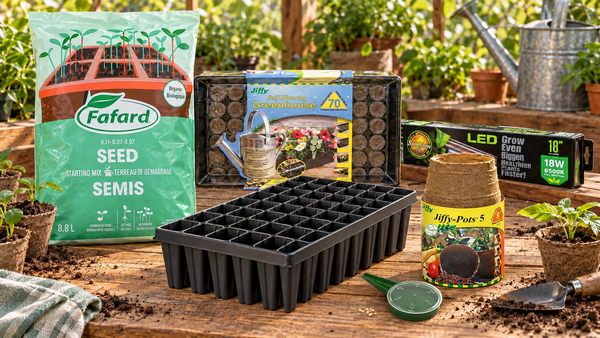
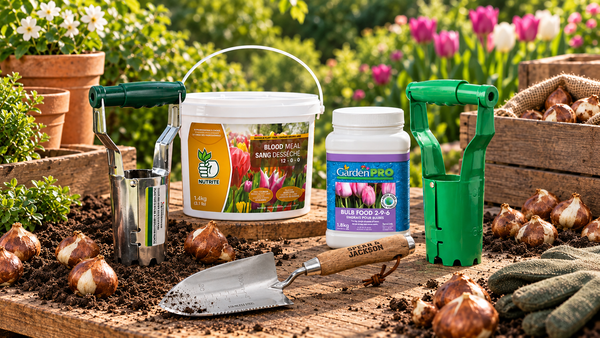
Seed-starting essentials

Click a product to build your selection.

Your selection

Total