Sweet pea

Climbing annual flower

Le potager ornemental de Catherine

Lathyrus odoratus

Available

Pay in 4 interest-free payments withSezzle

Delivery and pickup: view conditions

Product information
Advice adapted to Canada
Secure payment
Share

From seed to harvest

Open-pollinated
Common nameSweet pea
FamilyFabaceae
GenusLathyrus
Speciesodoratus
TypeOpen-pollinated seeds
Botanical nameLathyrus odoratus
Reproducible seedsYes
Quantity per packet±35 seeds

Sweet pea belongs to Lathyrus odoratus. The plant completes its life cycle in one season. The flowers are highly fragrant, in a mixture of colours: white, pink, red or mauve. The climbing stems require a support 1.40 to 2 m (4.6 to 6.6 ft) tall. The flowers feed bees and bumblebees. The seeds are toxic and must not be eaten. These characteristics help you choose its position in the garden and compare this selection with other cultivars in the same group. Plan its location around its growth, leaving enough room to observe and care for the plant.

Choose a location receiving sun or partial shade and provide soil that is rich and has good drainage. Sow seeds directly in mid-May. Sow the seeds at a depth of 1 cm (0.4 in). Space 10 cm (3.9 in) apart. Germination in 7-20 days at 13-18 °C (55.4 to 64.4 °F). In Quebec, adjust the timing of planting to the frost risks in your particular area and to the life cycle of the plant. Keep the growing mix slightly moist during emergence without saturating it, and provide light as soon as seedlings appear. If sowing begins indoors, acclimatize the seedlings to wind and sun before planting them in the garden.

Position the plants where their flowers will remain clearly visible, taking their expected height and spread into account when arranging the planting. Leave access for watering at the base, following buds as they open and removing damaged stems. This plant is toxic: keep it labelled and away from harvests intended for cooking. Leave enough room for the foliage as it continues to grow and develop through the season. For this annual, follow flowering through the season and choose which stems to keep for their seeds. Keep labels in place to recognize each variety, even after the flowers have faded. Keep these flower seeds dry until the next sowing.

Light and life cycle

In the garden

Exposure
Full sun to part shade
Life cycle
Annual
Sowing and germination

Sowing guide

Sowing & germination

Sowing depth

1 cm (0.39 in)

Spacing / density

10 cm (3.9 in)

Sowing period

Direct sow mid-May.

Propagation

Seed sowing

Growing method

Full sun or partial shade; rich, well-drained soil. Sow seeds directly outdoors in mid-May. 1 cm (0.39 in) deep. Space 10 cm (3.9 in) apart. Germination in 7-20 days at 13-18 °C (55.4 to 64.4 °F). To prepare these sweet pea flower seeds in Quebec, link the sowing schedule to your garden's conditions rather than one date for all of Canada. When sowing sweet pea seeds, prepare the bed for sowing described above and keep to the sowing stage that is specified. Prepare the growing medium before distributing seeds to avoid accidentally burying them afterwards. Maintain consistent moisture until emergence while allowing excess water to drain away. Provide seedlings with sufficient light and thin them once they are large enough to handle. Gradually harden off seedlings started indoors; planting outside must account for frost risk in your region of Quebec. Reserve clear space for the climbing stems and fragrant flowers. Keep stems accessible so that you can observe the flowers and tend the plants without breaking them. The height and width described for this selection help organize planting while accounting for the growth of neighbouring plants.
Soil and care

Soil and care

Soil & care

Moisture

Even moisture without saturation

Care level

Moderate

Watering

Direct water to the sweet pea's roots, then check the soil instead of watering only at fixed intervals. A container-grown plant dries out faster than a clump planted in the ground. Rain may wet the leaves without penetrating far enough into the growing medium. Keep the drainage working properly and adjust the amount of water to the heat, wind and stage of plant growth.

Soil type

Full sun or partial shade; rich, well-drained soil. Well-drained soil lets roots develop without sitting in a waterlogged area. Prepare the seedbed before you sow, remove any obstacles and keep the soil surface clear of foot traffic. The amount of compost you add should match the soil's fertility and this plant's needs rather than a uniform dose applied throughout the entire garden.

Fertilization

Adjust the amount of fertilizer given to sweet pea according to the fertility of the soil and how the plant is developing. Excessive feeding does not guarantee more flowers and can make stems harder to support. Keep drainage working and observe growth before adding more soil amendments. In containers, check the nutrients already in the potting mix and follow the instructions for your chosen fertilizer.

Seasonal care

Full sun or partial shade; rich, well-drained soil. Sow seeds directly outdoors in mid-May. 1 cm (0.39 in) deep. Space 10 cm (3.9 in) apart. Germination in 7-20 days at 13-18°C (55.4 to 64.4 °F). To prepare flower seeds of this selection in Quebec, base your sowing schedule on your garden's conditions rather than one date for all of Canada. When sowing sweet pea seeds, prepare the bed for sowing described above and keep to the sowing stage that is specified. Prepare the growing medium before distributing seeds to avoid accidentally burying them afterwards. Maintain consistent moisture until emergence while allowing excess water to drain away. Provide seedlings with sufficient light and thin them once they are large enough to handle. Gradually acclimatize the young plants that were started indoors to outdoor conditions; when planting them outside, take account of the risk of frost in your particular region of Quebec. Direct water to the sweet pea's roots, then check the soil instead of watering only at fixed intervals. A container-grown plant dries out faster than a clump planted in the ground. Rain may wet the leaves without penetrating far enough into the growing medium. Keep the drainage working properly and adjust the amount of water to the heat, wind and stage of plant growth. Persistent wilting calls for checking actual moisture before adding more water.
Growth and harvest

Size, flowering & harvest

Mature height

1.40 to 2 m (4.6 to 6.6 ft)

Growth habit

Climbing
Garden companions

Garden associations

Companion plants & uses

Garden use

Sweet pea: this crop is grown as an annual. Very fragrant flowers in a mix of white, pink, red or purple. The plant climbs and needs a support 1.40 to 2 metres (4.6 to 6.6 ft) tall. Nectar-producing and appreciated by bees and bumblebees. These flower seeds suit a garden project planned around the growth habit and uses of Sweet pea. In the garden, sweet pea is used to showcase its climbing stems and the fragrance of its flowers. Position other plants so that this silhouette remains visible and accessible. For fragrant bouquets and flower-covered supports, plan how you will reach the stems or flowers as you plan the planting. A bed that is organized carefully leaves an aisle where you can work without continually disturbing the stems as you move around the plants. Choose neighbours according to their height, water needs and growing period rather than assuming that proximity provides automatic protection. Full sun or partial shade; rich, well-drained soil. Reserve clear space for the climbing stems and fragrant flowers. Keep stems accessible so that you can observe the flowers and tend the plants without breaking them.

Wildlife and pets

Wildlife & precautions

Reported toxicity

Yes

Supporting wildlife

Sweet pea may provide resources for some visiting insects while in bloom. Their appeal varies with flower shape, flowering time and the species present in the area. Avoid applying insecticide treatments while the plants are flowering, in order to protect the beneficial insects that visit their flowers.

Frequently asked questions

Frequently asked questions

What distinguishes Sweet pea?
Sweet pea: this crop is grown as an annual. Very fragrant flowers in a mix of white, pink, red or purple. The plant climbs and needs a support 1.40 to 2 metres (4.6 to 6.6 ft) tall. Nectar-producing and appreciated by bees and bumblebees. Use sweet pea for making fragrant bouquets and for supports covered in flowers, taking into account the climbing stems and the scented flowers. Keep stems accessible and maintain effective drainage as the plants grow. In an ornamental garden, choose neighbours according to their size and requirements, and leave enough room to care for the planting without breaking stems.
How do you start Sweet pea from seed?
Full sun or partial shade; rich, well-drained soil. Sow seeds directly outdoors in mid-May. 1 cm (0.39 in) deep. Space 10 cm (3.9 in) apart. Germination in 7-20 days at 13-18°C (55.4 to 64.4 °F). To prepare flower seeds of this selection in Quebec, base your sowing schedule on your garden's conditions rather than one date for all of Canada. When sowing sweet pea seeds, prepare the bed for sowing described above and keep to the sowing stage that is specified. Prepare the growing medium before you distribute the seeds over it, so that you do not accidentally cover and bury them while working afterwards.
How should you position Sweet pea in the garden?
Sweet pea: this crop is grown as an annual. Very fragrant flowers in a mix of white, pink, red or purple. The plant climbs and needs a support 1.40 to 2 metres (4.6 to 6.6 ft) tall. Nectar-producing and appreciated by bees and bumblebees. Full sun or partial shade; rich, well-drained soil. Reserve clear space for the climbing stems and fragrant flowers. Keep stems accessible so that you can observe the flowers and tend the plants without breaking them. The height and width described for this selection help organize planting while accounting for the growth of neighbouring plants.
How do you care for Sweet pea during the growing season?
Direct water to the sweet pea's roots, then check the soil instead of watering only at fixed intervals. A container-grown plant dries out faster than a clump planted in the ground. Rain may wet the leaves without penetrating far enough into the growing medium. Keep the drainage working properly and adjust the amount of water to the heat, wind and stage of plant growth. Persistent wilting calls for checking actual moisture before adding more water. Guide the stems of sweet pea onto the support provided for them while they are still soft and flexible. Avoid fastening the ties too tightly around the growing shoots, and keep the flowers within easy reach for cutting bouquets.
What growth stage should you look for in Sweet pea?
Very fragrant flowers in a mix of white, pink, red or purple. Observe the flower buds and flowers on the sweet pea during the flowering period indicated above. The sowing date, light and weather can shift the start of flowering. The flower colour described for this selection helps you choose its position beside neighbouring plants. Keep flowering stems accessible to remove faded blooms or pick flowers for bouquets when this use is confirmed. Do not confuse the end of a single flower with the end of the entire flowering period. The outdoor growing cycle of sweet pea comes to an end with the close of the annual growing season.

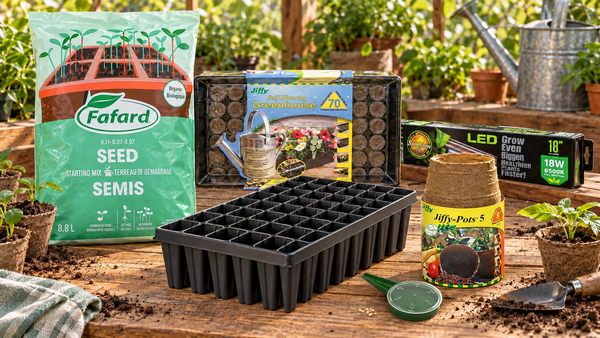
Seed-starting essentials

Click a product to build your selection.

Your selection

Total