Perennial vines with decorative foliage

Summer Shandy™ hop

Humulus lupulus ‘Sumner’

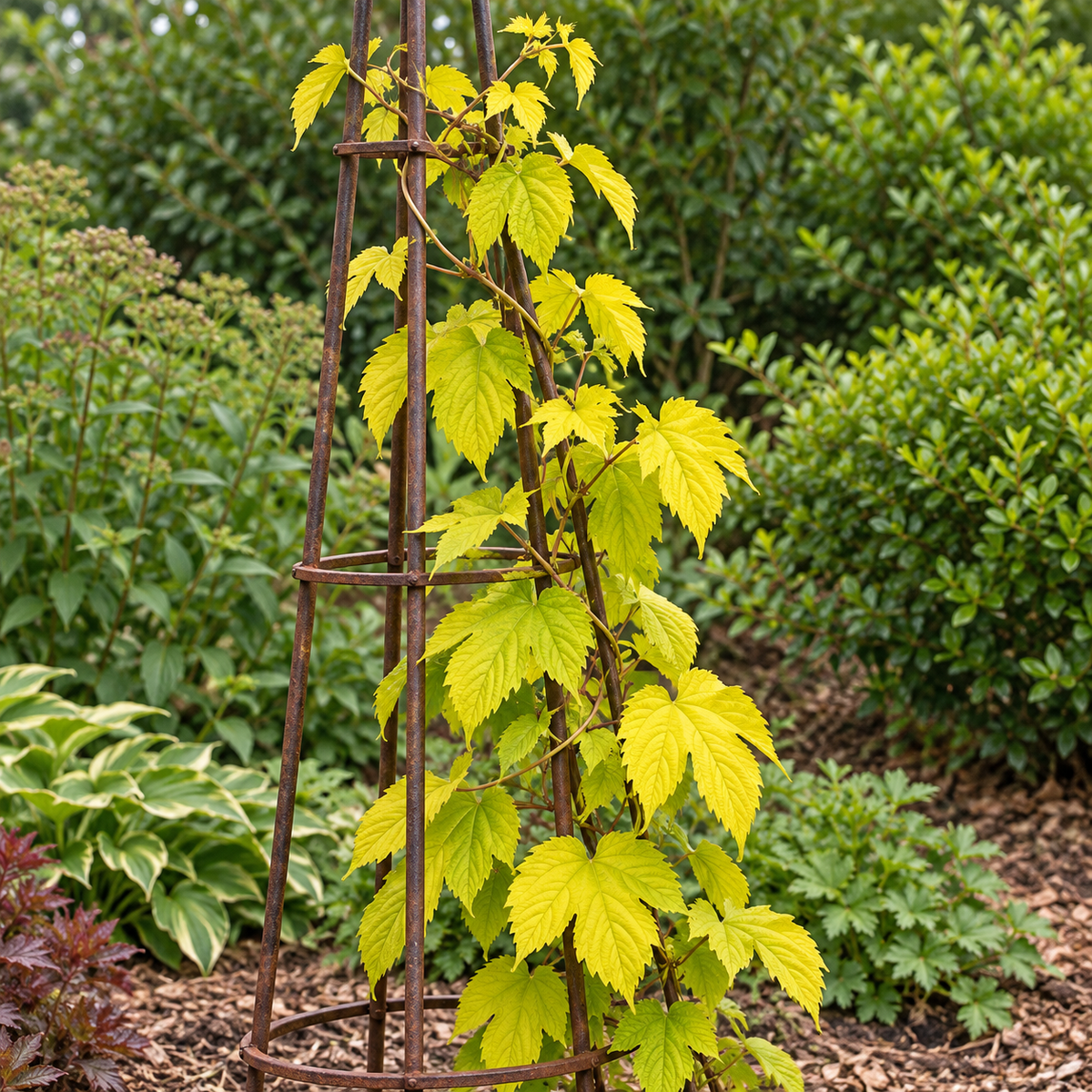
Summer Shandy™ is a female ornamental hop with a more compact habit than the species. Twining stems carry deeply lobed lime-green to golden-yellow foliage that brightens trellises, fences and pergolas. Seasonal growth generally reaches 1.5 to 3 m high and 45 to 60 cm wide. Small cone-like flowers may appear in July and August. This selection is intended for decoration rather than brewing. It prefers sun, fertile moist soil, a sturdy support and regular watering. Its usual hardiness range covers Zones 5 to 8, and dried stems are cut back after leaf drop. For best results, guide new stems regularly onto a sturdy support and keep the soil evenly moist. This Humulus Summer Shandy selection is a distinctive Summer Shandy hop plant for ornamental gardens.
Share

Planting essentials

Click a product to build your selection.

Your selection

Total

Exposure
Full sun to light partial shade
Life cycle
Vivace

Discover the plant

Common nameSummer Shandy™ hop
FamilyCannabaceae
GenusHumulus
Specieslupulus
CultivarSumner
TypeOrnamental perennial vine
Botanical nameHumulus lupulus ‘Sumner’

Summer Shandy™ Hop (Humulus lupulus ‘Sumner’) is an ornamental perennial vine selected for luminous foliage and a relatively compact habit. Deeply lobed leaves range from lime green to golden yellow and remain colourful throughout the growing season. Twining stems can reach approximately 1.5 to 3 m high while spreading only 45 to 60 cm when trained vertically. Female cone-like flower clusters may appear during July and August and have a moderately pleasant fragrance. This cultivar was selected for ornamental garden performance rather than brewing, so its strongest value comes from foliage colour, fast seasonal coverage and manageable proportions.

Grow Summer Shandy™ in full sun or light partial shade against a trellis, open fence, pergola or sturdy wires. Fertile, moist yet well-drained soil promotes dense growth and strong golden colouring. Water regularly during establishment and hot periods, but never leave roots in saturated ground. Stems naturally twine around narrow supports, although several soft ties help direct young shoots at the beginning of the season. Provide reasonable air circulation and inspect leaves for aphids or other changes so problems can be addressed promptly. A sunny exposure generally produces the brightest colour, while some afternoon protection can help in unusually hot sites.

In late fall, allow foliage to yellow and then cut dried stems close to the ground after leaf drop. The permanent crown returns in spring and quickly sends up fresh shoots. This cultivar is generally hardy in Zones 5 to 8 and tolerates approximately -29 °C when established in freely draining soil. It can also grow in a large container fitted with a tall support, although container plants require more frequent watering and suitable winter protection. Keep every fresh or dried hop part away from dogs because ingestion can cause severe poisoning, including dangerous overheating, panting and seizures.

Summer Shandy™ Hop (<em>Humulus lupulus</em> ‘Sumner’)

Planting guide

From planting to establishment.

Best planting time Spring or early fall
Propagation Licensed softwood cuttings
Growing method
Select a sunny or lightly shaded position and install a trellis, wires or open fence capable of supporting several metres of seasonal growth before planting. Loosen the soil and incorporate mature compost when fertility is low while preserving fast drainage. Set the root ball at the same level it occupied in its container and allow 45 to 60 cm of width. Water deeply after planting, then maintain consistent moisture during establishment. As young stems lengthen, gently wind them around the support or secure them with soft ties. Avoid tight fasteners that could damage expanding stems. Inspect leaves for aphids and remove badly damaged growth promptly. Moderate spring feeding supports renewal, but excessive nitrogen may encourage soft growth. In fall, allow leaves to yellow and then cut dried stems close to the ground. Keep every hop clipping away from dogs. The permanent crown remains below and produces fast new shoots the following spring. For best results, guide new stems regularly onto a sturdy support and keep the soil evenly moist. Its luminous foliage creates strong contrast without requiring the dimensions of an especially vigorous common hop. Regular observation supports prompt care while preserving a dense, healthy and decorative plant throughout the growing season.

Soil and care

The right care,at the right time.

Watering

Keep the soil evenly moist during active growth. Water deeply when the upper layer begins to dry, especially during establishment, hot weather and container culture. Direct water toward the root zone rather than the foliage. Avoid prolonged saturation because it reduces available oxygen and weakens the crown. Light mulch limits evaporation. Water needs decline after stems die back in fall and the plant becomes dormant, although containers should not remain completely dry for extended winter periods.

Soil type

Summer Shandy™ prefers fertile, moist and well-drained soil. Compost-enriched loam holds enough water to support rapid growth without suffocating roots. The plant adapts to several textures when excess water drains freely. Avoid permanently saturated sites and soil that dries completely for long periods. Organic mulch placed around the crown helps stabilize moisture without covering emerging shoots directly. Good structure is particularly important where winter thaws could otherwise leave the crown standing in water.

Fertilization

In spring, add a thin layer of mature compost around the crown or apply balanced fertilizer according to soil needs. Moderate nutrition supports rapid growth and foliage colour. Avoid excessive nitrogen, which produces soft stems more vulnerable to aphids and collapse. In containers, use controlled-release fertilizer according to its label and always water after a granular application. Stop heavy feeding late in the season so growth can mature before cold weather.

Seasonal care

In early spring, remove old stems if they were not cut in fall and confirm that the support remains sturdy. Add compost around the crown without covering emerging buds. When fresh shoots reach the structure, guide them gently in the desired direction and use only soft ties. During spring and summer, water when the surface begins to dry and inspect carefully for aphids beneath the leaves. Stronger golden colour usually develops in sun, while light late-day shade can reduce stress in exceptionally hot sites. Remove weak, broken or poorly positioned stems to improve air circulation. Female flower clusters may appear during July and August; they are decorative, although this selection is not marketed for brewing. After the first frosts, allow foliage to yellow and stems to dry. Cut all top growth close to the ground using a clean tool. Collect cones and debris carefully and keep them away from dogs. In borderline climates or containers, protect the crown from repeated freezing and thawing while maintaining dependable winter drainage. For best results, guide new stems regularly onto a sturdy support and keep the soil evenly moist. Its luminous foliage creates strong contrast without requiring the dimensions of an especially vigorous common hop. Regular observation supports prompt care while preserving a dense, healthy and decorative plant throughout the growing season. For best results, guide new stems regularly onto a sturdy support and keep the soil evenly moist.

Container growing

A garden,within reach.

Choose a container at least 45 to 60 cm wide and deep with generous drainage holes. Install a tall, firmly anchored trellis from the beginning because stems can grow several metres in one season. Use rich but airy potting mix and keep the root ball at its original level. Water thoroughly, then check moisture often because a sunny container dries much faster than open ground. Add light mulch without covering the crown. Controlled-release spring fertilizer can support growth when used according to its label. Guide new stems and trim those moving away from the support. In fall, allow foliage to yellow and then cut stems back. Move the pot to a sheltered position or insulate it because container roots receive less cold protection. Prevent water from collecting during winter thaws. In spring, renew the upper potting-mix layer and inspect root condition. Keep every piece of hop debris away from dogs and clean the surrounding surface after pruning. For best results, guide new stems regularly onto a sturdy support and keep the soil evenly moist. Its luminous foliage creates strong contrast without requiring the dimensions of an especially vigorous common hop.
Summer Shandy™ Hop (Humulus lupulus ‘Sumner’)

Bloom and dimensions

Its place,in your garden.

Mature height

6 m (20 ft)

Width / spread

2 m (7 ft)

Flower color

Yellowish green

Foliage color

Lime green to golden yellow

Foliage type

Deciduous, deeply lobed

Growth rate

Fast

Growth habit

Climbing, twining and relatively compact

Fragrance

Moderately pleasant

Bloom period

Summer Shandy™ is a female selection that can produce terminal cone-like flower clusters during July and August. Each cluster contains several flowers and may persist for approximately three to four weeks. Their primary value is decorative beside the golden foliage. A moderately pleasant fragrance may be noticeable. Seed or fruit development was not observed in the patented cultivar description, and the plant was selected for ornamental performance rather than brewing qualities or commercial cone production.

Fruiting

Decorative female cones; seed not observed
Summer Shandy™ Hop (Humulus lupulus ‘Sumner’)

Garden associations

In goodcompany.

Companion plants

Pair Summer Shandy™ golden foliage with blue or purple perennials such as salvias, catmints, hardy geraniums and coneflowers, positioned far enough from the crown to limit competition. Compact grasses and dark-green conifers also strengthen contrast. Choose partners that appreciate moist yet well-drained soil. Keep the base open for watering and pruning, and redirect stems before they twine around neighbouring plants. Low companions should not block air movement or hide emerging spring shoots. For best results, guide new stems regularly onto a sturdy support and keep the soil evenly moist.

Frequently asked questions

Your questions,answered.

How large does Summer Shandy™ hop grow?
Summer Shandy™ generally reaches 1.5 to 3 m high when trained onto a support and spreads approximately 45 to 60 cm. These dimensions are more compact than those of many common hops, although the plant remains a fast vine requiring a trellis, wires or a sturdy open fence. Final height depends on light, fertility, moisture and support length. Annual stems die after frost and return from the permanent crown in spring. Light summer trimming can redirect shoots that move beyond the intended space without removing the entire screen. Provide enough vertical room before planting so repeated severe cutting is unnecessary.
Can Summer Shandy™ hop be used for brewing?
Summer Shandy™ was selected and marketed for ornamental performance, especially lime-green to golden-yellow foliage and a relatively compact habit. Cultivar documents do not present it as a brewing variety or provide the alpha-acid, aroma and yield information needed for that purpose. Choose a recognized brewing hop cultivar when beer production is the main objective. Summer Shandy™ female cones can instead be appreciated as a decorative feature during July and August. Keep them away from dogs, along with every other fresh or dried plant part. Ornamental selection and attractive cones do not automatically establish suitability, flavour or safety for brewing. For best results, guide new stems regularly onto a sturdy support and keep the soil evenly moist.
Is Summer Shandy™ hop dangerous to dogs?
Yes. Hops can cause severe poisoning in dogs. Ingestion of cones, leaves, stems or fresh or dried waste may lead to intense panting, dangerously high body temperature, seizures and sometimes death. Grow the plant in an area dogs cannot access and collect all debris after pruning. Never place hop material in compost available to an animal. If ingestion is suspected, contact a veterinarian or animal poison-control service immediately; do not wait for symptoms and do not attempt a home remedy. Explain that the plant is Humulus lupulus and, when possible, report the approximate amount and time of exposure. For best results, guide new stems regularly onto a sturdy support and keep the soil evenly moist.
How can Summer Shandy™ retain its golden foliage?
A sunny exposure generally produces the strongest golden-yellow colour. In an exceptionally hot site, light late-day shade can reduce stress without removing all brightness. Keep soil evenly moist because prolonged drought may brown leaf edges. Fertile, freely draining soil and moderate spring feeding support regular growth. Avoid excessive nitrogen, which encourages soft tissue, and inspect beneath leaves for aphids. Colour can naturally range from lime green to yellow according to the season, light level and leaf age. Older shaded leaves may remain greener than young growth receiving direct light, so guide stems evenly across the support instead of allowing a dense tangled mass.
Should Summer Shandy™ be cut back every year?
Yes. The above-ground stems of this perennial hop naturally die after frost, while the crown and roots survive below the soil. Wait until leaves yellow and stems dry, then cut all growth close to the ground using a clean tool. This releases the support, removes debris and prepares for fresh shoots in spring. Collect cones, leaves and stems and keep them away from dogs. In borderline climates, mulch placed around the crown can reduce temperature swings, but it must not trap water or bury the centre deeply. Inspect the trellis at the same time and repair any weak anchors before rapid spring growth begins.

Wildlife and pets

Life,around your plants.

Reported toxicity

Yes

Supporting wildlife

Female cone-like flowers and their fragrance may interest certain insects, but Summer Shandy™ is grown mainly for foliage. This selection is not a major resource for birds, hummingbirds or butterflies. Nectar-rich companion flowers provide stronger wildlife support while highlighting its golden colour and preserving clear access around the crown.