


Compact reblooming hydrangea for borders and containers
'Let's Dance Sky View' Hydrangea
Hydrangea macrophylla × serrata 'Let's Dance Sky View'
Products and available quantities may vary between Brossard and Laval. To check a store’s inventory, please contact us directly.
Even better: visit us in store to discover the full selection available!
- Exposure
- Full sun to partial shade
- Hardiness
- Zones 4 to 9
Discover the plant
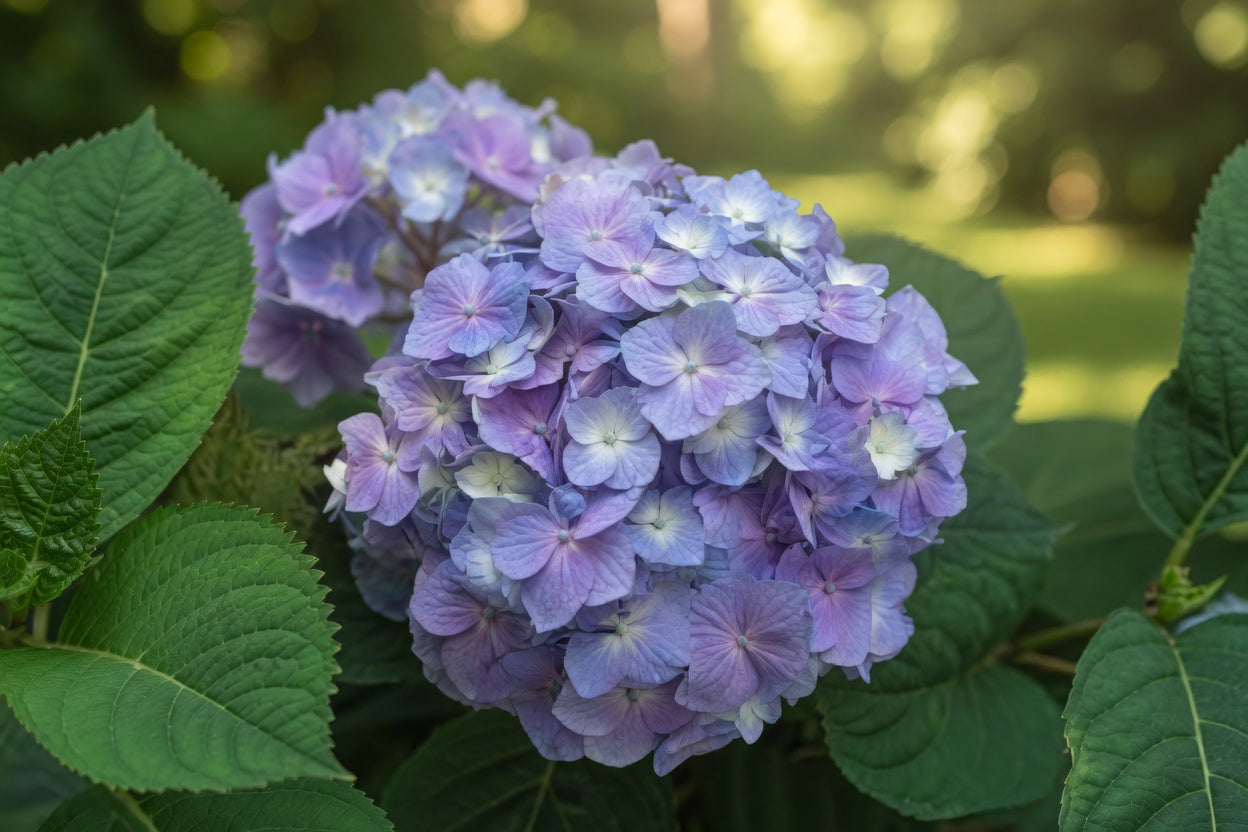
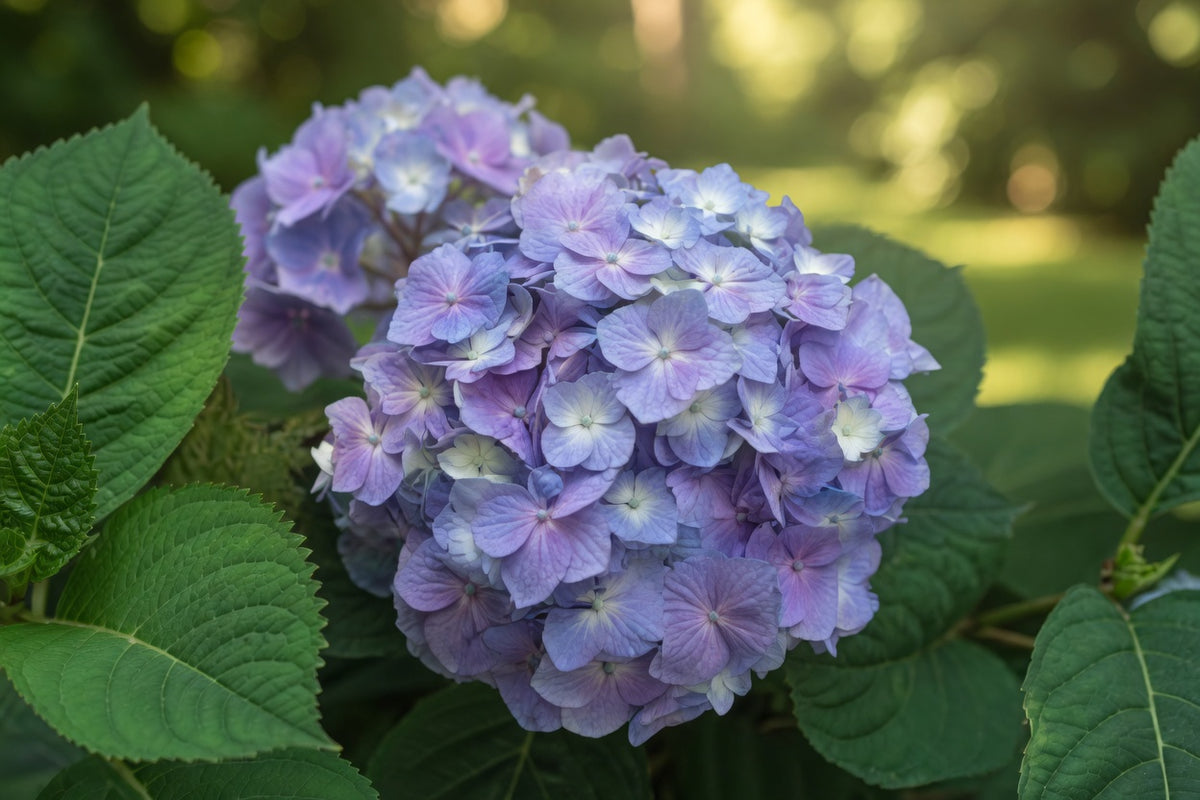
Let's Dance Sky View hydrangea (Hydrangea macrophylla × serrata 'Let's Dance Sky View') is a compact deciduous shrub with a rounded habit, selected for reblooming performance and improved reliability in colder climates. It produces large mophead flower clusters whose colour ranges from pink to blue depending on soil chemistry, with sky-blue to lavender-blue tones especially desirable in acidic conditions. Deep green foliage provides an attractive background throughout the growing season. Plants reach approximately 60 to 90 cm (2 to 3 ft) tall and 60 to 120 cm (2 to 4 ft) wide. Hardy in Zones 4 to 9, this cultivar flowers on both old and new wood, helping extend its bloom season from summer into fall.
Full sun to partial shade suits Let's Dance Sky View hydrangea; in cooler regions, increased sun generally supports abundant flowering, while protection from intense afternoon sun is useful in warmer sites. Plant it in organically rich, evenly moist, well-drained soil and maintain consistent moisture without prolonged waterlogging. Organic mulch helps conserve moisture and moderate temperatures around the root zone. Moderate spring fertilization is usually sufficient. Pruning should remain minimal because this cultivar flowers on both old and new wood; remove only dead or damaged stems when needed. Its Zone 4 hardiness makes it suitable for many areas of Quebec and Canada when planted in an appropriate site protected from severe exposure and supplied with adequate moisture.
Its compact size makes this reblooming hydrangea easy to use in mixed borders, foundation plantings, shrub beds, and large containers. The flowers can also be harvested fresh or dried for decorative arrangements. In garden combinations, it pairs effectively with hostas, ferns, heucheras, astilbes, and other perennials that appreciate evenly moist soil and filtered light. Flower clusters may be visited by various insects, although their value to pollinators depends on the proportion of fertile florets present. For a cohesive design, repeat several plants along a border or combine their blue or pink flowers with silver, purple, or fresh green foliage. Hydrangeas contain compounds that make them toxic if ingested, so this ornamental shrub should not be treated as an edible plant.

Planting guide
From planting to establishment.
Soil and care
The right care,at the right time.
Soil pH
Minimum temperature
Care level
Watering
Soil type
Fertilization
Moisture
Seasonal care
Container growing
A garden,within reach.
Recommended pot size
Bloom and dimensions
Its place,in your garden.
Mature height
Width / spread
Flower color
Foliage color
Foliage type
Growth rate
Growth habit
Bloom period
Fruiting
Garden associations
In goodcompany.
Companion plants
Plants to avoid
Frequently asked questions
Your questions,answered.
How large does Let's Dance Sky View hydrangea grow?
Does Let's Dance Sky View hydrangea prefer sun or shade?
Why do Let's Dance Sky View flowers change colour?
Should Let's Dance Sky View hydrangea be pruned every year?
Can Let's Dance Sky View hydrangea be grown in a container in Quebec?
Wildlife and pets