

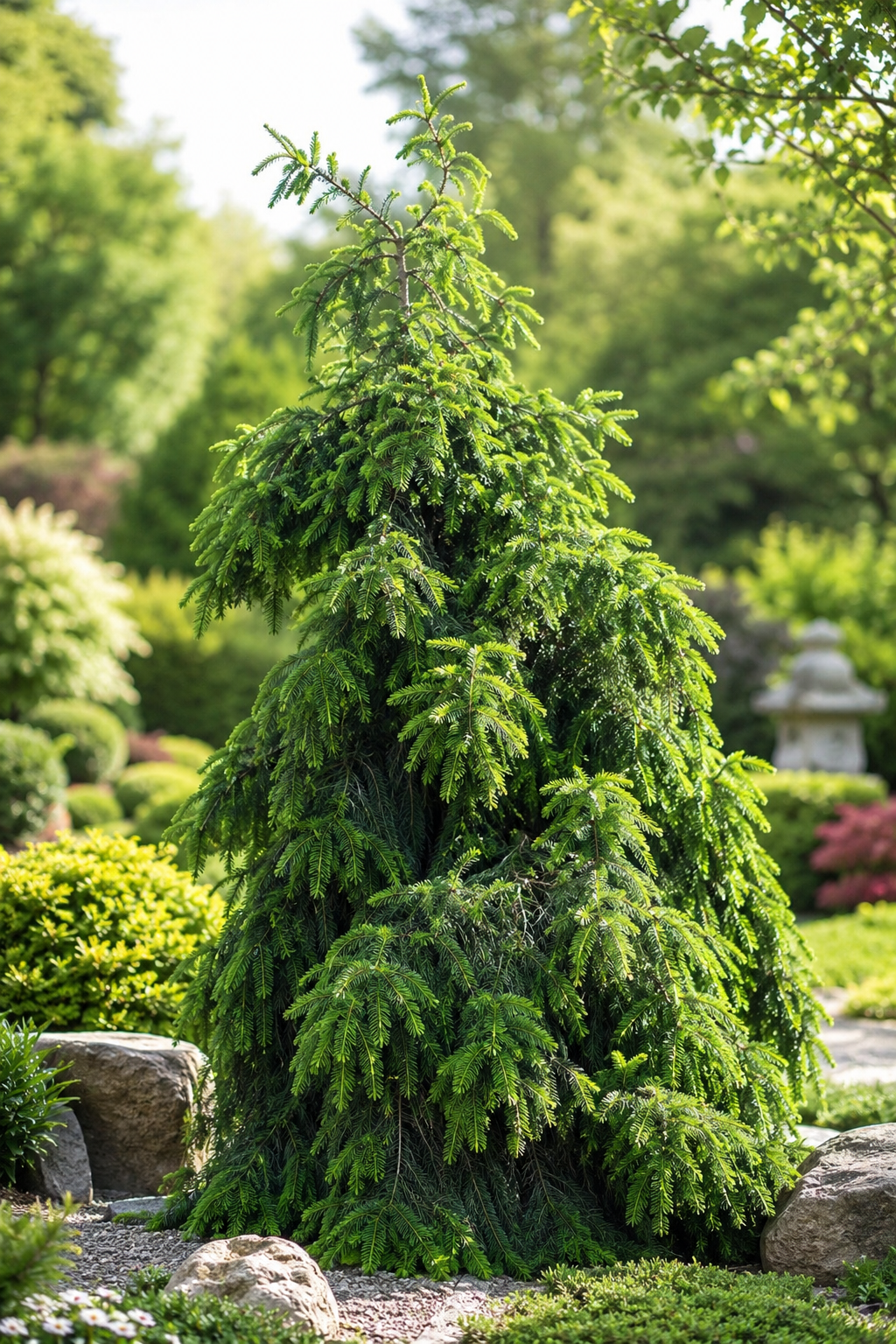
Under suitable conditions, this cultivar can reach approximately 7.5 m tall and 4.5 m wide. Its outline remains irregular because the twisting branches spiral downward around a central leader. Final dimensions vary with climate, soil conditions, available space, and any selective staking or shaping performed while the tree is young.
Sale
Sold out

Ornamental conifer
Pinaceae
Green Spiral European Silver Fir — Abies alba 'Green Spiral'
Abies alba 'Green Spiral'
An evergreen conifer with an upright, weeping habit and twisting branches that spiral around a strong central leader. Its glossy dark green foliage and sculptural silhouette create a remarkable year-round garden focal point.
Exposure
Full sun to partial shade
Hardiness
Zone 4
Difficulty level
Easy to moderate
Discover the plant
Family
Pinaceae
Type
Ornamental conifer
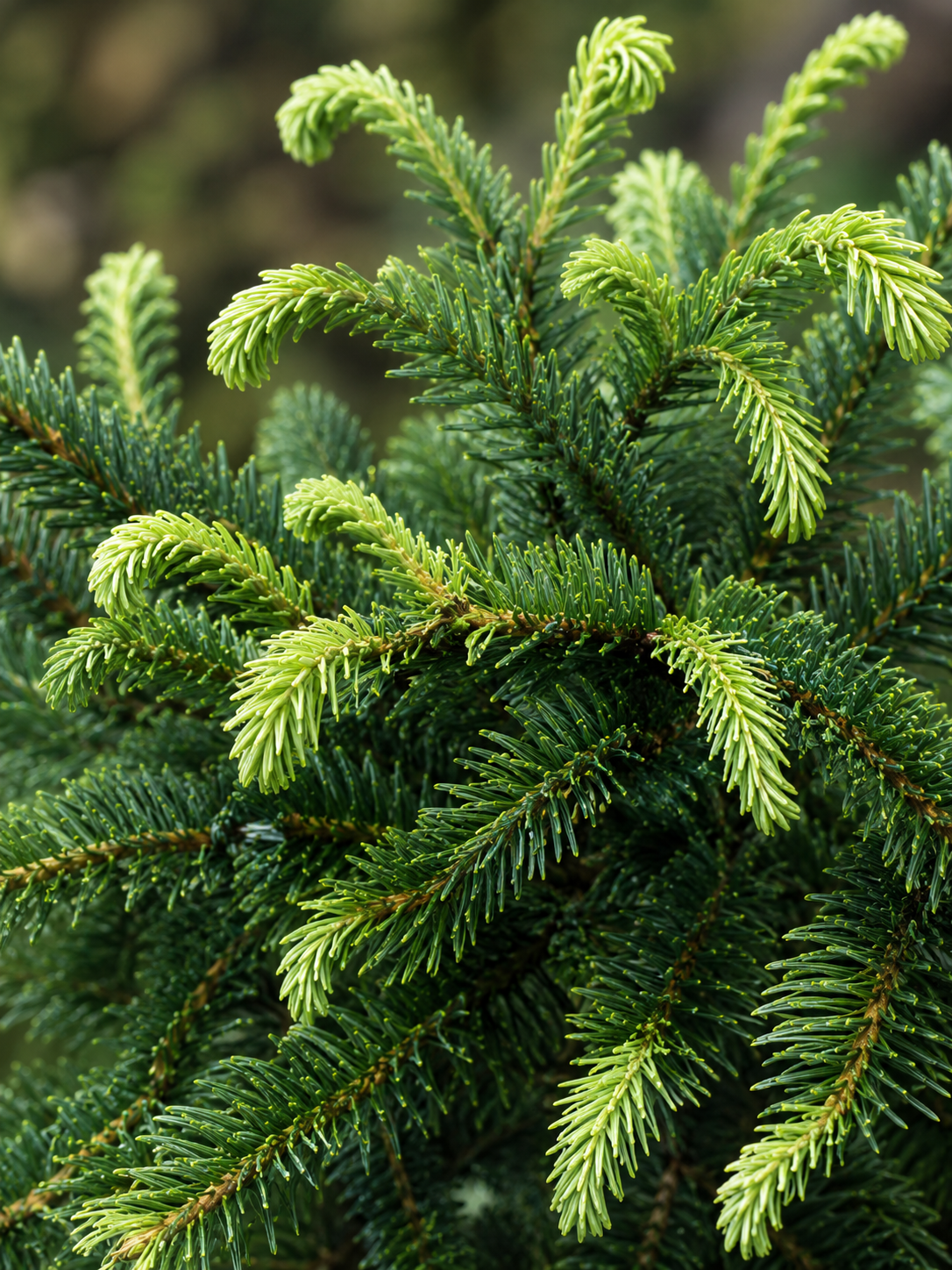
Green Spiral European silver fir (Abies alba 'Green Spiral') is a distinctive evergreen conifer valued for its upright, weeping, and irregular habit. Twisting branches spiral outward and downward around a strong central leader, producing an architectural silhouette that becomes increasingly expressive with age. Its short, dense needles are glossy dark green above and paler beneath, creating subtle silvery highlights whenever the branches move. Hardy to Zone 4, this fir provides year-round colour, structure, and visual interest. Its moderate growth and unusual branching pattern make it a durable specimen tree for Canadian landscapes where a bold vertical accent is desired without the rigid symmetry of a conventional conifer.
Plant this European silver fir in full sun or partial shade, preferably where it is sheltered from drying winds and excessive reflected heat. It performs best in fertile, consistently moist, slightly acidic to neutral soil with excellent drainage. Water deeply and regularly throughout the first growing season and during prolonged hot or dry weather, while avoiding saturated conditions around the roots. A layer of organic mulch helps maintain even soil moisture and moderates root-zone temperatures. Routine pruning is unnecessary; remove only dead, damaged, or poorly positioned branches. Light selective shaping or staking may be used when needed to guide the leader while retaining the cultivar’s naturally twisting form.
With its spiralling, cascading branches, Abies alba 'Green Spiral' makes a dramatic focal point near an entrance, in a structured border, a conifer collection, or a contemporary landscape. It can also add height to a large rock garden or provide striking contrast beside rounded evergreens, blue-toned junipers, heathers, dwarf rhododendrons, ferns, heucheras, and ornamental grasses. The evergreen foliage supplies dependable colour, texture, and limited shelter throughout the seasons, although this cultivar is not primarily selected as a pollinator plant. Allow generous room around the tree so its descending lateral branches can develop freely and display their distinctive sculptural character without crowding nearby plants.

Planting guide
From planting to establishment.
Spacing / density
Space 3.5 to 4.5 m apart
Best planting time
Spring or early fall
Propagation
Grafting
Growing method
Dig a planting hole twice as wide as the root ball but no deeper. Position the root flare at soil level, backfill with the existing soil, adding a modest amount of compost only when needed, and water thoroughly. Apply organic mulch without piling it against the trunk. Keep the soil evenly moist while roots establish, and stake only on windy sites or when the central leader requires guidance. Avoid compacted, waterlogged ground and locations that experience prolonged drought.
Soil and care
The right conditions.
Exposure
Full sun to partial shade
Soil pH
Slightly acidic to neutral
Hardiness zone
Zone 4
Minimum temperature
Approximately -34°C
Watering
Moderate to regular; keep soil moist but not waterlogged
Soil type
Fertile, moist, and well-drained
Fertilization
Light compost or conifer fertilizer in spring, only when needed
Seasonal care
In spring, inspect the tree for winter injury and remove only dead, broken, or diseased growth. Apply a thin layer of compost when the soil is poor, then refresh the mulch without piling it against the trunk. During summer, water deeply whenever rainfall is inadequate, especially through the first few years and during hot weather. Monitor drainage carefully and prevent prolonged saturation. In fall, continue watering until freeze-up when conditions remain dry. Routine pruning is unnecessary; occasional selective shaping or temporary staking can guide the central leader and preserve the spiralling habit without forcing the tree into a uniform shape that would diminish its naturally irregular character.
Container growing
A controlled environment.
Recommended pot size
Minimum 75 to 115 L, deep and frost-resistant
Possible in a large container for several years, especially to create an original vertical effect in a small space. Use a deep pot with excellent drainage and fresh, slightly acidic to neutral soil, suitable for conifers. Keep the substrate uniformly moist, without overwatering, and protect the container from intense freeze-thaw cycles in winter.
Bloom and dimensions
The complete profile.
Flower color
Inconspicuous, yellow to reddish
Foliage color
Glossy dark green with silvery undersides
Foliage type
Evergreen
Growth rate
Moderate, approximately 38 cm or more per year
Bloom period
Spring; inconspicuous reproductive structures
Fruiting
Upright cones may develop on mature trees
Maximum height
7.5 m (25 ft)
Maximum width
4.5 m (15 ft)
Garden associations
What to plant with it.
Good companions
Blue-toned junipers, dwarf spruces, compact pines, heathers, dwarf rhododendrons, ferns, heucheras, and ornamental grasses
Avoid planting with
Plants requiring very dry, waterlogged, or heavily compacted soil
Ornamental specimen and vertical accent
Frequently asked questions
Everything toknow.
Routine pruning is unnecessary. Remove only dead, broken, or diseased branches. Light selective pruning may correct a poorly positioned shoot, while temporary staking can help guide the leader. Avoid severe trimming or shearing, which would diminish the naturally irregular, spiralling habit that gives this cultivar its distinctive ornamental value.
It prefers fertile, consistently moist, slightly acidic to neutral soil with good drainage. The root zone should remain evenly moist without staying saturated. Organic mulch helps stabilize moisture and soil temperature. Avoid extremely dry, compacted locations and low areas where water collects for extended periods after rain or snowmelt.
It can be grown for several years in a large, deep, stable container with excellent drainage. Moisture must be monitored carefully, and the roots need protection from repeated freeze-thaw cycles. Over the long term, its mature size and expanding root system generally make planting in the ground the better option.
Choose a full-sun or partially shaded location where the sculptural silhouette can be viewed from several angles. It is particularly effective as a specimen near an entrance, in a structured border, or within a conifer garden. Allow enough open space for the cascading branches to develop freely without crowding.
Its strengths, naturally.

Not recommended for pets
Pets