Decorative foliage perennials for edging

Lady’s mantle

Alchemilla mollis

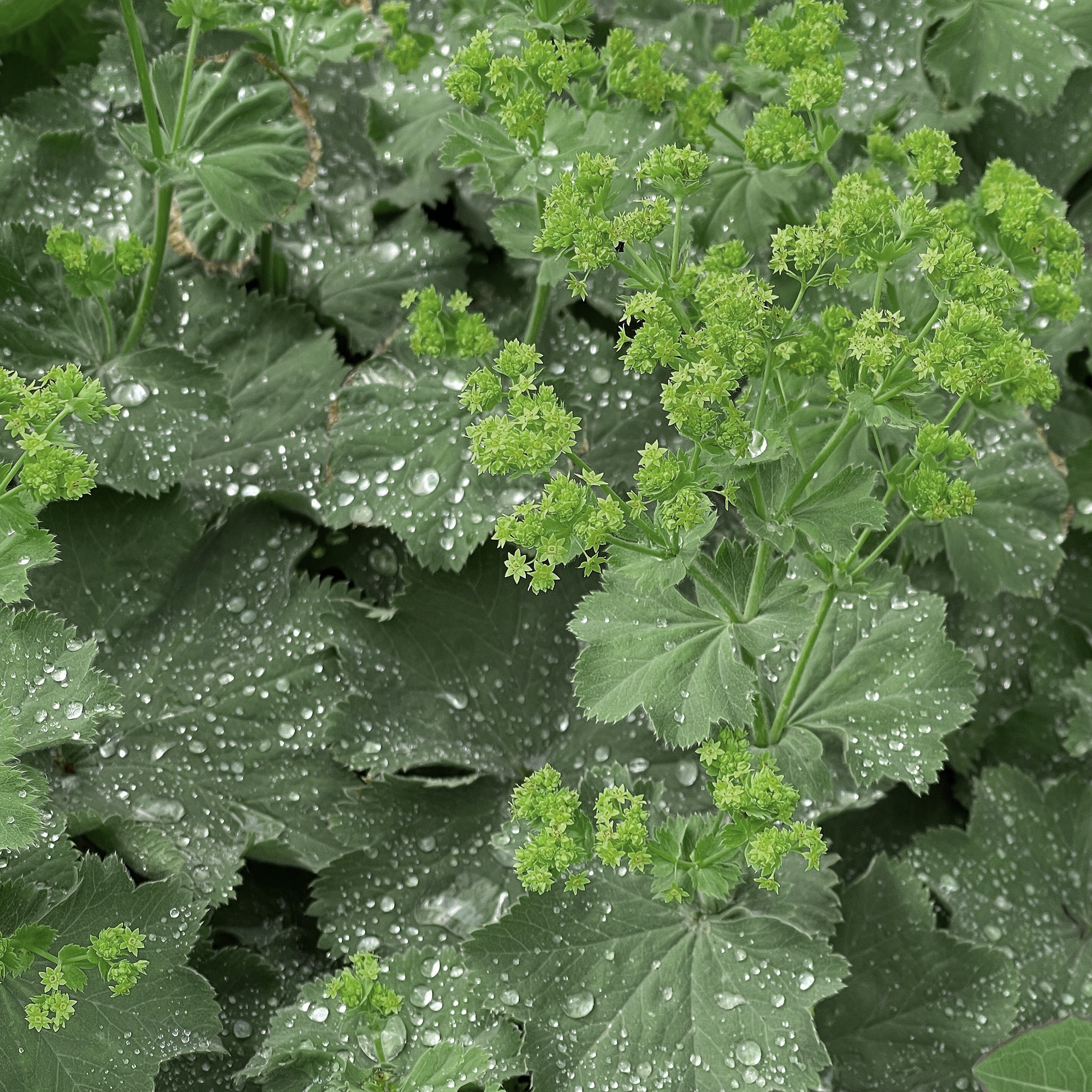
Lady’s mantle forms a rounded clump of soft, pleated light-green leaves that hold rain and dew in bright beads. Tiny chartreuse-yellow flowers appear in airy clouds from June to July. The plant reaches approximately 30 to 45 cm tall and 45 to 60 cm wide. Hardy in Zones 3 to 8, it prefers moist, drained soil in gentle sun or partial shade. It suits edging, underplanting and cottage gardens, but should be cut back after flowering to limit its many volunteer seedlings. Fresh foliage often appears soon after this treatment. For best results, maintain regular moisture without leaving the soil waterlogged.

Format

9 cm (3.5 in) pot
Share
Quantity
9 cm (3.5 in) pot
Exposure
Gentle sun, partial shade or filtered shade
Life cycle
Hardy perennial
Hardiness
Zones 3 to 8

Discover the plant

Common nameLady’s mantle
FamilyRosaceae
GenusAlchemilla
Speciesmollis
TypeHerbaceous ground-cover perennial
Botanical nameAlchemilla mollis
Reproducible seedsYes

Lady’s Mantle (Alchemilla mollis) is a hardy perennial in the rose family, native from the Carpathians to the Caucasus. Soft light-green leaves are rounded and gently pleated, with nine to eleven shallow lobes and toothed margins. Their downy surface holds rain and dew in bright beads, an effect clearly visible in the product photograph. During June and July, tiny yellow-green flowers form broad, airy clouds above the dense mounded foliage. This lady's mantle plant brings quiet texture and luminous colour without overwhelming nearby flowers. The contrast between jewelled foliage and airy bloom adds depth to early-summer borders.

Grow lady’s mantle in gentle sun, partial shade or filtered shade in moist, freely draining soil. It accepts clay, loam, sand and a wide pH range, provided it is not exposed to prolonged drought or standing water. Water regularly while roots establish and whenever the surface begins to dry. A thin compost layer in spring is generally sufficient. Hardy in Zones 3 to 8, this deciduous perennial disappears during winter and returns vigorously in spring. Afternoon shade helps preserve attractive foliage in hot, dry locations. Morning light also makes the water beads especially visible without exposing the mound to intense afternoon heat.

Use Alchemilla mollis as edging, beneath roses or shrubs, beside a path or in a cottage-style planting. Chartreuse flowers complement roses and blue, violet, pink or white perennials, while the rounded leaves create a soft ground-cover effect. After flowering, cut back spent stems and tired foliage to produce a fresh rosette and limit volunteer seedlings. This species is sold as an ornamental plant and should not be confused with lady’s mantle species traditionally prepared as herbal products. Its flowers can also add a light filler texture to seasonal bouquets. Repeat several plants to form a calm, continuous ribbon through mixed perennial beds.

Alchémille molle — Alchemilla mollis

Planting guide

From planting to establishment.

Spacing / density 45 to 60 cm (18 to 24 in)
Best planting time Spring or early fall
Propagation Division in spring or fall; seed in spring
Growing method
Plant lady’s mantle in spring or early fall in moist soil that drains freely. Dig a hole slightly wider than the root ball and keep the crown level with the ground. Space plants 45 to 60 cm apart because each mound broadens with age. Water deeply after planting and maintain regular moisture while roots establish. Add a thin compost layer in spring without covering the centre. During summer, water whenever the surface dries, especially in sun. After the June or July display, cut inflorescences and tired foliage close to the base. A clean new rosette develops quickly and unwanted seedlings are reduced. Remove dead leaves in early spring before growth resumes. Avoid constantly waterlogged soil and very dry positions exposed to scorching sun. Division can rejuvenate an older clump when its centre begins to thin. For best results, maintain regular moisture without leaving the soil waterlogged. Cutting back after flowering renews the foliage and limits unwanted seedlings. This hardy perennial structures borders easily in gentle sun or partial shade. Its velvety leaves look especially decorative after rain or morning dew. For best results, maintain regular moisture without leaving the soil waterlogged.

Soil and care

The right care,at the right time.

Soil pH

Acidic, neutral or alkaline; approximately 5.5 to 7.5

Care level

Easy to moderate

Watering

Water regularly during establishment so the entire root ball stays moist without becoming saturated. Afterwards, check the soil surface and water deeply when it begins to dry. Lady’s mantle is not truly tolerant of prolonged drought, and water stress browns the leaves and reduces their quality. Containers and sunny locations require more frequent attention. Reduce watering after dormancy while preventing standing water around the crown. Mulch can conserve moisture, but keep it from burying the centre.

Soil type

Lady’s mantle accepts clay, loam, sand and chalky soil when some moisture is retained. The ideal ground is moderately fertile, rich in organic matter and freely draining. In full sun, moist soil protects foliage quality. In shade, avoid persistent standing water instead. Add compost to very poor soil and loosen compacted ground before planting. The species tolerates a broad pH range, so drainage and moisture balance matter more than exact acidity.

Fertilization

In spring, spread a thin layer of mature compost around the clump without covering its crown. In ordinary soil, this application is generally sufficient for the season. A low rate of balanced fertilizer can support container plants or very poor ground. Avoid high-nitrogen feeding, which produces soft foliage and excessive growth. After the summer cutback, water the plant rather than adding a heavy fertilizer dose. Stop feeding as dormancy approaches.

Moisture

Average; moist soil

Seasonal care

In early spring, remove dead leaves before the new rosette unfolds. Loosen the surface gently and add a thin compost layer without covering the centre. Divide older clumps that have begun thinning, then replant sections at the same depth. During active growth, keep the soil moist and monitor plants in sun more closely. Velvety leaves generally resist slugs and snails, but constantly wet, crowded foliage can lose quality. During June and July, enjoy the chartreuse inflorescences or cut several stems for bouquets. As flowers begin browning, remove them before seed matures fully. Tired foliage can also be cut close to the base, and a clean new rosette often appears quickly. This treatment greatly limits volunteer seedlings, which can become numerous in favourable ground. Continue watering through dry periods because the species dislikes prolonged drought. In fall, leave healthy leaves to feed the crown until hard frost. Remove only growth that has died completely. Thick winter mulch is unnecessary for an established Zone 3 plant, although light protection can shelter a recent planting after the ground freezes. Keep the centre open and prevent standing water during thaws. For best results, maintain regular moisture without leaving the soil waterlogged. Cutting back after flowering renews the foliage and limits unwanted seedlings. This hardy perennial structures borders easily in gentle sun or partial shade.

Container growing

A garden,within reach.

Recommended pot size
At least 30 to 35 cm (12 to 14 in) in diameter
Grow lady’s mantle in a container at least 30 to 35 cm wide with several drainage holes. Use a perennial potting mix that retains some moisture while allowing excess water to escape. Keep the crown level with the surface and choose morning sun, partial shade or filtered light. Water deeply whenever the top few centimetres begin drying; a container dries faster than garden soil, and lady’s mantle quickly loses foliage quality when kept too dry. Add a modest rate of slow-release fertilizer in spring. After flowering, cut back stems and tired leaves to renew the rosette and prevent seed formation. During winter, leave the pot outside in a sheltered position, move it beside a wall or group it with other containers. Drainage holes must remain open during thaws. A larger soil volume protects roots from rapid temperature changes. Avoid decorative covers without drainage and never leave a saucer filled with water. For best results, maintain regular moisture without leaving the soil waterlogged. Cutting back after flowering renews the foliage and limits unwanted seedlings. This hardy perennial structures borders easily in gentle sun or partial shade. Its velvety leaves look especially decorative after rain or morning dew.
Alchémille molle — Alchemilla mollis

Bloom and dimensions

Its place,in your garden.

Mature height

17.7 inches

Width / spread

23.62 inches

Flower color

Yellow-green to chartreuse

Foliage color

Light green to grey-green

Foliage type

Deciduous

Growth rate

Moderate

Growth habit

Dense, mounded, spreading and ground covering

Fragrance

No notable fragrance

Bloom period

Tiny petal-free yellow-green to chartreuse flowers are held in broad branched cymes above the foliage. They create an airy haze during June and July in Quebec and may remain attractive longer in mild climates. Stems provide a useful filler for fresh or dried bouquets. Cut them back after flowering to obtain fresh foliage and prevent abundant seed production. The flowers are subtle rather than individually showy.

Fruiting

Small brown achenes; abundant volunteer seedlings are possible

Harvest

June to August
Alchémille molle — Alchemilla mollis

Garden associations

In goodcompany.

Companion plants

Combine lady’s mantle with roses, hardy geraniums, hostas, heucheras, astilbes, ferns, irises, foxgloves, sages and small ornamental grasses. These plants provide complementary colour or form, and many appreciate moist soil. Position taller companions behind the low mound. These combinations reflect compatible growing conditions and design value; they do not guarantee protection from pests or diseases. Leave enough room to cut each clump back after flowering. For best results, maintain regular moisture without leaving the soil waterlogged. Cutting back after flowering renews the foliage and limits unwanted seedlings.

Plants to avoid

Avoid invasive plants, very dry sites and companions that keep the crown waterlogged.

Frequently asked questions

Your questions,answered.

Why do lady’s mantle leaves hold water?
Alchemilla mollis leaves are covered with fine hairs that make their surface difficult to wet evenly. Rain and dew therefore collect in rounded beads instead of forming a flat film. The pleated leaf shape also guides water toward the centre, where it remains visible and reflects light. This natural effect does not mean the plant has received too much water. Whenever possible, irrigate the soil at the base rather than the foliage, especially in a shaded position where leaves dry slowly. Consistent soil moisture still matters during dry weather. For best results, maintain regular moisture without leaving the soil waterlogged.
Can lady’s mantle become invasive?
Yes. Lady’s mantle can produce many volunteer seedlings when soil and moisture suit it. Young plants often appear around the parent clump or between path joints. To keep the planting in place, remove every inflorescence as soon as it starts browning, before the small achenes mature. Tired foliage can be cut close to the base at the same time. A clean new rosette generally develops quickly. Pull unwanted seedlings while they are young and easy to remove. Avoid placing material containing mature seed into ordinary garden compost, where some seed may survive. For best results, maintain regular moisture without leaving the soil waterlogged.
Is lady’s mantle edible?
This page concerns Alchemilla mollis sold as an ornamental plant. The common name lady’s mantle is also used in herbal traditions for other Alchemilla species, especially the broad Alchemilla vulgaris group, which creates easy confusion. The horticultural sources reviewed do not present Alchemilla mollis as a culinary herb, and clinical evidence for medicinal lady’s mantle products remains limited. Do not eat this plant or use it to prepare tea or a home treatment. Choose a properly identified food-grade product that is specifically intended for consumption instead. The ornamental plant’s role is foliage, flowers, edging and bouquet filler. For best results, maintain regular moisture without leaving the soil waterlogged.
How can the foliage stay fresh through summer?
Choose moist, freely draining soil and water deeply whenever the surface begins to dry. Lady’s mantle handles prolonged drought poorly, especially in full sun. Morning sun or partial shade protects the leaves more effectively during hot weather. When flowering ends and the mound looks tired, cut stems and old leaves close to the base. Water the soil afterwards without soaking the crown. A fresh rosette often appears quickly. A thin compost or mulch layer conserves moisture, but always keep the centre of the plant open. Container-grown plants require more frequent checks because their soil volume dries faster. For best results, maintain regular moisture without leaving the soil waterlogged.
Is lady’s mantle safe around pets?
No toxic effects are commonly reported for Alchemilla mollis in the horticultural sources reviewed, and the plant can generally be grown in a garden visited by pets. The ASPCA does not provide a species-specific entry for this plant, however. Non-toxic does not mean edible, and chewing a large quantity of plant material may cause digestive discomfort. Keep fertilizers and garden treatments out of reach as well. If a pet consumes many leaves or develops symptoms, contact a veterinarian and provide the botanical name Alchemilla mollis to support an accurate assessment. For best results, maintain regular moisture without leaving the soil waterlogged.

Wildlife and pets

Life,around your plants.

Supporting wildlife

Numerous small yellow-green flowers provide pollen and nectar for small insects and may attract butterflies. Their value is most visible when several plants flower together. Avoid insecticides on open inflorescences and combine lady’s mantle with other perennials that offer flowers before and after its June-to-July display. Individual wildlife visits vary by location.