


Fine Herbs
Betony
Products and available quantities may vary between Brossard and Laval. To check a store’s inventory, please contact us directly.
Even better: visit us in store to discover the full selection available!
- Exposure
- Full sun to partial shade
- Hardiness
- Zone 4
Discover the plant
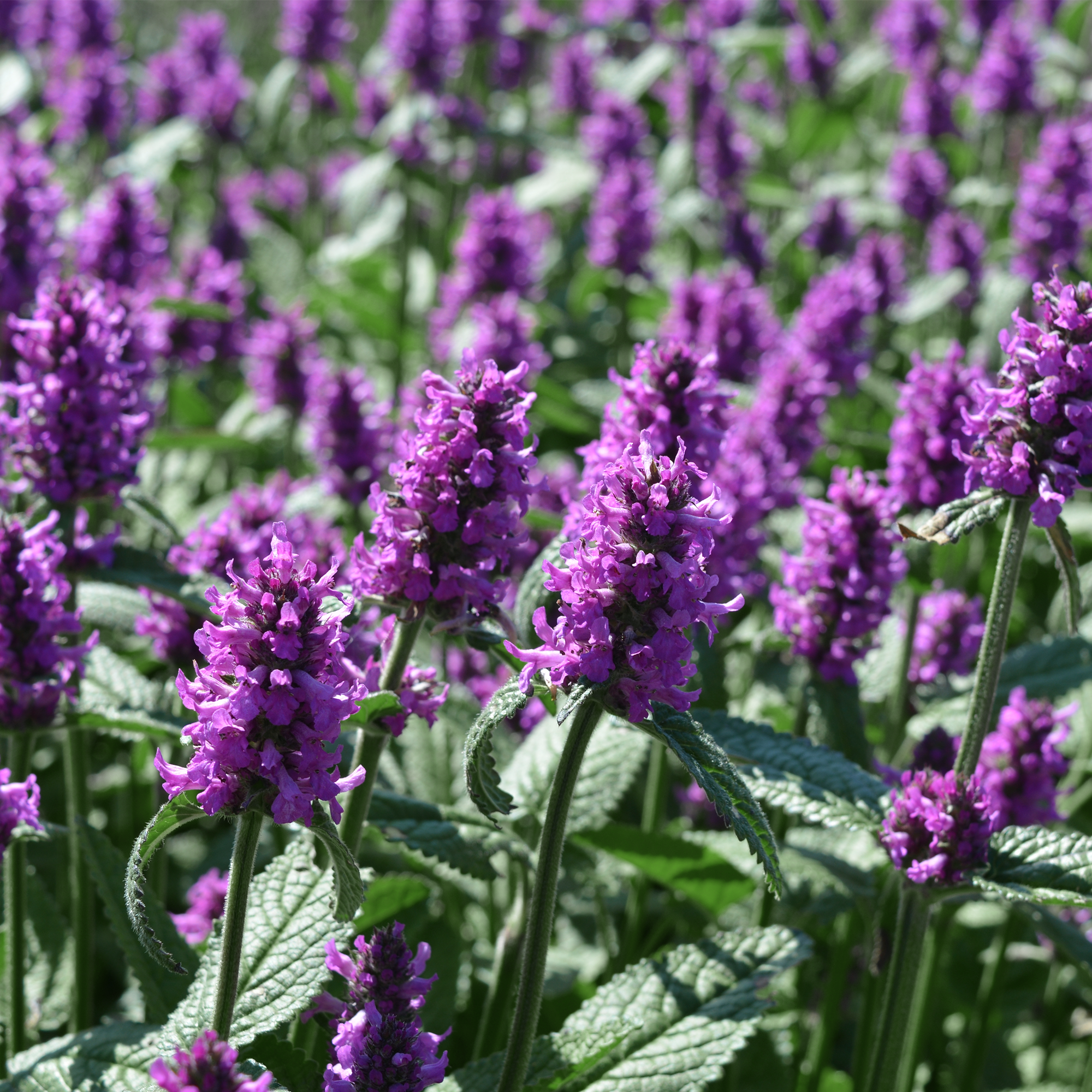
Betony is a perennial medicinal and ornamental plant appreciated for its natural habit, textured green foliage, and spikes of purplish-pink to mauve flowers that bring a beautiful country touch to the garden. It fits perfectly into perennial borders, herb gardens, naturalized landscapes, and flowerbeds. Its delicate blossoms attract pollinators and add movement to beds, while offering a soft, rustic, and very easy-to-arrange appearance.
Easy to grow, betony prefers a location in sun or partial shade, in well-drained, cool to moderately moist soil. Once established, it requires little maintenance and forms a durable clump that returns year after year. It is very suitable for natural-style gardens, perennial borders, cool rock gardens, and areas where one wishes to integrate useful, robust, and decorative plants.
Traditionally recognized as a medicinal plant, betony is also highly valued for its ecological interest and beautiful summer bloom. It pairs well with salvias, coneflowers, yarrows, grasses, bellflowers, and many other sun-loving or partial-shade perennials. It is an excellent plant for adding texture, color, and a botanical touch to a medicinal plant garden, a flower border, or a country-style arrangement.

Planting guide
From planting to establishment.
Soil and care
The right care,at the right time.
Soil pH
Minimum temperature
Care level
Watering
Soil type
Fertilization
Moisture
Seasonal care
Container growing
A garden,within reach.
Bloom and dimensions
Its place,in your garden.
Mature height
Width / spread
Flower color
Foliage color
Foliage type
Growth rate
Bloom period
Harvest

Garden associations
In goodcompany.
Companion plants
Plants to avoid
Wildlife and pets