


Fine Herbs
Greater Celandine
Products and available quantities may vary between Brossard and Laval. To check a store’s inventory, please contact us directly.
Even better: visit us in store to discover the full selection available!
- Exposure
- Partial shade to light shade
- Hardiness
- Zone 4
Discover the plant
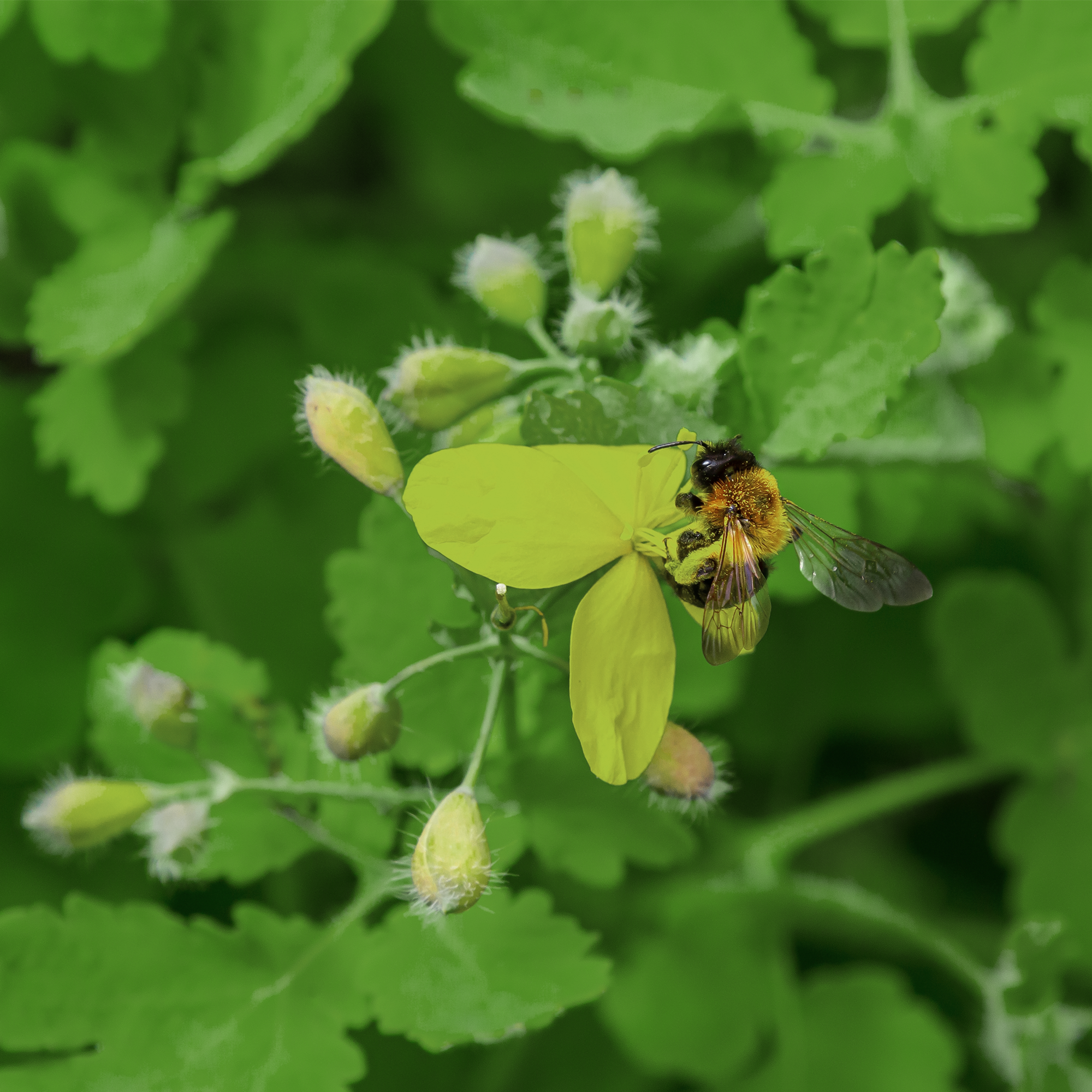
Greater celandine is a natural, perennial medicinal plant, appreciated for its bluish-green cut foliage and bright yellow flowers, which bring a wild touch to useful plant gardens, naturalized borders, and partially shaded corners. It forms a light, spontaneous clump, ideal for country-inspired designs where you want to integrate botanical, hardy, and easy-to-grow plants. Its delicate flowering attracts certain pollinators and adds a colorful note to the garden without requiring much maintenance.
Easy to grow, greater celandine prefers a location in partial shade or gentle sun, in fresh, light, and well-drained soil. It can adapt to different soil types and sometimes self-seeds naturally when it thrives, making it an interesting plant for naturalized gardens and less formal spaces. Its flexible foliage and yellow flowers integrate well at the foot of shrubs, at the edge of clear undergrowth, or in a medicinal garden where one is looking for a plant with an authentic character.
Traditionally recognized as a medicinal plant, greater celandine is mainly cultivated for its botanical interest, natural appearance, and great adaptability. As its orange sap is potent and can be irritating, it must be handled with care and is not suitable for culinary use. It is an ideal plant to add a wild, luminous, and historical touch to a medicinal plant garden, while enriching partially shaded arrangements with a robust and distinctive perennial.

Planting guide
From planting to establishment.
Soil and care
The right care,at the right time.
Soil pH
Minimum temperature
Care level
Watering
Soil type
Fertilization
Moisture
Seasonal care
Container growing
A garden,within reach.
Bloom and dimensions
Its place,in your garden.
Mature height
Width / spread
Flower color
Foliage color
Foliage type
Growth rate
Bloom period
Fruiting
Harvest

Garden associations
In goodcompany.
Companion plants
Plants to avoid
Wildlife and pets