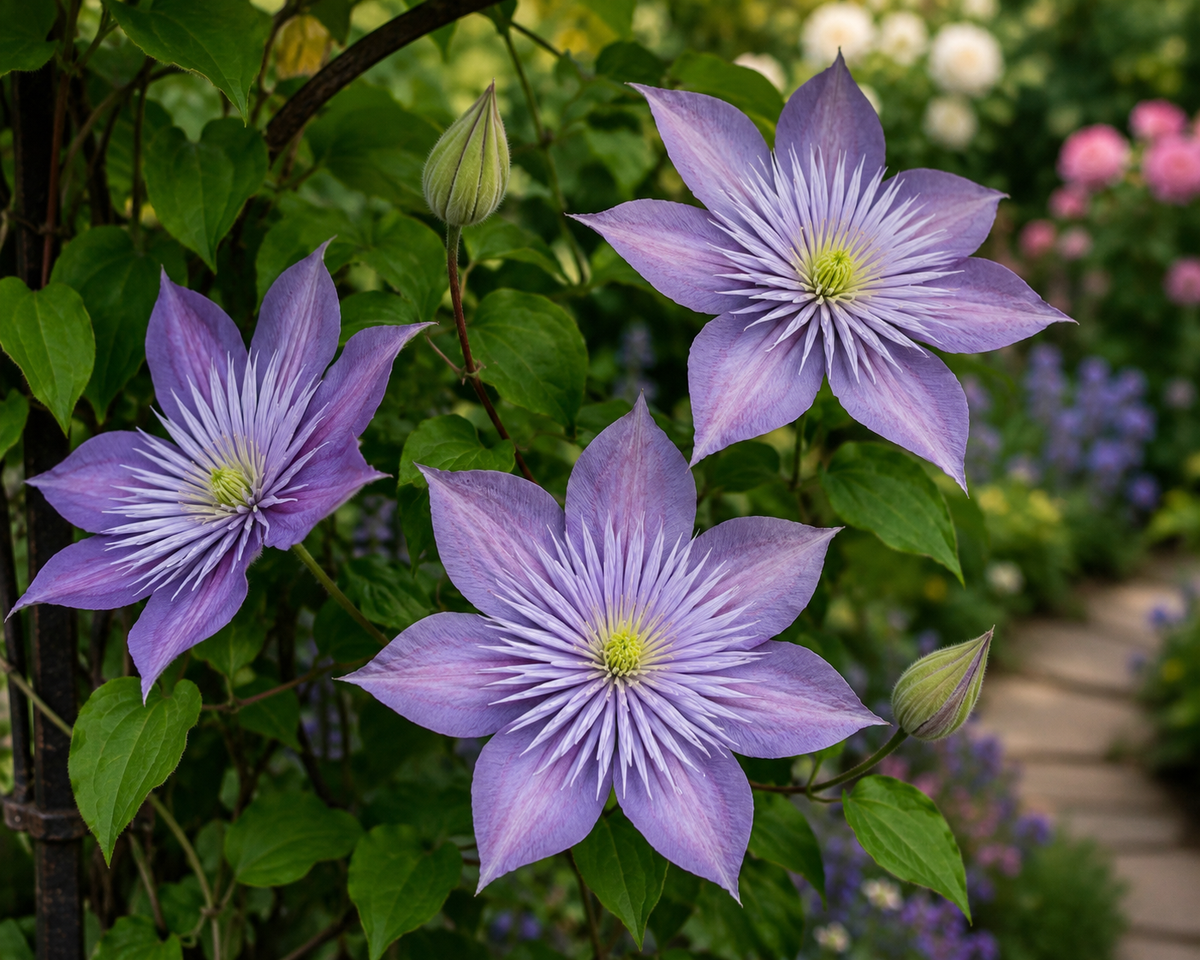
Violet-blue double clematis for patios

Crystal Fountain clematis

Clematis ‘Evipo038’

Crystal Fountain™ is a compact repeat-flowering clematis with double violet-blue blooms measuring 7 to 15 cm across. Approximately eight sepals surround more than 100 fine petaloid staminodes that create a silvery-mauve fountain at the centre. This ruff gradually becomes paler and often remains after the sepals fall, extending the flower’s ornamental effect. The first wave appears in May and June, followed by another in September and October. With a usual height of 150 to 180 cm, this climber suits large containers, patios, trellises and smaller gardens. Light pruning, moist soil and stable support encourage a balanced display close to outdoor living areas.
Share
Exposure
Full sun to partial shade; almost any aspect with sufficient light
Hardiness
Zone 4 to 9

Discover the plant

Common nameCrystal Fountain clematis
FamilyRanunculaceae
GenusClematis
SpeciesGarden hybrids
CultivarEvipo038 (Crystal Fountain; Fairy Blue synonym in Canada)
TypePerennial climbing plants
Botanical nameClematis ‘Evipo038’

Crystal Fountain™ Clematis (Clematis ‘Evipo038’) is a compact repeat-flowering climber prized for its exotic blooms. This sport of ‘H.F. Young’ was identified in a Japanese nursery in 1994 and later distributed under the Crystal Fountain™ trade designation. Its double, flat, outward-facing flowers usually measure 10 to 12 cm, within a documented range of 7 to 15 cm. Approximately eight violet-blue sepals surround more than 100 fine petaloid staminodes. These create a silvery-mauve fountain at the centre that gradually becomes paler and often remains after the outer sepals fall, extending the ornamental effect of every layered flower.

Crystal Fountain generally reaches 150 to 180 cm according to the breeder, although mature stems can cover a broader support under favourable conditions. Its dense habit suits patios, large containers, trellises, obelisks and smaller gardens. Full sun or partial shade is suitable in almost any aspect when the plant receives enough light and remains protected from severe winds. Choose fertile, moisture-retentive yet well-drained soil. Set the crown 5 to 8 cm below the surface and keep roots cool with light mulch, flat stones or low companion plants that do not hide the base. Install support before planting and guide fresh shoots with loose ties.

The first flowering period usually appears in May and June, followed by another wave in September and October. In late winter or early spring, remove dead or damaged stems and reduce the remaining top growth by approximately one third to strong buds. This light Group 2 pruning preserves older wood needed for the earliest flowers while encouraging fresh shoots. Water deeply when the surface begins to dry, especially in containers, and feed moderately in spring. Every clematis is toxic when eaten, and sap may also irritate sensitive skin, so wear gloves during pruning. Keep the crown accessible for inspection and collect cut material promptly after seasonal maintenance.

Crystal Fountain™ Clematis (<em>Clematis</em> ‘Evipo038’)

Planting guide

From planting to establishment.

Spacing / density Approximately 60 to 90 cm (24 to 35 in) between crowns
Best planting time Spring or early fall
Propagation Semi-ripe cuttings or layering; commercial propagation may be restricted
Growing method
Plant Crystal Fountain™ in full sun or partial shade in a sheltered position, avoiding a very dark north-facing site. Choose fertile, organic-rich soil that retains moisture while draining freely. Dig a hole wider than the root ball and set the crown 5 to 8 cm below the surface to encourage replacement stems. Install support before planting and position the crown away from a wall so rainfall can reach the roots. Water deeply after planting, then maintain consistent moisture without saturation. Light mulch or flat stones keep roots cool without covering the crown. Guide young stems with loose ties. In spring, add compost or balanced fertilizer. After the first flowering period, light feeding and steady moisture can support the early-autumn repeat. Inspect stems periodically for sudden wilt, slugs or aphids. Complete light Group 2 pruning in late winter or early spring, removing damaged growth and shortening remaining stems by approximately one third to strong buds. During flowering, avoid wetting the blooms unnecessarily and space stems so air can circulate. The large double flowers will remain better presented after rain. Remove only damaged material during active bloom, and keep the crown visible whenever mulch is renewed around the container or garden planting.

Soil and care

The right care,at the right time.

Soil pH

Acid to alkaline

Minimum temperature

-34 °C (-29 °F)

Care level

Intermediate

Watering

Water deeply and regularly during establishment so the root ball stays evenly moist without becoming saturated. In hot weather, check containers and plants growing beside walls more often because these sites dry quickly. Direct water toward the base instead of wetting foliage. Established clematis still perform best with consistent moisture and should not be treated as highly drought tolerant, especially while actively extending and flowering.

Soil type

Crystal Fountain™ prefers fertile, organic-rich soil that remains moist yet drains well. Loam, clay, sand or chalk-based soil can be suitable when excess water escapes freely. Add mature compost before planting and avoid sites that remain waterlogged. Light mulch maintains moisture and cool conditions around the roots without directly covering the crown or restricting the emergence of new shoots. In containers, refresh the upper layer periodically with mature compost.

Fertilization

In spring, add mature compost or apply a balanced fertilizer according to label directions. A second light feeding after the first flush can support Crystal Fountain™ repeat bloom. Avoid excessive nitrogen, which encourages foliage at the expense of flowers. Water before and after feeding, then stop fertilizing early enough for stems to mature before winter. In containers, use smaller applications when needed because nutrients leach more quickly with frequent watering.

Moisture

Moist soil without standing water

Seasonal care

In late winter or early spring, examine Crystal Fountain™ from the base before cutting. First remove dead, broken or clearly weak stems. Then shorten the remaining top growth by approximately one third to a pair of strong buds. This light Group 2 pruning retains enough older wood for late-spring bloom while stimulating shoots that carry the repeat display. Tie new stems loosely and distribute them across the support. In spring, renew a thin layer of compost and begin regular watering as growth accelerates. During the first flowering period, remove only damaged material. After the midsummer wave, light feeding and stable moisture support early-autumn buds. Check containers daily during hot weather. In fall, collect diseased foliage and inspect ties. In cold climates, shelter pots from wind and repeated freeze-thaw cycles. Wear gloves during pruning because clematis sap may irritate sensitive skin. Keep the crown visible for quick inspection, and replace any mulch that has shifted against emerging stems after heavy rain. Protect emerging shoots from slugs and snails as growth begins. Monitor aphids and remove any stem that wilts suddenly. During flowering, direct water toward the base instead of the layered blooms. After heavy rain, allow flowers to drain without crushing their many floral parts. Keep support stable and leave enough room in ties for stems to thicken. When renewing mulch, preserve a clear ring around the crown so emerging shoots remain visible and air can move freely. Regular observation makes seasonal care easier and helps the repeat display develop evenly across the support.

Container growing

A garden,within reach.

Recommended pot size

At least 50 cm (20 in) deep and wide
Crystal Fountain™ performs very well in a large container because of its bushy habit and usual height of 150 to 180 cm. Choose a frost-resistant pot at least 45 to 50 cm deep and wide with several drainage holes. Add a stable obelisk or trellis before filling the container. Use rich potting mix that retains moisture while allowing excess water to escape. Set the crown 5 to 8 cm below the surface, water thoroughly and keep the base lightly shaded. Distribute stems with loose ties so double flowers remain visible without crowding. Check moisture daily during hot periods because containers dry quickly. Feed moderately in spring and after the first wave. In late winter, remove dead growth and reduce the remainder by approximately one third. In cold climates, raise the pot, insulate its sides and shelter it from wind without moving the dormant plant into a heated room. Keep drainage openings clear throughout winter thaws. Rotate a movable container periodically for balanced light and inspect the support after strong winds. Remove damaged flowers or leaves, keep the crown visible when renewing mulch and leave enough space around the pot for convenient watering. A saucer should never retain water around the roots for long periods.
Crystal Fountain™ Clematis (Clematis ‘Evipo038’)

Bloom and dimensions

Its place,in your garden.

Mature height

Approximately 150 to 180 cm (5 to 6 ft)

Width / spread

Approximately 60 to 100 cm (24 to 39 in) when trained; potentially broader when mature

Flower color

Violet-blue with a silvery-mauve centre becoming very pale

Foliage color

Mid-green

Foliage type

Deciduous

Growth rate

Moderate to fast

Growth habit

Climbing, bushy and dense

Fragrance

Not fragrant

Bloom period

Crystal Fountain™ produces double, flat, outward-facing flowers 7 to 15 cm across. Approximately eight violet-blue sepals surround more than 100 silvery-mauve petaloid staminodes that form a central fountain. The staminodes become paler with age and often remain after the sepals fall. The first wave appears in May and June, and the plant generally flowers again in September and October on fresh growth.

Fruiting

Achenes with decorative feathery styles late in the season
Crystal Fountain™ Clematis (Clematis ‘Evipo038’)

Garden associations

In goodcompany.

Companion plants

Pair Crystal Fountain™ with white roses, lime coral bells, silver artemisias or shrubs carrying variegated foliage. White, grey and dark-green tones highlight the violet-blue sepals and silvery-mauve fountain centre. Low perennials can keep soil cool, but preserve clear space around the crown for watering and pruning. Avoid overly vigorous plants or aggressive roots that could reduce available moisture and hide emerging shoots. Choose companions with similar light and moisture needs for balanced growth. Leave enough room to inspect and guide new stems safely.

Plants to avoid

Avoid highly invasive plants or aggressive roots immediately around the crowns

Frequently asked questions

Your questions,answered.

How should Crystal Fountain clematis be pruned?
Crystal Fountain™ belongs to pruning Group 2. In late winter or early spring, begin by visually tracing stems from the base. Remove dead, broken or weak wood. Then reduce the remaining top growth by approximately one third, cutting just above a pair of strong buds. This light pruning retains older wood for late-spring flowering while encouraging fresh shoots responsible for the repeat display. Use clean pruners, wear gloves and collect debris because clematis sap can irritate skin. Inspect the support, replace worn ties and distribute young stems before they become tangled. Avoid cutting every stem to ground level unless severe damage makes renovation necessary, because that would delay the earliest flowers.
What creates the centre of Crystal Fountain clematis?
The fountain-shaped centre contains more than 100 staminodes, which are floral organs transformed into fine petaloid structures. They open silvery mauve, then gradually become very pale and sometimes nearly white. Approximately eight violet-blue sepals surround them and create a double flower measuring 7 to 15 cm across. The staminodes often remain after the sepals fall, extending the ornamental effect and changing the bloom’s appearance with age. To appreciate this structure clearly, spread stems across support near eye level and choose a simple silver, pale or dark-green background that emphasizes the many fine details in the centre throughout both flowering periods.
Does Crystal Fountain clematis suit containers?
Yes. Crystal Fountain™ suits a large frost-resistant container at least 45 to 50 cm deep and wide. Choose a pot with several drainage holes and install a stable obelisk before planting. Use rich potting mix that holds moisture without remaining waterlogged, then set the crown 5 to 8 cm below the surface. Water until excess drains freely and check moisture daily during hot periods. Its usual height of 150 to 180 cm creates a strong vertical presence on a patio. In winter, raise the pot, insulate its sides and protect it from wind and standing water. Keep the dormant plant outdoors rather than moving it into a heated room.
What site suits Crystal Fountain clematis?
Choose full sun or partial shade in a sheltered position. The breeder recommends avoiding a very dark north-facing site, while sufficient light supports both flowering periods. Soil should be fertile, organic-rich, moisture-retentive and well drained. Position the crown 30 to 60 cm away from a foundation so rainfall reaches the roots. Light mulch, flat stones or a low companion can keep soil cool without covering the crown. Install the trellis or obelisk before planting. Good air circulation helps foliage dry after rain, but avoid severe gusts that can damage the large double flowers. Leave easy access to the base for watering, feeding, inspection and annual light pruning.
Is Crystal Fountain clematis toxic?
Yes. Like other clematis, Crystal Fountain™ contains protoanemonin and is toxic when eaten. It may cause mouth irritation, drooling and digestive upset in dogs, cats, horses or people who chew the plant. Sap can also irritate sensitive skin. Position the container or support away from young children and animals that chew garden plants. Wear gloves during pruning, avoid touching your face and wash your hands after maintenance. Collect cut stems promptly and do not use them in food or decorative activities accessible to pets. If ingestion is suspected or symptoms appear, contact a veterinarian, poison-control service or medical professional for case-specific guidance rather than attempting a home remedy.

Wildlife and pets

Life,around your plants.

Reported toxicity

Yes

Supporting wildlife

The very double flowers of Crystal Fountain™ may provide less accessible pollen than single clematis blooms. Insects may still visit, but this cultivar is selected mainly for ornamental value. To support more pollinators, add nearby single flowers rich in nectar that bloom during the same late-spring, summer and early-autumn periods.