


Fine Herbs
Comfrey
Products and available quantities may vary between Brossard and Laval. To check a store’s inventory, please contact us directly.
Even better: visit us in store to discover the full selection available!
- Exposure
- Full sun to partial shade
- Hardiness
- Zone 3
Discover the plant
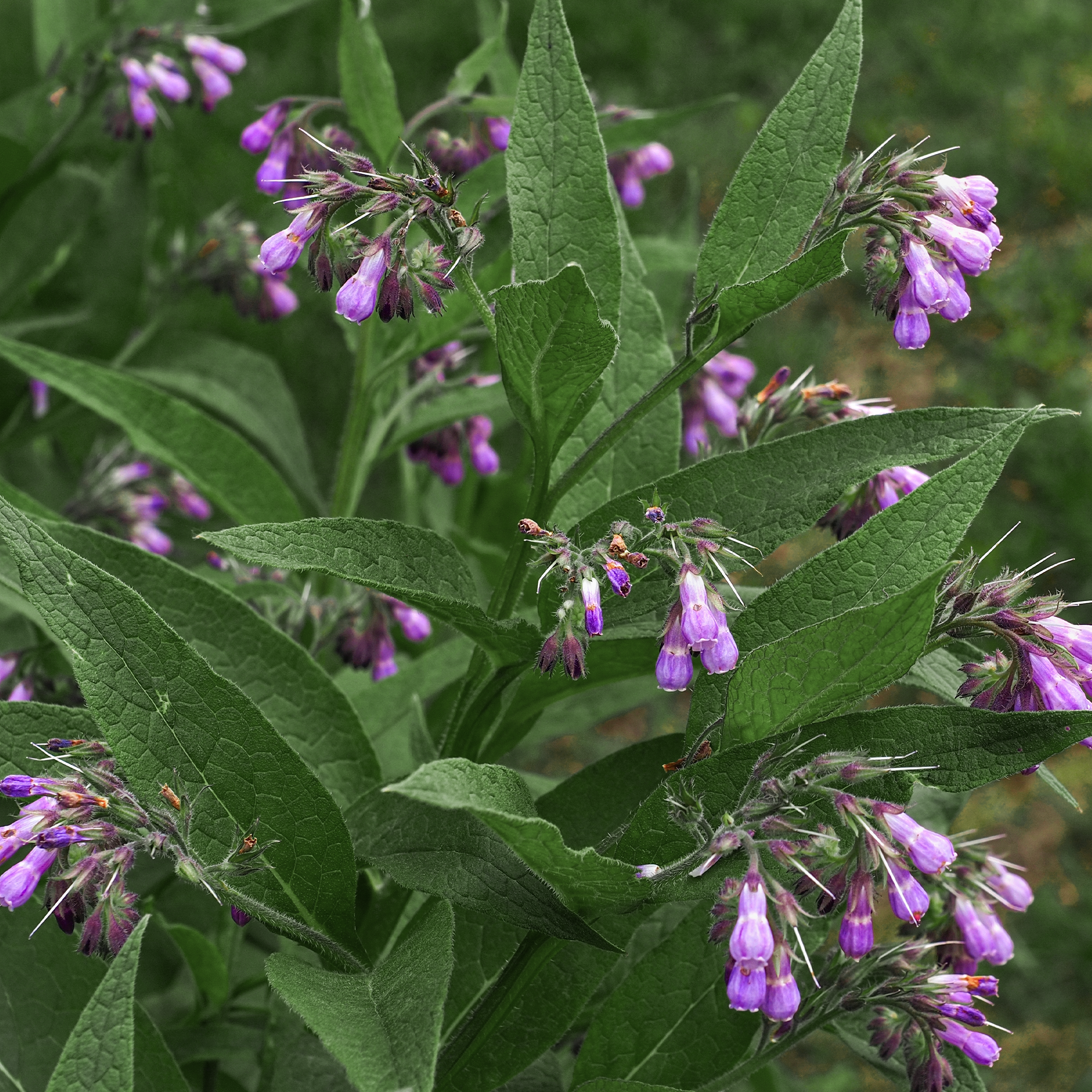
Comfrey is a robust perennial plant, recognized for its large, slightly rough foliage and its flowering in small, drooping bell-shaped flowers, often mauve, pink, white, or bluish depending on the variety. It brings a natural and rustic style to medicinal herb gardens, edible landscapes, perennial borders, and pollinator-friendly spaces. Its vigorous growth makes it an interesting plant for quickly adding volume, texture, and a generous presence to the garden.
Easy to cultivate, comfrey prefers a location in sun or partial shade, in rich, cool, deep, and well-drained soil. It appreciates soils that retain some moisture and can become imposing once established, so it is best to reserve enough space for it. Its dense foliage can be cut during the season and used in the garden as plant material for compost, mulch, or natural horticultural preparations.
Traditionally recognized as a medicinal plant, comfrey is mainly appreciated today for its ecological role, its melliferous flowering, and its usefulness in the garden. It attracts bees and other pollinators, while integrating perfectly into natural gardens, productive vegetable patches, and wilder areas of the land. It is an ideal perennial for gardeners looking for a useful, resistant, decorative, and characterful plant.

Planting guide
From planting to establishment.
Soil and care
The right care,at the right time.
Soil pH
Minimum temperature
Care level
Watering
Soil type
Fertilization
Moisture
Seasonal care
Container growing
A garden,within reach.
Bloom and dimensions
Its place,in your garden.
Mature height
Width / spread
Flower color
Foliage color
Foliage type
Growth rate
Bloom period
Harvest

Garden associations
In goodcompany.
Companion plants
Plants to avoid
Wildlife and pets