


Fine Herbs
'Kent Beauty' Oregano
Products and available quantities may vary between Brossard and Laval. To check a store’s inventory, please contact us directly.
Even better: visit us in store to discover the full selection available!
- Exposure
- Full sun
- Hardiness
- Zone 5
Discover the plant
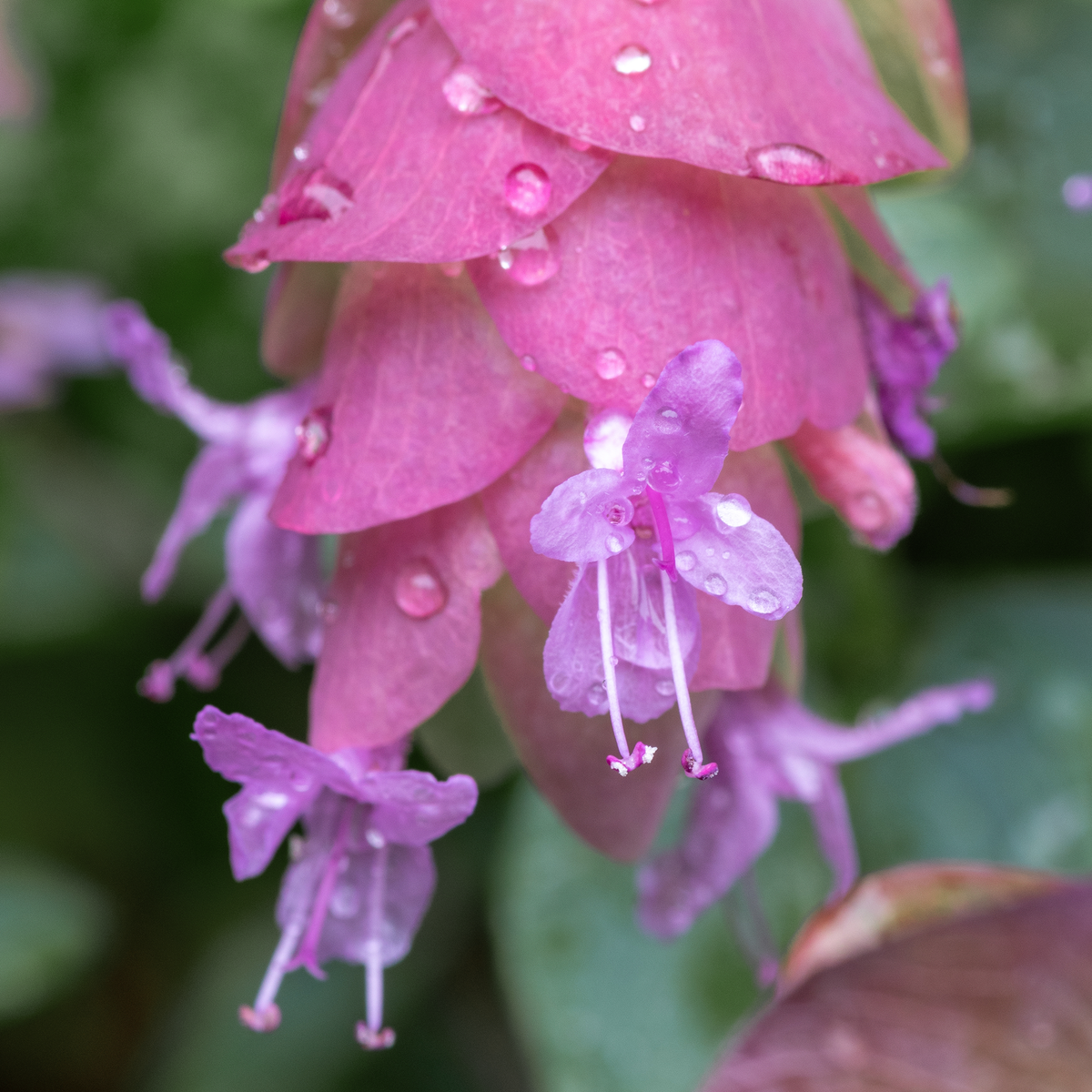
'Kent Beauty' oregano is a highly decorative aromatic and ornamental plant, prized for its cascading habit, slightly bluish-green foliage, and pink to purplish floral bracts that resemble small, delicate clusters. More sought after for its visual impact than for its culinary production, it is ideal in hanging baskets, window boxes, rock gardens, low walls, sunny borders, and patio containers. Its soft, trailing appearance adds a Mediterranean, natural, and very elegant touch to outdoor spaces.
Easy to grow, 'Kent Beauty' oregano prefers a full sun, warm, and well-ventilated location, in light, poor to moderately fertile, and very well-drained soil. It tolerates drier conditions well once established but does not tolerate excessive water, especially in heavy soil or poorly drained containers. In pots, it is important to let the potting mix dry slightly between waterings to maintain a healthy, compact, and free-flowering plant. Light pruning after flowering helps to maintain a denser and more harmonious habit.
Both fragrant, melliferous, and very decorative, 'Kent Beauty' oregano attracts pollinators while adding texture, color, and movement to the garden. Its trailing stems pair beautifully with lavenders, santolinas, thymes, sedums, grasses, and other full-sun plants. It is an excellent variety for gardeners looking for an original, low-maintenance oregano that is perfect for enhancing containers, rockeries, and natural-style landscapes.

Planting guide
From planting to establishment.
Soil and care
The right care,at the right time.
Soil pH
Minimum temperature
Care level
Watering
Soil type
Fertilization
Moisture
Seasonal care
Container growing
A garden,within reach.

Bloom and dimensions
Its place,in your garden.
Mature height
Width / spread
Flower color
Foliage color
Foliage type
Growth rate
Bloom period
Harvest
Garden associations
In goodcompany.
Companion plants
Wildlife and pets