Shrubs

Holden’s™ Peach rhododendron

Rhododendron 'HoldenRhodo213'

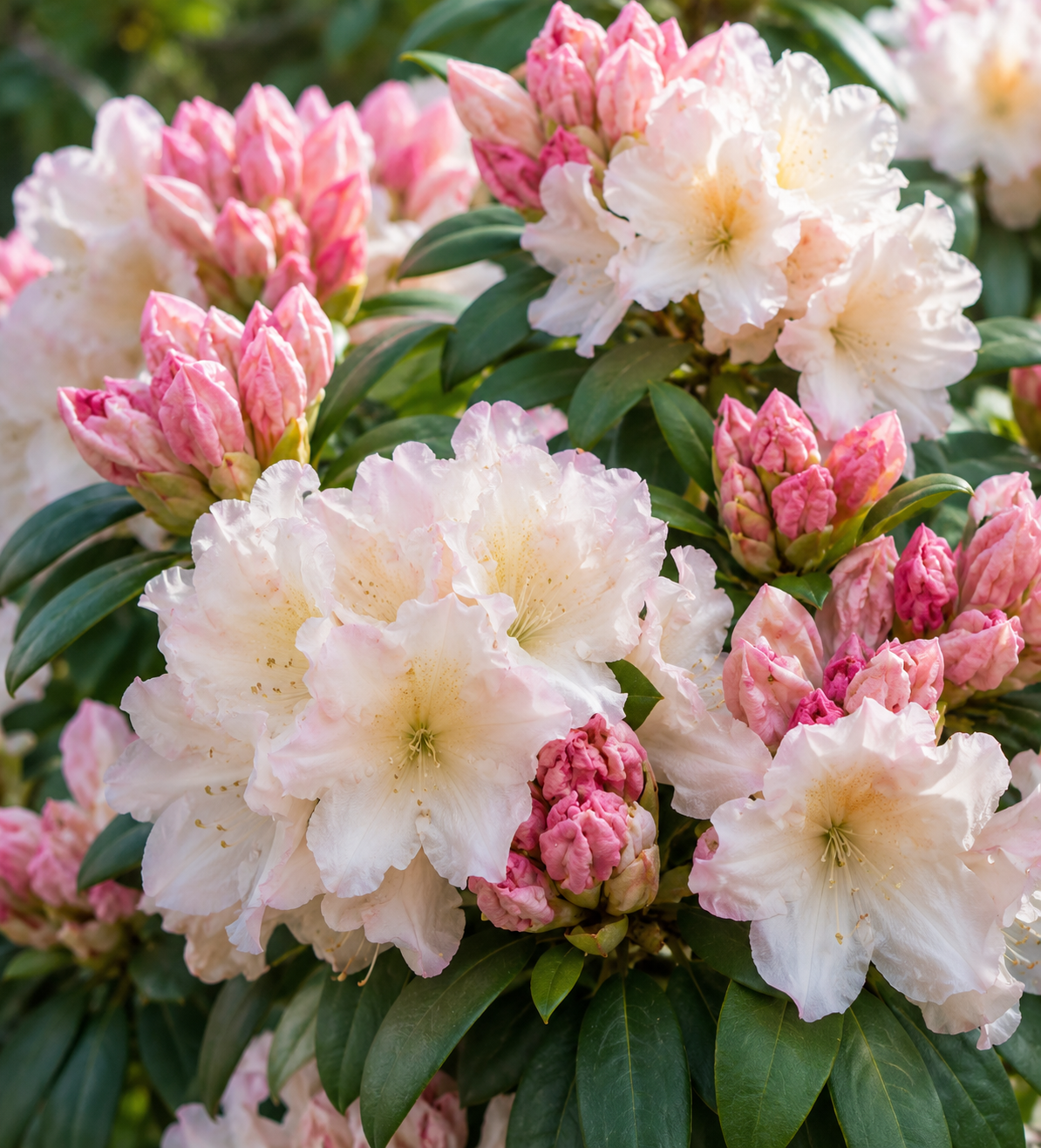
Holden’s™ Peach is a compact evergreen rhododendron with mauve-pink buds opening to soft ivory-peach flowers touched with pink and yellow. Hardy to Zone 5, it prefers partial shade and acidic, moist, well-drained soil. Its glossy dark green foliage provides lasting structure in shaded borders and woodland-style plantings after the spring flowering display has finished.
Share
Exposure
Partial shade
Hardiness
Zone 5

Discover the plant

Common nameHolden’s™ Peach rhododendron
FamilyEricaceae
GenusRhododendron
SpeciesHybrid
CultivarHoldenRhodo213
TypeEvergreen ornamental shrub
Botanical nameRhododendron 'HoldenRhodo213'

Holden’s™ Peach rhododendron (Rhododendron 'HoldenRhodo213') is an evergreen ornamental shrub with a dense, rounded and gently spreading habit. Mauve-pink buds open in spring to generous ivory-peach flowers touched with pink and a subtle yellow tone in the throat. The luminous blooms contrast attractively with dark green, leathery and glossy foliage that remains ornamental throughout the year. This selection gradually develops into a compact shrub, generally reaching about 1.2 to 1.5 m (4 to 4.9 ft) in height and spread. Its growth rate is moderate, and Zone 5 hardiness allows cultivation in Quebec locations that fall within this appropriate hardiness range.

Partial shade is particularly suitable for Holden’s™ Peach, especially filtered light or morning sun combined with protection from intense afternoon exposure. Like other rhododendrons, it prefers acidic, organic-rich, moist and very well-drained soil. Consistent moisture supports healthy growth and flower-bud development, while standing water around the roots should always be avoided. Organic mulch helps keep the shallow root zone cool and reduces rapid moisture fluctuations. A light fertilizer formulated for acid-loving plants can be applied in spring when needed. In Quebec, a location protected from drying winter winds is beneficial for preserving evergreen foliage and reducing seasonal stress, particularly on exposed sites where winter sun and wind can increase moisture loss.

This rhododendron is well suited to shaded borders, woodland gardens, shrub beds and plantings near an entrance or patio where its spring flowers can be appreciated at close range. It combines effectively with ferns, hostas, heucheras and other plants that enjoy cool, acidic soils, provided enough space remains for its rounded habit to develop. Spring flowers can be visited by bees and may also attract butterflies. Evergreen foliage continues to provide useful structure after flowering has finished. For a balanced planting, avoid highly competitive neighbours and plants requiring alkaline soil immediately around its shallow root system. Its compact form and soft peach colouring make it especially effective in refined, layered shade-garden compositions.

Rhododendron 'HoldenRhodo213'

Planting guide

From planting to establishment.

Spacing / density Allow approximately 1.2 to 1.5 m (4 to 4.9 ft) between plants depending on the desired effect and available mature space.
Best planting time Spring or early autumn, avoiding periods of intense heat so the root system can begin establishing before more extreme seasonal conditions.
Propagation Vegetative propagation is used to preserve the characteristics of the 'HoldenRhodo213' cultivar marketed under the Holden’s™ Peach name.

Soil and care

The right care,at the right time.

Soil pH

Acidic, ideally approximately 4.5 to 6.0

Minimum temperature

Approximately −28.9 °C

Care level

Moderate

Watering

Maintain consistent moisture without waterlogging the soil, especially during establishment, warm periods and flower-bud development.

Soil type

Acidic, organic-rich, moist and very well-drained soil; avoid alkaline, compacted or persistently waterlogged conditions.

Fertilization

Light, using fertilizer formulated for acid-loving plants in spring when growth or soil conditions indicate a need.

Moisture

Cool, evenly moist but consistently well-drained soil; the shallow root system responds quickly to prolonged dryness as well as excess water.

Seasonal care

In spring, check foliage condition after winter and remove only dead or damaged stems. A light fertilizer for acid-loving plants can be applied as growth begins when soil conditions justify it. After flowering, spent clusters may be carefully removed if desired, and any light corrective pruning should be completed promptly because the following year’s flower buds develop on existing growth. During summer, keep the soil cool through dry periods without allowing standing water around the roots. Renew organic mulch when necessary. In autumn, water deeply when rainfall is inadequate so the shrub enters winter well hydrated. During winter, limit exposure to drying winds and keep de-icing salts away from the root zone. Evergreen foliage benefits from adequate stored moisture even while the ground is frozen.

Container growing

A garden,within reach.

Recommended pot size

Large container at least 45 to 50 cm (18 to 20 in) wide, with ample drainage and sufficient room for the shallow root system.
Holden’s™ Peach can be grown in a container for several years when the pot is sufficiently broad, stable and exceptionally well drained. Use a growing medium formulated for acid-loving plants, with an open structure that retains even moisture without remaining saturated. Position the container in partial shade and monitor watering frequently, especially during hot weather, because the shallow roots can dry quickly in pots. Avoid irrigation water that gradually raises the medium’s pH when possible. In Quebec, container-grown roots are more exposed to winter cold than roots planted in the ground, so substantial pot protection or overwintering in a protected cold location is required. Repot when necessary as roots begin to occupy most of the available growing volume.
Rhododendron 'HoldenRhodo213'

Bloom and dimensions

Its place,in your garden.

Mature height

1.5 m (4.9 ft)

Width / spread

1.5 m (4.9 ft)

Flower color

Ivory peach, soft pink and a subtle yellow tone in the throat

Foliage color

Glossy dark green

Foliage type

Evergreen, leathery and glossy, creating a dense mass that retains architectural interest after flowering.

Growth rate

Moderate

Growth habit

Dense, rounded, compact and gently spreading, gradually forming a well-filled and balanced evergreen shrub.

Bloom period

Abundant spring flowering in clusters, developing from mauve-pink buds that open into delicately coloured ivory-peach flowers.

Fruiting

Dry capsules may develop after flowering when successfully pollinated flower clusters are left on the shrub.
Rhododendron 'HoldenRhodo213'

Garden associations

In goodcompany.

Companion plants

Ferns, hostas, heucheras and other partial-shade plants suited to acidic, moist soil create harmonious combinations around this rhododendron.

Plants to avoid

Avoid plants requiring alkaline soil and highly competitive species with aggressive roots that rapidly dry the rhododendron’s shallow root zone.

Frequently asked questions

Your questions,answered.

What exposure is best for Holden’s™ Peach rhododendron?
Partial shade is particularly suitable for Holden’s™ Peach. Filtered light or several hours of morning sun support flowering while limiting stress from intense afternoon exposure. In Quebec, protection from drying winter winds is also beneficial because evergreen foliage can continue losing moisture at times when frozen soil restricts the roots’ ability to replace that water.
How large does Holden’s™ Peach become at maturity?
Holden’s™ Peach develops into a dense, rounded shrub approximately 1.2 to 1.5 m (4 to 4.9 ft) tall with a similar spread, depending on growing conditions. Its moderate growth rate maintains a relatively compact form for many years. Providing adequate space at planting allows the branches to spread naturally and reduces the need for future corrective pruning.
What soil does Holden’s™ Peach rhododendron require?
This rhododendron prefers acidic, organic-rich, moist and very well-drained soil. A pH of approximately 4.5 to 6.0 generally suits rhododendrons and supports appropriate nutrient availability. Avoid alkaline, compacted or waterlogged soils. Organic mulch helps maintain moisture and protects the shallow root system from rapid changes in temperature and soil dryness throughout the growing season.
When should Holden’s™ Peach be pruned?
Major pruning is generally unnecessary because Holden’s™ Peach naturally develops a compact, rounded form. Remove dead or damaged branches as needed. If shaping is required, prune shortly after the spring flowering period so the plant has enough time to develop flower buds for the following year. Avoid late-season pruning that could remove developing buds and reduce the next spring display.
Is Holden’s™ Peach toxic to pets?
Yes. Like other rhododendrons, Holden’s™ Peach contains toxic compounds and should not be considered safe for dogs, cats or other pets to ingest. Animals should be prevented from chewing the leaves, flowers or other plant parts. If ingestion is suspected, contact a veterinarian or an appropriate animal poison-control service promptly for professional advice based on the animal and exposure.

Wildlife and pets

Life,around your plants.

Reported toxicity

Yes

Supporting wildlife

Spring flowers provide a floral resource for visiting insects, including bees, and may also attract butterflies when weather conditions and pollinator activity are favourable.