


Fine Herbs
Sage
Products and available quantities may vary between Brossard and Laval. To check a store’s inventory, please contact us directly.
Even better: visit us in store to discover the full selection available!
- Exposure
- Full sun
- Hardiness
- Zone 4 and above
Discover the plant
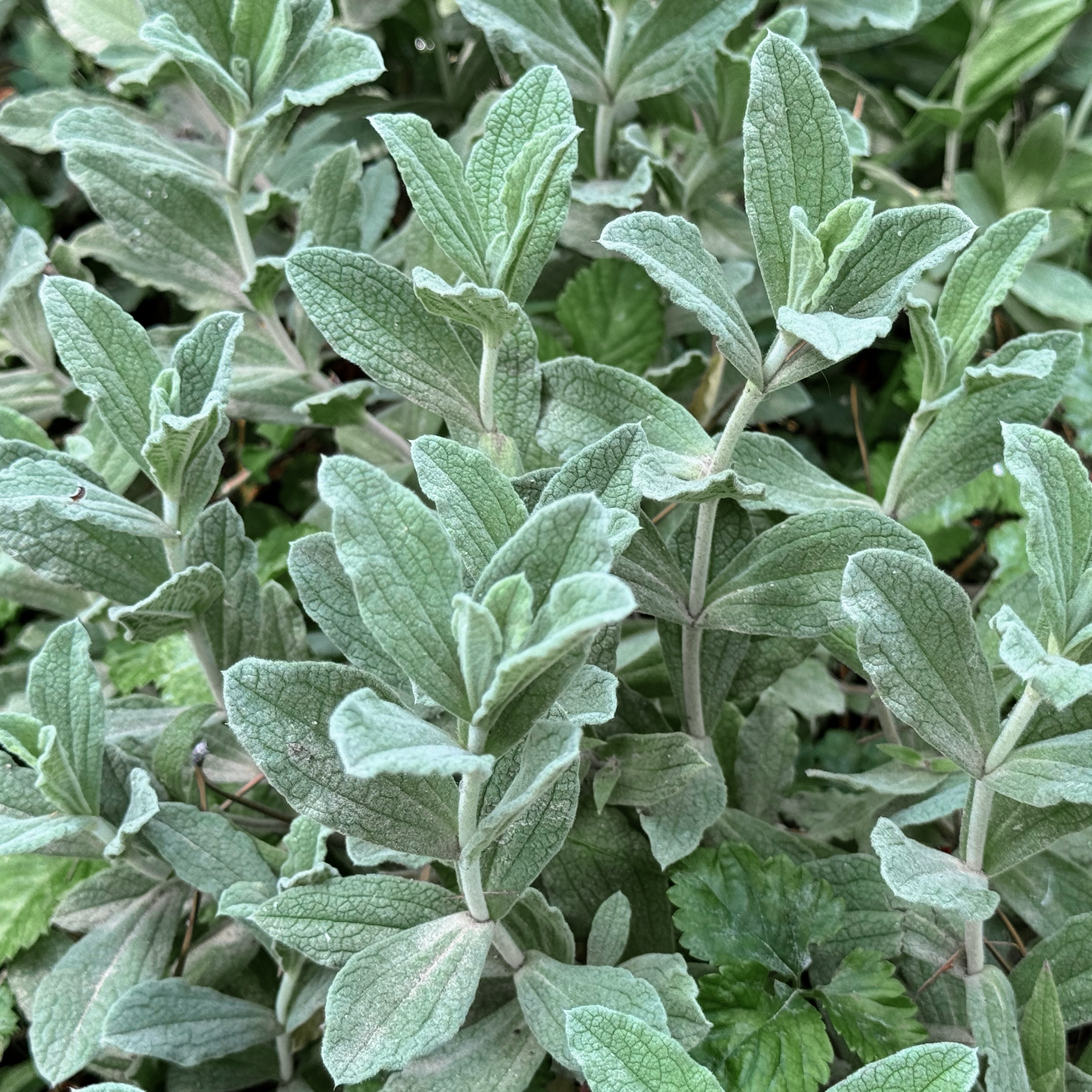
Sage is a perennial aromatic plant highly valued for its grayish-green, slightly downy foliage with a powerful, resinous scent. Indispensable in cooking, it adds a warm, herbaceous, and slightly peppery flavor to meats, poultry, stuffings, sauces, roasted vegetables, potatoes, pasta, flavored butters, and stews. Its decorative foliage and compact habit also make it an excellent plant for herb gardens, sunny borders, rock gardens, and patio containers.
Easy to grow, sage prefers a full sun, warm, well-ventilated location in light, poor to moderately fertile, and very well-drained soil. It tolerates heat and drier periods well once established but does not tolerate excess water, especially in heavy or poorly drained soil. Light pruning after flowering or in spring helps maintain a dense, compact, and well-branched plant. Its leaves can be harvested fresh as needed or dried for prolonged use in cooking.
Both aromatic, decorative, and useful for pollinators, sage produces spikes of purple, bluish, pink, or white flowers depending on the variety. It pairs very well with thyme, rosemary, lavender, oregano, santolina, and other full-sun plants. It is an essential herb for gardeners looking for a robust, fragrant, drought-resistant plant perfect for creating a gourmet garden with a Mediterranean style.

Planting guide
From planting to establishment.
Soil and care
The right care,at the right time.
Soil pH
Minimum temperature
Care level
Watering
Soil type
Fertilization
Moisture
Seasonal care
Container growing
A garden,within reach.
Bloom and dimensions
Its place,in your garden.
Mature height
Width / spread
Flower color
Foliage color
Foliage type
Growth rate
Bloom period
Harvest
Garden associations
In goodcompany.
Companion plants
Plants to avoid
Wildlife and pets