


Sale
Sold out

Lamiaceae
Fine herbs
Portuguese thyme
Portuguese Thyme is a compact aromatic perennial with fragrant foliage, perfect for grilling, fish, meats, roasted vegetables, sauces, and Mediterranean dishes.
Hardiness
Zone 6
Difficulty level
Easy
Discover the plant
Family
Lamiaceae
Portuguese thyme is a perennial herb highly valued for its aromatic, compact, and fragrant foliage, with a warm, herbaceous, and slightly spicy flavor. It is easily used in cooking to enhance grilled meats, poultry, fish, roasted vegetables, potatoes, sauces, soups, marinades, broths, and stews. Its low and dense habit also makes it an excellent plant for herb gardens, rockeries, edible borders, and sunny containers near the kitchen.
Easy to grow, Portuguese thyme prefers a full sun, warm, and well-ventilated location, in light, poor to moderately fertile, and very well-drained soil. It tolerates dry conditions very well once established, but does not tolerate excessive water and heavy soils. Both in pots and in the ground, regular harvesting of young stems helps maintain a compact, branched, and productive plant, while stimulating the production of new fragrant foliage.
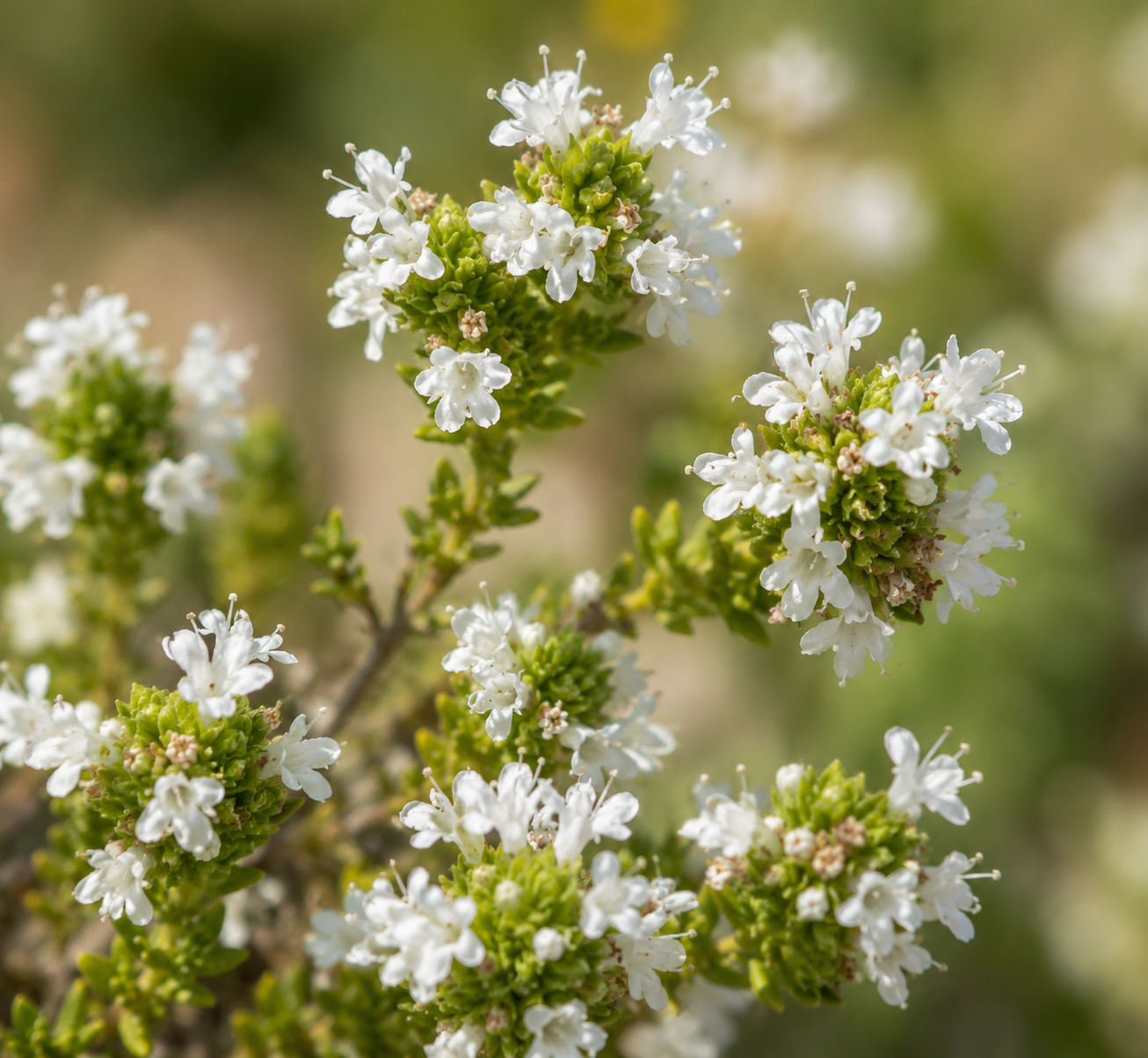
Both aromatic, decorative, and beneficial for pollinators, Portuguese thyme produces delicate flowers that attract bees and other beneficial insects to the garden. It pairs very well with rosemary, sage, oregano, lavender, santolina, and other full-sun plants. It is an excellent herb for gardeners looking for a robust, flavorful, drought-resistant plant ideal for creating a gourmet garden with a Mediterranean style.

Planting guide
From plantingto establishment.
Propagation
Sowing, cuttings, or division
Soil and care
The rightconditions.
Soil pH
Neutral to slightly alkaline
Fertilization
Light compost in spring; avoid excessive fertilizer
Care level
Easy
Seasonal care
Lightly prune after flowering to maintain a dense habit; avoid soggy soils; harvest young shoots as needed
Container growing
A controlledenvironment.
Pot culture excellent in a well-drained container
Bloom and dimensions
The completeprofile.
Bloom periodSummer
Flower colorPale pink to purple
Foliage colorGrayish green
Foliage typeSemi-persistent
Maximum height20 to 30 cm (8 to 12 inches)
Maximum width30 to 45 cm (12 to 18 inches)
Growth rateSlow to moderate growth
Hardiness zoneZone 6
Minimum temperature-20 °C
Garden associations
What to plantwith it.
Vegetable garden, herbs, border, rock garden, container, Portuguese and Mediterranean cuisine
Its strengths, naturally.

Not recommended for pets
Pets

Plants that attract butterflies
Butterflies

Helps repel certain pests
Repellent

Less attractive or generally tolerated by deer
Deer


