Sale
Sold out

Compact perennial with thick rosy-purple spikes
Plantaginaceae
Compact rosy-purple speedwells for borders and pollinators
Magic Show® Purple Illusion spike speedwell
Veronica spicata
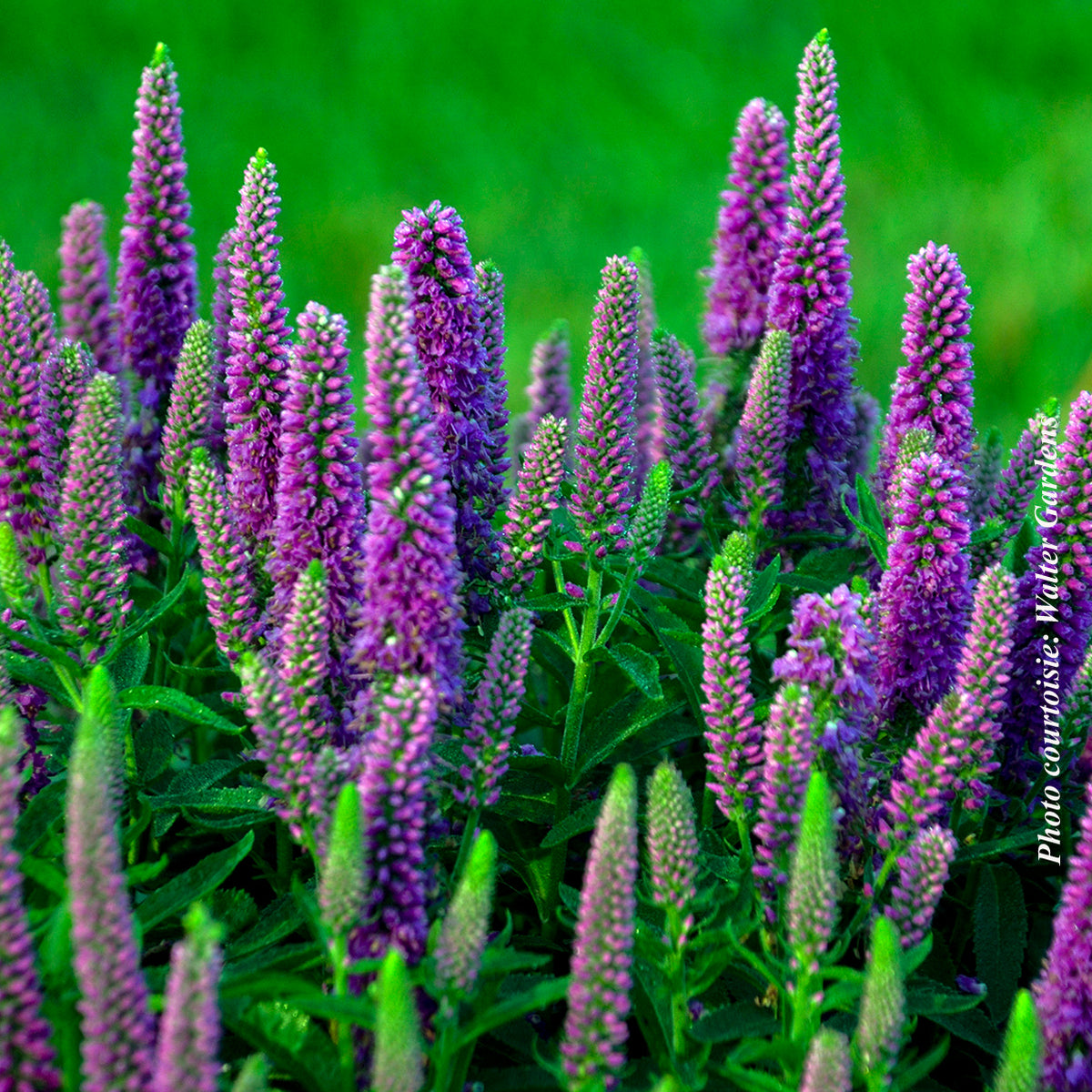
Magic Show® Purple Illusion is a compact purple speedwell with thick rosy-purple flowers above an exceptionally dense canopy of deep-green leaves. Reaching 41 to 46 centimetres in both height and spread, this Zone 4 to 8 perennial flowers from late spring into early summer for up to five weeks. It attracts bees, butterflies and hummingbirds, generally resists deer browsing and tolerates salt. Its balanced habit suits borders, grouped plantings, containers and bouquets. Trimming after bloom keeps the clump tidy and can encourage additional spikes, while the substantial foliage remains attractive after the main display ends.
- Quantity
- 2-gallon pot
- Exposure
- Full sun to light shade
- Life cycle
- Deciduous herbaceous perennial
- Hardiness
- Zone 4 to 8
Discover the plant
Common nameMagic Show® Purple Illusion spike speedwell
FamilyPlantaginaceae
GenusVeronica
Speciesspicata
CultivarPurple Illusion
TypeCompact perennial with thick rosy-purple spikes
Botanical nameVeronica spicata
Magic Show® Purple Illusion Spike Speedwell (Veronica spicata ‘Purple Illusion’) is a compact perennial with thick rosy-purple spikes. Abundant flowers rise above a rounded, low clump of closely packed, glossy deep-green leaves. Proven Winners lists both height and spread at 41 to 46 centimetres, while the plant patent describes approximately 48 stems on a mature specimen. Bloom begins in late spring or early summer and continues for up to five weeks. This dense vertical silhouette contrasts beautifully with rounded flowers at the front of a border, beside a path or in a large container where its strong colour remains easy to appreciate.
For best results, grow this purple speedwell in full sun or partial shade and average, humus-rich, well-drained soil. Full sun supports the heaviest flowering. Water regularly during establishment, then maintain moderate moisture without leaving standing water around the crown. Space plants 41 to 46 centimetres apart so every clump can reach its natural width. Cut faded stems after the first display to retain a tidy appearance and encourage additional flowers. A thin spring layer of compost is generally sufficient. Avoid saturated winter soil and excessive nitrogen. Mature plants tolerate some drought, but consistent moisture and reliable drainage produce stronger growth and a longer floral display.
Purple Illusion speedwell suits borders, grouped plantings, pollinator gardens, bouquets and containers. Numerous spikes attract bees, butterflies and hummingbirds, while deer generally avoid the foliage. Proven Winners lists the cultivar for Zones 4 to 8, highlights its long bloom and notes salt tolerance. Pair the rosy-purple flowers with white Shasta daisies, coneflowers, golden black-eyed Susans, catmint or fine ornamental grasses. Repeating three to five plants creates a generous band of colour. Dense foliage remains attractive after flowering and helps the clump maintain a polished presence through the rest of summer, even when neighbouring perennials begin to change.

Planting guide
From planting to establishment.
Spacing / density
Space plants 41 to 46 cm apart
Best planting time
Spring or early fall
Propagation
Division, basal cuttings or shoot-tip tissue culture
Growing method
Plant Purple Illusion spike speedwell in spring or early fall in a sunny or lightly shaded position. Choose fertile, evenly moist and well-drained soil. Loosen the ground to about 30 centimetres and work in compost when organic matter is low. Dig a hole as deep as the root ball and roughly twice as wide. Keep the crown level with the surrounding soil, refill gently and water thoroughly. Space plants 50 to 60 centimetres apart so each clump can reach its natural width. Maintain consistent moisture through the first growing season without leaving standing water. Apply a thin mulch while keeping the crown clear. When the main flowering period ends, cut faded spikes just above healthy foliage to encourage possible rebloom. The following spring, remove dry stems and add a light compost layer. Divide an overly dense clump or take basal shoots for propagation. In a container, use free-draining potting mix and monitor moisture more frequently than in the ground. Check moisture below the mulch instead of watering automatically. After several years, divide the clump in spring if its centre loses vigour, then replant healthy sections at the same depth. Keep newly divided plants evenly moist until fresh growth confirms that roots are established.
Soil and care
The right care,at the right time.
Soil pH
Acidic, neutral or slightly alkaline
Care level
Low
Drought tolerance
Yes
Watering
Water deeply after planting and keep the root ball evenly moist during establishment. Once rooted, irrigate during dry periods when leaves begin to lose firmness. Direct water toward the soil rather than the spikes. Allow excess moisture to drain and avoid frequent applications that keep the crown saturated. Morning irrigation allows wet foliage to dry before night and reduces conditions that favour leaf diseases.
Soil type
This perennial prefers fertile, evenly moist and well-drained soil that retains moderate moisture without remaining saturated. Compost-enriched loam is especially suitable. In clay, improve structure and avoid depressions where water collects. In sandy soil, add organic matter to slow drying. Work organic matter through the whole planting area instead of concentrating it only in the hole. Prompt winter drainage remains essential for crown longevity.
Fertilization
In spring, spread a thin compost layer around the clump without covering the crown. In average soil, this is generally sufficient. If growth remains weak, use a balanced slow-release fertilizer at the lowest labelled rate. Avoid excessive nitrogen, which can produce softer stems and fewer flowers. In containers, refresh part of the potting mix in spring before adding any additional fertilizer.
Moisture
Moderate; evenly moist but well-drained soil
Seasonal care
In spring, remove dead stems and clear the crown before growth resumes. Water during prolonged drought and monitor leaf firmness. After approximately five weeks of bloom, cut back faded spikes to encourage a few new flowers. In fall, allow the clump to yellow naturally or clean it after frost when a tidy border is preferred. In early spring, remove dry stems before new shoots lengthen. Clear dead leaves from the crown and confirm that snowmelt drains promptly. Spread a thin compost layer around the clump without covering it. During active growth, water deeply when the upper soil begins to dry, especially in the first year. Watch for aphids and leaf-spot symptoms, then improve air circulation when foliage stays wet for long periods. From June through August, cut spikes after most flowers fade to maintain shape and encourage rebloom. Avoid nitrogen-rich fertilizer, which can soften the stems. In fall, let foliage yellow naturally before cleanup or leave it until spring. Check drainage before winter and pull thick mulch away from the crown. Divide older clumps in spring when the centre becomes sparse. Replant vigorous sections promptly and maintain even moisture until they resume growth. Container plants require more frequent checks because their roots dry and freeze faster than those planted in garden soil. Adjust the schedule to local weather, soil moisture and the plant’s visible condition.
Container growing
A garden,within reach.
Recommended pot size
Container at least 40 cm wide with drainage
Purple Illusion spike speedwell grows well in a broad, stable container in full sun or partial shade. Use rich but free-draining potting mix and a container with drainage holes. Water when the surface begins to dry without leaving water in the saucer. Remove faded spikes to maintain interest. In cold Canadian regions, protect the pot from repeated freeze-thaw cycles. Choose a container at least 30 centimetres wide with several drainage holes. Fill it with perennial potting mix amended with a small amount of compost. Position the root ball so the crown remains level with the surface, then water until excess moisture drains. Place the container in full sun and rotate it periodically when light comes mainly from one direction. Check moisture with a finger and water when the upper few centimetres begin to dry. Empty the saucer and avoid sealed cachepots. Remove faded spikes to maintain a polished display and encourage possible rebloom. In spring, replace the upper layer of mix and add a little compost. In cold regions, move the container beside a sheltered wall or insulate it to reduce rapid freeze-and-thaw cycles. Divide or repot the clump when roots completely occupy the available volume, and resume regular watering as soon as active growth returns.

Bloom and dimensions
Its place,in your garden.
Mature height
18 inches (45.5 cm)
Width / spread
18 inches (45.5 cm)
Flower color
Rosy purple
Foliage color
Glossy deep green
Foliage type
Deciduous
Growth rate
Moderate
Growth habit
Broad, compact, dense and upright in bloom
Fragrance
No detectable fragrance
Bloom period
Branched stems carry numerous closely packed rosy-purple flowers. The plant patent reports bloom beginning in late spring in Michigan and continuing for at least five weeks into summer. Proven Winners gives early summer as the main season. Flowers open progressively along the spikes, maintaining colour for several weeks. Cut stems after most flowers have finished to retain a tidy outline and encourage a few additional spikes. Exact timing varies with region, exposure and spring weather, so Canadian gardens may begin somewhat later than Michigan trial plants. Full sun and even moisture support the strongest display.
Fruiting
Small ellipsoid capsules
Garden associations
In goodcompany.
Companion plants
Pair it with compact bee balm, shorter phlox, coneflowers, black-eyed Susans, catmint and fine grasses. Pink, white or yellow flowers contrast with the deep rosy purple spikes, while silver foliage emphasizes their colour. Choose companions that also prefer sun and evenly moist, well-drained soil. Spring bulbs fill the space before the foliage develops completely, while sedums and asters continue the display after August. Repeat one or two companions elsewhere in the border for a coherent result. Avoid plants requiring constantly saturated soil and vigorous spreaders that quickly smother the small clumps.
Plants to avoid
Avoid highly aggressive plants that would invade the crown and neighbours requiring constantly saturated soil. Tall perennials that collapse can hide or bend the flower stems. Leave enough space for air to circulate around the clump and remove compacted leaves in spring.
Frequently asked questions
Your questions,answered.
Is Purple Illusion speedwell hardy in Canada?
The plant patent, Walters Gardens and Proven Winners list Purple Illusion for Zones 4 to 8. This range suits many populated Canadian regions when the crown grows in well-drained soil. A hardiness zone does not establish one exact minimum temperature, so no unverified degree value is added. To improve overwintering, avoid low spots where snowmelt collects, keep the crown level with the soil and pull thick mulch away. Allow foliage to decline naturally in fall, then remove dry stems in spring. In containers, protect the roots from rapid freeze-and-thaw cycles or place the pot in a more sheltered position.
When does Veronica Purple Illusion bloom?
The plant patent reports flowering beginning in late spring in Michigan and continuing for at least five weeks into summer. Proven Winners gives early summer as the main season. Flowers open progressively along branched spikes, extending the rosy-purple effect. Cut stems after most flowers have faded to retain a tidy outline and encourage a few additional spikes. Full sun, consistent moisture and effective drainage support a stronger display than dense shade or saturated soil. Exact timing varies with region and spring conditions, so Quebec and other Canadian gardens may begin later than Michigan trial plants. Continue watering during dry weather without keeping the crown constantly wet.
Should faded Purple Illusion spikes be removed?
Yes. Petals are self-cleaning, but sepals and styles persist on the stems. Cut each spike after most flowers have finished to maintain a tidy border and encourage possible rebloom. Use clean pruners and cut back to a healthy leaf or near the base of the flower stem without removing living foliage. If you want to observe seed capsules, leave selected stems to mature, while remembering that seedlings from a hybrid cultivar may not reproduce the parent plant. In spring, remove remaining dry stems before new shoots lengthen. Severe cutting of the entire clump during active growth is generally unnecessary. Continue watering after pruning when weather remains hot and dry.
Does Purple Illusion attract pollinators?
Yes. Rosy-purple spikes attract bees, butterflies and hummingbirds. The large number of small flowers on the main and secondary racemes makes the clump especially visible in early summer. Group three or more plants, avoid insecticides during bloom and maintain enough moisture to prevent premature wilting. Add spring bulbs and late-summer asters or sedums to extend nectar and pollen availability. A shallow water source can complement the planting. When cutting stems for a bouquet, leave several spikes outdoors so winged visitors retain a resource during the main flowering period. Combining several flower shapes also supports a broader range of visiting pollinators.
Which plants pair well with Purple Illusion speedwell?
Choose full-sun or light-shade companions that enjoy evenly moist, well-drained soil. White coneflowers, yellow yarrow, catmint, hardy geraniums, black-eyed Susans and fine grasses work well. Their rounded or airy forms contrast with the thick upright rosy-purple spikes. Allow approximately 41 to 46 centimetres between clumps so the foliage can broaden. Avoid aggressive neighbours that would invade the crown and plants requiring constantly saturated soil. Spring bulbs occupy the space before bloom, while sedums and asters take over later. Repeat one or two companions elsewhere in the border to produce a coherent composition and emphasize the rhythm of the speedwell plants. Silver foliage also highlights the deep flower colour.
Wildlife and pets
Life,around your plants.
Supporting wildlife
Rosy-purple spikes attract bees, butterflies and hummingbirds in early summer. Grouping three or more plants creates a more visible floral target. Avoid insecticides during bloom and leave part of the display outdoors when cutting stems for bouquets. Combine this cultivar with plants that flower before and after it to extend access to nectar and pollen.
For your planting projects
The right extras.Right here.
Hand Tools
Shop the collection