Sale
Sold out

Creeping groundcover perennial with white flowers
Plantaginaceae
White flowering groundcover perennials for rock gardens and borders
Whitewater prostrate speedwell
Veronica
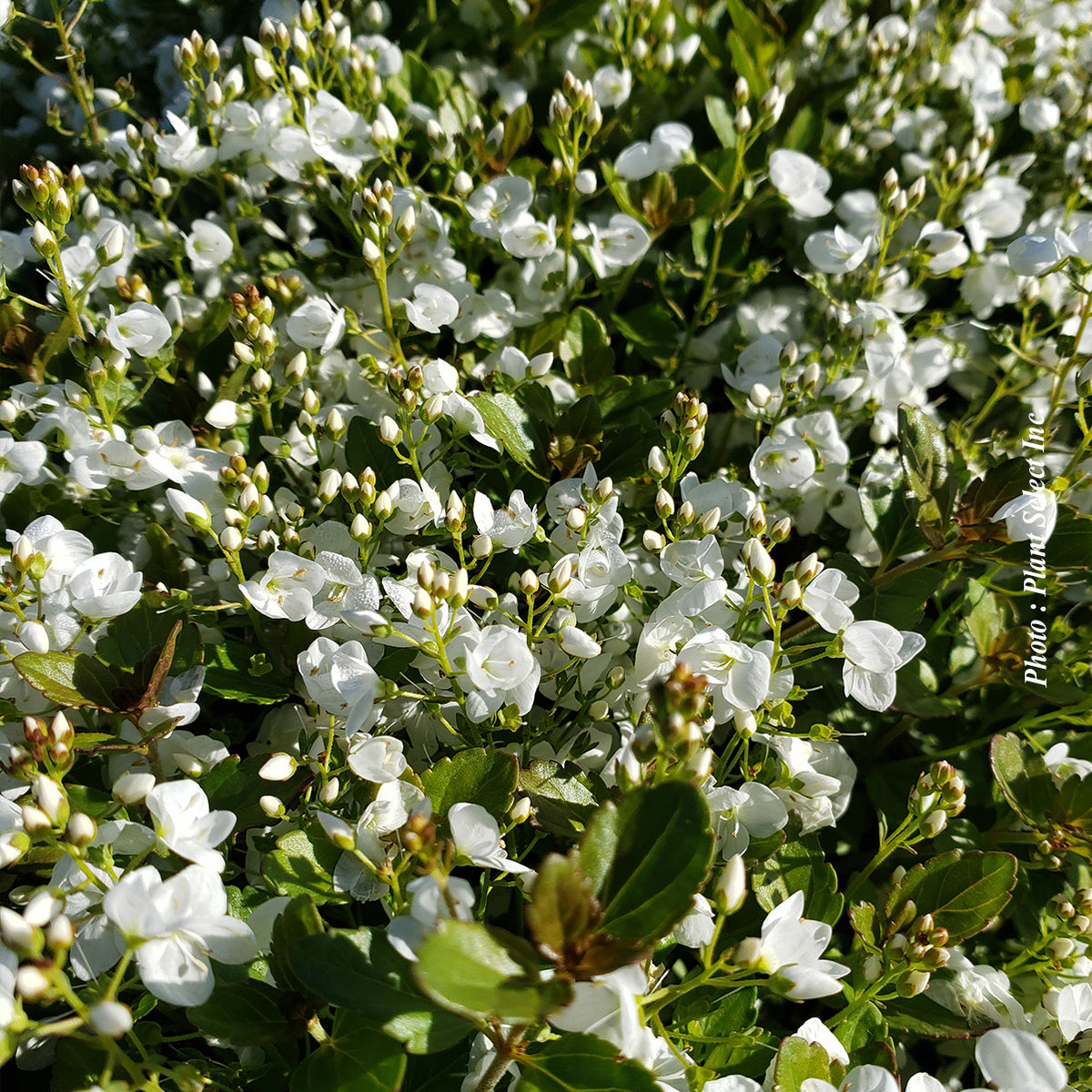
This Veronica speedwell plant forms a dense carpet of glossy green foliage covered with white spring flowers. Only 10 to 15 centimetres tall, Whitewater spreads quickly between stones, along paths and beneath lightly canopied plantings. Its leaves develop burgundy and bronze tones as temperatures cool.
- Quantity
- 1-gallon pot
- Exposure
- Full sun to partial shade
- Life cycle
- Herbaceous groundcover perennial
- Hardiness
- Zone 4 to 7
Discover the plant
Common nameWhitewater prostrate speedwell
FamilyPlantaginaceae
GenusVeronica
CultivarWhitewater
TypeCreeping groundcover perennial with white flowers
Botanical nameVeronica
Whitewater Prostrate Speedwell (Veronica ‘Whitewater’) forms a low, dense and vigorous groundcover. Creeping stems root as they spread, creating a mat 10 to 15 centimetres tall that can reach 30 to 45 centimetres wide in one season. From spring into early summer, abundant small white flowers shine above glossy, dark green leaves with finely scalloped edges. As temperatures cool, the foliage develops burgundy and bronze tones. This seasonal colour extends the plant's ornamental value well beyond flowering and highlights border edges, stones and spring bulbs. Its compact profile is especially useful where a tall perennial would hide nearby details.
For best results, grow Veronica ‘Whitewater’ in full sun or partial shade in average to moderately dry, well-drained soil. The cultivar adapts to several soil textures and a broad pH range. Water regularly during establishment, then allow the surface to dry slightly between waterings. Avoid sites where water remains around the roots. Space plants 30 to 45 centimetres apart to develop a continuous carpet. Rooted stems can be divided or shoot tips can be taken for propagation. A light trim after flowering helps maintain a neat edge without removing all of the colourful foliage. Established plants require little routine maintenance.
Whitewater prostrate speedwell is ideal for rock gardens, path edges, broad joints between stepping stones and the tops of retaining walls. It can trail over rocks, weave among bulbs or serve as a living mulch beneath lightly canopied shrubs. Its dense mat helps suppress weeds and tolerates occasional foot traffic, although it should not replace turf where people walk frequently. Chicago Botanic Garden lists it for Zones 4 to 7 and describes it as resistant to deer and rabbits. Combine its white flowers with aubrieta, creeping phlox, compact grasses or spring bulbs for lasting contrast. The glossy foliage remains an attractive feature after bloom.

Planting guide
From planting to establishment.
Spacing / density
Space plants 30 to 45 cm apart
Best planting time
Spring or early fall
Propagation
Stem cuttings or division of rooted stems
Growing method
Plant Whitewater prostrate speedwell in spring or early fall in a sunny or partly shaded position. Choose average to moderately dry soil that drains excess water quickly. Loosen the ground, remove perennial weeds and dig a hole as deep as the root ball. Keep the crown level with the soil, refill gently and water deeply. Space plants 30 to 45 centimetres apart; creeping stems will gradually fill the gaps as they root. Maintain consistent moisture for the first few weeks, then reduce watering frequency after new growth confirms establishment. Avoid thick mulch because it prevents stems from touching the soil. Trim tips that extend beyond the desired area. After flowering, a light cut can produce a denser mat. To propagate the plant, lift an already rooted section or take shoot-tip cuttings during active growth. Replant divisions immediately and keep them slightly moist until growth resumes. On a wall or in a rock garden, allow enough room for stems to trail without covering smaller neighbouring plants.
Soil and care
The right care,at the right time.
Soil pH
Acidic, neutral or alkaline
Care level
Low
Drought tolerance
Yes
Watering
Water deeply after planting, then keep the root ball slightly moist during establishment. Once stems begin to root and spread, allow the surface to dry between waterings. Occasional irrigation is generally sufficient in average to dry soil. Avoid frequent applications that keep the ground saturated, especially during cool weather.
Soil type
This perennial prefers average to moderately dry, well-drained soil. It adapts to several textures and a broad pH range. Gravelly, sandy or loamy ground works when water does not remain around the roots. In heavy soil, improve drainage or place the plant on a slope or raised area.
Fertilization
This speedwell needs little fertilizer. In spring, a thin layer of screened compost is sufficient in most gardens. Avoid high-nitrogen products that may encourage overly soft foliage instead of a compact mat. In very poor soil, apply a balanced fertilizer at a low rate after growth resumes.
Moisture
Low to moderate; well-drained soil
Seasonal care
In spring, remove dead leaves and debris caught in the mat without pulling rooted stems. After flowering, lightly trim the edges if the plant extends onto a path or covers a neighbour. In summer, monitor only prolonged dry periods. In fall, retain the foliage to enjoy its burgundy and bronze colour.
Container growing
A garden,within reach.
Recommended pot size
Container at least 30 cm wide with drainage
Whitewater prostrate speedwell suits broad, shallow containers and planters in full sun or partial shade. Use free-draining potting mix and a container with drainage holes, then allow stems to trail over the edge. Water when the upper few centimetres dry. In cold Canadian regions, protect the container from repeated freeze-thaw cycles or overwinter it in a cold, sheltered location.

Bloom and dimensions
Its place,in your garden.
Mature height
6 inches (15 cm)
Width / spread
18 inches (45.5 cm)
Flower color
White
Foliage color
Glossy dark green, turning burgundy to bronze
Foliage type
Semi-evergreen depending on climate
Growth rate
Fast to vigorous for a low groundcover
Growth habit
Creeping, prostrate and mat-forming
Fragrance
No fragrance reported
Bloom period
Small white flowers about 1 centimetre wide appear in short racemes above the foliage. The main bloom extended from late April to late June in Chicago Botanic Garden trials, peaking around mid-May. A few flowers may appear sporadically during summer and fall.
Fruiting
No fruit or seed production observed in the patent trials
Garden associations
In goodcompany.
Companion plants
Pair it with aubrieta, creeping phlox, dwarf dianthus, compact grasses, alliums and other spring bulbs. Blue, pink or purple flowers contrast with its bright white bloom, while grey or golden foliage highlights the burgundy fall colour. Choose companions that also prefer well-drained soil and do not create overly dense shade.
Plants to avoid
Avoid very vigorous plants that could smother this low groundcover and neighbours requiring constantly saturated soil. Thick mulch, compacted leaves and broad-leaved perennials can prevent stems from rooting. Maintain a clear edge near delicate plants so Whitewater does not cover their crowns.
Frequently asked questions
Your questions,answered.
Is Whitewater prostrate speedwell hardy in Canada?
Chicago Botanic Garden recommends Veronica ‘Whitewater’ for Zones 4 to 7, while the United States plant patent mentions Zones 4 to 8. This range suits many populated Canadian regions, but survival also depends on drainage, snow cover and winter exposure. Plant it where water drains quickly to reduce damage caused by freezing in saturated soil. Leave the foliage in place through fall because it partially protects creeping stems and develops attractive colour. In a highly exposed site, consistent snow cover or a light mulch applied after the ground freezes can reduce freeze-thaw cycles. Remove debris carefully in spring without pulling up rooted stems. Container-grown plants need additional protection because their roots experience colder and more variable temperatures than plants in the ground.
Which exposure suits Veronica Whitewater?
Veronica ‘Whitewater’ grows in full sun or partial shade. Good light generally encourages a dense mat, abundant flowering and stronger fall colour. In a warm region or a very dry position, some afternoon shade may reduce moisture stress. Avoid deep shade beneath conifers or heavily leafed shrubs because stems may stretch and flowering can decline. Beneath a lightly canopied shrub, use it as living mulch only when several hours of light reach the ground. Monitor moisture during the first few weeks, then space waterings farther apart after stems begin to root. On a sunny wall, drainage is excellent but the growing medium dries more quickly and requires additional attention. If flowers become sparse, compare the amount of direct light with nearby sections that bloom more generously.
How can this speedwell be kept within its border?
Whitewater stems root whenever they touch the soil, allowing the mat to widen over time. Inspect the edges in spring and after flowering, then cut stems that enter a delicate plant or extend onto a walking surface. Lift rooted sections with a small trowel instead of pulling so the remaining mat stays undisturbed. A mineral edge, gravel joint or narrow strip of regularly cultivated soil makes control easier. Removed pieces can be replanted elsewhere or shared. Avoid burying stems beneath thick mulch because their progress becomes harder to see. This growth is useful in a broad rock garden or on a slope but requires occasional trimming in a small, precisely defined space. Check the border before neighbouring plants produce dense summer foliage and hide advancing stems.
Does Whitewater speedwell tolerate foot traffic?
Chicago Botanic Garden notes that this groundcover is tough enough to tolerate occasional foot traffic. It can therefore grow in broad joints between stepping stones or along a path where a foot lands from time to time. It does not replace turf or a plant designed for daily traffic. Position stones to carry most of the weight, then allow stems to occupy the spaces between them. Avoid walking on the mat when soil is saturated because roots and stems are more easily damaged. After accidental damage, gently place stems against the soil and keep the area slightly moist until growth resumes. In a heavily used entrance, grow Whitewater beside the route so its carpet remains visible without being repeatedly crushed.
Why does Whitewater foliage turn bronze?
The colour change is a normal characteristic of this cultivar. Glossy dark green foliage develops burgundy and bronze tones as temperatures cool in fall and winter. This colouring does not automatically mean that the plant lacks fertilizer or is diseased. Keep healthy leaves in place to enjoy the display and provide some protection for creeping stems. In spring, remove only sections that are truly dry or damaged after growth resumes. If foliage suddenly browns in summer, check soil moisture, drainage and signs of physical damage instead. Constantly saturated soil or, conversely, a newly planted root ball that dries completely can cause decline that looks different from uniform seasonal colouring. Compare affected stems with healthy sections before deciding that the whole mat needs treatment.
Wildlife and pets
Life,around your plants.
Supporting wildlife
The small white flowers produce pollen in spring. However, the consulted sources do not quantify this cultivar’s attraction for a specific pollinator group. To support more wildlife, combine it with several spring- and summer-flowering nectar plants and avoid insecticides during bloom.
For your planting projects
The right extras.Right here.
Hand Tools
Shop the collection