Sale
Sold out

Tall upright perennial with light pink flowers
Plantaginaceae
Tall pink perennials for moist soil
Pink Culver's root ‘Roseum’
Veronicastrum virginicum
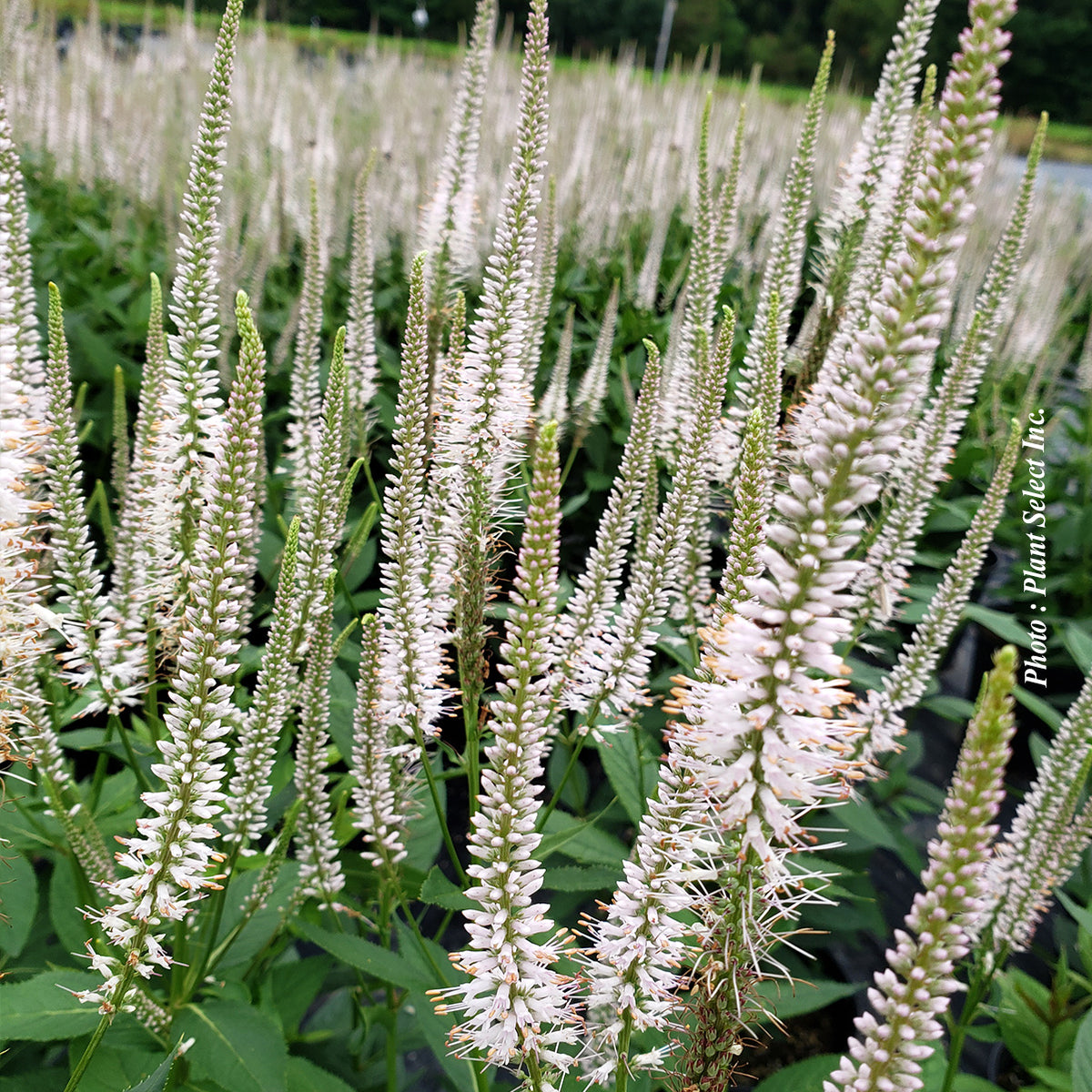
Culver's root ‘Roseum’ forms a tall upright clump topped with light pink spikes that open in summer. Green leaves arranged in whorls and branching flower clusters create a distinctive architectural effect. This perennial prefers full sun or partial shade and fertile soil that remains evenly moist without staying waterlogged. It suits the back of borders, rain gardens, flowering meadows and naturalistic plantings. Its flowers attract many pollinating insects, while the dried silhouette remains decorative after bloom. A spacious, clearly visible garden position allows the plant's elegant height and candelabra-like form to be appreciated fully without crowding neighbouring perennials nearby. throughout summer.
- Quantity
- 1-gallon pot
- Exposure
- Full sun to partial shade
- Life cycle
- Hardy perennial
- Hardiness
- RHS H7 rating; species generally listed for Zone 3 to 8
Discover the plant
Common namePink Culver's root ‘Roseum’
FamilyPlantaginaceae
GenusVeronicastrum
Speciesvirginicum
CultivarRoseum
TypeTall upright perennial with light pink flowers
Botanical nameVeronicastrum virginicum
Pink Culver's Root ‘Roseum’ (Veronicastrum virginicum ‘Roseum’) is a tall herbaceous perennial with an upright, columnar habit. Strong stems carry lance-shaped, serrated leaves in distinctive whorls, then branch into long flower spikes that create an elegant candelabra effect. Numerous small light pink flowers open progressively through summer and into early fall. Plants generally reach 1 to 1.5 metres tall and spread 50 centimetres to 1 metre. The deciduous foliage disappears in winter, while dry stems can retain a graphic presence in the garden. This refined cultivar adds height without producing dense, visually heavy foliage.
For best results, grow Veronicastrum virginicum ‘Roseum’ in full sun or partial shade in moderately fertile, humus-rich, evenly moist and well-drained soil. Water regularly while roots establish and during dry periods because the ground should not dry completely. Space plants 50 to 75 centimetres apart so air can circulate between clumps. A spring compost application is generally sufficient. Abundant light encourages sturdier stems; in substantial shade or a windy position, discreet support may become useful. Remove faded spikes to extend seasonal interest and encourage possible rebloom. Avoid permanently waterlogged ground even though the plant accepts periodically moist conditions.
This veronicastrum Roseum and pink Culver's root suits the back of borders, rain gardens, flowering meadows and naturalistic plantings. Light pink spikes attract bees, bumblebees, butterflies and other useful insects while providing excellent vertical lines for bouquets. The cultivar derives from a species native to central and eastern North America, but the Canadian databases consulted do not classify that species as native to Quebec. The RHS gives the roseum form an H7 rating, meaning published hardiness below −20°C. Leave stems standing through winter if you enjoy their silhouette, then cut them back before spring growth begins. Pair the pale flowers with purple, blue or golden companions.

Planting guide
From planting to establishment.
Spacing / density
Space plants 50 to 75 cm apart
Best planting time
Spring or early fall
Propagation
Division in spring; seed propagation is also possible
Growing method
Plant Culver's root ‘Roseum’ in spring or early fall in full sun or light shade. Loosen fertile, humus-rich soil to a depth of about 30 centimetres and incorporate compost when the site is poor. Dig a hole as deep as the root ball and twice as wide. Keep the crown level with the surrounding soil, refill without heavy compaction and water deeply. Space plants 50 to 75 centimetres apart so each clump can broaden while air moves freely through the stems. Keep soil evenly moist throughout the first growing season and never allow the root ball to dry during hot weather. Apply a thin organic mulch without covering the crown. In substantial shade, provide discreet support if the tall stems lean. Remove faded spikes to extend seasonal interest or leave them for their winter silhouette. The following spring, add a light compost layer and cut dry stems before new shoots emerge. After several years, divide a very dense clump in spring and replant the sections promptly in moist soil. Continue watering until renewed growth confirms that each division has established. Check the soil frequently during its first warm month after replanting.
Soil and care
The right care,at the right time.
Soil pH
Acid, neutral or alkaline
Minimum temperature
Below −20°C under the RHS H7 rating
Care level
Low to moderate
Watering
Water deeply after planting, then keep the soil evenly moist while roots establish. Check moisture once or twice each week during hot weather and irrigate when the upper few centimetres begin to dry. A thin mulch layer reduces evaporation. Established plants tolerate periodically wet conditions but benefit from adequate drainage between rain events. Avoid frequent shallow watering, which encourages surface roots and leaves tall stems less resilient during summer heat.
Soil type
This perennial prefers fertile, humus-rich, evenly moist to wet and well-drained soil. It accepts clay, loam and sand when moisture remains consistent, along with acid, neutral or alkaline conditions. A rain garden is suitable when water can drain between wet periods. Avoid ground that dries completely during summer and sites that remain permanently waterlogged, where the roots receive too little air.
Fertilization
Spread a thin compost layer around the clump in spring without covering the crown. In fertile soil, this is generally sufficient. A balanced slow-release fertilizer may be used sparingly when growth remains weak despite adequate light and moisture. Avoid excessive nitrogen because it can produce unusually tall, less sturdy stems. Water after applying any granular fertilizer and keep concentrated products away from emerging shoots.
Moisture
Evenly moist to wet soil
Seasonal care
In spring, cut dry stems before new shoots lengthen and remove leaves that have collected over the crown. Add a thin compost layer and make sure mulch does not touch emerging stems. Divide an overly dense clump at this time and replant sections without delay. During summer, maintain consistent moisture, especially through the first year and during hot periods. Watch for leaning stems in shaded or windy positions and add discreet support when needed. Cut faded spikes back to basal foliage for a tidier appearance and possible rebloom. Also watch for aphids, powdery mildew, downy mildew and leaf spots; improve air circulation and avoid unnecessary wetting of foliage. In fall, gradually reduce watering as dormancy begins while preventing the root ball from becoming completely dry. You may leave stems and spikes standing for winter structure and habitat. In late winter, cut them to a few centimetres above the soil and compost only healthy material. In a rain garden, remove debris that blocks drainage so water does not remain stagnant around the crown. Check for frost heaving after winter thaws and gently firm exposed roots back into the soil before growth resumes. During the first spring after planting, monitor moisture beneath the mulch every few days because young roots occupy a limited soil volume. Refresh edging and supports before stems lengthen so later work does not disturb new shoots.
Container growing
A garden,within reach.
Recommended pot size
Stable container 50 to 60 cm wide and deep
Culver's root ‘Roseum’ can grow in a large container, but its height and steady moisture requirement call for a very stable pot. Choose a container at least 50 to 60 centimetres wide and deep with several drainage holes. Use rich quality potting mix amended with compost and keep the crown level with the surface. Place the pot in full sun or partial shade, protected from winds that could bend tall stems. Water deeply whenever the upper few centimetres of mix begin to dry; a generous soil volume reduces rapid moisture swings. Add a thin compost layer in spring and position a discreet circular support before stems become tall. Remove faded spikes or retain them for winter. In Quebec, protect the container from repeated freezing and thawing by grouping it with other pots, insulating its sides or moving it to a cold sheltered location. Keep the root ball slightly moist during dormancy without standing water. Divide or repot the clump when roots fill the available space and renew part of the potting mix at the same time. Inspect drainage holes before winter and again during thaws so melting snow can leave the container freely.

Bloom and dimensions
Its place,in your garden.
Mature height
5 feet (1.53 m)
Width / spread
24 inches (61 cm)
Flower color
Light pink
Foliage color
Dark green
Foliage type
Deciduous
Growth rate
Moderate; initially slow to establish
Growth habit
Upright, vertical and clump-forming
Fragrance
Undocumented for this selection
Bloom period
Long branching racemes carry numerous small tubular flowers in light pink. They open from the top downward and create a candelabra effect above the whorled foliage. Bloom generally begins in early summer and continues into midsummer. Removing faded spikes may encourage a later rebloom. The flowers are also suitable for cutting and attract a broad diversity of pollinating insects, including bees, bumblebees, butterflies, moths, hoverflies and beneficial wasps.
Fruiting
Dry capsules after flowering
Garden associations
In goodcompany.
Companion plants
Pair Culver's root ‘Roseum’ with spotted Joe-Pye weed, New England aster, black-eyed Susan, purple coneflower, switchgrass or big bluestem. These plants generally appreciate sun and consistent moisture while contributing complementary shapes. Umbels, daisy flowers and grasses contrast effectively with the upright spikes. Respect the mature space of each species so air can circulate and clumps do not compete excessively. Choose companions according to the actual drainage and moisture pattern of the carefully prepared garden site rather than flower colour alone nearby.
Plants to avoid
Around Véronicastrum ‘Roseum’, above all avoid neighbouring plants that would cover its leaves or strongly compete with its root ball. The compatibility of light, water, and spread takes precedence over a list of so-called enemy plants.
Frequently asked questions
Your questions,answered.
Is Culver's root ‘Roseum’ hardy in Canada?
Yes. North American horticultural references generally place Veronicastrum virginicum in Zones 3 to 8, while the RHS gives it an H7 rating associated with hardiness below −20°C. This range suits many inhabited parts of Canada when the site provides reliable winter drainage. Keep the crown level with the soil, water consistently through the first growing season and prevent standing water around the roots during winter thaws. A thin mulch layer can moderate temperature changes without covering the crown. Leave dry stems standing if you value their winter outline, then cut them back before spring growth begins. Check newly planted crowns after freeze-thaw cycles and gently firm any exposed roots.
Which exposure suits Veronicastrum virginicum?
Veronicastrum virginicum prefers full sun but accepts partial shade. Abundant light generally encourages generous flowering and sturdier stems. In a shaded position, plants may lean more and benefit from discreet support or sturdy neighbours. Regardless of exposure, the soil should remain fertile, evenly moist and well drained. In full sun, monitor moisture more frequently during hot periods so the root ball never dries completely. Space plants 50 to 75 centimetres apart to preserve good air circulation. In very warm regions, some afternoon shade may reduce stress, but Canadian summer sun is suitable when watering remains consistent. Avoid dense shade because it can reduce bloom and weaken the upright architectural form.
How can soil be kept moist enough for this perennial?
Work compost into the soil before planting to improve its ability to hold consistent moisture while retaining good drainage. Water deeply instead of frequently and shallowly, then check the upper few centimetres during hot weather. A thin organic mulch reduces evaporation, but leave open space around the crown. Grouping plants with similar moisture needs also makes irrigation simpler. A rain garden can work when water drains between storms. Avoid permanently waterlogged sites because saturated soil deprives roots of air. In a container, choose a generous volume of potting mix and check moisture much more often. During the first season, continue watering until cool fall weather rather than stopping immediately after flowering.
Does Culver's root ‘Roseum’ attract pollinators?
Yes. The small tubular flowers provide nectar and pollen for a broad diversity of insects. NC State Extension lists long- and short-tongued bees, honeybees, bumblebees, mason bees, metallic bees, butterflies, moths, hoverflies and certain beneficial wasps among the visitors. Plant several specimens together to create a floral resource that is easy to locate. Avoid insecticides during bloom and include other plants flowering before and after this perennial to extend nectar availability. A shallow water source and stems retained through winter can also make the garden more useful to different organisms. Culver's root ‘Roseum’ is especially effective when combined with native asters, coneflowers and moisture-loving grasses.
Which plants pair well with Culver's root ‘Roseum’?
Choose companions that also appreciate sun and consistently moist soil. Spotted Joe-Pye weed, New England aster, black-eyed Susan, purple coneflower, switchgrass and big bluestem make effective combinations in a large border or flowering meadow. Their rounded flowers, daisy shapes and airy seed heads contrast with the upright spikes of Culver's root ‘Roseum’. Position shorter species toward the front and allow 50 to 75 centimetres around each Veronicastrum virginicum clump. Always match moisture requirements to the site's actual drainage pattern. Repeating several clumps creates a more natural rhythm than using one isolated plant. Avoid placing drought-loving companions immediately beside it if regular irrigation cannot be supplied.
Wildlife and pets
Life,around your plants.
Supporting wildlife
The flowers provide nectar and pollen for long- and short-tongued bees, honeybees, bumblebees, mason bees, butterflies, moths, hoverflies and beneficial wasps. Grouping several plants makes the upright spikes much easier for visiting insects to locate throughout the main summer flowering period in the garden landscape.
For your planting projects
The right extras.Right here.
Hand Tools
Shop the collection