


Deep purple double-flowered Japanese wisteria
Grande Diva® Jessye Japanese wisteria
Wisteria floribunda
Products and available quantities may vary between Brossard and Laval. To check a store’s inventory, please contact us directly.
Even better: visit us in store to discover the full selection available!
- Exposure
- Full sun; light partial shade is tolerated, but flowering may decrease
- Hardiness
- Zone 5
Discover the plant
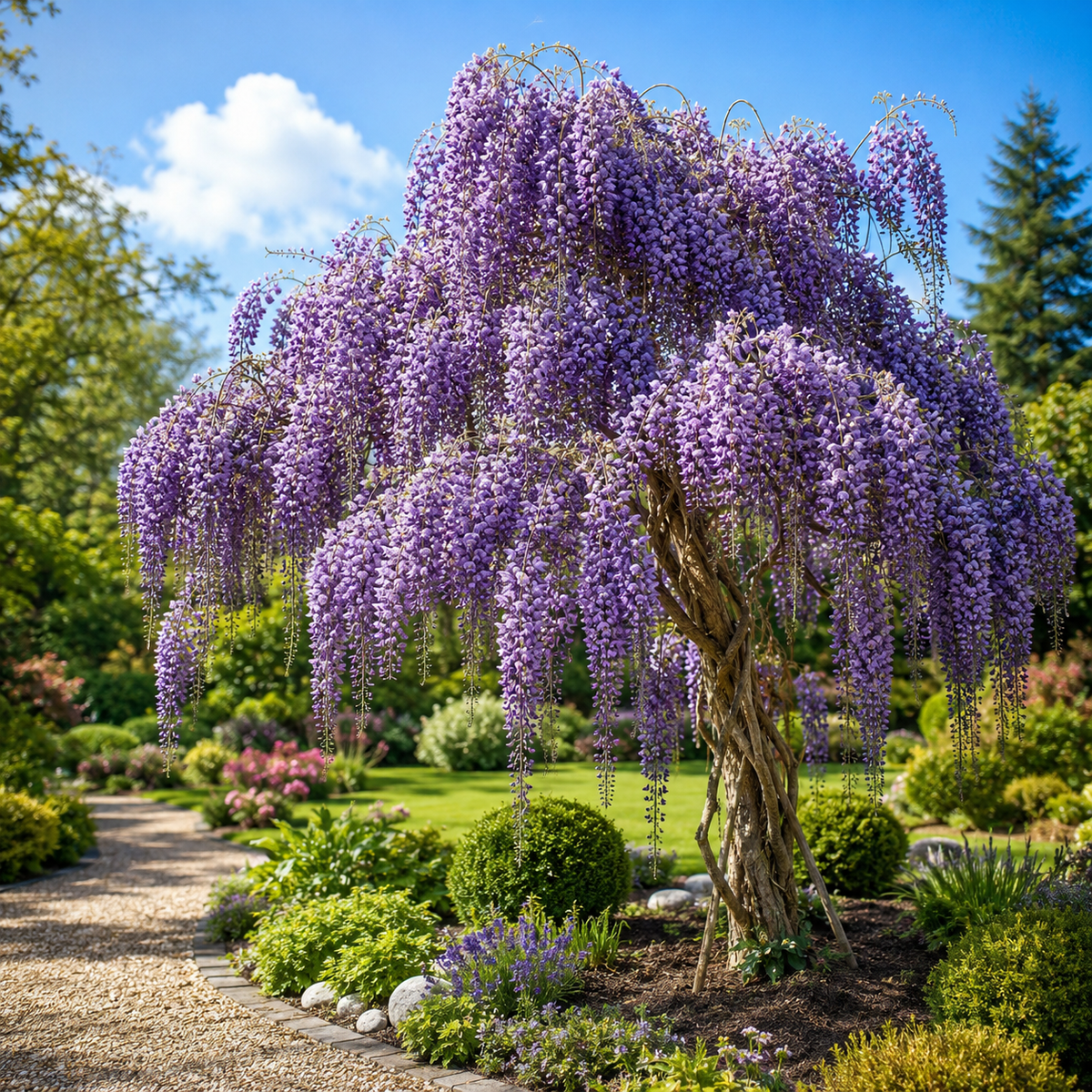
Grande Diva® Jessye Japanese wisteria (Wisteria floribunda ‘MinwiCB02’) stands out for deep purple double flowers carried in fragrant spring racemes. Selected in France and named in honour of opera singer Jessye Norman, this woody vine creates a theatrical feature on a pergola, arbour, or large trellis. Deciduous deep green foliage follows and forms a dense summer screen. Growth can reach about 90 cm (3 ft) per year, while final dimensions depend strongly on the supporting structure and pruning. A carefully trained plant may extend 3 to 9 m (10 to 30 ft) in length.
Choose a full-sun location because abundant light supports the greatest flower production. Soil should be fertile without excess, evenly moist, and well drained. Install an independent support from the beginning that can carry heavy woody stems as they mature. Water slowly during establishment, then allow the soil surface to dry slightly between applications without creating prolonged stress. Avoid high-nitrogen fertilizers, which mainly encourage leaves and long shoots. Regular pruning keeps the flower clusters visible, protects nearby structures, and prevents stems from reaching trees, gutters, siding, or other areas where this vigorous Japanese wisteria would be difficult to manage.
After flowering, shorten flexible shoots extending beyond the support. In late winter, reduce secondary growth to several well-placed buds and remove dead, weak, or crossing wood. This routine develops an orderly framework and makes annual care more predictable. Asian wisterias are vigorous, so monitor stems touching the ground and remove them before they root. Seeds, pods, and other wisteria parts are toxic when eaten. Collect accessible debris and choose the site carefully around children or pets. The fragrant double flowers welcome pollinating insects, while the foliage supplies shade and privacy during the northern growing season.

Planting guide
From planting to establishment.
Soil and care
The right care,at the right time.
Soil pH
Care level
Watering
Soil type
Fertilization
Moisture
Seasonal care
Container growing
A garden,within reach.
Recommended pot size

Bloom and dimensions
Its place,in your garden.
Mature height
Width / spread
Flower color
Foliage color
Foliage type
Growth rate
Growth habit
Fragrance
Bloom period
Fruiting
Garden associations
In goodcompany.
Companion plants
Plants to avoid
Frequently asked questions
Your questions,answered.
Does Grande Diva® Jessye really have double flowers?
What support is suitable for Jessye wisteria?
How should Grande Diva® Jessye wisteria be pruned?
Can Jessye wisteria be grown in a container in Canada?
Is Grande Diva® Jessye wisteria toxic?
Wildlife and pets