


Shrubs
Snowbelle Mock Orange
Philadelphus
Products and available quantities may vary between Brossard and Laval. To check a store’s inventory, please contact us directly.
Even better: visit us in store to discover the full selection available!
- Exposure
- Full sun to partial shade
- Hardiness
- Zone 4
Discover the plant
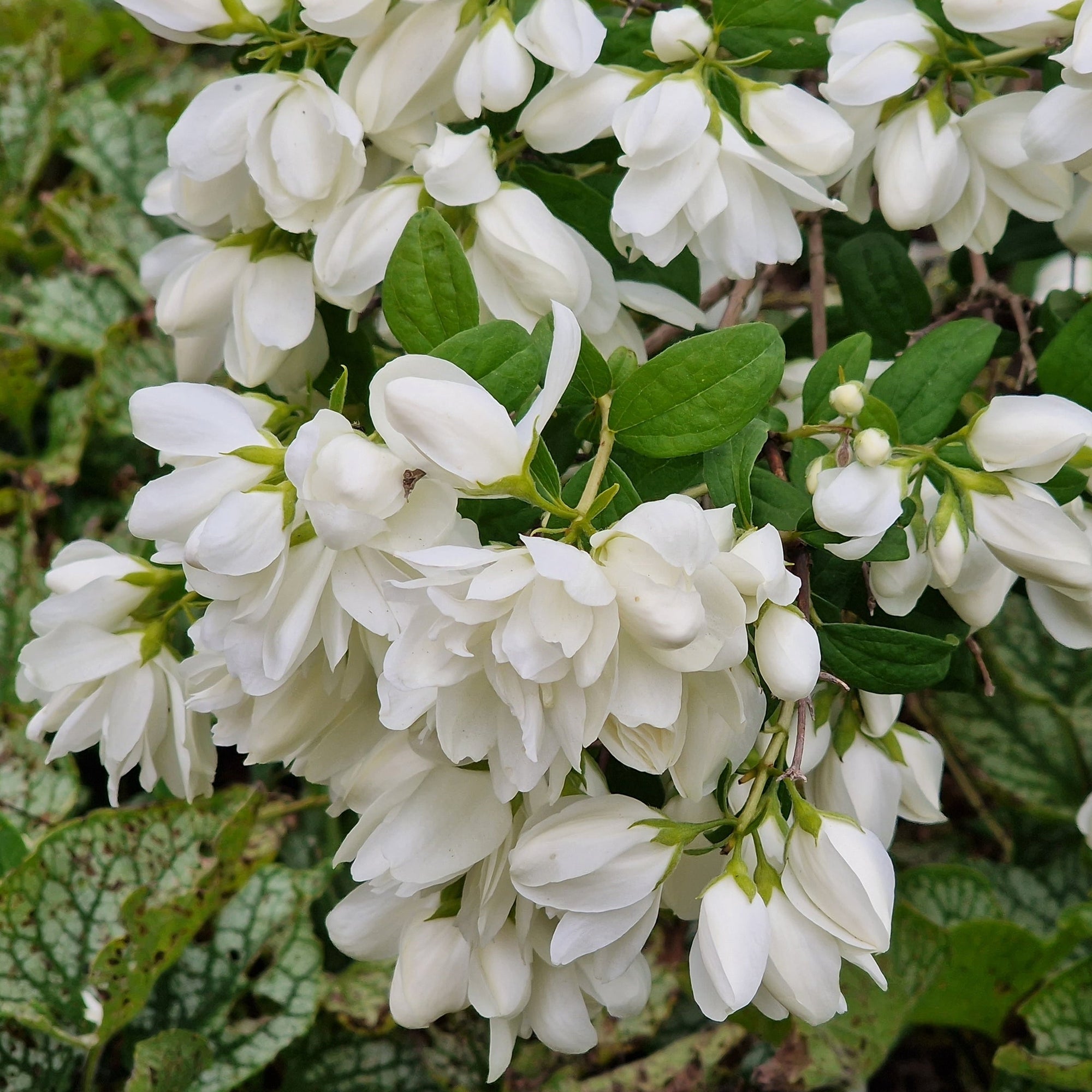
Mock Orange 'Snowbelle' (Philadelphus 'Snowbelle'). Philadelphus 'Snowbelle', also known as mock orange 'Snowbelle', is a compact shrub prized for its double white, highly fragrant blossoms that resemble orange blossoms in early summer. Its rounded, dense, and neat habit is particularly well suited to small gardens, foundation plantings, and landscapes where a flowering presence is desired without taking up too much space. This variety is distinguished by its abundant, full, and luminous flowers, which stand out beautifully against its deciduous green foliage. It requires little maintenance, tolerates ordinary garden conditions well, and can be pruned after flowering, if necessary, to maintain a balanced shape and encourage new growth.
To plant 'Snowbelle' mock orange, choose an appropriate exposure: full sun to partial shade. The recommended soil is moderately fertile, fresh, and well-drained. Water the root ball before planting and ensure that water can drain after planting. During establishment, check the moisture by hand before watering again. Spread mulch around the base, leaving the crown clear. Avoid systematic fertilizer applications without considering the soil's richness. In Quebec, choose a period when the soil is thawed and easy to work with.
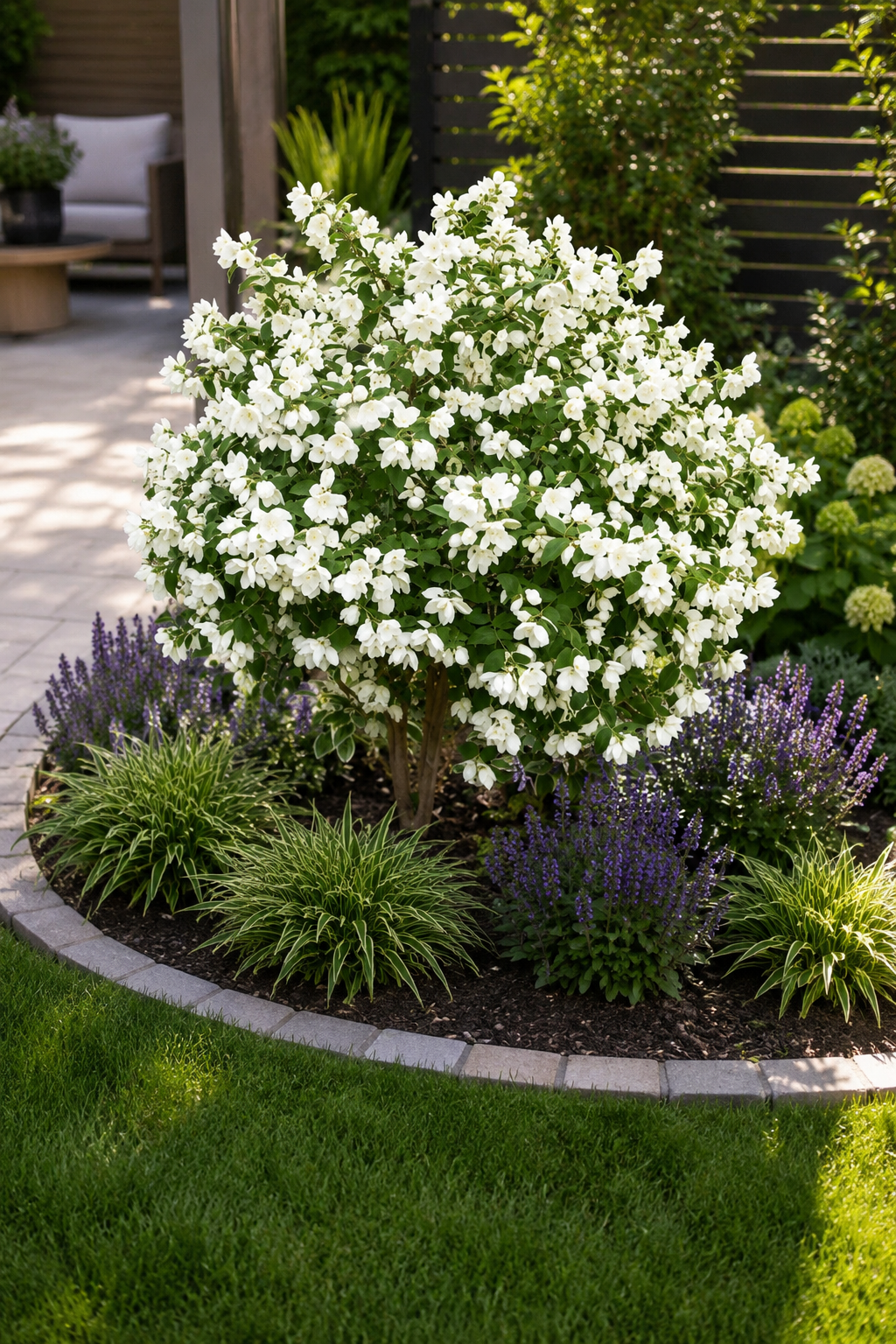
Excellent in mass plantings, shrub borders, near an entrance, patio, path, or in a foundation planting. Also suitable for fragrant gardens and pollinator-friendly landscapes. Allow for a width of 1-1.5 m (3-5 ft) to organize this plant's space in the garden. The indicated height of 1-1.5 m (3-5 ft) helps choose its position relative to neighboring plants. Keep access to the base to weed, check moisture, and remove damaged parts. Associate this variety with plants whose light and water requirements are compatible.

Planting guide
From planting to establishment.
Soil and care
The right care,at the right time.
Soil pH
Minimum temperature
Care level
Watering
Soil type
Fertilization
Moisture
Seasonal care
Container growing
A garden,within reach.
Bloom and dimensions
Its place,in your garden.
Mature height
Width / spread
Flower color
Foliage color
Foliage type
Growth rate
Growth habit
Bloom period
Fruiting
Garden associations
In goodcompany.
Companion plants
Wildlife and pets