Sale
Sold out

Organic Mexican heirloom open-pollinated hot pepper
Solanaceae
Organic hot pepper seeds
Organic 'De Arbol' hot pepper
Capsicum annuum
Product code : BIOVO-0081
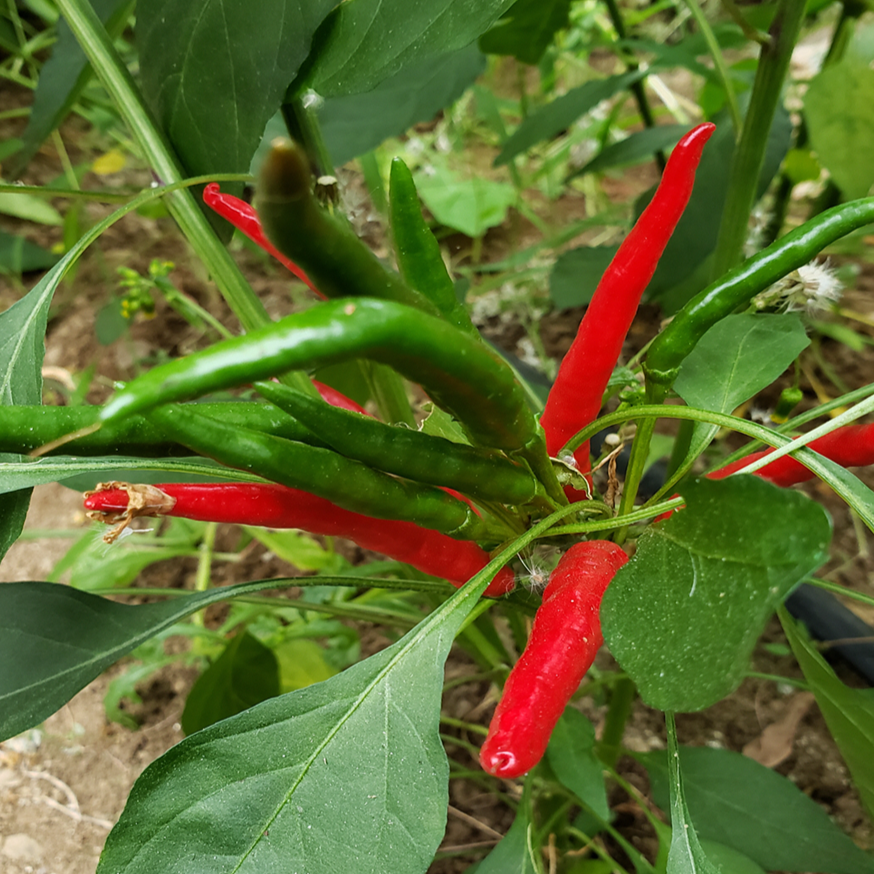
Organic 'De Arbol' is a Mexican heirloom, open-pollinated pepper with long, slender fruit that changes from green to bright red. Bright, lightly smoky flavour and thin walls suit drying, flakes, powder, and sauces. Plants reach approximately 60–90 cm; germination requires 10–21 days at 24–30°C, and harvest begins around 70–80 days after transplanting. Each selection contains approximately 10 organic seeds. Grow in full sun and handle peppers with gloves because the exact heat of this selection is not published. Stake early, water evenly without saturating the soil, and identify every plant from sowing onward. Wear gloves during harvest, drying, and grinding, ventilate thoroughly, avoid inhaling pepper dust, and keep every finished batch clearly labelled.
- Quantity
- Approximately 10 seeds per packet
- Exposure
- Full sun
- Life cycle
- Annual vegetable in Canadian gardens
Discover the plant
Common nameDe Arbol pepper
FamilySolanaceae
GenusCapsicum
Speciesannuum
CultivarDe Arbol
TypeOrganic Mexican heirloom open-pollinated hot pepper
Botanical nameCapsicum annuum
Reproducible seedsYes
Heirloom varietyYes
Organic 'De Arbol' hot pepper (Capsicum annuum) produces long, slender fruit that changes from green to red at full maturity. Relatively thin walls make peppers suitable for drying into flakes or powder, while fresh fruit works in sauces, marinades, and hot dishes. This organic, open-pollinated variety provides a versatile harvest in a warm sunny location. Each selection contains approximately 10 seeds, a practical quantity for several carefully identified plants in a garden, greenhouse, or well-drained container. Changing fruit colour also makes ripening easy to follow from one harvest visit to the next.
Sow indoors from February through April, 0.5–1 cm deep, approximately eight to ten weeks before the last frost. Maintain 24–30°C until emergence, generally in 10–21 days, then place seedlings under strong light. Harden plants gradually and transplant only after frost once nights remain mild. Choose rich, warm, well-drained soil in full sun. Water deeply when the surface begins to dry and feed moderately; excessive nitrogen encourages foliage at the expense of flowering and ripening. Install support early if branches become heavily loaded with developing fruit. Add light mulch only after the soil has warmed thoroughly.
Plants reach approximately 60–90 cm tall and spread about 40 cm. Harvest begins around 70–80 days after transplanting, depending on warmth and growing conditions. Pick green fruit for a more vegetal flavour or wait until it turns red for a riper, fruitier profile. The exact Scoville rating for this selection is not published; taste a small amount before adding more. Wear gloves during preparation, avoid contact with eyes, and clearly label fresh, frozen, dried, powdered, or prepared harvests. Chill picked peppers promptly and discard fruit showing mould, rot, or an unusual odour.

Sowing guide
It all startswith a seed.
Sowing depth
Approximately 0.5 to 1 cm (¼ to ⅜ in)
Spacing / density
Approximately 40 cm between plants; leave sufficient space between rows for care and harvest
Germination temperature
24 to 30 °C (75.2 to 86 °F)
Germination time
10–21 days
Sowing period
Indoors, 8 to 10 weeks before the last frost
Propagation
Seed
Growing method
Growing 'De Arbol' hot pepper from seed. Sow 0.5–1 cm deep in light mix eight to ten weeks before last frost. Use clean seed starting mix for the indoor start of 'De Arbol', keeping it moist but never saturated. After emergence, move seedlings immediately under strong light with gentle airflow so stems remain sturdy. A pepper seedling needs strong light, gentle airflow, and an evenly moist root zone without standing water. Plan around the way 'De Arbol' grows: vigorous, upright, branched, and productive. Keep access to the root zone for watering and inspection. Feed moderately after establishment; excessive nitrogen can postpone flowers and ripe fruit. Lay out the pepper plant at approximately 40 cm between plants; leave sufficient space between rows for care and harvest, then keep paths open instead of filling gaps with another mature crop. Label every seedling because fruit colour and heat cannot identify young pepper plants. As the crop matures, use the expected harvest form—long, slender fruit, green then bright red at maturity—to guide support, inspection, and careful picking. Harden plants gradually to sun, wind, and cooler air, bringing them back under cover if frost threatens. Give the plant full sun. Choose the site before committing the final planting position. Choose full sun and warm, fertile, freely drained soil for the long ripening season. After late-season rain or wind, confirm drainage and support while preserving healthy foliage needed to finish ripening. Clip this pepper at the intended colour, supporting loaded branches with the other hand. Gloves and clear labels protect the kitchen workflow, while a frost forecast determines when remaining usable fruit must come inside.
Soil and care
The right care,at the right time.
Soil pH
Approximately 6.0 to 6.8
Care level
Moderate
Watering
The elongated fruit of 'De Arbol' hot pepper develops most evenly when the plant receives steady moisture through flowering and fruit elongation. As 'De Arbol' hot pepper's long, slender fruit, green then bright red at maturity develops on a plant with vigorous upright branched productive growth, widen the wetted area with the expanding canopy and roots. 'De Arbol' hot pepper is listed at approximately 70–80 days after transplanting, depending on growing conditions; treat that as a planning reference and monitor moisture while later flowers and fruit are still developing.
Soil type
Give 'De Arbol' hot pepper loose, deep soil so its vigorous roots can sustain repeated growth of elongated fruit. Give 'De Arbol' hot pepper's vigorous upright branched productive growth enough uncompacted root area to carry long, slender fruit, green then bright red at maturity. With 'De Arbol' hot pepper's harvest listed as approximately 70–80 days after transplanting, depending on growing conditions, keep its soil open and workable through the full production period. Before planting 'De Arbol' hot pepper, incorporate mature compost and break compacted layers instead of creating a rich, wet pocket around the crown.
Fertilization
'De Arbol' needs steady nutrition, not lush nitrogen-driven growth. Apply every fertilizer at its labelled rate. For 'De Arbol' hot pepper, fruit development responds best once feeding becomes restrained. Pause feeding when growth already looks balanced. Once De Arbol pepper buds, excessive nitrogen can delay fruiting. Record plant response before repeating the treatment. For 'De Arbol', its branches should remain sturdy as fruit begins filling. Let a soil test guide any corrective amendment. Even moisture helps 'De Arbol' hot pepper use available nutrients consistently.
Moisture
Consistent soil moisture without saturation; good air circulation around the foliage.
Seasonal care
Seasonal care for 'De Arbol' hot pepper. Use 'De Arbol' hot pepper’s stated sowing window as a frost-relative cue, not a universal date: indoors, 8 to 10 weeks before the last frost. Sow approximately 0.5 to 1 cm deep and allow 10 to 21 days for emergence at 24 to 30 °C (75.2 to 86 °F), then move seedlings promptly into strong light as soon as they appear. After emergence, give 'De Arbol' seedlings bright light and gentle air movement; pot on before roots circle densely, without burying a weak stem in wet mix. Harden the plants gradually, then transplant only after frost risk has passed, the soil is warm, and nights remain consistently mild. Choose full sun and loose fertile soil, mixing in mature compost while preserving drainage around the crown. Water deeply at soil level, then let the upper layer begin drying; repeated drought-to-soaking cycles can interrupt flower and fruit development. For container-grown 'De Arbol' hot pepper, use the supplied guidance—deep, well-drained 15–20 L container, one plant per pot—and check drainage before growth hides the surface. During flowering, inspect 'De Arbol' foliage for pests, maintain airflow, and avoid excess nitrogen, which can favour leafy growth over flower set and fruit ripening. Follow the supplied harvest guidance—approximately 70–80 days after transplanting depending on conditions—while remembering that warmth and light still determine how quickly each fruit reaches its final stage. When 'De Arbol' fruit begins colouring, handle it with gloves until the actual heat is known and label green and fully ripe harvests separately. Before the first autumn frost, move portable pots under protection or collect sound developed fruit, then remove diseased debris from the growing area.
Container growing
A garden,within reach.
Recommended pot size
Deep, well-drained 15–20 L container, one plant per pot
Growing 'De Arbol' hot pepper in containers. For 'De Arbol', choose a container matching this guide: deep, well-drained 15–20 L container, one plant per pot. Keep several drainage holes unobstructed. Water slowly when the upper mix begins drying, continue until surplus drains, and empty the saucer. Match 'De Arbol' to full sun and observe the actual hours of unobstructed light at the site. Place the pot in full sun where heat reflected from pavement will not overheat the roots. Keep approximately 40 cm between plants; leave sufficient space between rows for care and harvest around the crop, especially where neighbouring foliage could shade or trap moisture. Set one established the pepper plant plant at an appropriate depth and keep the stem clear of the rim and mulch. The expected harvest form—long, slender fruit, green then bright red at maturity—helps confirm crop identity, while local warmth and plant health still influence maturity. Check moisture daily during hot or windy periods, using pot weight and the root zone rather than a rigid schedule. Leave the plant open to light, airflow, and watering at soil level. Its growth is vigorous, upright, branched, and productive. Check ties after wind, remove only damaged lower leaves, and preserve airflow through the supported canopy. As nights cool, let the rate of mix drying guide watering, and inspect leaf undersides before sheltering the container. Complete the harvest as cold nights approach, retaining only sound fruit. A container brought under cover needs useful light, warmth, and a short isolation period for pest inspection.

Bloom and dimensions
Its place,in your garden.
Mature height
60 to 90 cm (23.6 to 35.4 in)
Width / spread
Approximately 40 cm (15.7 in)
Flower color
White to greenish white
Foliage color
Green
Foliage type
Simple herbaceous foliage
Growth rate
Fast
Growth habit
Vigorous upright branched productive plant
Fragrance
Bright, lightly smoky flavour with direct heat
Bloom period
Gentle air movement helps 'De Arbol' release pollen. Maintain airflow without repeatedly wetting the blossoms. For 'De Arbol' hot pepper, those self-fertile blossoms precede fruit development. Watch new flowers for recovery after stressful weather. De Arbol pepper opens small flowers where leaves meet its stems. Avoid spraying while beneficial insects are working. For 'De Arbol', its flowering branches may shed buds during environmental stress. Keep treatments off petals and active pollinators. 'De Arbol' hot pepper may also receive pollen-moving visits from insects. Secure De Arbol pepper before fruit weighs down flowering branches.
Fruiting
De Arbol peppers develop from fertilized blossoms and can be left on the plant to reach full red colour for drying or seasoning. Pick firm, sound pods with a short piece of stem attached where practical. Damaged fruit should be used or discarded promptly rather than mixed into a drying batch. Ripening time varies with growing conditions, so assess colour and condition alongside the maturity estimate.
Days to maturity
Approximately 70–80 days after transplanting, depending on growing conditions
Harvest
approximately 70–80 days after transplanting depending on conditions
Garden associations
In goodcompany.
Companion plants
De Arbol fits a seasoning garden with herbs such as oregano or parsley, but those companions should occupy their own spaces. Keep the pepper in the warmest adequately lit part of the bed and avoid allowing sprawling herb stems to hide fallen fruit. If a nearby early salad crop is used, harvest it before pepper branches expand. A clear picking route is especially helpful when collecting repeated small batches for drying. Evaluate companions by mature size and care requirements rather than relying on an unverified pest-repelling pairing.
Plants to avoid
Avoid close rotations with tomatoes, eggplants, potatoes, and other peppers where soil disease or heavy pest pressure has occurred.
Recipe idea
From the gardento your plate.
Edible parts
Fruit
'De Arbol' hot pepper in the kitchen. De Arbol pepper flakes — Harvest firm red peppers and wear gloves while working. Rinse them, dry every surface, remove stems, and split the slender fruit so moisture can escape. Arrange pieces in a single layer in a dehydrator and use the manufacturer's pepper setting until they are fully brittle. Let the thickest piece cool, then confirm it snaps rather than bends; return any leathery pieces to the dehydrator. Working with good ventilation, pulse the dry peppers briefly to coarse flakes while keeping your face away from dust. Mix 10 mL flakes with 5 mL toasted sesame seeds and 2 mL dried oregano for a savoury table blend. Sprinkle lightly over beans, roasted squash, noodles, or grilled corn, allowing diners to add their own portion. Transfer the completely cool blend to a clean, dry, labelled jar and protect it from steam and humidity. Discard any batch that softens, clumps, develops mould, or smells abnormal. Clean the grinder, gloves, board, trays, and work area before preparing other foods.
Frequently asked questions
Your questions,answered.
How hot is 'De Arbol' pepper?
De Arbol is a hot pepper with bright, lightly smoky flavour and direct heat. The verified product information does not state a precise Scoville rating, so avoid presenting one fixed number or assuming every fruit will feel identical. Its long, slender peppers start green and mature bright red, but ripeness colour is not a reliable measurement of pungency. Use gloves when cutting several fruit and keep hands away from eyes. Clean knives, boards, and work surfaces before they touch mild food. Begin with a small amount in a recipe and adjust after the flavour is distributed through the dish. Label fresh, dried, or frozen peppers clearly, especially once their slender shape resembles other red chiles. Treat both green and mature red De Arbol fruit as hot.
What is the difference between green and bright red fruit?
Green and bright red De Arbol peppers are two stages of the same slender fruit. Green indicates an earlier stage; bright red is the documented mature colour. The listing gives about 70–80 days after transplanting, depending on conditions, so inspect individual peppers and do not expect the whole plant to colour at once. Clip stems to avoid tearing the productive branches. Both stages are edible and hot, with a bright, lightly smoky flavour and direct heat. Red colour does not provide an exact measure of pungency. Wear gloves during a large harvest or preparation, avoid touching your face, and wash hands, tools, and boards afterward. Label green and red batches by cultivar and stage, particularly if other slender peppers are stored nearby. Use damaged fruit promptly and preserve only clean, sound peppers.
How should 'De Arbol' pepper be started in Canada?
Start De Arbol pepper indoors for dependable growth in Canada's short warm season. Sow seeds 0.5 to 1 cm (¼ to ⅜ in) deep in moist starting mix and keep them at 24 to 30 °C (75 to 86 °F). Allow 10 to 21 days for germination. Once seedlings emerge, provide bright light, avoid overwatering, and give gentle air circulation without cold drafts. Pot plants on before roots become congested. Harden them outdoors in stages and transplant after all frost danger has passed. In the garden, space plants approximately 40 cm apart and leave rows accessible for harvesting the long fruit. One plant may instead grow in a deep, well-drained 15–20 L container. Maturity is listed about 70–80 days after transplanting, depending on conditions. Developing peppers are green and become bright red at the documented mature stage.
When should 'De Arbol' pepper be harvested and stored?
Harvest De Arbol at the green stage or wait until its long, slender fruit is bright red at maturity. The published 70–80-day range is counted from transplanting, so use full colour, firmness, and fruit condition as the main cues. Clip stems to protect the branching plant. Refrigerate dry peppers for near-term use. For longer storage, freeze portions or dry the thin-walled fruit until no moisture remains before sealing. Its bright, lightly smoky flavour comes with direct heat: wear gloves, avoid touching the face, and clean knives and boards thoroughly. Label green, red, dried, and ground batches, because slender chiles become difficult to identify once stored. Reject soft, leaking, mouldy, or partly dried fruit instead of mixing it into a sound batch.
Can De Arbol be grown in a container?
De Arbol can grow in a deep, well-drained 15–20 L container, one plant per pot. Select a stable vessel and provide support for upright branches reaching approximately 60 to 90 cm. Put it outside after frost danger, give it a warm position, and water evenly while allowing excess to escape. Monitor moisture frequently during heat and leave room around the 40-cm spread for harvest. The long fruit develops green and finishes bright red. Because the published maturity range is approximately 70–80 days from transplanting, use visible colour and firm condition for picking. Keep the pot labelled as a hot Mexican heirloom pepper, away from children and pets. Wear gloves while processing and clean tools carefully before preparing mild ingredients.
Wildlife and pets
Life,around your plants.
Supporting wildlife
De Arbol blossoms can receive pollen from their own flowers as well as insect-assisted transfer. Observe flowers directly when assessing pollination; the number of nearby bees alone does not explain every failure to set fruit. Temperature extremes and plant stress also affect peppers, particularly in exposed or enclosed growing spaces.
For a great start to your seeds
The right extras.Right here.
Seed Starting Soil
Shop the collectionSeed starting supplies
Shop the collection