Sale
Sold out

Organic dwarf early open-pollinated snap pea
Fabaceae
Organic snap pea seeds
Organic 'Sugar Ann' snap pea
Pisum sativum
Product code : BIOVO-0106
Sugar Ann is an organic dwarf very early open-pollinated snap pea with green rounded fleshy crisp entirely edible pods. For best results with this compact snap pea, keep soil cool, well drained, and consistently moist. A low trellis supports this compact snap pea by holding stems upright and keeping pods clearly visible. Adjust this compact snap pea to actual weather because sustained heat reduces flowering and hastens tough texture. Picking every one or two days improves this compact snap pea and preserves tender juicy texture. During this compact snap pea, choose bright-green rounded pods that are lightly filled and free of soft areas. After this compact snap pea, cool the harvest promptly and refrigerate cut or prepared portions within two hours.
- Quantity
- Approximately 100 organic seeds per packet
- Exposure
- Sun to light partial shade
- Life cycle
- Cool-season annual
Discover the plant
Common nameSugar Ann snap pea
FamilyFabaceae
GenusPisum
Speciessativum
CultivarSugar Ann
TypeOrganic dwarf early open-pollinated snap pea
Botanical namePisum sativum
Reproducible seedsYes
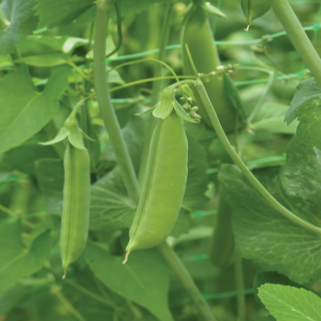
Organic 'Sugar Ann' snap pea (Pisum sativum) is a dwarf, very early snap pea with rounded pods eaten whole while tender and juicy. Unlike the flat pod of a snow pea, snap pea pods become fleshy as the peas develop. Sugar Ann received an All-America Selections award in 1984 and crops quickly on compact plants. The selection contains approximately 100 organic reproducible seeds and is open-pollinated. Its early compact format is especially useful in spring gardens and containers fitted with low support. White flowers make the first developing pods easy to anticipate.
Direct sow April through June as soon as soil can be worked, 2.5–4 cm deep and approximately 5–10 cm apart. Maintain cool, loose, well-drained soil; 10–18°C supports emergence in 7–14 days. Full sun gives the best yield, while light partial shade may extend quality as heat arrives. Keep moisture even, especially during flowering and pod filling. A low trellis supports stems and simplifies picking even for this dwarf variety. Light mulch after emergence helps steady moisture without leaving roots waterlogged. Protect emerging shoots from birds when activity is high, then remove the cover before stems reach it.
Harvest generally begins approximately 52–58 days after sowing. Pick while pods are bright green, rounded, fleshy, crisp, and lightly filled, before they become hard or fibrous. Pick every one or two days to support continued production. Sugar Ann is excellent fresh, as a snack, in salads, lightly steamed, or stir-fried. The variety has documented resistance to Fusarium wilt race 1. Crop rotation and soil-level watering complement that resistance without promising complete protection. Harvest in the morning after dew dries, hold the stem while picking, and cool sound pods promptly. Discard anything mouldy, slimy, or abnormal-smelling.

Sowing guide
It all startswith a seed.
Sowing depth
Approximately 2.5 to 4 cm (1 to 1½ in)
Spacing / density
Approximately 5 to 10 cm between plants; rows spaced for airflow and harvest
Germination temperature
10 to 18 °C (50 to 64 °F)
Germination time
Approximately 7 to 14 days
Sowing period
April through June by direct sowing Adjust these dates to your local frost dates and soil conditions; Canadian growing seasons vary by region.
Propagation
Direct sowing
Growing method
Sowing pea seeds: 'Sugar Ann' pea. Direct sow as soon as soil can be worked, 2.5–4 cm deep and 5–10 cm apart. Maintain 10–18°C and even moisture until emergence in 7–14 days. Install a low trellis before stems tangle. Thin without disturbing remaining roots, water at soil level, and weed shallowly. Avoid nitrogen-rich fertilizer. Protect young shoots from birds if necessary and pick pods every one or two days once rounded and fleshy, and tender. For best results with garden cultivation, keep soil cool rather than saturated and inspect foliage regularly. A low trellis improves garden cultivation by keeping stems airy and making young pods easy to see. Always adjust garden cultivation to actual weather, soil drainage, and the stage of plant development. Picking every one or two days supports garden cultivation and preserves the tender texture of young pods. Avoid excess nitrogen during garden cultivation, because it favours foliage at the expense of pod production. After garden cultivation, remove severely affected tissue and clean tools before moving to another row. Rotation with non-legume crops also helps make garden cultivation more reliable from one season to the next. Notes made during garden cultivation help refine the next sowing without relying on an overly rigid calendar.
Soil and care
The right care,at the right time.
Soil pH
Approximately 6.0 to 7.0
Care level
Easy to moderate
Watering
Keep 'Sugar Ann' snap pea evenly moist from emergence through flowering and pod fill, especially as its dwarf, bushy, and lightly climbing begins using the support. Water 'Sugar Ann' snap pea slowly at soil level, then let the surface start drying; saturation around newly sown seed can delay establishment. Morning irrigation keeps 'Sugar Ann' snap pea's foliage drier and permits pod inspection without carrying moisture between plants. Check container-grown 'Sugar Ann' snap pea more often during bloom and harvest, emptying standing water immediately. Pick 'Sugar Ann' snap pea's mature pods regularly and reassess moisture after hot or windy days instead of following a rigid schedule.
Soil type
'Sugar Ann' snap pea needs a deep, stable root zone beside its trellis, with soil that drains after heavy rain. Mix mature compost through 'Sugar Ann' snap pea's bed without compressing it, and avoid low ground where cool water surrounds newly sown seed. For 'Sugar Ann' snap pea, the supplied pH guidance is approximately 6.0 to 7.0; test first and amend only when results justify it. Give container-grown 'Sugar Ann' snap pea the recommended root volume and airy mix, with clear drainage and a support that does not crush roots. A level 'Sugar Ann' snap pea seedbed promotes even emergence and prevents later watering from pooling around individual plants.
Fertilization
'Sugar Ann' seldom benefits from heavy nitrogen fertilizer. Let a soil test guide any corrective amendment. For 'Sugar Ann' snap pea, too much nitrogen delays pod development behind foliage. Never place fertilizer directly against young roots. Healthy roots let Sugar Ann snap pea obtain nitrogen through nodules. Use new growth to judge whether nutrition is adequate. For 'Sugar Ann', avoid disturbing the root zone once flowering approaches. Apply every fertilizer at its labelled rate. For 'Sugar Ann' snap pea, its stems should remain supported without lush growth.
Moisture
Cool consistently moist soil without saturation; well-aerated foliage
Seasonal care
Seasonal care for 'Sugar Ann' pea. In spring sow as soon as soil can be worked and protect young shoots from birds if needed. Install a short trellis before stems tangle. Maintain moisture, weed shallowly, and monitor aphids, slugs, and foliar symptoms. Avoid water stress during flowering. Harvest pods every one or two days. When heat slows production remove diseased plants; healthy plants may be cut at soil level with roots left to decompose in place. For best results with its care through the season, keep soil cool rather than saturated and inspect foliage regularly. A low trellis improves its care through the season by keeping stems airy and making young pods easy to see. Always adjust its care through the season to actual weather, soil drainage, and the stage of plant development. Picking every one or two days supports its care through the season and preserves the tender texture of young pods. Avoid excess nitrogen during its care through the season, because it favours foliage at the expense of pod production. After its care through the season, remove severely affected tissue and clean tools before moving to another row. Rotation with non-legume crops also helps make its care through the season more reliable from one season to the next. Notes made during its care through the season help refine the next sowing without relying on an overly rigid calendar. Harvest flat glossy pods during its care through the season, when the peas inside are visible but still tender, before the pod becomes hard.
Container growing
A garden,within reach.
Recommended pot size
15 to 20 L (4 to 5 gal) with a low trellis
Growing 'Sugar Ann' pea in containers. Use a 15–20 L container at least 25–30 cm deep with numerous drainage holes. Fill with fertile loose free-draining mix and install a low trellis before sowing. Sow 2.5–4 cm deep with plants approximately 5–10 cm apart. Place the container in morning sun or sun with light shade during strong heat. Keep soil cool without standing water and harvest often. The listed volume suits a small group of plants; avoid overcrowding to preserve airflow and access for picking. For best results with container growing, keep soil cool rather than saturated and inspect foliage regularly. A low trellis improves container growing by keeping stems airy and making young pods easy to see. Always adjust container growing to actual weather, soil drainage, and the stage of plant development. Picking every one or two days supports container growing and preserves the tender texture of young pods. Avoid excess nitrogen during container growing, because it favours foliage at the expense of pod production. After container growing, remove severely affected tissue and clean tools before moving to another row. Rotation with non-legume crops also helps make container growing more reliable from one season to the next. Notes made during container growing help refine the next sowing without relying on an overly rigid calendar.
Bloom and dimensions
Its place,in your garden.
Mature height
Approximately 60 to 90 cm (24 to 36 in)
Width / spread
Approximately 5 to 10 cm (2 to 4 in) between plants
Flower color
White
Foliage color
Green
Foliage type
Annual deciduous herbaceous foliage
Growth rate
Fast in cool weather
Growth habit
Dwarf, bushy, and lightly climbing
Bloom period
'Sugar Ann' forms self-fertile flowers before its pods enlarge. Keep the root zone evenly moist during bloom. For 'Sugar Ann' snap pea, each retained blossom can develop into a pod. Support stems before the developing harvest adds weight. Visiting insects may supplement Sugar Ann snap pea's normal self-pollination. Check moisture before blaming poor set on fertility. For 'Sugar Ann', its flowering stems can drop blossoms during drought or heat. Good light and airflow help reproductive growth continue. Pick mature pods to help 'Sugar Ann' snap pea continue flowering. For Sugar Ann snap pea, avoid disturbing roots while blossoms become young pods.
Fruiting
Numerous sweet crisp pods eaten whole while young and fleshy For best results with pod formation, keep soil cool, well drained, and consistently moist. A low trellis supports pod formation by holding stems upright and keeping pods clearly visible. Adjust pod formation to actual weather because sustained heat reduces flowering and hastens tough texture. Picking every one or two days improves pod formation and preserves tender juicy texture.
Days to maturity
Approximately 52 to 58 days after sowing
Harvest
Begin watching for harvest approximately 52–58 days after sowing. Pick when pods are bright green, rounded, fleshy, and crisp with peas visible but still tender. Hold the stem with one hand and detach the pod with the other. Return to the plants every one or two days so tender pods are not overlooked and flowering can continue. Cool sound pods promptly and discard any that are yellowed, mouldy, or slimy.
Garden associations
In goodcompany.
Companion plants
Sugar Ann peas can occupy an early cool-season bed beside radishes or lettuce, with each row easy to reach. Keep taller later crops from shading the peas before picking is complete. Because the pea crop finishes on a different schedule from many summer vegetables, plan the next planting as a succession rather than forcing both to mature in one crowded space. A low support can make harvest cleaner if needed. Nearby crops should not be promised an immediate nitrogen boost simply because peas are legumes.
Recipe idea
From the gardento your plate.
Edible parts
Young pods, peas, and tender shoots
'Sugar Ann' pea in the kitchen. Make a crisp snap-pea salad from young, sound Sugar Ann pods, cucumber, radishes, and fresh herbs. Rinse the vegetables, trim the pea ends, and remove any strings that resist a gentle pull. Slice the pods diagonally so their rounded peas and juicy walls remain visible. Cut cucumber into small pieces and radishes into thin rounds, then toss everything with a little lemon juice, oil, and seasoning. Add the dressing shortly before serving to preserve the fresh texture. For a lightly cooked variation, briefly blanch the trimmed pods until bright green, cool them rapidly, drain thoroughly, and combine with the remaining ingredients. The pods should still have some bite rather than becoming soft. Serve as a side for a simple lunch or spoon the mixture over a cooled grain salad. Keep prepared ingredients chilled and refrigerate leftovers within two hours. This is a fresh, perishable dish, not a preserving recipe. Discard any pods that are slimy, mouldy, or otherwise deteriorated, and wash the knife and board before preparing other foods.
Frequently asked questions
Your questions,answered.
Is Sugar Ann a snow pea or a snap pea?
Sugar Ann is a snap pea rather than a flat-podded snow pea. Its pod becomes rounded and fleshy as peas develop yet remains entirely edible when harvested tender. This distinction explains why the pod should fill slightly before picking without waiting until it becomes hard or fibrous. For best results with the distinction between snap peas and snow peas, keep soil cool, well drained, and consistently moist. A low trellis supports the distinction between snap peas and snow peas by holding stems upright and keeping pods clearly visible. Adjust the distinction between snap peas and snow peas to actual weather because sustained heat reduces flowering and hastens tough texture.
When should Sugar Ann be sown in your region?
Direct sow April through June as soon as soil can be worked. Place seed 2.5–4 cm deep and approximately 5–10 cm apart. Temperature of 10–18°C with even moisture normally produces emergence in 7–14 days. Sugar Ann prefers cool weather; successive sowings one to two weeks apart can extend harvest before hot weather. For best results with this sowing schedule, keep soil cool, well drained, and consistently moist. A low trellis supports this sowing schedule by holding stems upright and keeping pods clearly visible. Adjust this sowing schedule to actual weather because sustained heat reduces flowering and hastens tough texture. Picking every one or two days improves this sowing schedule and preserves tender juicy texture.
Does Sugar Ann need a trellis?
Support is not always essential because Sugar Ann is dwarf, but a low trellis is recommended. It keeps pods clean, improves airflow, simplifies picking, and prevents stems from collapsing under their crop. Install 60–90 cm mesh or branches before tendrils tangle. In containers secure the support so it withstands wind. For best results with this low trellis, keep soil cool, well drained, and consistently moist. A low trellis supports this low trellis by holding stems upright and keeping pods clearly visible. Adjust this low trellis to actual weather because sustained heat reduces flowering and hastens tough texture. Picking every one or two days improves this low trellis and preserves tender juicy texture.
When should Sugar Ann pods be harvested?
Begin approximately 52–58 days after sowing. Choose bright-green pods once they are rounded, fleshy, crisp, and lightly filled while the peas remain tender. Harvest every one or two days to support new flowers. If a pod becomes hard or very fibrous, use the interior peas instead. For best results with this harvest stage, keep soil cool, well drained, and consistently moist. A low trellis supports this harvest stage by holding stems upright and keeping pods clearly visible. Adjust this harvest stage to actual weather because sustained heat reduces flowering and hastens tough texture. Picking every one or two days improves this harvest stage and preserves tender juicy texture.
Is Sugar Ann disease resistant?
A University of Arkansas extension sheet reports Fusarium wilt resistance for Sugar Ann. Resistance reduces risk without guaranteeing absence of disease. No specific powdery mildew resistance is claimed for this harvest. Rotate three to four years away from legumes, water at soil level, space for airflow, and remove severely affected plants rather than composting them. Continue scouting 'Sugar Ann' even where resistance is documented: inspect lower and inner foliage, preserve airflow, water at soil level, and remove severely affected material. Record any symptoms and their timing so the next rotation and support sanitation respond to what actually occurred rather than treating resistance as immunity.
Wildlife and pets
Life,around your plants.
Supporting wildlife
Sugar Ann peas generally pollinate themselves, so a compact planting can produce pods without a second pea cultivar. Their flowers may still receive visitors. Use separate early-season flowers to support insects while keeping the pea row clear for picking; leaving pods to mature for seed changes the crop's harvest rhythm.
For a great start to your seeds
The right extras.Right here.
Seed Starting Soil
Shop the collectionSeed starting supplies
Shop the collection