


Sale
Sold out

Organic heatless habanero-flavoured pepper, open-pollinated
Solanaceae
Organic hot pepper seeds
Organic orange 'Habanada' sweet pepper
Capsicum chinense
Product code : BIOVO-0110
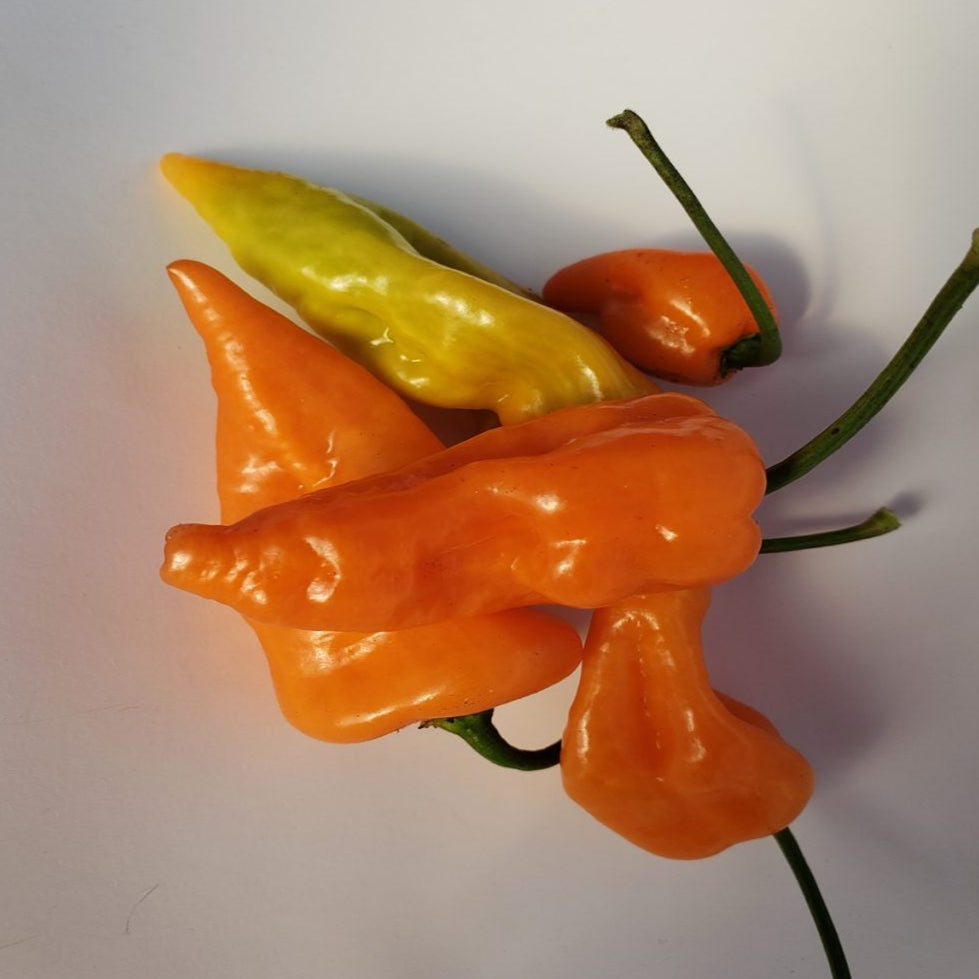
Organic Habanada is an open-pollinated sweet pepper with fruity, tropical, floral habanero aroma but no burning heat. Its elongated, lightly wrinkled fruit ripens from lime green to bright orange. Each packet contains approximately 10 organic seeds. Germination takes 10 to 21 days at 24 to 30°C. Harvest green after approximately 70 to 75 days, or wait 95 to 100 days for full orange colour and the richest aroma. Grow in full sun in fertile, warm, well-drained soil or in a 15 to 25 L container. A stake can support loaded branches during the warmest part of summer. Full orange colour signals the most aromatic harvest stage.
- Quantity
- Approximately 10 seeds per packet
- Exposure
- Full sun
- Life cycle
- Annual vegetable in Canadian gardens
Discover the plant
Common nameHabanada, heatless orange habanero-flavoured sweet pepper
FamilySolanaceae
GenusCapsicum
Specieschinense
CultivarHabanada
TypeOrganic heatless habanero-flavoured pepper, open-pollinated
Botanical nameCapsicum chinense
Reproducible seedsYes
Organic orange 'Habanada' sweet pepper (Capsicum chinense) combines habanero's fruity, tropical, floral aroma without its burning heat. Bred at Cornell University, this open-pollinated cultivar produces elongated, lightly wrinkled fruit that ripens from lime green to bright orange. Each selection contains approximately 10 organic seeds. Plants generally reach 60–90 cm tall and spread about 40 cm. Habanada suits gardeners seeking the complex aroma of a Capsicum chinense in an approachable sweet pepper. Its vivid colour also adds ornamental appeal to edible gardens and large containers. This variety performs best with sustained summer warmth.
Sow indoors from February through April, approximately eight to ten weeks before the last frost, 0.5–1 cm deep. Maintain 24–30°C and even moisture; emergence takes approximately 10–21 days. After germination, provide strong light for 14–16 hours daily, pot up when roots fill the cell, and harden plants gradually for 7–10 days. Transplant after all frost risk into full sun and fertile, organic-rich, well-drained soil. One plant fits a 15–25 L container. Protect young plants from cold nights and stake loaded branches when needed. Water immediately after transplanting to settle the root ball and reduce stress. Warm soil helps young plants establish steadily after transplanting.
Harvest green fruit after approximately 70–75 days, or wait about 95–100 days for orange colour and fullest aroma. Enjoy it raw, grilled, sautéed, stuffed, in salsa, or in sauce. Its complex flavour delivers habanero character in a mild preparation with no heat. Clip stems with clean scissors and harvest regularly. Promptly refrigerate cut or cooked fruit. For any shelf-stable preserve, use a tested recipe and follow its acidity, proportions, and processing exactly. Discard anything soft, mouldy, deeply split, damaged, or abnormal-smelling. Keep green and orange harvests in separate labelled containers when comparing their flavour. Regular picking supports continued fruit development during warm weather.

Sowing guide
It all startswith a seed.
Sowing depth
Approximately 0.5 to 1 cm (¼ to ⅜ in)
Spacing / density
Approximately 40 cm between plants; in containers, grow one plant per pot
Germination temperature
24 to 30 °C (75 to 86 °F)
Germination time
Approximately 10–21 days
Sowing period
Indoors, 8 to 10 weeks before the last frost
Propagation
Seed
Growing method
Growing 'Habanada' sweet pepper from seed. Sow 0.5–1 cm deep in light mix eight to ten weeks before last frost. Use clean seed starting mix that drains freely, and never leave the tray saturated. Maintain 24–30°C and even moisture until emergence, then provide 14–16 hours of strong light. Pot up at several true leaves without deeply burying the stem. Harden for 7–10 days and transplant once soil is warm and nights remain above approximately 12°C. Space approximately 40 cm apart, water immediately, stake if needed, and remove first flowers only if the plant remains very small. After transplanting, water deeply, tie plants loosely, and protect temporarily from cold wind. Mulch only once soil is warm. Inspect leaf undersides for aphids, whiteflies, and mites, especially under protection. During flowering, maintain steady moisture and avoid excessive nitrogen. Harvest often with clean scissors to support production without breaking branches. Allow fruit to reach uniform bright orange at maturity colour for the fullest fruity character, then keep peppers cool and dry. As nights cool, protect plants or move containers under shelter. Discard every mouldy, rotten, or abnormal-smelling fruit. Wash fruit immediately before use and keep harvested peppers cool and dry. Keep every plant labelled and record harvest dates for later comparison. Keep harvests clearly labelled and wash tools after handling. Check each pepper seedling for a sturdy stem and healthy leaves before moving it outdoors.
Soil and care
The right care,at the right time.
Soil pH
Approximately 6.0 to 6.8
Care level
Moderate
Watering
Orange 'Habanada' sweet pepper has a long fruiting period, so its root zone should not swing repeatedly between dryness and saturation. As orange 'Habanada' sweet pepper's elongated, lightly wrinkled fruit, green then bright orange develops on a plant with vigorous upright branched productive growth, widen the wetted area with the expanding canopy and roots. Orange 'Habanada' sweet pepper is listed at approximately 70 to 75 days for green fruit and 95 to 100 days for orange fruit; treat that as a planning reference and monitor moisture while later flowers and fruit are still developing.
Soil type
Orange 'Habanada' sweet pepper needs a warm, open root zone that can support its extended season without remaining waterlogged. Give orange 'Habanada' sweet pepper's vigorous upright branched productive growth enough uncompacted root area to carry elongated, lightly wrinkled fruit, green then bright orange. With orange 'Habanada' sweet pepper's harvest listed as approximately 70 to 75 days for green fruit and 95 to 100 days for orange fruit, keep its soil open and workable through the full production period. Before planting orange 'Habanada' sweet pepper, incorporate mature compost and break compacted layers instead of creating a rich, wet pocket around the crown.
Fertilization
'Habanada' needs steady nutrition, not lush nitrogen-driven growth. Read the root zone before reaching for fertilizer. Once orange 'Habanada' sweet pepper buds, excessive nitrogen can delay fruiting. Water granular amendments into the active root zone. For Habanada, fruit development responds best once feeding becomes restrained. Use new growth to judge whether nutrition is adequate. Even moisture helps 'Habanada' use available nutrients consistently. Choose amendments from soil results and crop response. For orange 'Habanada' sweet pepper, its branches should remain sturdy as fruit begins filling.
Moisture
Consistent soil moisture without saturation; good air circulation around the foliage.
Seasonal care
Seasonal care for 'Habanada' sweet pepper. In spring, keep seedlings at 24–30°C under strong light and pot up when roots fill their cells. Harden them gradually for 7–10 days, then transplant after all frost risk into warmed soil. In summer, maintain even moisture, add mulch once soil is warm, and loosely tie loaded branches. Monitor aphids, whiteflies, and mites, especially under protection, while maintaining good airflow. Harvest green or orange fruit with clean scissors to avoid breaking branches. In late summer, protect plants when nights cool and focus care on fruit already formed. A container may be moved under cover to extend ripening. Promptly remove any diseased, soft, or mouldy fruit. After the final harvest, clean stakes and containers, discard affected residue, and rotate the site with an unrelated crop. Record sowing, transplanting, and first-harvest dates to refine timing the following season. When saving seed, choose fully ripe orange fruit from a healthy plant whose flowers were isolated from compatible peppers, then dry seed completely before labelling and storing it in a cool, dry place. Check container moisture daily during hot, windy periods, but never leave roots standing in water. Stop late fertilizer applications that would encourage new growth unable to mature before cold weather. Inspect foliage above and below each week, remove only badly damaged leaves, and use the least disruptive suitable response when a problem is correctly identified.
Container growing
A garden,within reach.
Recommended pot size
15–25 L per plant
Growing 'Habanada' sweet pepper in containers. Choose a 15–25 L container per plant that is deep, stable, and pierced with several drainage holes. Fill it with rich, free-draining mix and place it in the warmest, sunniest available location. Install a stake at planting to avoid injuring roots later. Water deeply when the surface begins to dry and always empty the saucer. Feed moderately according to the label without excessive nitrogen. Rotate the pot occasionally when light comes mainly from one direction. During hot weather, check moisture morning and evening without keeping the mix saturated. Tie branches with soft supports and adjust them as plants grow. Move the container under protection when nights cool to help late fruit turn orange. Inspect beneath leaves before bringing a pot indoors so aphids, whiteflies, or mites are not introduced. Harvest with clean scissors, keep sound fruit cool, and promptly remove diseased material. After the season, remove roots, wash the container, and let it dry before reuse. Keep drainage holes open and raise the pot slightly when needed so excess water can escape freely after every watering. During windy periods, move the pot to a sheltered position without reducing sunlight and check that ties do not rub stems. Label the container clearly so the cultivar remains easy to track from transplanting through harvest.
Bloom and dimensions
Its place,in your garden.
Mature height
Approximately 60 to 90 cm (24 to 36 in)
Width / spread
Approximately 40 cm (16 in)
Flower color
White to greenish white
Foliage color
Green
Foliage type
Simple herbaceous foliage
Growth rate
Fast
Growth habit
Vigorous upright branched productive plant
Bloom period
Small white to greenish-white flowers appear during the warm season. Peppers can self-pollinate, while light air movement and insect visits support pollen transfer. Temperature extremes, cold nights, water stress, or excessive nitrogen may cause blossom drop. Maintain steady growth, ventilate protected spaces, and avoid insecticides on open flowers while pollinators are active. Support branches before developing fruit becomes heavy and keep soil evenly moist during fruit set.
Fruiting
Plants bear elongated, lightly wrinkled fruit that ripens from green to bright orange. Aroma becomes fruitier and more citrus-like at maturity. The exact heat of this selection is not published. Harvest with clean utensils, eye protection, and clean scissors, then keep peppers cool or process promptly. Discard fruit showing mould, rot, damage, or an unusual odour, and label every batch by colour and date.
Days to maturity
Approximately 70 to 75 days for green fruit and 95 to 100 days for orange fruit
Harvest
Approximately 70–75 days for green fruit and 95–100 days for orange fruit
Garden associations
In goodcompany.
Companion plants
Compact herbs and low flowers may occupy nearby space when they do not deprive Habanada of sun, water, airflow, or root room. Their blooms provide resources for insects that also visit pepper flowers. Keep a clear path for watering and harvest, and avoid excessive density. Tomatoes, eggplants, potatoes, and other peppers belong to the same family and are not ideal rotation choices where soil-borne disease has occurred. Companion planting organizes the garden but never guarantees protection from pests or diseases.
Plants to avoid
Beans and fennel may be less compatible with peppers in some growing situations. Good crop rotation also helps maintain healthy plants.
Recipe idea
From the gardento your plate.
Edible parts
Fruit
'Habanada' sweet pepper in the kitchen. Pineapple and Habanada salsa — Dice 300 g pineapple, 100 g cucumber, one orange Habanada pepper, 40 g red onion, and a handful of cilantro. Add the juice of one lime and a pinch of salt, then mix gently. Refrigerate for 15 minutes to blend the flavours. Serve with corn chips, grilled fish, tofu, or tacos. To compare maturity stages, prepare a second small portion with green fruit and keep the seasoning identical. Place leftovers in a clean shallow container and refrigerate within two hours. Use within three days and discard the salsa if it develops slimy texture, mould, or an unusual odour. This fresh recipe is not a canning method. Wash produce immediately before preparation and use clean utensils for every ingredient. For a crisper texture, add the pepper immediately before serving. Keep the salsa cold, use a clean spoon for every portion, and return unused salsa to the refrigerator without delay.
Frequently asked questions
Your questions,answered.
When should Habanada sweet pepper be sown in Canada?
Sow indoors from February through April, approximately eight to ten weeks before the last frost. Place seed 0.5–1 cm deep in fine, free-draining mix, maintain 24–30°C, and keep evenly moist without saturation. Emergence generally takes 10–21 days. After germination, provide strong light for 14–16 hours daily, pot up as needed, and harden gradually for 7–10 days. Transplant only after frost once soil is warm and nights remain mild. Temporarily protect young plants from cold wind and water immediately after planting to settle the root ball. Label every container at sowing, water without saturation, and pause hardening during unusually cold, wet, or windy weather.
Is Habanada sweet pepper truly heatless?
Yes. Habanada was bred to provide fruity, tropical, and floral habanero aroma without its burning heat, so it cooks like a sweet pepper. Fully ripe orange fruit develops the most expressive aroma, while green fruit offers a more vegetal flavour. An off-type variation is always possible in any crop; when serving someone especially sensitive, taste a small piece first. This precaution does not change the cultivar's normally mild, heatless character. Wash fruit immediately before preparation and promptly refrigerate any cut portion. Its mildness makes it useful in meals where a conventional habanero would be too intense, while preserving an aromatic tropical character.
When does Habanada develop its best aroma?
Green fruit is already edible, but its fruity, tropical, and floral notes become richer once the skin turns uniformly orange. Allow fruit to ripen on the plant while temperatures remain favourable. Harvest it firm, glossy, and free of soft areas. To compare stages, taste green and orange fruit in the same simple preparation with identical seasoning. Record the date, colour, texture, and preferred use to refine harvest timing through the season. Promptly refrigerate cut samples in separate labelled containers. This side-by-side tasting helps identify the best stage for salads, salsa, grilling, or sauce. Repeat the comparison with several harvests because weather and maturity can influence aroma.
Can Habanada be grown in a container?
Yes. Use a 15–25 L container per plant with several drainage holes and rich, free-draining mix. Place it in full sun in the warmest available position and stake loaded branches when needed. Check moisture daily during hot weather, water deeply without standing water, and feed moderately according to the label. A movable container makes protection easier as nights cool and can help late fruit turn orange. Rotate the pot occasionally when light comes mainly from one direction, and keep the drainage holes unobstructed throughout the season. Check ties after strong wind and move the pot away from surfaces reflecting excessive heat onto foliage.
When should Habanada sweet pepper be harvested?
Harvest green fruit after approximately 70–75 days for a more vegetal flavour, or wait approximately 95–100 days and a uniform orange colour for the most developed aroma. Fruit should be firm, well formed, and glossy. Clip the stem with clean scissors rather than pulling on the branch. Regular harvest lightens branches and supports continued production. Promptly refrigerate sound fruit and discard anything soft, mouldy, deeply split, damaged, or abnormal-smelling. Keep green and orange harvests separately labelled when comparing flavour. Use this crop-specific harvest cue—Approximately 70–75 days for green fruit and 95–100 days for orange fruit—and compare colour, firmness, and flavour from several sound fruit rather than relying on the calendar alone. Record the stage preferred for 'Habanada', clip instead of pulling where stems resist, and refrigerate damaged or cut produce promptly.
Wildlife and pets
Life,around your plants.
Supporting wildlife
Habanada flowers can self-pollinate, while bees and other small insects may visit blossoms and support pollen transfer. Low nearby flowers provide additional resources without competing with the plant. Avoid insecticides on open blossoms while pollinators are active, maintain good airflow, and keep soil evenly moist during fruit set.
For a great start to your seeds
The right extras.Right here.
Seed Starting Soil
Shop the collectionSeed starting supplies
Shop the collection





