


Sale
Sold out

Organic Italian heirloom sweet pepper, open-pollinated
Solanaceae
Organic sweet pepper seeds
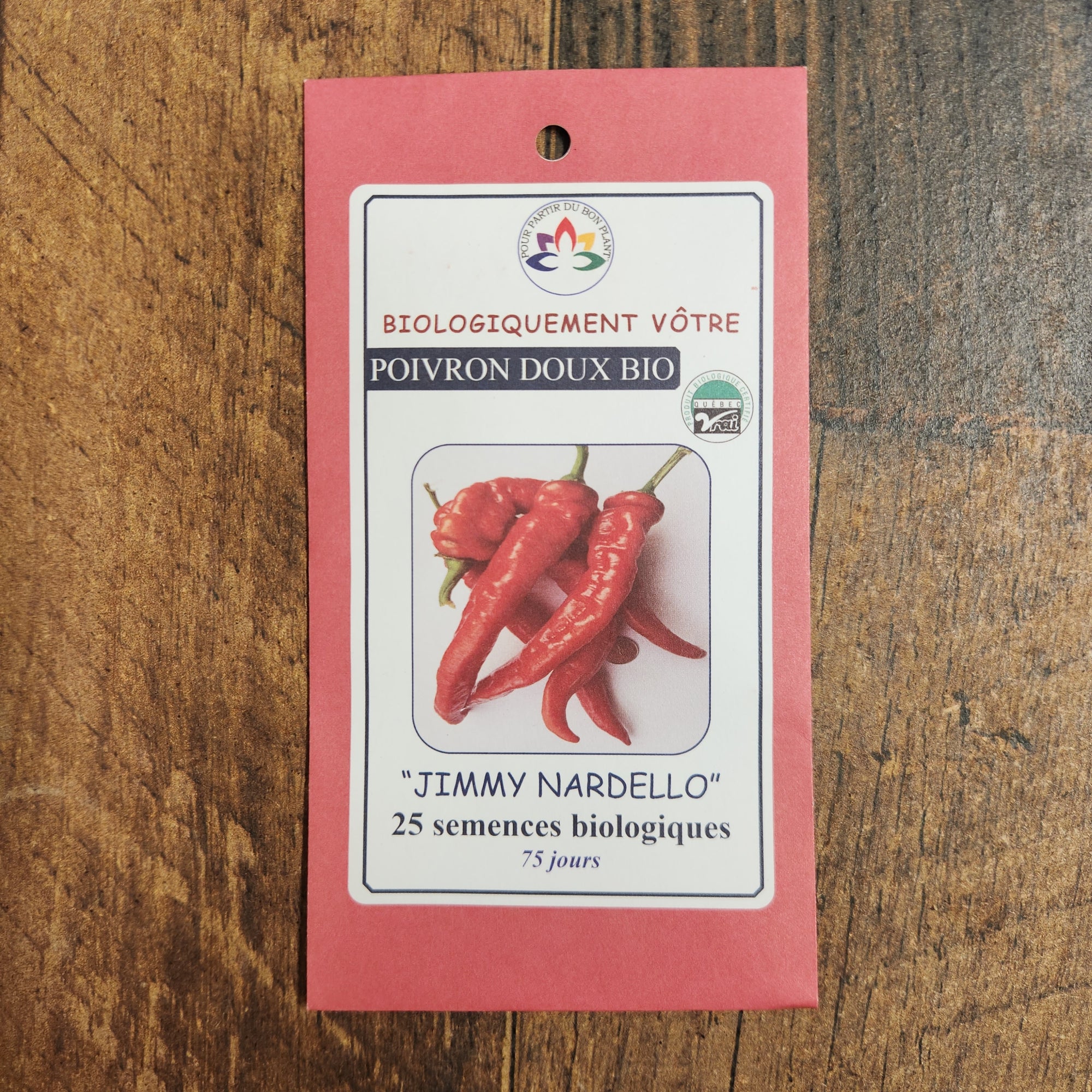
Organic red 'Jimmy Nardello' sweet pepper
Capsicum annuum
Product code : BIOVO-0112
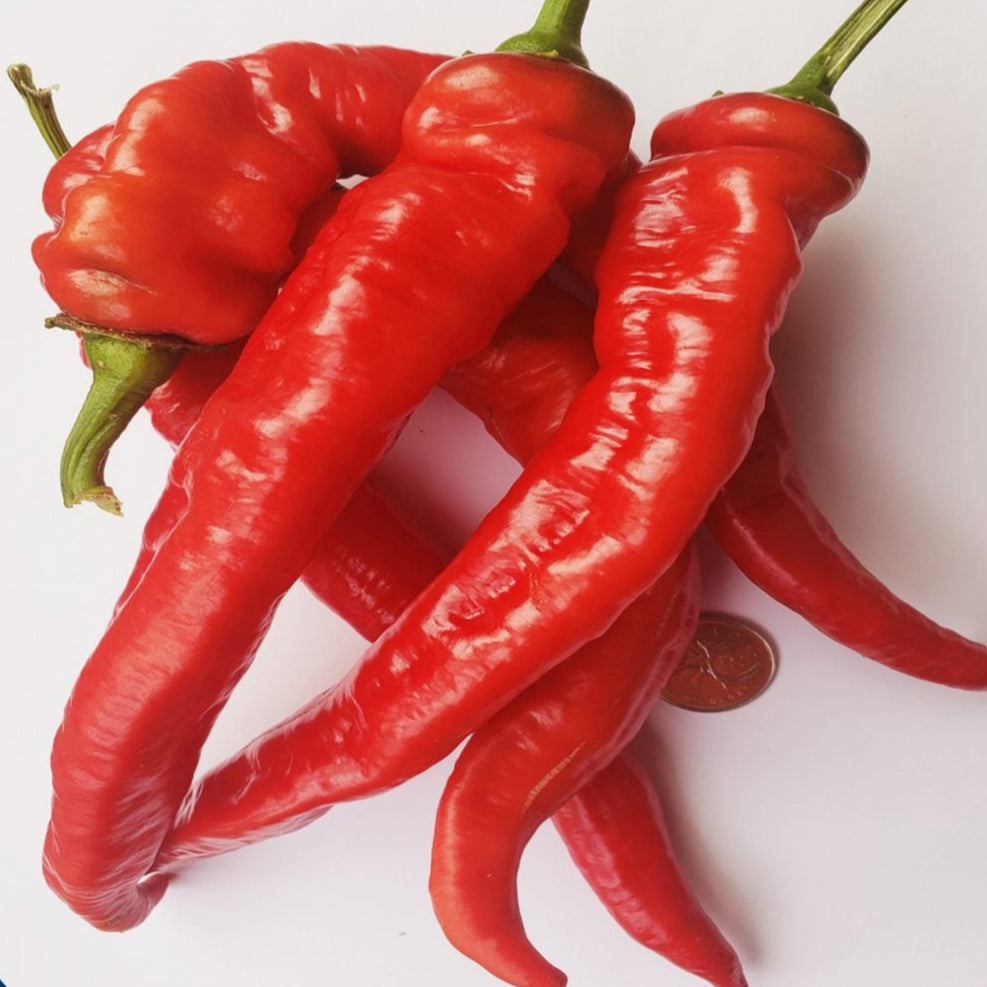
Organic Jimmy Nardello is an open-pollinated Italian heirloom sweet pepper with long, slender, often curved fruit that ripens from green to glossy red. Thin walls, sweetness, and fruity aroma suit quick pan-frying, grilling, and roasting. Each packet contains approximately 25 organic seeds. Plants reach 60 to 75 cm tall and spread about 40 cm. Germination takes 7 to 14 days at 24 to 30°C, followed by harvest around 75 days after transplanting. Grow in full sun in fertile, well-drained soil or in a 15 to 20 L container. A light stake supports loaded branches, and regular harvest makes it easy to compare green and fully red flavour.
- Quantity
- Approximately 25 organic seeds per packet
- Exposure
- Sun
- Life cycle
- Annual in Canadian gardens; frost-tender perennial where frost-free
Discover the plant
Common nameJimmy Nardello, Italian sweet frying pepper
FamilySolanaceae
GenusCapsicum
Speciesannuum
CultivarJimmy Nardello
TypeOrganic Italian heirloom sweet pepper, open-pollinated
Botanical nameCapsicum annuum
Reproducible seedsYes
Heirloom varietyYes
Organic red 'Jimmy Nardello' sweet pepper (Capsicum annuum) is an Italian heirloom sweet pepper known for long, slender, often curved fruit that ripens from green to glossy red. Thin walls, sweetness, and fruity aroma make it especially suited to quick pan-frying, grilling, or oven roasting. The variety is associated with a southern Italian family history and was introduced to the United States in the late nineteenth century. Each selection contains approximately 25 organic open-pollinated seeds. Plants generally reach 60–75 cm tall and spread about 40 cm. Its distinctive shape adds interest to edible gardens and patio containers.
Sow indoors from February through April, approximately eight to ten weeks before the last frost, 0.5–1 cm deep. Maintain 24–30°C and even moisture; emergence generally takes 7–14 days. After germination, provide strong light for 14–16 hours daily. Pot up when roots fill the cell, then harden plants gradually for 7–10 days. Transplant only after frost into warm, fertile, well-drained soil in full sun. Maintain even moisture during flowering and fruit development. One plant fits a 15–20 L container, and a light stake supports loaded branches. Protect young transplants from cold wind and water immediately after planting.
Harvest begins approximately 75 days after transplanting, depending on conditions. Pick green fruit for a more vegetal flavour or wait for glossy red colour and greater sweetness and fruitiness. Fruit should be firm, fully developed, and sound. Quickly pan-fry it with a little oil, grill it, roast it, or use it in salads, sandwiches, and side dishes. Clip stems with clean scissors and harvest regularly. Promptly refrigerate cut or cooked peppers. For any shelf-stable preserve, choose a tested recipe and follow its acidity, proportions, and processing exactly. Keep green and red harvests separately labelled when comparing flavour and texture.

Sowing guide
It all startswith a seed.
Sowing depth
Approximately 0.5 to 1 cm (¼ to ⅜ in)
Spacing / density
approximately 40 cm between plants; rows spaced for easy access
Germination temperature
24 to 30 °C (75 to 86 °F)
Germination time
Approximately 7–14 days
Sowing period
Indoors, 8 to 10 weeks before the last frost
Propagation
Seed
Growing method
Growing 'Jimmy Nardello' sweet pepper from seed. Sow indoors eight to ten weeks before the last frost, 5 or 6 mm (1/4 in) deep in clean, lightly moist starting mix. For 'Jimmy Nardello' indoor sowing, follow the frost-relative timing above. Start seed of 'Jimmy Nardello' in clean, lightly moist mix, then move emerging seedlings into strong light without leaving the cells saturated. A pepper seedling needs strong light, gentle airflow, and an evenly moist root zone without standing water. If a seed harvest from this pepper is planned, retain the cultivar label and consult crop-specific isolation guidance; vegetable harvest directions alone are not sufficient. Set the plant at its previous depth, water it in, and install support before the plant becomes difficult to handle. Place the plant in sun, while preserving drainage and airflow at root and leaf level. Label every seedling because fruit colour and heat cannot identify young pepper plants. Use clean, lightly moist seed-starting mix and steady bottom warmth; never leave the tray saturated. The pepper plant produces the expected harvest form: long, slender, often curved fruit, green then glossy red. Protect the developing crop from soil splash and rough handling. Feed moderately after establishment; excessive nitrogen can postpone flowers and ripe fruit. Keep approximately 40 cm between plants; rows spaced for easy access around this pepper, especially where neighbouring foliage could shade or trap moisture. After late-season rain or wind, confirm drainage and support while preserving healthy foliage needed to finish ripening. Clip the plant without pulling on loaded branches. Compare green and ripe stages when appropriate, then harvest remaining sound fruit as the first autumn frost approaches.
Soil and care
The right care,at the right time.
Soil pH
Approximately 6.0 to 6.8
Care level
Moderate
Watering
The elongated fruit of red 'Jimmy Nardello' sweet pepper develops most evenly when the plant receives steady moisture through flowering and fruit elongation. As red 'Jimmy Nardello' sweet pepper's long, slender, often curved fruit, green then glossy red develops on a plant with compact, upright, and branching growth, widen the wetted area with the expanding canopy and roots. Red 'Jimmy Nardello' sweet pepper is listed at approximately 75 days after transplanting; treat that as a planning reference and monitor moisture while later flowers and fruit are still developing.
Soil type
Give red 'Jimmy Nardello' sweet pepper loose, deep soil so its vigorous roots can sustain repeated growth of elongated fruit. Give red 'Jimmy Nardello' sweet pepper's compact, upright, and branching growth enough uncompacted root area to carry long, slender, often curved fruit, green then glossy red. With red 'Jimmy Nardello' sweet pepper's harvest listed as approximately 75 days after transplanting, keep its soil open and workable through the full production period. Before planting red 'Jimmy Nardello' sweet pepper, incorporate mature compost and break compacted layers instead of creating a rich, wet pocket around the crown.
Fertilization
Begin 'Jimmy Nardello' in soil amended with mature compost, then use a soil test to choose any balanced supplemental feed. When tending 'Jimmy Nardello', once buds and long, slender, often curved fruit, green then glossy red appear, steady growth matters more than high nitrogen. Apply only the labelled rate to moist soil and water granular product into the root zone. For red 'Jimmy Nardello' sweet pepper, excess nitrogen can delay flowering and ripening by pushing soft foliage. In containers, divide necessary feeding into smaller applications because drainage removes nutrients. Stop or reduce feeding when 'Jimmy Nardello' already shows balanced growth.
Moisture
Consistent soil moisture without saturation; good air circulation around the foliage.
Seasonal care
Seasonal care for 'Jimmy Nardello' sweet pepper. Red 'Jimmy Nardello' sweet pepper begins with season-aware timing—indoors, 8 to 10 weeks before the last frost—so compare that guidance with the actual spring or autumn at your site. Sow approximately 0.5 to 1 cm deep. Expect germination in 7 to 14 days at 24 to 30 °C (75 to 86 °F); keep the medium evenly moist but aerated throughout that interval. After emergence, give 'Jimmy Nardello' seedlings bright light and gentle air movement; pot on before roots circle densely, without burying a weak stem in wet mix. Harden the plants gradually, then transplant only after frost risk has passed, the soil is warm, and nights remain consistently mild. Choose full sun and loose fertile soil, mixing in mature compost while preserving drainage around the crown. Keep the root zone evenly moist but never saturated, widening the watered area as the canopy expands through summer. For container-grown red 'Jimmy Nardello' sweet pepper, use the supplied guidance—15–20 L per plant—and check drainage before growth hides the surface. During flowering, inspect 'Jimmy Nardello' foliage for pests, maintain airflow, and avoid excess nitrogen, which can favour leafy growth over flower set and fruit ripening. Follow the supplied harvest guidance—approximately 75 days after transplanting; harvest green or glossy red—while remembering that warmth and light still determine how quickly each fruit reaches its final stage. Pick at the colour and firmness described for the variety, using clean scissors so loaded branches are not torn. Before the first autumn frost, move portable pots under protection or collect sound developed fruit, then remove diseased debris from the growing area.
Container growing
A garden,within reach.
Recommended pot size
15–20 L per plant
Growing 'Jimmy Nardello' sweet pepper in containers. For 'Jimmy Nardello', choose a container matching this guide: 15–20 L per plant. Keep several drainage holes unobstructed. Feed at a modest labelled rate after watering. Excess nitrogen can delay flowering and ripening while encouraging leafy growth. Give 'Jimmy Nardello' sun, and keep water from collecting around the crown or container base. Place the pot in full sun where heat reflected from pavement will not overheat the roots. Lay out the pepper plant at approximately 40 cm between plants; rows spaced for easy access, then keep paths open instead of filling gaps with another mature crop. Install a stake or cage at planting when support is needed, without later piercing the root ball. Place the crop before late-season crowding develops, keeping its mature habit in mind: compact, upright, and branching. Fill the container with fresh, airy vegetable potting mix amended modestly with mature compost, never dense garden soil. Leave enough access around the plant to inspect and cleanly harvest long, slender, often curved fruit, green then glossy red. Keep lower foliage away from wet mix, secure branches with soft ties, and leave an open route to inspect flowers and pick ripe fruit. As nights cool, let the rate of mix drying guide watering, and inspect leaf undersides before sheltering the container. Harvest this pepper when colour and texture show the intended stage. Before frost, gather sound developed fruit; quarantine any plant moved under protection and inspect it for insects.
Bloom and dimensions
Its place,in your garden.
Mature height
Approximately 60 to 75 cm (24 to 30 in)
Width / spread
Approximately 40 cm (16 in)
Flower color
White to greenish white
Foliage color
Green
Foliage type
Herbaceous
Growth rate
Fast
Growth habit
Compact, upright, and branching
Bloom period
For 'Jimmy Nardello', those self-fertile blossoms precede fruit development. Avoid strong nitrogen feeding once buds appear. red 'Jimmy Nardello' sweet pepper opens small flowers where leaves meet its stems. Keep treatments off petals and active pollinators. For Jimmy Nardello, its flowering branches may shed buds during environmental stress. Keep the root zone evenly moist during bloom. Gentle air movement helps 'Jimmy Nardello' release pollen. Do not treat every fallen blossom as disease. red 'Jimmy Nardello' sweet pepper may also receive pollen-moving visits from insects. Secure Jimmy Nardello before fruit weighs down flowering branches.
Fruiting
Plants bear long, slender, often curved fruit that changes from green to glossy red. Harvest it firm, fully developed, and glossy. The green stage offers a more vegetal flavour, while glossy red brings greater sweetness. Clip stems with clean scissors, promptly refrigerate sound fruit, and remove anything soft, mouldy, deeply split, damaged, or abnormal-smelling. Harvest regularly to support continuing production and keep green and deep-red batches separately labelled by date.
Days to maturity
Approximately 75 days after transplanting
Harvest
Approximately 75 days after transplanting; harvest green or glossy red
Garden associations
In goodcompany.
Companion plants
Rotate red 'Jimmy Nardello' sweet pepper with crops outside the nightshade family; nearby herbs do not interrupt a soil-borne disease cycle. Basil, parsley, oregano, or chives can occupy nearby space around 'Jimmy Nardello' when they do not shade the pepper. Give the pepper plant enough sun and airflow as branches begin carrying fruit. Around 'Jimmy Nardello', remove any neighbour that begins competing for light, moisture, airflow, or harvest access. In the red 'Jimmy Nardello' sweet pepper planting, keep access open to the long, slender, often curved fruit, green then glossy red so gloves, labels, and clean harvest containers can be used without brushing other crops. Reassess the arrangement around 'Jimmy Nardello' as both crops approach mature size. Use companion planting to organize succession and diversity, not as a substitute for sound crop care.
Plants to avoid
Bean, fennel
Recipe idea
From the gardento your plate.
Edible parts
Fruit, after appropriate culinary preparation
'Jimmy Nardello' sweet pepper in the kitchen. Pan-fried Jimmy Nardello peppers — Wash 300 g firm fruit, remove stems, and cut it into long strips. Heat 15 ml oil in a large skillet, add peppers, and cook for 6–8 minutes while stirring until tender and lightly browned. Add one small minced garlic clove during the final minute, season lightly, and stir in fresh herbs. Serve immediately with eggs, sandwiches, pasta, rice, or grilled vegetables. Place leftovers in a clean shallow container and refrigerate within two hours. Use within three days. Discard the preparation if it develops slimy texture, mould, or an unusual odour. This recipe is not a canning method. To compare maturity stages, use equal portions of green and red fruit and keep each colour on one side of the skillet. Add the herbs only at the end to preserve their fragrance. Serve the finished peppers hot and use clean utensils for every individual portion safely.
Frequently asked questions
Your questions,answered.
When should Jimmy Nardello pepper be sown in Canada?
Sow Jimmy Nardello indoors eight to ten weeks before the expected last frost in your area. Set seeds approximately 0.5 to 1 cm (¼ to ⅜ in) deep and hold the starting mix at 24 to 30 °C (75 to 86 °F). Germination normally occurs in about 7 to 14 days. After emergence, provide strong light, maintain moderate moisture, and pot up seedlings as their roots fill the cells. Harden plants gradually outdoors and wait until frost danger is over, the soil is warm, and nights are reliably mild before transplanting. Leave about 40 cm between plants, or grow one in a 15–20 L container. The compact, upright plant reaches roughly 60 to 75 cm. Its long, often curved sweet frying peppers begin green and become glossy red, with maturity listed at about 75 days after transplanting.
Is Jimmy Nardello sweet pepper hot?
Jimmy Nardello is a sweet frying pepper, not a hot-pepper cultivar. Its long, slender, often curved fruit starts green and becomes glossy red at maturity. Both stages can be used, while full red colour identifies the documented ripe stage and classic sweet-pepper use. No Scoville value is needed for its verified classification. Keep plants and harvested fruit labelled if hot peppers grow nearby, since long red shapes can be confused after picking. Wash knives and boards between hot and sweet peppers to prevent capsaicin transfer. If an unidentified fruit causes unexpected irritation, stop tasting and verify its source. Jimmy Nardello's compact plant and Italian heirloom identity do not themselves determine heat; the product record specifically describes it as an open-pollinated sweet pepper.
Why is Jimmy Nardello well suited to pan-frying?
Jimmy Nardello is particularly suited to pan-frying because its fruit is long, slender, and relatively quick to cook compared with a thick blocky bell pepper. Pick it green for an earlier stage or wait until the skin is glossy red at maturity. Slice lengthwise or crosswise into even pieces so they soften at a similar rate, then cook according to the dish rather than forcing a fixed time. Its sweet-pepper classification means capsaicin heat is not the intended feature. Use sound, freshly harvested fruit and trim damaged tissue. The crop is listed at about 75 days after transplanting, but fruit can be taken at both colour stages. Keep harvested peppers dry until preparation and do not crowd the pan, which would steam the pieces instead of allowing direct contact with the cooking surface.
Can Jimmy Nardello be grown in a container?
Yes. Grow one 'Jimmy Nardello' plant in a stable 15 to 20 L container approximately 30 to 35 cm (12 to 14 in) in diameter, with several drainage holes. Fill it with airy vegetable potting mix amended with mature compost and place it in full sun in a warm, sheltered location. Water slowly when the surface begins to dry and never leave water standing in the saucer. Feed moderately after fruit set, rotate the container if light comes from one side, and add a light stake if loaded branches begin to bend. Check moisture daily during hot, windy weather, especially in exposed locations.
When should Jimmy Nardello pepper be harvested?
Jimmy Nardello can be harvested green or left until its long, curved fruit becomes glossy red. Begin checking around 75 days after transplanting. Green represents an earlier usable stage, while an even glossy red surface marks documented maturity and the stage often chosen for sweet frying-pepper flavour. Clip stems cleanly to protect the compact branching plant. Refrigerate sound, dry fruit for short-term use and wash it only before preparation. Use split or bruised peppers promptly if they remain clean, and discard soft, leaking, or mouldy fruit. Harvesting regularly keeps later peppers visible and reduces load on branches. Label green and red batches with the cultivar name, especially when long hot peppers share the garden, refrigerator, or kitchen.
Wildlife and pets
Life,around your plants.
Supporting wildlife
Jimmy Nardello's Sweet sets fruit from self-fertile flowers, aided by breeze and plant movement. Bees may inspect the blooms and their vibration can release additional pollen, but no insect is essential. The pepper's contribution to wildlife is modest. Avoid spraying when flowers are open and provide neighbouring plants with longer, nectar-rich bloom periods.
For a great start to your seeds
The right extras.Right here.
Seed Starting Soil
Shop the collectionSeed starting supplies
Shop the collection





