Sale
Sold out

Organic open-pollinated colourful spring radish mixture
Brassicaceae
Organic colourful radish seeds
Organic 'Biomix' radish
Raphanus sativus
Product code : BIOVO-0119
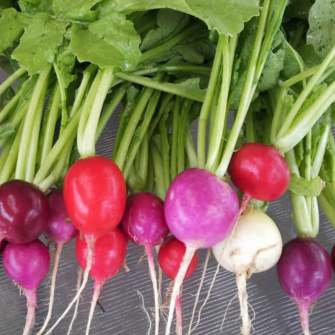
Biomix is an organic radish blend for gardeners who enjoy a colourful, quick-growing root crop. The supplied product description identifies red, white, pink and purple roots, without naming every component cultivar or fixing their proportions. Sow small amounts directly into loose soil during cool weather and thin early so the roots can develop separately. The approximately 25-day maturity reference is a starting point for inspection, not a deadline shared by every plant. Lift roots selectively while they remain crisp, then remove the tops and refrigerate promptly. A broad planter or a short row beside the kitchen garden makes frequent picking convenient. Use the harvest fresh in salads, on open sandwiches or alongside a creamy herb dip.
- Quantity
- Approximately 200 seeds
- Exposure
- Full sun to partial shade
- Life cycle
- Annual
Discover the plant
Common nameBiomix colourful radish mixture
FamilyBrassicaceae
GenusRaphanus
Speciessativus
CultivarBiomix
TypeOrganic open-pollinated colourful spring radish mixture
Botanical nameRaphanus sativus
Reproducible seedsYes
Organic 'Biomix' radish (Raphanus sativus) combines spring radishes with red, white, pink, and purple roots. Each sowing provides a visually varied, crisp, lightly pungent crop suited to colourful bunches, crudités, and salads. Because it is a mixture, exact shape, colour, and speed of individual roots may vary; detailed cultivar composition is variable by conditions. Each selection contains approximately 200 organic seeds from an open-pollinated mixture. Foliage reaches approximately 15–25 cm and harvest begins near 25 days. Even moisture helps every root remain tender and crisp. Early thinning reduces competition within the row.
Direct sow April through September in light loose stone-free well-drained soil, approximately 1 cm deep. Maintain 10–20°C and even moisture; germination generally takes 4–10 days. Thin to approximately 5 cm so each root can size without competition. Full sun suits cool weather while light partial shade may slow drying during warm periods. Repeat small sowings every two or three weeks rather than planting the entire selection at once. Harvest one test root before clearing the entire section. Steady watering supports even development across the different colours and shapes in the blend. Early thinning reduces competition within the row.
Begin inspecting roots around 20–25 days and harvest once they reach a satisfactory size. Biomix should be picked young to retain tender crisp moderately pungent flesh; roots left too long may become pithy fibrous or very strong. Uncover a shoulder to assess diameter, then lift a sample. Remove tops and cool roots promptly. Serve fresh, sliced in salads, with dip, or briefly roasted. Yield and the proportion of each colour are not guaranteed. Lift a second colour separately because the varieties may not mature on exactly the same day. Consistent soil moisture limits sudden stress as each type approaches its preferred harvest size.

Sowing guide
It all startswith a seed.
Sowing depth
Approximately 1 cm (⅜ to ½ in)
Spacing / density
Approximately 5 cm between plants and 20 to 30 cm between rows
Germination temperature
10 to 20 °C (50 to 68 °F)
Germination time
Approximately 4 to 10 days
Sowing period
Direct sow in cool spring or late-summer conditions; adjust successive sowings to local soil temperatures.
Propagation
Direct sowing
Growing method
Growing Biomix radishes from seed. Prepare a small, level seedbed in a sunny position with loose, well-drained soil. Break up clods before sowing because young roots cannot be straightened later by extra fertilizer. Sow directly about 1 cm (3/8 in) deep and water gently after covering the seed. The supplied germination guidance is four to ten days at approximately 10 to 20°C (50 to 68°F); cool outdoor conditions can change the actual timing. Keep the seed zone evenly moist without leaving it waterlogged. Once the seedlings are established, thin crowded spots to roughly 5 cm between plants. Snipping the extras avoids disturbing retained roots. Label the sowing date and reserve a separate short section for a later batch, rather than oversowing the entire packet. Check young leaves for flea-beetle damage and use securely fitted insect mesh where protection is needed. Remove weeds while they are small enough to lift without loosening the radishes. As harvest approaches, uncover a few shoulders and lift a sample from different parts of the row. A blend will not necessarily mature uniformly. Take ready roots while leaving sound, smaller neighbours to develop. When hot weather repeatedly produces poor texture, wait for a cooler sowing window instead of trying to correct the problem with stronger feeding.
Soil and care
The right care,at the right time.
Soil pH
Approximately 6.0 to 7.0
Care level
Easy
Watering
'Biomix' radish matures quickly, so even a short dry spell can leave its mixture of small red, white, pink, and purple roots in varied shapes coarse or sharply flavoured. Before 'Biomix' radish emerges, use a gentle flow; as roots lengthen, water more deeply and let excess leave the bed. Across a mixed row of 'Biomix' radish, judge watering by the driest section while avoiding puddles around slower plants. Mulch 'Biomix' radish lightly only after establishment, limiting abrupt wet-dry cycles that can cause cracking or uneven texture. A 'Biomix' radish container must drain freely and needs daily checks in warm wind while the edible root enlarges.
Soil type
Prepare a fine, loose seedbed for 'Biomix' radish; compacted clods interfere with the fast expansion of its mixture of small red, white, pink, and purple roots in varied shapes. Well before sowing 'Biomix' radish, work in mature compost, remove stones and undecomposed debris, and avoid fresh manure near its roots. For 'Biomix' radish, the stated soil reaction is approximately 6.0 to 7.0; confirm it with a test before amending. Level the 'Biomix' radish seedbed carefully so moisture and emergence stay uniform across the row. For potted 'Biomix' radish, use the recommended depth, light vegetable mix, and clear drainage holes.
Fertilization
Before sowing incorporate only a moderate amount of mature compost when soil is poor or very sandy. Biomix radish grows quickly and needs little feeding: excess nitrogen produces abundant foliage at the expense of roots, delays their formation, and may encourage less pleasant texture. Do not use fresh manure and never place concentrated fertilizer directly against seed or young roots. If a soil test reveals a deficiency choose a balanced root-vegetable fertilizer, apply a light dose according to its label, then water. In fresh pre-enriched potting mix no additional feeding is normally needed during this approximately 25-day cycle.
Moisture
Evenly moist, freely draining soil; avoid a dry crust during germination.
Seasonal care
Seasonal care for Biomix radishes. In spring, wait until the bed can be worked without smearing wet soil into compact clods. Sow a small test section first, label it and keep the surface evenly moist until emergence. Early thinning is more useful than trying to separate tangled roots later. Check the young foliage for flea beetles, particularly when neighbouring brassicas are already affected, and fit insect mesh before damage becomes extensive. During the main growing period, look at the row frequently rather than relying only on the approximately 25-day maturity reference. Lift roots as they reach a useful size and compare texture among different parts of the bed. Hot, dry weather can shorten the interval between a crisp harvest and an overmature one. If successive summer crops perform poorly, leave the next section unsown until cooler conditions return. In late summer, calculate whether enough growing time remains before persistent freezing in your region. Shorter days and cooler soil can slow the final batch, so do not simply repeat a spring calendar. Harvest sound roots before the ground becomes difficult to work, remove the tops and refrigerate the crop promptly. At the end of the season, clear diseased material, clean harvest tools and note which sowing dates worked best. Winter care concerns the stored seed and planning records rather than keeping an exhausted root crop in place. Store unused seed dry, cool and clearly labelled for a later sowing.
Container growing
A garden,within reach.
Recommended pot size
A broad 10 to 15 L container, approximately 20 cm (8 in) deep, with drainage holes
Growing Biomix radishes in containers. Choose a broad planter rather than a narrow decorative pot: usable surface area determines how many roots can be spaced properly. A container holding about 10 to 15 L with roughly 20 cm (8 in) of depth provides a practical small planting space. It must have unobstructed drainage holes. Fill with a loose vegetable potting mix, leaving enough room below the rim to water without washing seed away. Mark small sections if you intend to sow on different dates. Cover seeds about 1 cm deep, moisten gently and thin emerged seedlings to approximately 5 cm apart. A dense carpet of leaves is not evidence of a successful root crop. Place the planter in good light during cool weather, and check how quickly it dries on windy balconies. Water across the whole surface rather than repeatedly wetting only the centre. Allow excess water to drain and empty any saucer. In already enriched mix, avoid adding fertilizer simply because the plants are growing quickly. Lift the largest ready roots first and inspect the remaining plants individually. After the last harvest, remove roots and debris, check the drainage openings and assess the mix before starting another crop. Persistent disease is a reason to clean the container and use fresh growing medium, not just to add new seed.
Bloom and dimensions
Its place,in your garden.
Mature height
Approximately 15 to 25 cm (6 to 10 in) for the foliage
Width / spread
Approximately 5 cm (2 in) between roots
Flower color
White to pale pink
Foliage color
Green
Foliage type
Herbaceous rosette
Growth rate
Fast
Growth habit
Leaf rosette above a round root
Bloom period
A central flower stalk marks the transition away from Biomix's tender-root harvest stage. Do not assume flowering must wait until a second year: spring radishes can bolt during their first growing season. Plants retained for flowers or seed need a separate purpose and space. For the kitchen crop, harvest useful roots before bolting and remove exhausted plants rather than expecting the flower stalk to improve root texture.
Fruiting
The familiar radish is a swollen underground storage organ, not a fruit. If a Biomix plant bolts and is retained, flowers can be followed by seed pods. That later stage is separate from producing crisp salad roots. A saved seed crop may change the assortment found in the original packet, especially where other radishes flower nearby. Label experimental seed clearly and avoid describing it as an exact reproduction of the commercial blend.
Days to maturity
Approximately 25 days after sowing
Harvest
Begin inspecting near 20 days and generally harvest around 25 days according to the shape and colour of each mixture component. Gently uncover a shoulder and lift a sample root. Pick while flesh is firm and crisp before it becomes pithy highly fibrous or excessively pungent. Progressively harvest ready roots rather than waiting for perfect uniformity. Remove tops, cool promptly, and discard any root that is soft, mouldy, slimy, or abnormal-smelling.

Garden associations
In goodcompany.
Companion plants
The Biomix radish planting is easiest to assess beside a clearly labelled salad row, where roots can be sampled without disturbing other crops. Different components may reach useful size at different times, so leave access for selective lifting. Avoid using the mix as a permanent filler around every larger vegetable. Its practical role is a short crop that can be removed before neighbours expand. If roots begin to crowd, harvest or thin them rather than assuming that interplanting alone will keep the bed productive.
Recipe idea
From the gardento your plate.
Edible parts
Root and healthy young leaves
Biomix radish and apple salad, four side servings. Gather 250 g firm Biomix radishes, one crisp apple, 30 ml plain yogurt, 15 ml lemon juice, 10 ml olive oil and 15 ml chopped chives. Add salt and pepper to taste. Wash the radishes under running water, trim the tops and root tips, and discard damaged or spoiled portions. Core the washed apple and cut it into thin matchsticks. Slice the radishes finely so their coloured edges remain visible. Whisk the yogurt, lemon juice and oil in a bowl, then fold in the prepared vegetables, apple and chives. Taste before adding more seasoning. Serve soon after mixing for the best contrast between crisp pieces and creamy dressing. Keep the bowl chilled until serving and refrigerate leftovers promptly in a covered container. Prepare only the quantity likely to be eaten while the apple and radishes remain crisp. This is a fresh salad, not a fermented product or a shelf-stable preserve. Use clean utensils throughout preparation and avoid contact with raw meat or its juices.
Frequently asked questions
Your questions,answered.
Which colours and varieties are included in Biomix radish seeds?
The supplied description identifies red, white, pink and purple roots, but it does not give a complete cultivar list or a fixed proportion for each colour. Treat Biomix as a blend rather than as a single uniform variety. Individual roots may differ in shape and development, so inspect several plants when judging the first harvest. There is no reason to leave a ready root in the ground simply because a smaller neighbour has not reached the same size. If you save seed experimentally, the next generation may not reproduce the original assortment. Keep those seeds labelled separately from the purchased mixture and do not promise another gardener the same colour balance.
When should I sow Biomix radishes in Canada?
Use local growing conditions rather than one national planting date. Begin with workable soil and cool weather in spring, then consider another series of small sowings as late-summer temperatures ease. The supplied seed information gives approximately 10 to 20°C (50 to 68°F) for germination and four to ten days for emergence under suitable conditions. Outdoor timing can be slower. Keep each new seedbed moist and label it so you can compare batches. During prolonged heat, waiting may produce better roots than repeatedly sowing into stressful conditions. For an autumn crop, leave enough time before persistent freezing and remember that shorter days can slow growth compared with spring.
How do I keep Biomix radishes crisp rather than woody?
Give the plants enough space, maintain reasonably even soil moisture and harvest before the roots become overmature. These practices work together: watering alone cannot correct severe crowding or reverse an old, pithy root. Thin early to approximately 5 cm, then check the row more often as harvest approaches. Lift a sample and cut it open if the outside gives little indication of texture. Remove ready roots instead of waiting for the whole mixture to become uniform. After picking, separate the tops and refrigerate the roots promptly. If a hot spell repeatedly produces harsh or fibrous radishes, postpone the next sowing until conditions improve rather than increasing fertilizer.
How can I tell when colourful Biomix radishes are ready to harvest?
The approximately 25-day reference tells you when to start watching closely, not when every root must be pulled. Gently move a little soil from a shoulder to judge its size, then lift a representative root. Look for a useful, firm root with a crisp interior. Colour is part of the mixture's identity, but one colour should not be assumed to mature on a fixed schedule ahead of another. Pick selectively and return to the row as the smaller plants develop. Do not leave a large root indefinitely while waiting for perfect uniformity. Remove the leaves after picking, rinse away soil as needed and keep the harvest refrigerated until use.
Can I grow Biomix radishes in a balcony planter?
Yes, provided the planter has enough surface area for proper spacing and drains freely. A broad 10 to 15 L container around 20 cm (8 in) deep is a practical starting point for a small batch. Use loose potting mix, direct sow and thin to approximately 5 cm between retained seedlings. The number of plants depends on the planter's usable area, not just its litre rating. A sunny balcony can dry rapidly in wind, so check the soil instead of watering on a fixed weekly schedule. Harvest progressively and remove finished roots before sowing another clearly marked section. Avoid placing the planter beneath taller pots that shade it for most of the day.
Wildlife and pets
Life,around your plants.
Supporting wildlife
Biomix is harvested for roots, so pollination is not needed for the usual crop. Plants left beyond harvest may bolt and produce flowers that insects can visit. Keep any seed-saving plants separate from rows intended for tender roots. Flowering is a different use of the planting, not a sign that edible roots are improving.
For a great start to your seeds
The right extras.Right here.
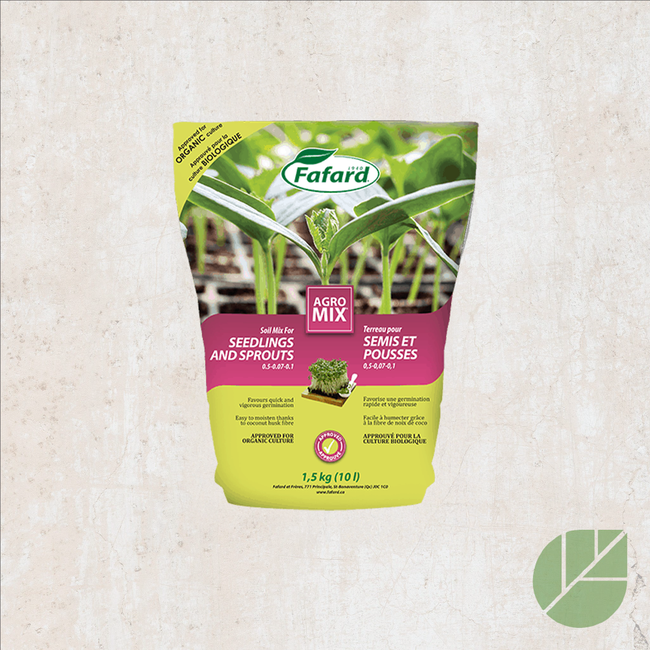
Seed Starting Soil
Shop the collectionSeed starting supplies
Shop the collection