Sale
Sold out

Organic heirloom open-pollinated spring radish
Brassicaceae
Organic colourful radish seeds
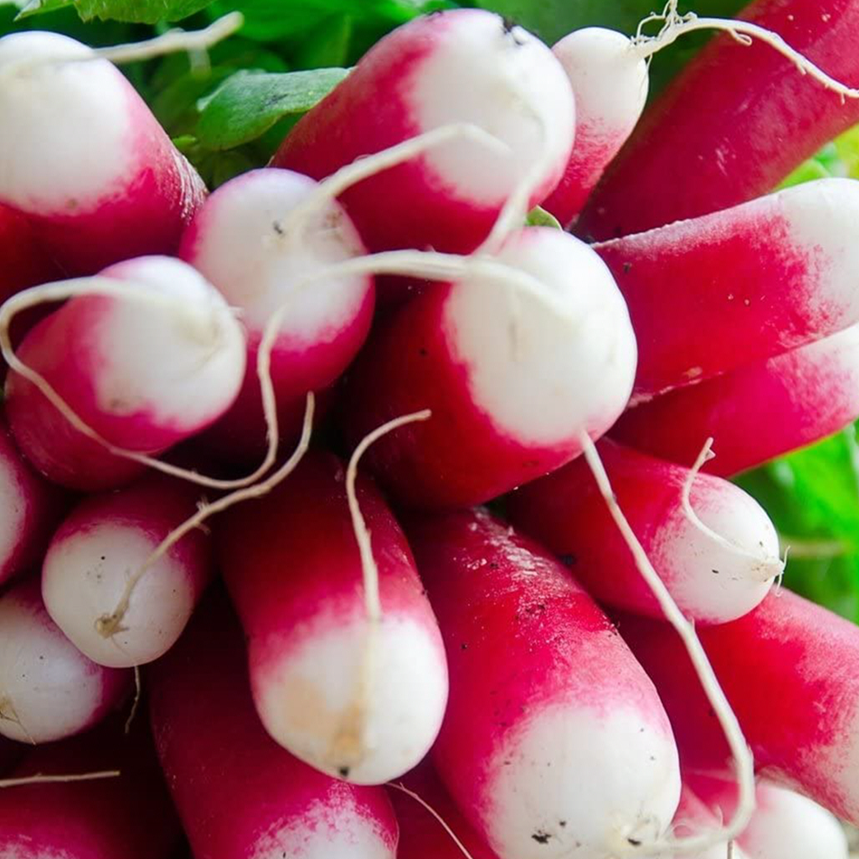
Organic 'French Breakfast' radish
Raphanus sativus
Product code : BIOVO-0120
Organic heirloom open-pollinated variety with elongated vivid-red white-tipped roots that are crisp mild and ready near 26 days. Each selection contains approximately 200 organic seeds. This open-pollinated French heirloom quickly forms elongated red roots with white tips. Direct sow during cool weather, thin early, and keep soil evenly moist. Harvested young near 26 days, its flesh remains tender, crisp, mild, and lightly peppery for salads, crudités, and buttered bread. Thin early so every elongated root has enough space to develop. Adjust care to the weather, especially during hot or windy days. For the variety overview, inspect each small section separately so roots are harvested at the desired size.
- Quantity
- Approximately 200 seeds
- Exposure
- Full sun to partial shade
- Life cycle
- Annual
Discover the plant
Common nameFrench Breakfast radish
FamilyBrassicaceae
GenusRaphanus
Speciessativus
CultivarFrench Breakfast
TypeOrganic heirloom open-pollinated spring radish
Botanical nameRaphanus sativus
Reproducible seedsYes
Heirloom varietyYes
Organic 'French Breakfast' radish (Raphanus sativus) is an heirloom open-pollinated variety known for elongated vivid-red roots ending in a white tip. Each selection contains approximately 200 organic seeds. Foliage reaches approximately 15–25 cm and harvest begins near 26 days. Crisp tender flesh has a mild lightly pungent flavour enjoyed fresh with butter and salt, in crudités, salads, or as a colourful garnish. Even moisture helps the root remain tender and crisp. Early thinning reduces competition within the row. Harvest one test root before clearing the entire section. Steady watering supports smooth growth and the characteristic red-and-white root pattern.
Direct sow April through September in light loose stone-free well-drained soil approximately 1 cm deep. Maintain 10–20°C and even moisture; germination generally takes 4–10 days. Thin to approximately 5 cm so elongated roots can form without competition. Full sun suits cool weather while light partial shade may slow drying during warm periods. Make small sowings every two or three weeks and pause when heat causes excessively pungent or fibrous roots. Check another root several days later when the first specimen is still slightly narrow. Consistent soil moisture limits stress while the cylindrical roots lengthen and fill.
Begin inspecting roots near 22–24 days and generally harvest around 26 days. Gently uncover a sample root shoulder and lift it once well coloured firm and still tender. Do not wait until roots become pithy split or excessively strong. Remove tops, rinse only before use, and cool promptly. Sound young tops may also be cooked. Yield, exact diameter, and maximum storage life for this harvest are variable by conditions. Compare shoulder width across the row because small differences in soil can alter maturity. Regular morning watering helps mature roots retain their clean snap through cool weather.

Sowing guide
It all startswith a seed.
Sowing depth
Approximately 1 cm (⅜ to ½ in)
Spacing / density
Approximately 5 cm between plants and 20 to 30 cm between rows
Germination temperature
10 to 20 °C (50 to 68 °F)
Germination time
Approximately 4 to 10 days
Sowing period
April through September by direct sowing Adjust these dates to your local frost dates and soil conditions; Canadian growing seasons vary by region.
Propagation
Direct sowing
Growing method
Growing 'French Breakfast' radish from seed. Choose a sunny, accessible strip where you can check the slender red-and-white roots frequently. Direct sow into a fine seedbed as soon as spring soil is workable, then repeat small batches while conditions remain cool. The planting date varies across Canada; a fixed April start is not suitable everywhere. Place seeds about 1 cm (3/8 in) deep, cover with fine soil and water through a gentle rose. Keep the surface moist until seedlings emerge, normally within the supplied four-to-ten-day range. Thin crowded seedlings by snipping them at soil level, retaining about 5 cm between plants. Pulling a clump apart can disturb the roots you want to keep. Remove small weeds before their roots compete with the radishes, and fit insect mesh over the row where flea beetles damage young leaves. Check beneath the cover when watering. Begin lifting sample roots as the crop approaches its approximately 25-day harvest reference. Judge their length and tenderness rather than waiting for every plant to look identical. Sow the next short row before the first is finished if you want a steady kitchen supply. During prolonged heat, postpone another batch until cooler conditions return. After harvest, remove the tops and refrigerate the roots promptly to help retain their crisp texture.
Soil and care
The right care,at the right time.
Soil pH
Approximately 6.0 to 7.0
Care level
Easy
Watering
'French Breakfast' radish matures quickly, so even a short dry spell can leave its elongated vivid-red root ending in a white tip coarse or sharply flavoured. Before 'French Breakfast' radish emerges, use a gentle flow; as roots lengthen, water more deeply and let excess leave the bed. For 'French Breakfast' radish, moisten the full depth of the developing root instead of repeatedly wetting only the surface. Mulch 'French Breakfast' radish lightly only after establishment, limiting abrupt wet-dry cycles that can cause cracking or uneven texture. A 'French Breakfast' radish container must drain freely and needs daily checks in warm wind while the edible root enlarges.
Soil type
Prepare a fine, loose seedbed for 'French Breakfast' radish; compacted clods interfere with the fast expansion of its elongated vivid-red root ending in a white tip. Well before sowing 'French Breakfast' radish, work in mature compost, remove stones and undecomposed debris, and avoid fresh manure near its roots. For 'French Breakfast' radish, the stated soil reaction is approximately 6.0 to 7.0; confirm it with a test before amending. Loosen 'French Breakfast' radish's bed through the expected root depth rather than improving only the top few centimetres. For potted 'French Breakfast' radish, use the recommended depth, light vegetable mix, and clear drainage holes.
Fertilization
Before sowing incorporate only a moderate amount of mature compost if soil is poor or very sandy. French Breakfast radish grows in approximately 26 days and needs little feeding: excess nitrogen mainly produces foliage, delays root formation, and may reduce quality. Avoid fresh manure and never place concentrated fertilizer directly against seed or young roots. If a soil test confirms a deficiency apply a light dose of balanced root-vegetable fertilizer according to its label, then water. In fresh pre-enriched potting mix no additional feeding is normally needed during this very short cycle.
Moisture
Keep French Breakfast radish evenly moist from sowing through its quick root expansion. A dry crust can delay emergence, while alternating drought and heavy watering encourages splitting or harsh texture. Water at soil level in the morning, then let excess drain freely. In windy containers, check the mix often because the narrow roots can lose quality before foliage visibly wilts.
Seasonal care
Seasonal care for 'French Breakfast' radish. From spring through autumn make small sowings every two or three weeks while weather remains cool. Keep the surface moist until emergence, then thin early to approximately 5 cm without disturbing retained plants. Weed shallowly and protect young leaves from flea beetles with insect netting if needed. Also monitor slugs aphids caterpillars and rots. Pause sowing during strong heat if roots become fibrous or excessively pungent. Begin inspecting near 22 days, harvest around 26 days, and remove diseased Brassicaceae residues. In spring, begin as soon as soil can be worked and protect young foliage from flea beetles where needed. In summer, pause sowing when heat accelerates bolting or makes roots strong; resume in late summer. Check size regularly and harvest ready roots without waiting for complete uniformity. In autumn, finish harvest before a deep freeze. Then remove diseased debris, clean tools, and rotate away from other Brassicaceae where a pest or disease was observed. As roots become larger, thin early so every elongated root has enough space to develop. For seasonal care, at the beginning, for steady development, adjust care to the weather, especially during hot or windy days. For seasonal care, after emergence, in well-prepared soil, harvest progressively before roots become pithy, fibrous, or excessively strong. Under sufficient light, after harvest, remove diseased tissue and rotate away from other Brassicaceae crops. For seasonal care, inspect each small section separately so roots are harvested at the desired size. Even moisture during seasonal care supports tender, crisp, moderately peppery flesh.
Container growing
A garden,within reach.
Recommended pot size
10 to 15 L, at least 25 to 30 cm (10 to 12 in) deep
Growing 'French Breakfast' radish in containers. Choose a 10 to 15 L container at least 25 to 30 cm deep, with several drainage holes and enough width for a short row. Fill it with loose, stone-free potting mix that drains freely but does not dry immediately. Direct-sow about 1 cm deep and keep the surface evenly moist until seedlings emerge, usually within 4 to 10 days. Thin to about 5 cm between plants so each elongated root can expand without bending or competing. Use scissors when thinning if pulling would disturb nearby roots. Place the container in full sun during cool weather; light partial shade can slow drying as days warm. Water at soil level whenever the upper mix begins to dry, avoiding both drought and standing water. Heavy nitrogen feeding favours tops, so rely on the nutrients already present in fresh mix unless growth shows a clear need. Begin checking roots near 26 days after sowing by uncovering one shoulder rather than pulling the entire planting. Harvest firm vivid-red roots with their white tips while they are still tender. Remove tops, cool the roots promptly, and start another small sowing only when suitable cool weather remains. Empty the saucer after rain and clear drainage openings before reusing the pot.
Bloom and dimensions
Its place,in your garden.
Mature height
Approximately 15 to 25 cm (6 to 10 in) for the foliage
Width / spread
Approximately 5 cm (2 in) between roots
Flower color
White to pale pink
Foliage color
Green
Foliage type
Herbaceous rosette
Growth rate
Fast
Growth habit
Leaf rosette above a round root
Bloom period
A French Breakfast radish left in place may produce a branched stalk with white to pinkish flowers visited by various pollinating insects. Flowering is not desired for tender roots. To save seed, isolate the variety from other flowering radishes, select several healthy true-to-type plants, then allow pods to mature and dry before collection. In a broad container, harvest progressively before roots become pithy, fibrous, or excessively strong.
Fruiting
This crop is harvested for its root, not a culinary fruit. After flowering, plants form seed pods; these are not part of the usual harvest. To produce seed, allow pods to brown on several healthy plants, gather them in dry weather, and finish drying under shelter before threshing. For the strongest roots, after harvest, remove diseased tissue and rotate away from other Brassicaceae crops.
Days to maturity
Approximately 26 days after sowing
Harvest
Start checking French Breakfast roots around 22–24 days and expect many to be ready near day 26. Brush soil from one shoulder to judge size, then lift roots while elongated bodies remain firm and crisp with a clean white tip. Harvest the row progressively; waiting for perfect uniformity can produce pithy or split roots. Remove tops and cool the roots soon after lifting.
Garden associations
In goodcompany.
Companion plants
French Breakfast radishes can mark a short, accessible early-harvest strip beside lettuce or another cool-season crop. Keep their row distinct so tender roots are not overlooked under larger leaves. If sowing near a slower vegetable, leave sufficient separation to pull the radishes without disturbing that crop's roots. Harvest on time instead of allowing them to become a permanent competitor. The useful association is staggered use of space; it does not depend on claims that the radish will repel all pests or improve a neighbouring crop's flavour.
Recipe idea
From the gardento your plate.
Edible parts
Root and healthy young leaves
'French Breakfast' radish in the kitchen. French Breakfast radish toasts, 4 servings — Prepare 12 firm radishes, 8 small slices of bread, 60 g softened butter, 15 ml fresh herbs, salt, and pepper. Scrub and rinse roots thoroughly, remove damaged portions, and slice thinly. Lightly toast the bread, let it cool slightly, then spread with butter. Arrange radish slices and add herbs, a small pinch of salt, and pepper. Serve immediately to preserve the contrast between crisp bread and crunchy radishes. Keep butter and radishes refrigerated until assembly. Refrigerate leftovers within two hours and eat them the same day for the best texture. Serve immediately to preserve crisp texture and keep all ingredients properly chilled. For this recipe, before harvest, in practical terms, keep soil cool and loose to support tender, evenly developed roots. For this recipe, during picking, in the vegetable garden, thin early so every elongated root has enough space to develop. For this recipe, after watering, for routine care, adjust care to the weather, especially during hot or windy days. For this recipe, inspect each small section separately so roots are harvested at the desired size.
Frequently asked questions
Your questions,answered.
When should French Breakfast radish be sown in your region?
Direct sow April through September while weather remains cool. Place seed approximately 1 cm deep, maintain 10–20°C, and keep the surface moist; emergence generally takes 4–10 days. Make small sowings every two or three weeks to stagger harvest. During strong heat wait for cooler temperatures to reduce bolting fibrous texture and excessively pungent flavour. For the sowing schedule, for a late sowing, for steady development, adjust care to the weather, especially during hot or windy days. For the sowing schedule, at the beginning, in well-prepared soil, harvest progressively before roots become pithy, fibrous, or excessively strong. For the sowing schedule, after emergence, under sufficient light, after harvest, remove diseased tissue and rotate away from other Brassicaceae crops. For the sowing schedule, inspect each small section separately so roots are harvested at the desired size.
Why is this variety called French Breakfast?
The traditional name is associated with eating these elongated two-coloured radishes with butter and salt. It describes a historic use rather than a requirement to serve them at breakfast. Their red white-tipped shape, fast cycle, and crisp texture explain their lasting popularity. They also suit salads crudités garnishes and very brief cooking. For the origin of the name, during thinning, when the surface begins to dry, keep soil cool and loose to support tender, evenly developed roots. For the origin of the name, midway through growth, before the next inspection, thin early so every elongated root has enough space to develop. For the origin of the name, before harvest, at harvest time, adjust care to the weather, especially during hot or windy days. For the origin of the name, inspect each small section separately so roots are harvested at the desired size.
How can roots remain tender and mildly pungent?
Maintain even moisture without saturating soil and harvest promptly, generally near 26 days. Drought followed by heavy watering promotes splitting and strong flavour; prolonged heat also makes flesh more fibrous. Thin to approximately 5 cm, use loose stone-free soil, and avoid excess nitrogen. Cool roots promptly after harvest and separate tops. For root quality, during picking, in a broad container, harvest progressively before roots become pithy, fibrous, or excessively strong. For root quality, after watering, for the strongest roots, after harvest, remove diseased tissue and rotate away from other Brassicaceae crops. For root quality, in cool weather, during warm periods, keep soil cool and loose to support tender, evenly developed roots. For root quality, inspect each small section separately so roots are harvested at the desired size.
When should French Breakfast radish be harvested?
While foliage remains healthy, begin checking near 22–24 days and generally harvest around 26 days. Uncover a root shoulder to assess colour and size, then lift a sample. Pick once the root is firm crisp and still tender. Do not wait until it becomes pithy highly fibrous split or excessively pungent. Progressive harvest is better than waiting for complete row uniformity. After deep watering, thin early so every elongated root has enough space to develop. Between shallow weedings, adjust care to the weather, especially during hot or windy days. To preserve crispness, harvest progressively before roots become pithy, fibrous, or excessively strong. For harvest timing, inspect each small section separately so roots are harvested at the desired size.
Can this radish be grown in a container?
Yes. Grow 'French Breakfast' in a broad, well-drained 10 to 15 L container at least 25 to 30 cm deep. Fill it with light, stone-free potting mix, sow approximately 1 cm deep, and thin seedlings to about 5 cm apart without disturbing the remaining roots. Use sun during cool weather and maintain even moisture without leaving water in the saucer. Several short rows sown successively are more useful than one crowded batch. Begin checking near 26 days after sowing and pull a sample before clearing the section; the roots should be firm, tender, and fully coloured rather than oversized. Remove damaged foliage after harvest and refresh the surface before the next sowing.
Wildlife and pets
Life,around your plants.
Supporting wildlife
French Breakfast radishes flower only after the plant moves beyond the usual tender-root harvest. A few retained plants can provide blossoms, but their roots should no longer be expected to match salad quality. Mark seed plants clearly so they are not confused with the next short row sown for fresh eating.
For a great start to your seeds
The right extras.Right here.
Seed Starting Soil
Shop the collectionSeed starting supplies
Shop the collection