


Sale
Sold out

Vegetable
Brassicaceae
Organic seeds
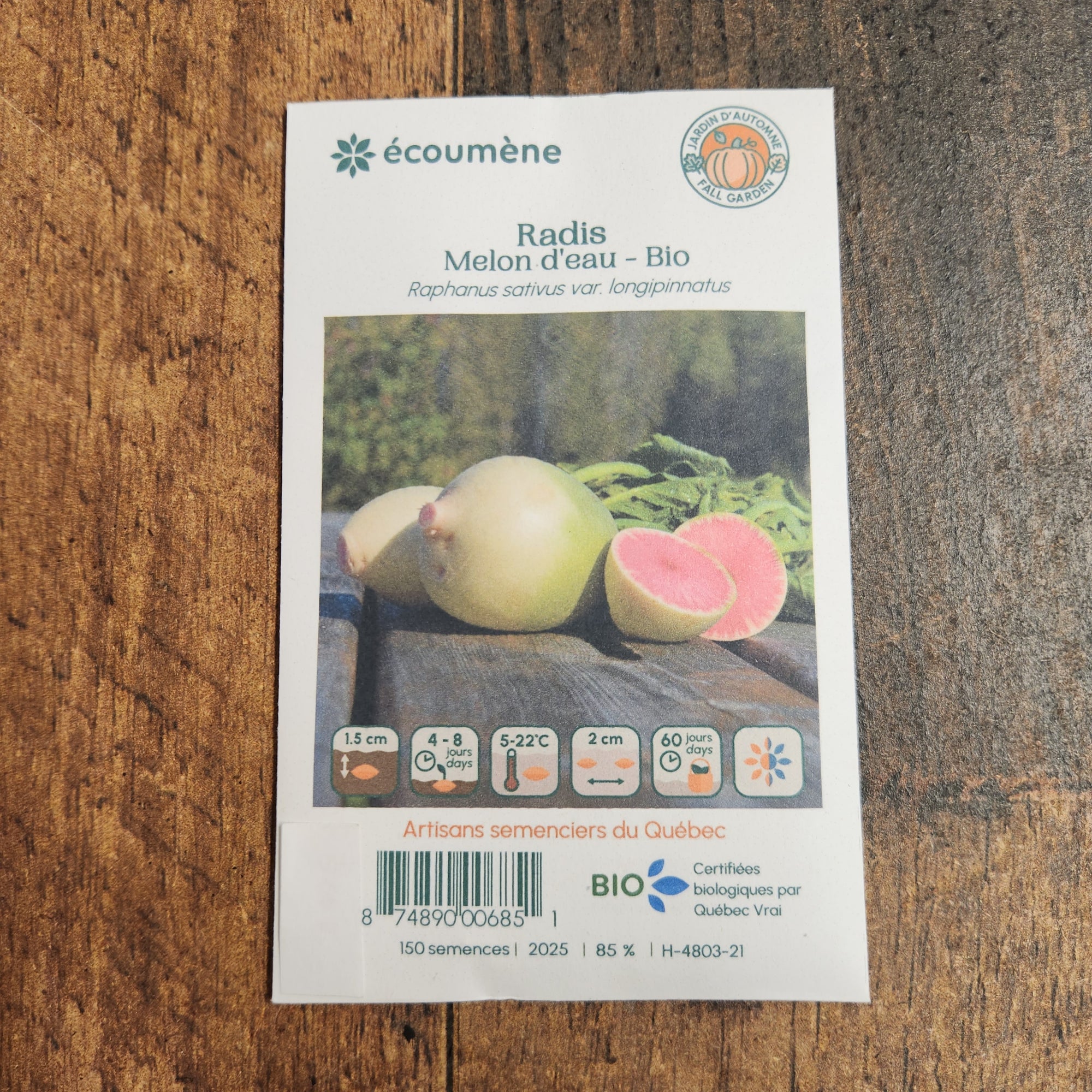
Organic 'Watermelon' Radish
Product code : JAREC-0206
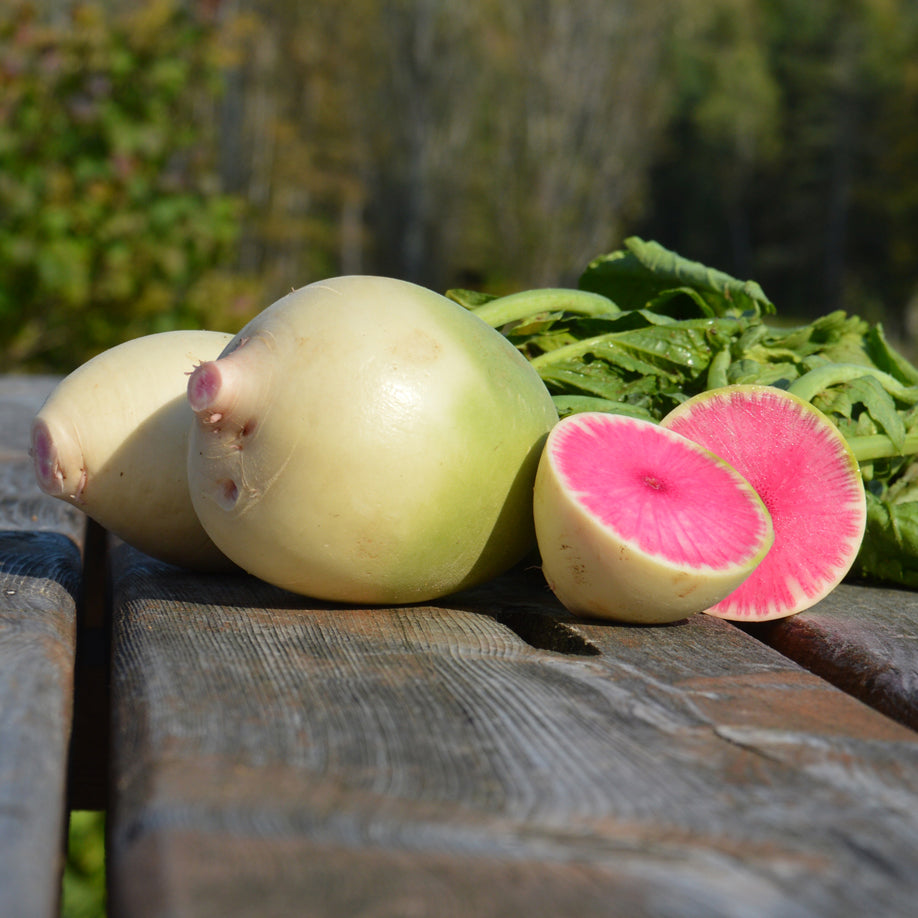
Under its pale, unassuming skin lies a vibrant, sometimes orange-tinged, pink heart that instantly brings to mind the refreshing sight of a sliced watermelon in the garden. This variety, also known as 'Shinrimei', captivates both gardeners and chefs with its spectacular appearance and crisp texture. Its flavor is sweet, slightly peppery, yet delicate enough to please even those who shy away from more robust radishes. Easy to integrate into a diverse vegetable garden, it also offers significant ornamental value thanks to its neat foliage and the colorful surprise it reveals at harvest.
- Quantity
- 150 seeds
- Exposure
- Sun to partial shade
- Life cycle
- Annual
Discover the plant
Common name'Watermelon' Radish
FamilyBrassicaceae
GenusRadish
Speciessativus
CultivarWatermelon
TypeVegetable
Botanical nameRadish
Reproducible seedsYes
Watermelon Radish (Raphanus sativus). Beneath its pale, unassuming skin lies a vibrant pink heart, sometimes tinged with orange, instantly evoking the freshness of a sliced watermelon from the garden. This variety, also known as 'Shinrimei', appeals to gardeners and cooks alike with its spectacular appearance and crisp texture. Its flavor is mild, slightly peppery, but delicate enough to please even those who shy away from more pungent radishes. Easy to integrate into a diverse vegetable garden, it also offers beautiful ornamental value thanks to its neat foliage and the colorful surprise it reveals at harvest.
Recommended sowing period: in summer, for an autumn harvest before heavy frosts. The recommended depth is 1 to 1.5 cm (3/8 to 5/8 in). Germination usually takes 4 to 10 days. For germination, keep the potting soil at 10 to 20 °C (50 to 68 °F). Sow radishes directly in finely prepared soil. Distribute seeds evenly enough to limit thinning. Spring radishes grow in small rows, while autumn types require a schedule adapted to shortening days.
Radishes can occupy a small area between two crops, but their growth rate varies depending on the type. Reserve a spot for autumn radishes that becomes available at the right time. Lettuce can be grown in a nearby section with compatible coolness requirements. A nearby path facilitates frequent harvests and limits trampling the row. Its flavor is mild, slightly peppery, but delicate enough to please even those who shy away from more pungent radishes. Easy to integrate into a diverse vegetable garden, it also offers beautiful ornamental value thanks to its neat foliage and the colorful surprise it reveals at harvest.

Sowing guide
It all startswith a seed.
Sowing depth
3/8 to 5/8 in (1 to 1.5 cm)
Germination temperature
10 to 20 °C (50 to 68 °F)
Germination time
4 to 10 days
Sowing period
July to September
Propagation
Sowing
Growing method
Recommended sowing period: in summer, for an autumn harvest before heavy frosts. The depth to respect is 1 to 1.5 cm (3/8 to 5/8 in). Germination usually takes 4 to 10 days. For germination, maintain the soil at 10 to 20 °C (50 to 68 °F). Sow radishes directly in finely prepared soil. Distribute the seeds fairly regularly to limit thinning. Spring radishes are sown in succession in small rows, while autumn types require a schedule adapted to shortening days. Check the type of this variety before repeating a sowing in the full summer heat. Taste a first radish as soon as it reaches a usable size. Quality depends more on tenderness than on maximum size. A radish left too long can become hollow or fibrous. Maintain regular moisture during development. Harvest developed roots without waiting for all of them to reach exactly the same diameter, then remove the greens before refrigerating them. The harvested part develops below the surface, which requires some checks instead of a simple observation of the foliage. Gently clear around the crown or lift a first plant to judge its size.
Soil and care
The right care,at the right time.
Care level
Regular during establishment, then adapted to growing conditions
Watering
Regular
Soil type
Loose, friable and well-drained
Fertilization
Fertilisation supports growth and takes into account nutrients already present in the soil or potting mix. Use mature compost or a suitable fertilizer for the crop, following the dosage instructions. Avoid using multiple products, especially in a container where roots occupy a limited volume. Water as needed after application and observe leaf development before re-fertilizing.
Moisture
Moist soil during germination, without standing water; then adjust to the crop
Seasonal care
This variety, also known as 'Shinrimei', appeals to both gardeners and cooks with its spectacular appearance and crisp texture. Sow the radishes directly into finely prepared soil. Distribute the seeds regularly enough to limit thinning. Spring radishes succeed one another in small rows, while autumn types require a schedule adapted to shortening days. Check the type of this variety before repeating a sowing in the full heat of summer. Taste a first radish as soon as it reaches a usable size. Quality depends more on tenderness than on maximum size. A radish left too long can become hollow or fibrous. Maintain regular moisture during development. Harvest developed roots without waiting for all of them to reach exactly the same diameter, then remove the greens before refrigerating them. The harvested part develops below the surface, which requires some checks rather than a simple observation of the foliage. Gently clear a collar or lift a first plant to judge its size. Regular growth promotes tenderness. Use bruised roots quickly and set aside intact specimens for storage adapted to the vegetable. Its flavor is mild, slightly pungent, but delicate enough to please even those who hesitate before stronger radishes. Easy to integrate into a diversified vegetable garden, it also brings great ornamental value thanks to its clean foliage and the colorful surprise it reserves at harvest.
Container growing
A garden,within reach.
Suitable for containers
Yes
Recommended pot size
A stable, perforated container, wide enough for the plant to spread out and deep enough for the roots.
Choose this exposure: sun to partial shade. Allow this spacing around the plant: 5 to 10 cm (2 to 4 in). A container makes it easy to monitor radishes, provided there is sufficient depth for the root type. Round varieties require less depth than long daikons. Sow in already moist potting soil and check for drainage after watering. Thin early so that the roots develop without crowding each other. Beneath its pale, unassuming skin lies a vibrant pink heart, sometimes tinged with orange, instantly evoking the freshness of a garden-fresh watermelon slice. This variety, also known as 'Shinrimei', appeals to both gardeners and cooks with its spectacular appearance and crisp texture. Its flavor is sweet, slightly peppery, but delicate enough to please even those who hesitate with stronger radishes. Easy to integrate into a diverse vegetable garden, it also offers beautiful ornamental value thanks to its neat foliage and the colorful surprise it reveals at harvest. Both decorative, flavorful, and memorable, 'Watermelon' enriches the garden and the plate with a vibrant and refined touch.
Bloom and dimensions
Its place,in your garden.
Mature height
15 to 20 cm (6 to 8 in.)
Width / spread
5 to 10 cm (2 to 4 in)
Foliage type
Seasonal foliage
Bloom period
May to July
Fruiting
Its flavor is mild, slightly pungent, but delicate enough to please even those who shy away from stronger radishes. Easy to integrate into a diversified vegetable garden, it also offers great ornamental value thanks to its clean foliage and the colorful surprise it holds at harvest. The harvested part develops below the surface, which requires some checking rather than just observing the foliage.
Harvest
50 to 65 days after sowing
Garden associations
In goodcompany.
Companion plants
In a diversified plantation, you can reserve neighboring sections for these plants: carrots, lettuces, spinach, cucumbers. The association here serves to organize space and harvests. Respect the height, light, and water needs of each plant, without crowding the foliage. Maintain a path for watering and picking, then remove finished crops to free up space. This organization facilitates maintenance without promising protection against pests. Radishes can occupy a small area between two crops, but their speed varies by type.
Recipe idea
From the gardento your plate.
Edible parts
Roots and young leaves
Watermelon Radish Kitchen Idea: Crispy Salad for Four Servings. Wash 300g of radishes and a small apple, then slice them thinly. For radishes with tough skin, peel the outer layer before slicing. Mix 15ml lemon juice, 15ml olive oil, and a pinch of salt. Pour over the slices, add 10ml chopped chives, and mix. Serve promptly to maintain crispness. Adjust the amount of radish according to its intensity. Prepare ingredients with clean utensils and adapt the slicing to the size of your harvest. This recipe highlights freshly picked parts: remove any damaged pieces before preparation. If doubling quantities, ensure enough space in the dish for even mixing or cooking. Quickly refrigerate leftovers in a sealed container and consume within two days. For a meal for two people, simply halve all quantities.
Frequently asked questions
Your questions,answered.
How to successfully sow 'Watermelon' Radishes?
Recommended sowing period: in summer, for an autumn harvest before heavy frosts. The recommended sowing depth is 1 to 1.5 cm (3/8 to 5/8 in). Germination usually takes 4 to 10 days. For germination, keep the potting soil at 10 to 20 °C (50 to 68 °F). Sow radishes directly in finely prepared soil. Distribute the seeds evenly enough to limit thinning. Spring radishes are planted in small successive rows, while autumn varieties require a schedule adapted to shorter days. Check the variety type before re-sowing in the peak summer heat.
Can ‘Watermelon’ Radishes be grown in pots?
Choose this exposure: full sun to partial shade. Allow this much spread around the plant: 5 to 10 cm (2 to 4 in). A container allows for easy monitoring of radishes, provided there is sufficient depth for the root type. Round varieties require less depth than long daikons. Sow in already moist potting mix and check drainage after watering. Thin early so that the roots develop without crowding each other. Beneath its pale, unassuming skin lies a vibrant pink heart, sometimes tinged with orange, instantly reminiscent of the freshness of a watermelon sliced straight from the garden.
When to harvest 'Watermelon' Radishes?
Its flavor is mild, slightly pungent, but delicate enough to please even those who hesitate to try stronger radishes. Easy to integrate into a diversified vegetable garden, it also offers beautiful ornamental value thanks to its neat foliage and the colorful surprise it reveals at harvest. The harvested part develops below the surface, which requires some checking instead of just observing the foliage. Gently clear around the crown or lift a first plant to assess its size. Consistent growth promotes tenderness. Use damaged roots quickly and save intact specimens for appropriate long-term storage.
What makes 'Watermelon' radish stand out in the garden?
Beneath its pale, unassuming skin lies a vibrant, sometimes orange-tinged, fuchsia heart, instantly reminiscent of a freshly sliced watermelon in the garden. This variety, also known as 'Shinrimei', captivates both gardeners and chefs with its spectacular appearance and crisp texture. Its flavor is sweet, slightly pungent, yet delicate enough to appeal even to those who shy away from more robust radishes. Easy to incorporate into a diverse vegetable garden, it also offers significant ornamental value thanks to its neat foliage and the colorful surprise it reveals at harvest.
How to plant ‘Watermelon’ radishes?
Radishes can occupy a small area between two crops, but their speed varies by type. Reserve a spot for autumn radishes that will become available at the right time. Lettuce can be grown in a neighboring section with compatible freshness needs. A nearby path facilitates frequent harvests and limits trampling of the row. Taste a first radish as soon as it reaches a usable size. Quality depends more on tenderness than on maximum size. A radish left too long can become hollow or fibrous. Maintain consistent moisture during growth. Harvest developed roots without waiting for all of them to reach exactly the same diameter, then remove the greens before refrigerating them.
For a great start to your seeds
The right extras.Right here.
Seed Starting Soil
Shop the collectionSeed starting supplies
Shop the collection





