Les jardins de l'écoumène

Diplotaxis erucoides ‘Wasabi’

Brassica juncea

The Japanese arugula Diplotaxis erucoides ‘Wasabi’ is an amazing organic annual that brings the vegetable garden a rare aromatic intensity and a true culinary personality. From the first harvest, the crisp, dark green leaves have a sharp flavour reminiscent of wasabi. This distinctive taste makes the plant an interesting choice for gardeners who enjoy strongly flavoured salad greens. The compact growth habit makes this plant easy to fit into edible garden beds, rows of vegetables or containers near the kitchen. Pick small amounts of leaves as you need them for meals. Hardy and cold tolerant, it lends itself as well to spring and autumn sowings, thus prolonging the season of fresh crops.
Sold as 140 seeds

Sold out

4 49 $
Pay in 4 interest-free payments withSezzle

Delivery and pickup: view conditions

Product information
Québec product
Secure payment
Share

Discover the plant

Common nameWasabi Arugula
FamilyBrassicaceae
GenusBrassica
Speciesrush-like
CultivarWasabi
TypeHerb
Botanical nameBrassica juncea
Reproducible seedsYes

Diplotaxis erucoides ‘Wasabi’ — Wasabi Arugula. The Japanese arugula Diplotaxis erucoides ‘Wasabi’ is an amazing organic annual that brings the vegetable garden a rare aromatic intensity and a true culinary personality. From the first harvest, the crisp, dark green leaves have a sharp flavour reminiscent of wasabi. This distinctive taste makes the plant an interesting choice for gardeners who enjoy strongly flavoured salad greens. The compact growth habit makes this plant easy to fit into edible garden beds, rows of vegetables or containers near the kitchen. Pick small amounts of leaves as you need them for meals.

Recommended planting period: April to September. Sow on the surface, without covering the arugula seeds. Germination usually takes 10 to 30 days. For germination, keep the soil at 15 to 20°C (59 to 68°F). Spread the seeds of the leafy vegetables regularly to avoid too tight a carpet of plants that are still in their early growth stages grown from seed. Thin or transplant according to the crop, retaining the strongest young plants. Sow at intervals to harvest leaves at different stages of development. Identify dates to track growth over the weeks.

Hardy and cold tolerant, it lends itself as well to spring and autumn sowings, thus prolonging the season of fresh crops. Leafy vegetables are better placed near a passage, as they are often harvested in small quantities. Arrange short rows or labelled groups to harvest ready plants without trampling the soil. Allow enough space for the central leaves or the head to develop, according to the type of vegetable you are growing. Different foliage colours identify varieties in mixed plantings and help create varied salads. The Japanese arugula Diplotaxis erucoides ‘Wasabi’ is an amazing organic annual that brings the vegetable garden a rare aromatic intensity and a true culinary personality.

In the garden

Exposure
Full sun to part shade
Life cycle
Annual

Sowing guide

Sowing & germination

Sowing depth

Surface sow; do not cover.

Germination temperature

15 to 20°C (59 to 68°F)

Germination time

10 to 30 days

Sowing period

April to September

Propagation

Sowing

Growing method

Recommended planting period: April to September. Sow on the surface, without covering the seeds. Germination usually takes 10 to 30 days. For germination, keep the soil at 15 to 20°C (59 to 68°F). Distribute the seeds of leafy vegetables evenly to avoid a densely crowded mat of young seedlings. Thin or transplant the seedlings as appropriate for the crop, keeping the strongest plants for further growth. Sowing at intervals gives you plants at different stages of growth, allowing you to harvest leaves over time. Label each sowing with its date so that you can follow the plants’ growth. During warm weather, check the surface of the seedbed: it may dry out before the young roots reach a moister layer of soil. For leaf-to-leaf crops, start with the outer leaves and preserve the centre of the plant. The arugula does not form an apple: pick a few healthy leaves at a time and let the plant continue to grow. A young leaf is usually softer than a leaf left too long. Rinse the harvest before preparation and avoid crushing the remaining foliage. Observe the elongation of the central stem to spot the beginning of seed ascent. When harvesting leafy vegetables, adjust the way you pick them to suit the particular type of plant.

Soil and care

Soil & care

Watering

For Japanese arugula ‘Wasabi’, maintain even moisture to support the production of young leaves. Gently water the seedlings, then direct the water to the ground as the foliage fills out. Avoid allowing the substrate to dry completely between waterings, especially in containers. Adjust watering to rains and temperatures: a damp soil does not need a new input. Under the surface, a dry top can be distinguished from a root ball that is still sufficiently moist.

Soil type

Prepare a fertile, moist, well-drained soil. A finely prepared surface facilitates the raising of small seeds. The soil must maintain moisture without remaining wet, especially when seedlings are close together. Mature compost can improve poor soil, but inputs must take into account its initial fertility. In a bowl or in a garden, use an aerated vegetable soil and ensure a free flow. Avoid trampling the cultivated area to preserve its structure.

Fertilization

Fertilization supports growth and should take into account the nutrients already present in the soil or potting mix. Use mature compost or a fertilizer suitable for the crop, following the recommended application rate. Avoid combining too many products, especially in a container where the roots have a limited volume of growing medium. Water as needed after applying nutrients, and observe foliage growth before deciding whether another fertilizer application is necessary.

Moisture

Keep the potting mix moist during emergence, without standing water; then adjust watering to suit the crop

Seasonal care

Its crisp, dark green leaves have a sharp flavour reminiscent of wasabi, offering a distinctive option for gardeners who enjoy pungent greens. Spread the seeds of the leafy vegetables regularly to avoid too tight a carpet of seedlings. Thin or transplant according to the crop, retaining the strongest young plants. Sow at intervals to harvest leaves at different stages of development. Identify dates to track growth. During warm periods, monitor the seedling surface: it can dry before the roots have reached a cooler layer. For leaf-to-leaf crops, start with the outer leaves and preserve the centre of the plant. Pumped types can also be harvested whole when the heart is well formed. A young leaf is usually softer than a leaf left too long. Rinse the harvest before preparation and avoid crushing the remaining foliage. Observe the elongation of the central stem to spot the beginning of seed ascent. Adjust the way you harvest leafy vegetables to the type of plant and the part that you intend to pick. An outdoor collection preserves the heart when you want to continue production. Very old leaves do not give the same tenderness as young shoots. Rinse the harvest just before use or dry it thoroughly before a short stay in the refrigerator. Recommended planting period: April to September. Sow on the surface, without covering the seeds.

Container growing

Container growing

Suitable for containers

Yes

Recommended pot size

A stable container with drainage holes, enough width for the plant’s spread and sufficient depth for its roots
Choose a growing position that receives full sun or partial shade, as indicated for this crop. Reserve this spread around the plant: 20 to 30 cm (8 to 12 in.). A leafy vegetable gardener keeps a harvest close to the kitchen. Use all available surfaces without tightening the plants against the edge. Apple types require more space than very young harvested leaves. Check the moisture level in the soil around the roots regularly and water under the foliage as much as possible. Harvest with clean scissors and remove damaged leaves to keep the heart accessible and ventilated. Its compact habit suits edible beds, vegetable rows or containers near the kitchen, where leaves can be picked as needed. The Japanese arugula Diplotaxis erucoides ‘Wasabi’ is an amazing organic annual that brings the vegetable garden a rare aromatic intensity and a true culinary personality. From the first harvest, the crisp, dark green leaves have a sharp flavour reminiscent of wasabi. This distinctive taste makes the plant an interesting choice for gardeners who enjoy strongly flavoured salad greens. Hardy and cold tolerant, it lends itself as well to spring and autumn sowings, thus prolonging the season of fresh crops.
Sachet de semences Roquette Japonaise Wasabi. Emballage blanc photographié de face sur un fond de bois brun. Une image du végétal occupe la partie centrale, sous le nom imprimé. De petits pictogrammes et un code-barres apparaissent au bas du sachet. La marque Écoumène figure dans la partie supérieure de cette présentation.

Bloom and dimensions

Size, flowering & harvest

Mature height

20 to 30 cm (8 to 12 in)

Width / spread

20 to 30 cm (8 to 12 in)

Foliage type

Seasonal foliage

Growth habit

Compact

Bloom period

Flowering in Japanese arugula ‘Wasabi’ marks a transition in the production of edible leaves. Pickings are usually more interesting on young and tender foliage. To extend the produce that you harvest from the garden, plan new seeding rather than rely solely on the seeded seed. A few plants left in bloom can complete a diverse planting. Keep them identified and separate from regularly harvested rows, to clearly track their evolution and seed formation.

Harvest

32 days after sowing
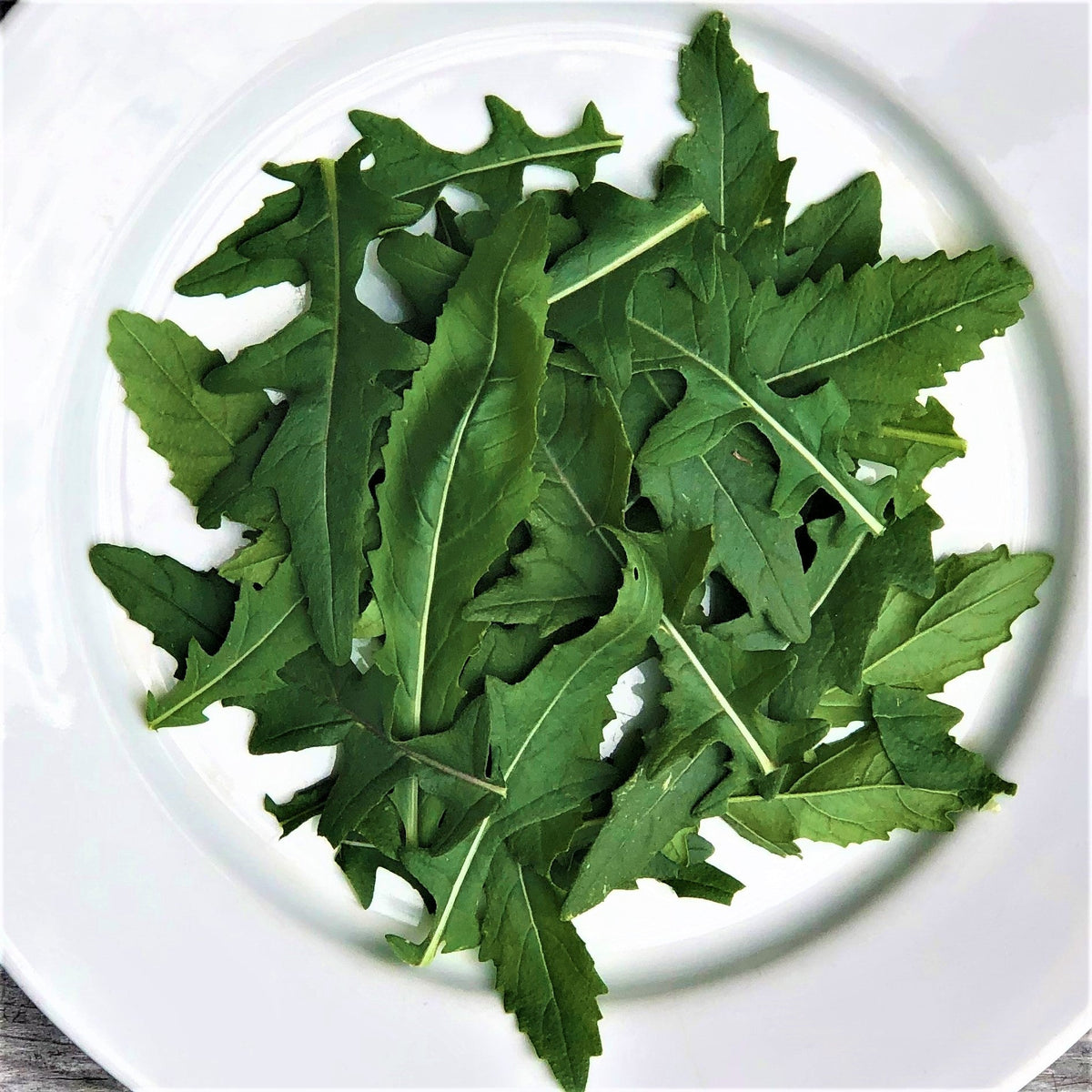
Roquette Japonaise Wasabi. Feuilles de roquette découpées dans une assiette blanche. Le cadrage permet de voir les formes, les couleurs et les détails du sujet représenté. Les contours se détachent du fond de l’image, avec des différences de teinte et de texture visibles sur les surfaces. Cette vue accompagne la présentation du produit dans la boutique.

Garden associations

Companion plants & uses

Companion plants

In a diverse planting, you can reserve sections close to these plants: carrots, lettuce, tomatoes, radishes. The association is used here to organize space and crops. Allow for the height, light requirements and water needs of each plant, leaving enough room between the foliage. Keep a path clear for watering and harvesting, then remove finished crops to make room for the next planting. This arrangement makes maintenance easier without promising protection against garden pests. Grow leafy vegetables close to a garden path, where it is easy to reach them for frequent harvests of small quantities.

Garden use

From the first harvest, the crisp, dark green leaves have a sharp flavour reminiscent of wasabi. This distinctive taste makes the plant an interesting choice for gardeners who enjoy strongly flavoured salad greens. The compact growth habit makes this plant easy to fit into edible garden beds, rows of vegetables or containers near the kitchen. Pick small amounts of leaves as you need them for meals. Hardy and cold tolerant, it lends itself as well to spring and autumn sowings, thus prolonging the season of fresh crops.

Recipe idea

From garden to table

Edible parts

Leaves
Kitchen idea with Japanese arugula ‘Wasabi’: garden salad for four servings. Wash and drows 200 g of soft leaves, then tear the larger ones. Add a grated carrot and four finely sliced radish. Mix 20 ml of olive oil, 10 ml of cider vinegar and 5 ml of mustard. Pour on the vegetables at the last moment and stir gently. For thicker leaves, mix a small handle with a soft lettuce base. Serve immediately to preserve their texture. Prepare all ingredients using clean utensils, cutting the freshly harvested vegetables into pieces suited to their size and the dish you are making. Use freshly harvested ingredients and remove any damaged pieces before preparing the recipe. If doubling the quantities, use a dish with enough space for even mixing or cooking. Promptly refrigerate leftovers in a covered container and eat them within two days. For a meal for two, divide each ingredient quantity by two.
Roquette Japonaise Wasabi. Feuilles de roquette découpées dans une assiette blanche. Le cadrage permet de voir les formes, les couleurs et les détails du sujet représenté. Les contours se détachent du fond de l’image, avec des différences de teinte et de texture visibles sur les surfaces. Cette vue accompagne la présentation du produit dans la boutique.

Frequently asked questions

Frequently asked questions

How do I grow Wasabi Arugula from seed?
Recommended planting period: April to September. Sow on the surface, without covering the seeds. Germination usually takes 10 to 30 days. For germination, keep the soil at 15 to 20°C (59 to 68°F). Distribute the seeds of leafy vegetables evenly to avoid a densely crowded mat of young seedlings. Thin or transplant the seedlings as appropriate for the crop, keeping the strongest plants for further growth. Sowing at intervals gives you plants at different stages of growth, allowing you to harvest leaves over time. Label each sowing with its date so that you can follow the plants’ growth. During warm weather, check the surface of the seedbed: it may dry out before the young roots reach a moister layer of soil.
Can I grow Wasabi Arugula in a container?
Choose full sun to partial shade for this crop. Reserve this spread around the plant: 20 to 30 cm (8 to 12 in.). A leafy vegetable gardener keeps a harvest close to the kitchen. Use all available surfaces without tightening the plants against the edge. Apple types require more space than very young harvested leaves. Check moisture regularly and water under the foliage as much as possible. Harvest with clean scissors and remove damaged leaves to keep the heart accessible and ventilated. The Japanese arugula Diplotaxis erucoides ‘Wasabi’ is an amazing organic annual that brings the vegetable garden a rare aromatic intensity and a true culinary personality.
When to enjoy the harvest of Japanese arugula ‘Wasabi’?
From the first harvest, the crisp, dark green leaves have a sharp flavour reminiscent of wasabi. This distinctive taste makes the plant an interesting choice for gardeners who enjoy strongly flavoured salad greens. The compact growth habit makes this plant easy to fit into edible garden beds, rows of vegetables or containers near the kitchen. Pick small amounts of leaves as you need them for meals. Hardy and cold tolerant, it lends itself as well to spring and autumn sowings, thus prolonging the season of fresh crops. At the same time productive, surprising and deliciously spicy, ‘Wasabi’ is an excellent ally for gourmet gardeners looking for new flavours.
What makes Wasabi Arugula distinctive in the garden?
The Japanese arugula Diplotaxis erucoides ‘Wasabi’ is an amazing organic annual that brings the vegetable garden a rare aromatic intensity and a true culinary personality. From the first harvest, the crisp, dark green leaves have a sharp flavour reminiscent of wasabi. This distinctive taste makes the plant an interesting choice for gardeners who enjoy strongly flavoured salad greens. The compact growth habit makes this plant easy to fit into edible garden beds, rows of vegetables or containers near the kitchen. Pick small amounts of leaves as you need them for meals. Hardy and cold tolerant, it lends itself as well to spring and autumn sowings, thus prolonging the season of fresh crops.
How should I arrange a planting of Wasabi Arugula?
Grow leafy vegetables close to a garden path, where it is easy to reach them for frequent harvests of small quantities. Arrange short rows or labelled groups to harvest ready plants without trampling the soil. Leave room for the central leaves or head, according to the type grown. Different foliage colours identify varieties in mixed plantings and help create varied salads. For leaf-to-leaf crops, start with the outer leaves and preserve the centre of the plant. Pumped types can also be harvested whole when the heart is well formed. A young leaf is usually softer than a leaf left too long.

Seed-starting essentials