


Shrubs
Shrimp Willow ‘Hakuro Nishiki’
Willow-leaved Spiraea
Products and available quantities may vary between Brossard and Laval. To check a store’s inventory, please contact us directly.
Even better: visit us in store to discover the full selection available!
- Exposure
- Sun to partial shade
- Hardiness
- Zone 4
Discover the plant
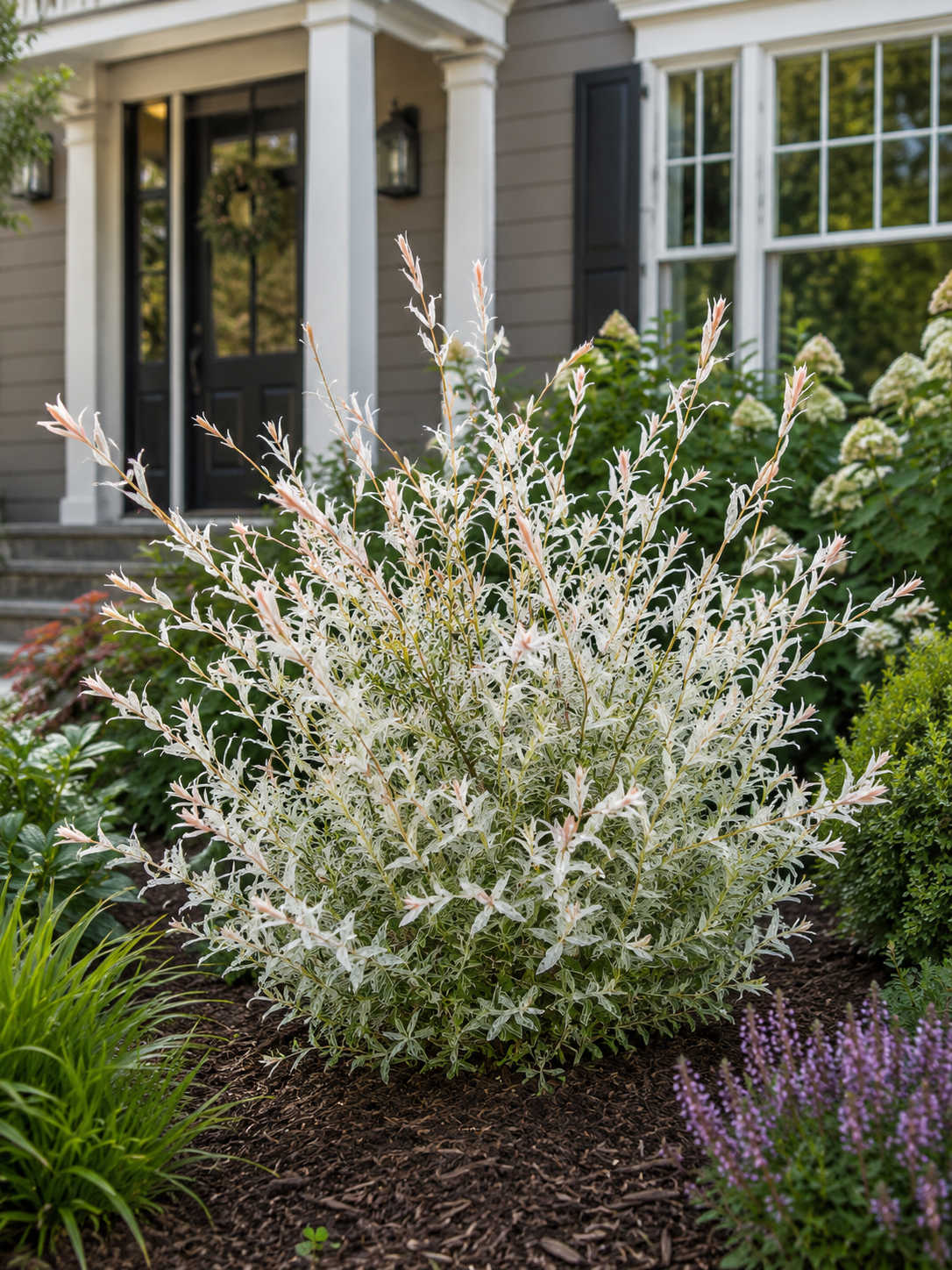
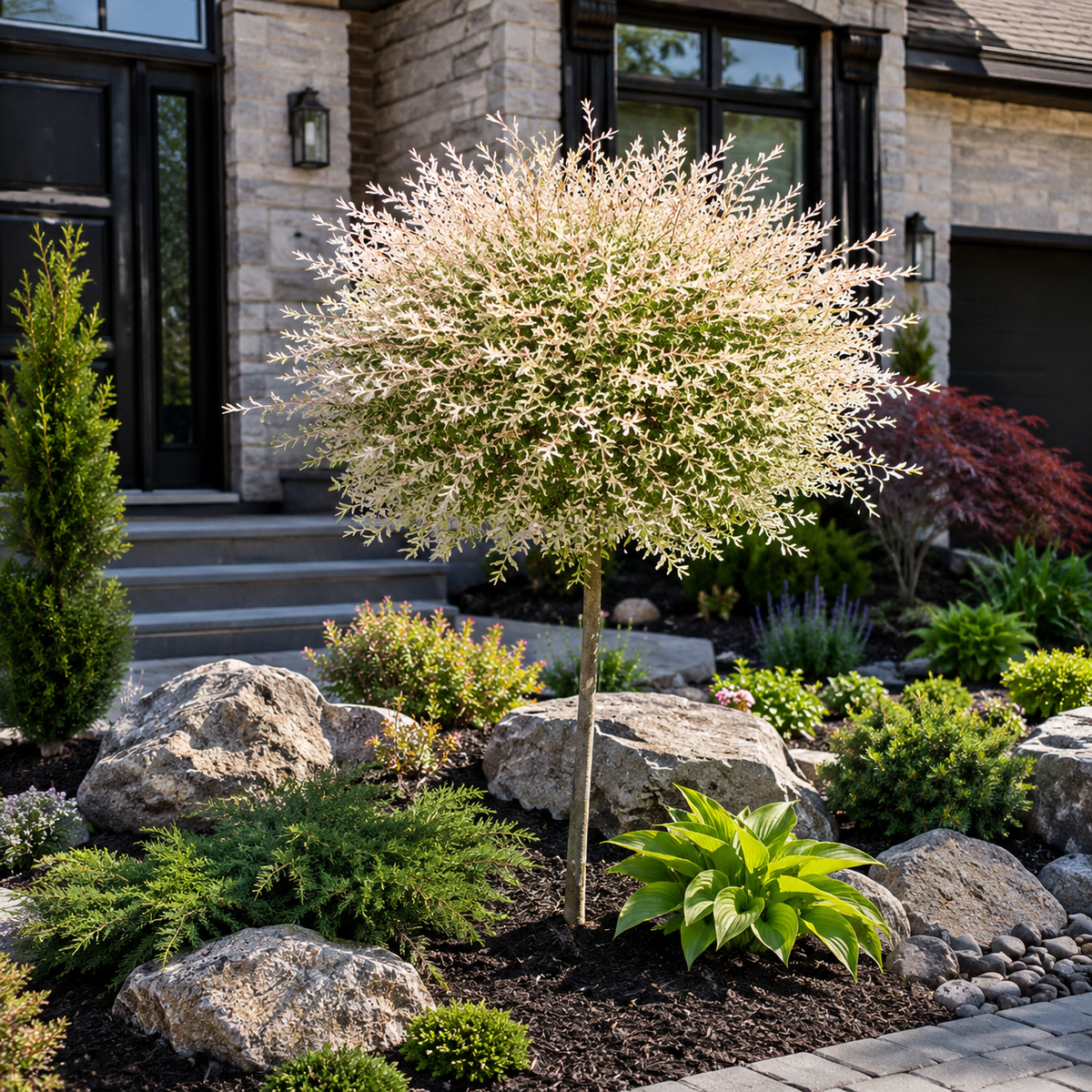
Shrimp Willow ‘Hakuro Nishiki’ (Salix integra ‘Hakuro Nishiki’). Salix integra 'Hakuro Nishiki', also called shrimp willow or dappled willow, is a very decorative Salix shrub sought after for its variegated green, creamy white, and salmon pink foliage. This willow shrub adds a bright and refined touch to landscape designs, especially in spring when the young shoots are most colorful. Compact, elegant, and easy to integrate, Salix 'Hakuro Nishiki' is ideal as an ornamental shrub as a specimen, in mass plantings, as a foundation plant, in a low informal hedge, or in a large decorative pot. This Salix shrub prefers full sun to partial shade in fertile, moist to wet, well-drained soil.
To plant Shrimp Willow ‘Hakuro Nishiki’, choose a suitable exposure: sun to partial shade. The recommended soil is: fertile, moist to wet, and well-drained. Water the root ball before planting it and check that water can drain after planting. During recovery, check the moisture by hand before watering again. Spread mulch around the base, leaving the collar clear. Avoid systematic fertilizer applications without considering the richness of the soil. In Quebec, choose a period when the soil is thawed and easy to work.
Excellent as a specimen, in shrub beds, foundation planting, informal low hedge, cool border, garden near a pond, contemporary design, decorative container or grafted onto a standard near an entrance. It serves very well as a focal point thanks to its light and changing foliage. Allow a width of 1.5-2 m (5-6 ft) to organize the space for this plant in the garden. The indicated height of 1.5-2 m (5-6 ft) helps choose its position in relation to neighboring plants. Keep access to the base to weed, check moisture, and remove damaged parts.

Planting guide
From planting to establishment.
Soil and care
The right care,at the right time.
Soil pH
Minimum temperature
Care level
Watering
Soil type
Fertilization
Moisture
Seasonal care
Container growing
A garden,within reach.
Bloom and dimensions
Its place,in your garden.
Mature height
Width / spread
Flower color
Foliage color
Foliage type
Growth rate
Growth habit
Bloom period
Fruiting
Garden associations
In goodcompany.
Companion plants
Wildlife and pets