Organic seeds

Les jardins de l'écoumène

Solanum lycopersicum ‘Ananas’

Tomato

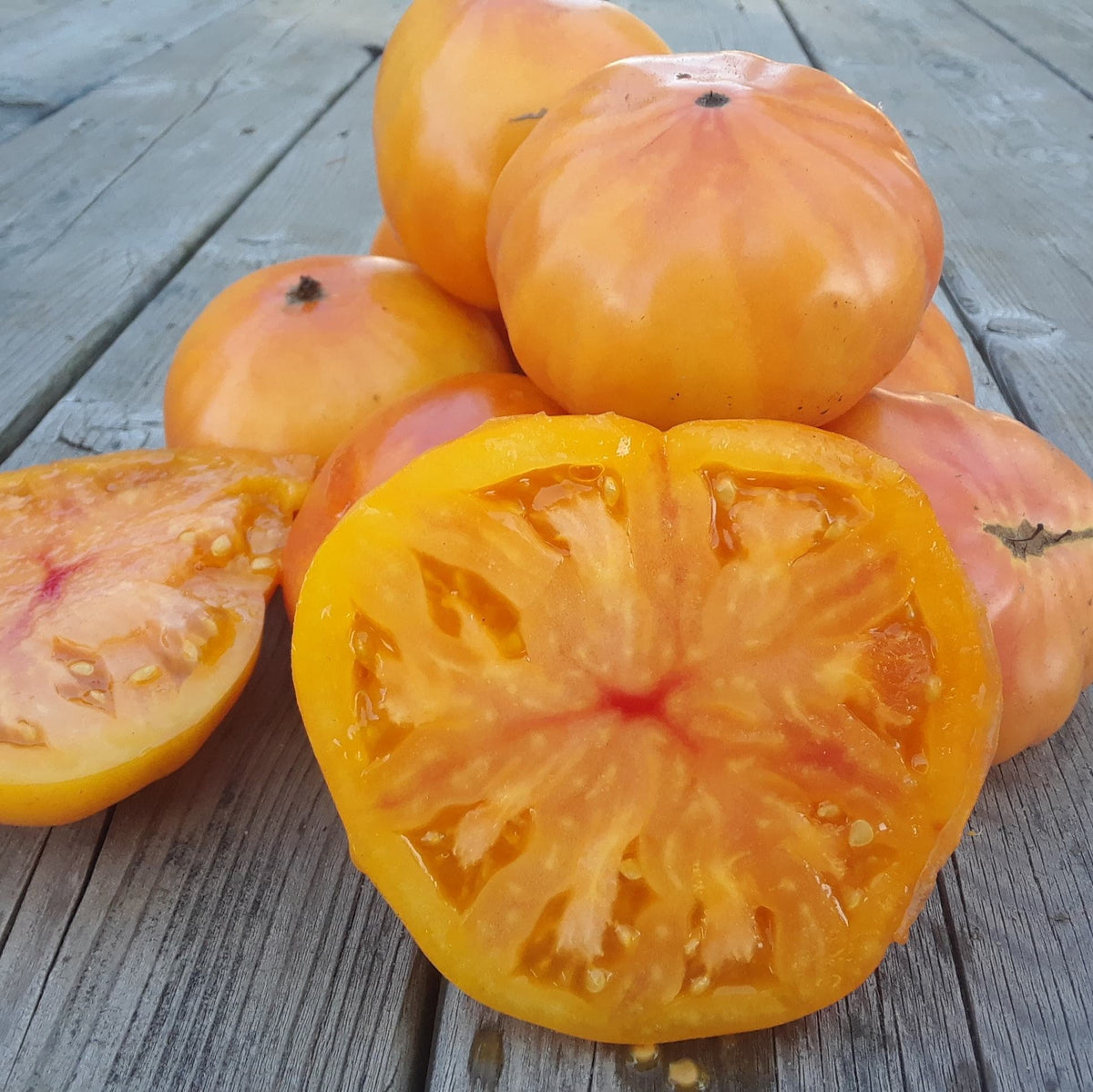
When cut into slices, the marbled flesh has the bright, varied appearance of a tropical fruit. This colouring explains the Ananas name and appeals to gardeners who enjoy distinctive tomatoes. On a vigorous, indeterminate plant, it produces late in the season generous flattened, fleshy and juicy fruits, whose sweet and mild flavour is balanced by a hint of acidity that recalls the taste of citrus fruits. This combination of flavours makes it particularly enjoyable in freshly prepared salads, where the colours of the sliced flesh attract attention alongside its distinctive taste. In the garden, it requires sun, a rich and well-drained soil and a sturdy staking to support its robust vines and heavy fruits.
Sold as 25 seeds
4 49 $

Available

Pay in 4 interest-free payments withSezzle

Delivery and pickup: view conditions

Product information
Québec product
Secure payment
Share

Discover the plant

Common nameAnanas Beefsteak Tomato
FamilyNightshades
GenusNightshade
Speciestomato
CultivarPineapple
TypeVegetable
Botanical nameTomato
Reproducible seedsYes
Heirloom varietyYes

Solanum lycopersicum ‘Ananas’ — Ananas Beefsteak Tomato. When cut into slices, the marbled flesh has the bright, varied appearance of a tropical fruit. This colouring explains the Ananas name and appeals to gardeners who enjoy distinctive tomatoes. On a vigorous, indeterminate plant, it produces late in the season generous flattened, fleshy and juicy fruits, whose sweet and mild flavour is balanced by a hint of acidity that recalls the taste of citrus fruits. This combination of flavours makes it particularly enjoyable in freshly prepared salads, where the colours of the sliced flesh attract attention alongside its distinctive taste.

Recommended planting period: March to April. The sowing depth is 6 mm (1/4 in.) Germination usually takes 5 to 10 days. For germination, keep the soil at 24 to 28°C (75 to 82°F). Transplant tomato seedlings once true leaves develop and the roots hold the potting mix together. Provide bright light to prevent the young stems from stretching. A short, sturdy plant establishes more readily than a weak, stretched seedling. While hardening off the young plants, gradually extend the time they spend outdoors and bring them back inside if cold nights return.

Tomato Ananas reveals yellow and red hues that extend into the flesh. A large sliced cut highlights this drawing; install a support capable of bearing the big fruits. Plant tomatoes where you can easily reach their fruit clusters from a garden path without pushing through the foliage. Position the supports so that the growing tomato plants do not cast too much shade on shorter neighbouring crops. Planting in rows makes stems easier to guide; a few separate plants bring the harvest closer to the patio. Leave enough space between tomato foliage and neighbouring plants for easy access and good air circulation.

In the garden

Exposure
Full sun
Life cycle
Annual

Sowing guide

Sowing & germination

Sowing depth

6 mm (1/4 in)

Germination temperature

24 to 28°C (75 to 82°F)

Germination time

5 to 10 days

Sowing period

March to April

Propagation

Sowing

Growing method

Recommended planting period: March to April. The sowing depth is 6 mm (1/4 in.) Germination usually takes 5 to 10 days. For germination, keep the soil at 24 to 28°C (75 to 82°F). Transplant tomato seedlings once true leaves develop and the roots hold the potting mix together. Provide bright light to prevent the young stems from stretching. A short, sturdy plant establishes more readily than a weak, stretched seedling. While hardening off the young plants, gradually extend the time they spend outdoors and bring them back inside if cold nights return. Soil temperature matters as much as the calendar date when deciding when to plant. Keep the lowest leaves clear of the soil to reduce the amount of soil splashed onto them when you water. Tie the stems to their supports with soft ties, leaving enough room for each stem to thicken as it grows. Inspect fruit clusters when checking the ties: developing tomatoes quickly add weight to the stems. Mulch applied after the soil warms helps maintain consistent moisture and keeps low-hanging fruit clean. The growth habit guides decisions about staking and pruning the plant.

Soil and care

Soil & care

Watering

For Tomato Beefsteak ‘Ananas’, maintain regular moisture around the roots, especially during fruit magnification. Water slowly at the foot to wet the root ball deep, then let the surface wipe before the next intake. Avoid alternations between marked drought and excessive watering. A mulch placed on a heated earth limits evaporation. When growing in containers, check the soil more often in hot weather and empty the saucer after discharge.

Soil type

Prepare a rich, fertile and well-drained soil. The soil must offer both a moisture reserve and a good ventilation to the roots. Incorporate well-ripened compost into prepared soil, with no excess nitrogen fertilization. Avoid areas that are piled or long-lasting engulfed. In the container, use vegetable soil and a drilled pot instead of compact garden soil. A mulch can cover the surface once the earth is warmed.

Fertilization

Fertilization supports growth and should take into account the nutrients already present in the soil or potting mix. Use mature compost or a fertilizer suitable for the crop, following the recommended application rate. Avoid combining too many products, especially in a container where the roots have a limited volume of growing medium. Water as needed after applying nutrients, and observe foliage growth before deciding whether another fertilizer application is necessary.

Moisture

Keep the potting mix moist during emergence, without standing water; then adjust watering to suit the crop

Seasonal care

Tomato Ananas reveals yellow and red hues that extend into the flesh. A large sliced cut highlights this drawing; install a support capable of bearing the big fruits. Transplant tomato seedlings once true leaves develop and the roots hold the potting mix together. Provide bright light to prevent the young stems from stretching. A short, sturdy plant establishes more readily than a weak, stretched seedling. During hardening off, gradually extend outdoor exposure and bring plants inside if cold nights return. Soil temperature matters as much as the calendar date when deciding when to plant. Keep the lowest leaves clear of the soil to reduce the amount of soil splashed onto them when you water. Attach stems with soft ties that leave room for the stems to thicken. Inspect fruit clusters when checking the ties: developing tomatoes quickly add weight to the stems. Mulch applied after the soil warms helps maintain consistent moisture and keeps low-hanging fruit clean. The growth habit guides decisions about staking and pruning the plant. Determinate tomatoes bear fruit on their branches; heavy pruning can remove part of the crop. An undetermined tomato requires more driving as it lengthens. Observe the fruits that approach their final colour and pick them without crushing the surrounding clusters. When cut into slices, the marbled flesh has the bright, varied appearance of a tropical fruit. This colouring explains the Ananas name and appeals to gardeners who enjoy distinctive tomatoes.

Container growing

Container growing

Suitable for containers

Yes

Recommended pot size

A stable container with drainage holes, enough width for the plant’s spread and sufficient depth for its roots
Choose a location in full sun. Reserve this spread around the plant: 50 to 70 cm (20 to 28 in.). A potted tomato needs enough potting mix to prevent its root ball from repeatedly becoming very dry or waterlogged. Install the support before the developing roots fill the container. A stable pot with a heavy base resists wind as the foliage grows larger. As fruit develops, check moisture more often and moisten the entire root ball rather than only its surface. When cut into slices, the marbled flesh has the bright, varied appearance of a tropical fruit. This colouring explains the Ananas name and appeals to gardeners who enjoy distinctive tomatoes. On a vigorous, indeterminate plant, it produces late in the season generous flattened, fleshy and juicy fruits, whose sweet and mild flavour is balanced by a hint of acidity that recalls the taste of citrus fruits. This combination of flavours makes it particularly enjoyable in freshly prepared salads, where the colours of the sliced flesh attract attention alongside its distinctive taste. In the garden, it requires sun, a rich and well-drained soil and a sturdy staking to support its robust vines and heavy fruits.
Sachet de semences Tomate Beefsteak Ananas. Emballage blanc photographié de face sur un fond de bois brun. Une image du végétal occupe la partie centrale, sous le nom imprimé. De petits pictogrammes et un code-barres apparaissent au bas du sachet. La marque Écoumène figure dans la partie supérieure de cette présentation.

Bloom and dimensions

Size, flowering & harvest

Mature height

1.7 m (5.5 ft)

Width / spread

50 to 70 cm (20 to 28 in)

Foliage type

Seasonal foliage

Bloom period

The flowers of Tomato Beefsteak ‘Ananas’ precede the fruit and must remain on the plant. Avoid removing them as ornamental faded flowers: their fertilization allows the formation of tomatoes. Excessive heat, cold nights or lack of water can disrupt the process. Keep a good air circulation around the foliage. Under shelter, the ventilation and natural vibrations of the stems accompany the release of pollen, without promising a fruitification to each flower.

Fruiting

When cut into slices, the marbled flesh has the bright, varied appearance of a tropical fruit. This colouring explains the Ananas name and appeals to gardeners who enjoy distinctive tomatoes. On a vigorous, indeterminate plant, it produces late in the season generous flattened, fleshy and juicy fruits, whose sweet and mild flavour is balanced by a hint of acidity that recalls the taste of citrus fruits.

Harvest

85 to 95 days after transplantation
Tomate Beefsteak Ananas. Grosse tomate jaune orangé entière et coupée. Le cadrage permet de voir les formes, les couleurs et les détails du sujet représenté. Les contours se détachent du fond de l’image, avec des différences de teinte et de texture visibles sur les surfaces. Cette vue accompagne la présentation du produit dans la boutique.

Garden associations

Companion plants & uses

Companion plants

In a diverse planting, you can reserve sections close to these plants: basil, garlic, pepper, care. The association is used here to organize space and crops. Allow for the height, light requirements and water needs of each plant, leaving enough room between the foliage. Keep a path clear for watering and harvesting, then remove finished crops to make room for the next planting. This arrangement makes maintenance easier without promising protection against garden pests. Plant tomatoes where the fruit clusters can be reached easily from a garden path.

Garden use

When cut into slices, the marbled flesh has the bright, varied appearance of a tropical fruit. This colouring explains the Ananas name and appeals to gardeners who enjoy distinctive tomatoes. On a vigorous, indeterminate plant, it produces late in the season generous flattened, fleshy and juicy fruits, whose sweet and mild flavour is balanced by a hint of acidity that recalls the taste of citrus fruits. This combination of flavours makes it particularly enjoyable in freshly prepared salads, where the colours of the sliced flesh attract attention alongside its distinctive taste.

Recipe idea

From garden to table

Edible parts

Ripe fruits
Kitchen idea with Tomato Beefsteak ‘Ananas: tomato salad for four servings. Cut 600 g of ripe tomatoes into slices or quarters and place them in a dish. Add a small thin green onion, 15 ml of olive oil and 10 ml of cider vinegar. Season lightly with salt and pepper, then add a few basil leaves. Let stand ten minutes before serving with bread. Cut large tomatoes on a rimmed board to collect their juice for the dressing. Prepare all ingredients using clean utensils, cutting the freshly harvested vegetables into pieces suited to their size and the dish you are making. Use freshly harvested ingredients and remove any damaged pieces before preparing the recipe. If doubling the quantities, use a dish with enough space for even mixing or cooking. Promptly refrigerate leftovers in a covered container and eat them within two days. For a meal for two, divide each ingredient quantity by two.
Tomate Beefsteak Ananas. Grosse tomate jaune orangé entière et coupée. Le cadrage permet de voir les formes, les couleurs et les détails du sujet représenté. Les contours se détachent du fond de l’image, avec des différences de teinte et de texture visibles sur les surfaces. Cette vue accompagne la présentation du produit dans la boutique.

Frequently asked questions

Frequently asked questions

How do I grow Ananas Beefsteak Tomato from seed?
Recommended planting period: March to April. The sowing depth is 6 mm (1/4 in.) Germination usually takes 5 to 10 days. For germination, keep the soil at 24 to 28°C (75 to 82°F). Transplant tomato seedlings once true leaves develop and the roots hold the potting mix together. Provide bright light to prevent the young stems from stretching. A short, sturdy plant establishes more readily than a weak, stretched seedling. During hardening off, gradually extend outdoor exposure and bring plants inside if cold nights return. Soil temperature matters as much as the calendar date when deciding when to plant.
Can I grow Ananas Beefsteak Tomato in a container?
Choose a location in full sun. Reserve this spread around the plant: 50 to 70 cm (20 to 28 in.). A potted tomato needs enough potting mix to prevent its root ball from repeatedly becoming very dry or waterlogged. Install the support before the developing roots fill the container. A stable pot with a heavy base resists wind as the foliage grows larger. As fruit develops, check moisture more often and moisten the entire root ball rather than only its surface. When cut into slices, the marbled flesh has the bright, varied appearance of a tropical fruit. This colouring explains the Ananas name and appeals to gardeners who enjoy distinctive tomatoes.
When to profit from Tomato Beefsteak's ‘Ananas’ harvest?
When cut into slices, the marbled flesh has the bright, varied appearance of a tropical fruit. This colouring explains the Ananas name and appeals to gardeners who enjoy distinctive tomatoes. On a vigorous, indeterminate plant, it produces late in the season generous flattened, fleshy and juicy fruits, whose sweet and mild flavour is balanced by a hint of acidity that recalls the taste of citrus fruits. This combination of flavours makes it particularly enjoyable in freshly prepared salads, where the colours of the sliced flesh attract attention alongside its distinctive taste. As a later variety, it requires patience before harvest, then provides fruits with the full, complex flavour described for this tomato.
What makes Ananas Beefsteak Tomato distinctive in the garden?
Tomato Ananas reveals yellow and red hues that extend into the flesh. A large sliced cut highlights this drawing; install a support capable of bearing the big fruits. When cut into slices, the marbled flesh has the bright, varied appearance of a tropical fruit. This colouring explains the Ananas name and appeals to gardeners who enjoy distinctive tomatoes. On a vigorous, indeterminate plant, it produces late in the season generous flattened, fleshy and juicy fruits, whose sweet and mild flavour is balanced by a hint of acidity that recalls the taste of citrus fruits. This combination of flavours makes it particularly enjoyable in freshly prepared salads, where the colours of the sliced flesh attract attention alongside its distinctive taste.
How should I arrange a planting of Ananas Beefsteak Tomato?
Plant tomatoes where the fruit clusters can be reached easily from a garden path. Position the supports to limit the shade cast on shorter neighbouring crops. Planting in rows makes stems easier to guide; a few separate plants bring the harvest closer to the patio. Leave enough space between tomato foliage and neighbouring plants for easy access and good air circulation. Keep the lowest leaves clear of the soil to reduce the amount of soil splashed onto them when you water. Tie the stems to their supports with soft ties, leaving enough room for each stem to thicken as it grows.

Seed-starting essentials

Click a product to build your selection.

Your selection

Total