

Sale
Sold out

Indeterminate striped tomato
Solanaceae
Organic fruiting vegetable seeds
Organic ‘Apricot Zebra’ striped tomato
Solanum lycopersicum ‘Apricot Zebra’
Product code : BIOVO-0168
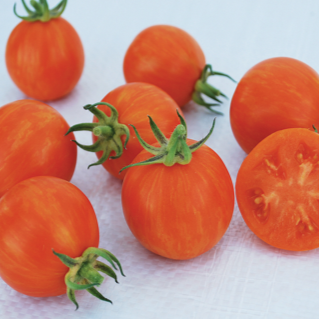
Organic indeterminate tomato with small striped apricot orange and yellow fruit that is juicy sweet fruity and lightly acidic.
- Exposure
- Full sun
Discover the plant
Common nameApricot Zebra striped tomato
FamilySolanaceae
GenusSolanum
SpeciesSolanum lycopersicum
CultivarApricot Zebra
TypeIndeterminate striped tomato
Botanical nameSolanum lycopersicum ‘Apricot Zebra’
Organic ‘Apricot Zebra’ striped tomato (Solanum lycopersicum ‘Apricot Zebra’) is a vigorous decorative indeterminate variety producing small marbled fruit in apricot orange and yellow tones. The Biologiquement Vôtre workbook lists plants 1.8–2.1 m tall and first harvest near 60 days after transplanting. Juicy sweet fruity lightly acidic flesh suits fresh eating salads snacks appetizers and tasting platters.
Sow indoors March through April approximately 0.5 cm deep six to eight weeks before transplanting. Maintain 21–27°C and even moisture; germination generally takes 7–14 days. Provide intense light immediately after emergence, pot seedlings up, and harden gradually. After last frost and once soil warms transplant in full sun into fertile organic-rich well-drained soil. Space generously and install a strong stake or cage immediately.
Water deeply and regularly at soil level then mulch once soil is warm. Tie stems to support and monitor foliar disease insects cracking and blossom-end rot. Harvest once apricot orange and yellow tones are well developed and fruit yields slightly to gentle pressure. Pick before frost and discard split mouldy slimy or abnormal-smelling fruit. Seed quantity exact fruit weight heirloom status open-pollinated status yield and particular resistance are unconfirmed.

Sowing guide
It all startswith a seed.
Sowing depth
0.5 cm (1/4 in)
Spacing / density
Space plants approximately 90 to 120 cm (36 to 48 in) apart to accommodate indeterminate growth and air circulation.
Germination temperature
21 to 27°C (70 to 81°F)
Germination time
7 to 14 days
Sowing period
March through April indoors
Propagation
Seed
Growing method
Sow Apricot Zebra indoors March through April six to eight weeks before last frost approximately 0.5 cm deep. Maintain 21–27°C and even moisture until emergence in 7–14 days. Provide intense light, pot up after true leaves, and harden gradually. Transplant after frost into warmed fertile drained soil in full sun. Space generously, immediately install a cage or stake, water at soil level, and mulch. Harvest progressively near 60 days once striping fully develops.
Soil and care
The right care,at the right time.
Soil pH
Approximately 6.0 to 6.8
Care level
Moderate
Watering
Water deeply at soil level when the top three to five centimetres begin to dry while maintaining moisture as evenly as possible. Alternating drought and heavy watering encourages cracking and may contribute to blossom-end rot while constantly waterlogged soil suffocates roots and increases disease. Water in the morning without unnecessarily wetting foliage then mulch once soil warms. During fruit set and sizing avoid prolonged water stress. In a large container check moisture daily during hot weather without leaving standing water in the saucer.
Soil type
Choose deep fertile loose well-drained organic-rich soil with a slightly acidic to neutral pH near 6.0–6.8. Incorporate mature compost before transplanting while avoiding fresh manure and excess nitrogen that produces leaves at the expense of fruit. Work soil when neither sticky nor dusty and do not compact the root zone. Even moisture and adequate calcium reserves support healthy fruiting without automatic calcium additions unless testing supports them. Rotate three or four years away from tomatoes peppers eggplants and potatoes.
Fertilization
Incorporate mature compost before transplanting then base later feeding on a soil test or the label of a balanced fruiting-vegetable fertilizer. Avoid excess nitrogen which promotes very vigorous stems and leaves but delays flowering and ripening. After fruit set balanced nutrition including potassium and phosphorus may support fruiting without exceeding label rates. Never place concentrated fertilizer against roots and water after application. In containers split a dilute solution rather than using one strong dose. No calcium supplement replaces even watering or a test confirming deficiency.
Moisture
Consistent soil moisture without saturation; good air circulation around the foliage.
Seasonal care
In spring sow indoors six to eight weeks before last frost and place seedlings under intense light immediately after emergence. Pot up once true leaves develop then gradually harden before transplanting. In summer tie stems to strong support, water deeply at soil level, maintain clean mulch, and remove only diseased leaves or those touching soil. Monitor cracking blossom-end rot aphids and foliar diseases. Harvest fruit as apricot orange and yellow striping becomes clear. In fall pick before frost, remove plants, and plan a three-to-four-year rotation.
Container growing
A garden,within reach.
Recommended pot size
Approximately 40 to 60 L, at least 45 to 50 cm (18 to 20 in) in diameter and depth
Choose a stable 40–60 L container approximately 45–50 cm wide and similarly deep with several drainage holes. Fill with airy vegetable potting mix enriched with compost. At planting install a strong cage or stake capable of supporting a 1.8–2.1 m indeterminate plant. Place in full sun, water slowly when the surface begins to dry, and never leave the pot in a water-filled saucer. Mulch lightly, feed moderately for fruiting vegetables, tie stems, and check moisture daily during hot weather.

Bloom and dimensions
Its place,in your garden.
Mature height
1.8 to 2.1 m (6 to 7 ft)
Width / spread
Approximately 60 to 90 cm (24 to 36 in), depending on training
Flower color
Yellow
Foliage color
Green
Foliage type
Compound, divided foliage with an aroma when bruised; grown as an annual in Quebec
Growth rate
Vigorous during the warm season
Growth habit
Indeterminate vigorous and climbing
Bloom period
Small yellow flowers in successive clusters through the warm season
Fruiting
Long clusters of small striped fruit produced progressively until frost
Days to maturity
Approximately 60 days after transplanting
Harvest
Generally harvest near 60 days after transplanting once apricot orange and yellow tones are fully developed and fruit yields slightly to gentle pressure. Pick progressively because the indeterminate plant continues producing. Before frost bring developed fruit indoors to finish ripening. Do not eat leaves or stems. Discard deeply split mouldy slimy or abnormal-smelling fruit. Exact weight yield and maximum storage life are not guaranteed.
Garden associations
In goodcompany.
Companion plants
Basil and early lettuce can occupy nearby space when light, water, air circulation, and root room remain sufficient.
Plants to avoid
Avoid waterlogged soil, overhead watering, crowding, and repeated rotations with tomatoes, peppers, eggplants, or potatoes.
Recipe idea
From the gardento your plate.
Edible parts
Ripe fruit
Apricot Zebra tomato salad — Rinse sound fruit and cut in half. Immediately before serving combine with cucumber basil a drizzle of olive oil a few drops of lemon and a small pinch of salt. Add fresh cheese if desired without hiding striped colours. Keep ingredients cold before preparation and refrigerate leftovers within two hours. Do not eat leaves or stems and discard any mouldy slimy or abnormal-smelling fruit.
Frequently asked questions
Your questions,answered.
When should Apricot Zebra be sown and transplanted in Quebec?
Sow indoors March through April approximately six to eight weeks before planned transplanting. Place seed 0.5 cm deep, maintain 21–27°C, and keep mix moist; emergence generally takes 7–14 days. Provide intense light, pot seedlings up, and harden gradually. Transplant only after last frost once soil is warm and nights are sufficiently mild.
How can ripe Apricot Zebra fruit be recognized?
Observe colour first: apricot orange and yellow tones should be well developed with clearly visible striping. Ripe fruit then yields slightly to gentle pressure without becoming soft. The approximately 60-day calendar after transplanting remains indicative because heat light and planting date affect ripening. Pick regularly and taste a sample fruit to refine the best stage in your conditions.
Does Apricot Zebra require support?
Yes. Indeterminate growth and listed height of 1.8–2.1 m require a tall cage trellis or strong stake installed at transplanting. Tie stems with soft ties as they grow and distribute cluster weight. In a container choose a stable 40–60 L pot and secure support against wind tipping.
When should Apricot Zebra be harvested?
Generally harvest near 60 days after transplanting once fruit is clearly striped in apricot orange and yellow and slightly yielding to gentle pressure. Pick progressively because the indeterminate plant continues producing. Before frost bring developed fruit indoors to finish ripening. Do not eat leaves or stems and discard mouldy slimy or heavily damaged fruit.
Is Apricot Zebra heirloom or open-pollinated?
The supplied workbook confirms neither heirloom nor open-pollinated status for this lot. The fiche therefore leaves both fields blank and does not recommend saving seed as though it necessarily reproduced the cultivar. Before seed saving obtain written supplier confirmation of variety type and required isolation conditions.
Wildlife and pets
Life,around your plants.
Supporting wildlife
Yellow blossoms may be visited by bumblebees and other bees able to vibrate the anthers and release pollen. Wind also contributes substantially to pollination, although active insect visitors can support consistent fruit set in the vegetable garden throughout the flowering period.
For a great start to your seeds
The right extras.Right here.
Platters, pots and domes
Shop the collection

Seed Starting Soil
Shop the collectionSeed starting supplies
Shop the collection




