Les jardins de l'écoumène

Solanum pimpinellifolium ‘Spoon’

Organic Spoon currant tomato brings an unusual small-fruited crop to the vegetable garden, combining the pleasure of discovery with a supply of fruit for the kitchen. Known for its exceptionally small tomatoes, this vigorous plant becomes covered in tiny red fruits that shine like little pearls when sunlight catches their skins. Derived from a wild species, it has a lively, tart and surprisingly intense flavour, creating a strong contrast between the taste and the very small size of each fruit. Its plentiful clusters invite immediate picking, especially for children discovering the garden, with tiny ripe tomatoes that can be gathered right from the plant. Its vigorous growth brings movement and abundance to the garden, especially when the stems climb a stake or fill a sturdy tomato cage.
Sold as 25 seeds

Available

4 49 $
Pay in 4 interest-free payments withSezzle

Delivery and pickup: view conditions

Product information
Québec product
Secure payment
Share

Discover the plant

Common nameSpoon Currant Tomato
FamilyNightshades
GenusNightshade
Speciespimpinellifolium
CultivarSpoon
TypeVegetable
Botanical nameSolanum pimpinellifolium
Reproducible seedsYes
Heirloom varietyYes

Solanum pimpinellifolium ‘Spoon’ — Spoon Currant Tomato. Organic Spoon currant tomato brings an unusual small-fruited crop to the vegetable garden, combining the pleasure of discovery with a supply of fruit for the kitchen. Known for its exceptionally small tomatoes, this vigorous plant becomes covered in tiny red fruits that shine like little pearls when sunlight catches their skins. Derived from a wild species, it has a lively, tart and surprisingly intense flavour, creating a strong contrast between the taste and the very small size of each fruit. Its plentiful clusters invite immediate picking, especially for children discovering the garden, with tiny ripe tomatoes that can be gathered right from the plant.

Sowing tomato seeds: 6 to 8 weeks before the last frost. The depth to be respected is 0.5 to 1 cm (0.2 to 0.4 in). Germination usually takes 7 to 10 days. For germination, keep the soil at 26 to 30°C (79 to 86°F). Transplant young tomatoes after true leaves develop and the roots hold the root ball together. Give the seedlings bright light to limit excessive stretching of their developing stems. A short, sturdy plant becomes established more readily than a weak seedling that has stretched towards the light. During hardening off, gradually increase the time the plants spend outdoors, bringing them back inside if the nights turn cold again.

Tomato Spoon is chosen both for its type of fruit and for the place available in the garden. Check the mature size and growth habit described for this variety before planning the supports and access for harvesting. Grow tomatoes in a position where you can easily reach the fruit clusters from a garden path. Position the supports so that they do not cast shade over the shorter crops growing nearby. Planting in rows makes it convenient to train the stems along their supports, while a few separate plants can bring the harvest closer to your patio. Leave enough room between the tomato foliage and the leaves of neighbouring plants to make care straightforward and allow air to circulate freely.

In the garden

Exposure
Full sun
Life cycle
Annual

Sowing guide

Sowing & germination

Sowing depth

0.5 to 1 cm (0.2 to 0.4 in.)

Germination temperature

26 to 30°C (79 to 86°F)

Germination time

7 to 10 days

Sowing period

6 to 8 weeks before the last gel

Propagation

From seed

Growing method

Recommended seeding period: 6 to 8 weeks before the last frost. The depth to be respected is 0.5 to 1 cm (0.2 to 0.4 in). Germination usually takes 7 to 10 days. For germination, keep the soil at 26 to 30°C (79 to 86°F). Transplant young tomato seedlings when their true leaves have developed and their roots hold the root ball together well enough for handling. Give the seedlings bright light to limit excessive stretching of their developing stems. A short, sturdy plant becomes established more readily than a weak seedling that has stretched towards the light. During hardening off, gradually increase the time the plants spend outdoors, bringing them back inside if the nights turn cold again. The soil temperature counts as much as the calendar date when planting. Keep the lower leaves away from the soil surface to reduce splashing onto the foliage when you water the plants. Secure the stems with a soft tie, leaving enough space for each stem to thicken as it grows. Inspect the clusters at the same time as the fasteners: the weight of the fruit increases rapidly as they grow. A mulch on an already heated soil helps to preserve regular moisture and keeps the lowest fruits clean.

Soil and care

Soil & care

Watering

Water at the base of the plant when the surface of the ground begins to dry, wetting the root zone. Keep regular applications during flowering and fruit development, without keeping the roots in saturated soil. Avoid repeated splashes on the foliage and let the excess drain containers. A mulch can reduce evaporation around established plants. Adapt the frequency to the available rain, wind, heat and earth volume.

Soil type

Prepare a rich, well drained and evenly moist soil. Transplant young tomato seedlings when their true leaves have developed and their roots hold the root ball together well enough for handling. Give the seedlings bright light to limit excessive stretching of their developing stems. A short, sturdy plant becomes established more readily than a weak seedling that has stretched towards the light. During hardening off, gradually increase the time the plants spend outdoors, bringing them back inside if the nights turn cold again.

Fertilization

Fertilization supports growth and should take into account the nutrients already present in the soil or potting mix. Use mature compost or a fertilizer suitable for the crop, following the recommended application rate. Avoid combining too many products, especially in a container where the roots have a limited volume of growing medium. Water as needed after applying nutrients, and observe foliage growth before deciding whether another fertilizer application is necessary.

Moisture

Keep the growing mix moist during germination, without standing water; then adjust to the crop

Seasonal care

Tomato Spoon is chosen both for its type of fruit and for the place available in the garden. Check the mature size and growth habit described for this variety before planning the supports and access for harvesting. Transplant young tomato seedlings when their true leaves have developed and their roots hold the root ball together well enough for handling. Give the seedlings bright light to limit excessive stretching of their developing stems. A short, sturdy plant becomes established more readily than a weak seedling that has stretched towards the light. During hardening off, gradually increase the time the plants spend outdoors, bringing them back inside if the nights turn cold again. The soil temperature counts as much as the calendar date when planting. Keep the lower leaves away from the soil surface to reduce splashing onto the foliage when you water the plants. Secure the stems with a soft tie, leaving enough space for each stem to thicken as it grows. Inspect the clusters at the same time as the fasteners: the weight of the fruit increases rapidly as they grow. A mulch on an already heated soil helps to preserve regular moisture and keeps the lowest fruits clean. The growth habit mainly determines the need for staking and pruning. A specific tomato retains its productive branches; a severe size may remove part of the crop. An undetermined tomato requires more driving as it lengthens. Observe the fruits that approach their final colour and pick them without crushing the surrounding clusters. Derived from a wild species, it has a lively, tart and surprisingly intense flavour, creating a strong contrast between the taste and the very small size of each fruit.

Container growing

Container growing

Suitable for containers

Yes

Recommended pot size

A stable container with drainage holes, enough width for the plant’s spread and sufficient depth for its roots
Choose a location in full sun. Reserve this spread around the plant: 60 to 90 cm (2 to 3 ft). A tomato grown in a pot needs enough potting mix to keep the root ball from swinging quickly between dry and wet conditions. Place the support before the roots occupy the entire container. A stable, heavy pot at the base is more resistant to wind when the foliage is fabricated. As the fruit forms, check moisture more often and water the entire root ball rather than wet only its surface. Organic Spoon currant tomato brings an unusual small-fruited crop to the vegetable garden, combining the pleasure of discovery with a supply of fruit for the kitchen. Known for its exceptionally small tomatoes, this vigorous plant becomes covered in tiny red fruits that shine like little pearls when sunlight catches their skins. Derived from a wild species, it has a lively, tart and surprisingly intense flavour, creating a strong contrast between the taste and the very small size of each fruit. Its plentiful clusters invite immediate picking, especially for children discovering the garden, with tiny ripe tomatoes that can be gathered right from the plant. Its vigorous growth brings movement and abundance to the garden, especially when the stems climb a stake or fill a sturdy tomato cage.
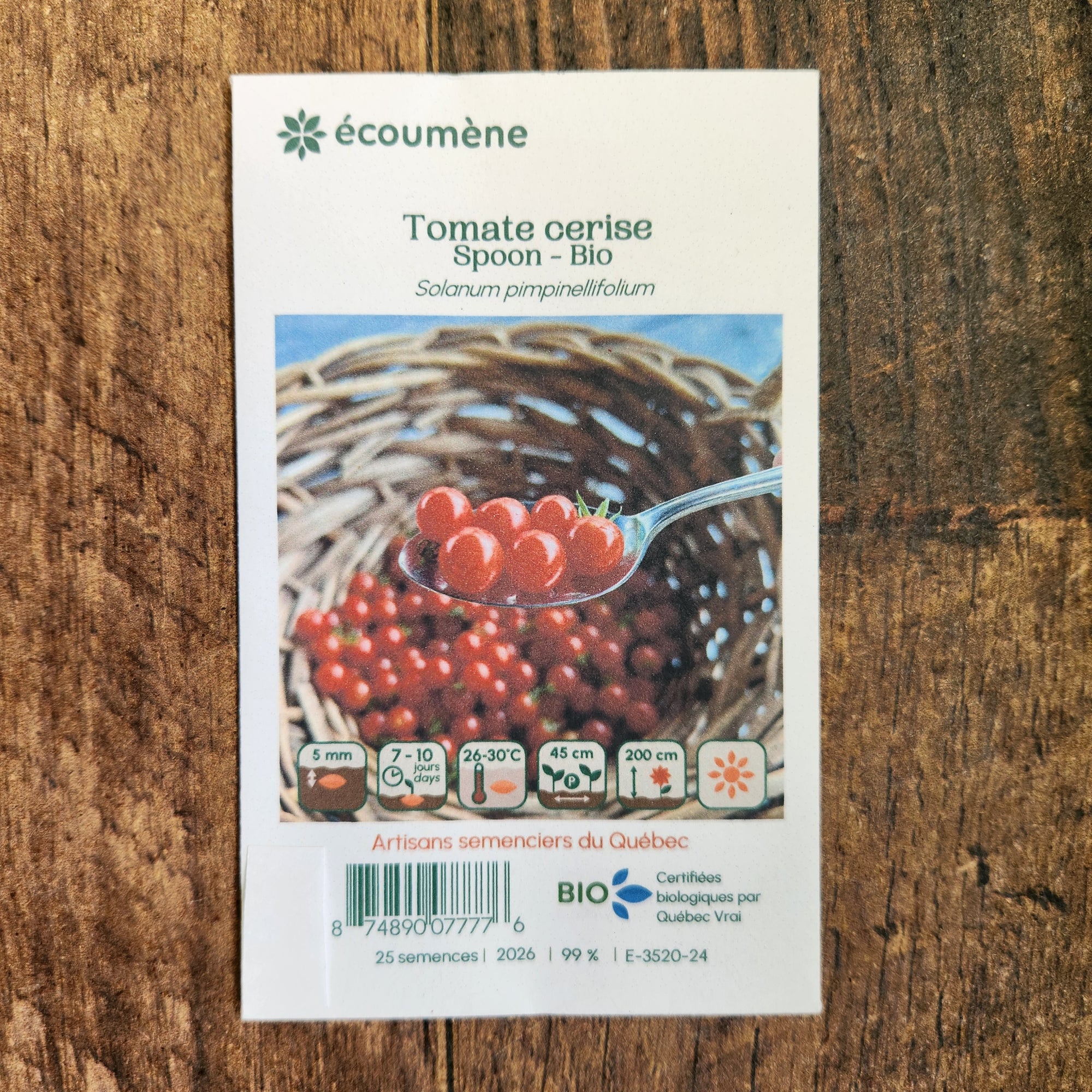
Sachet de semences Tomate cerise Spoon. Emballage blanc photographié de face sur un fond de bois brun. Une image du végétal occupe la partie centrale, sous le nom imprimé. De petits pictogrammes et un code-barres apparaissent au bas du sachet. La marque Écoumène figure dans la partie supérieure de cette présentation.

Bloom and dimensions

Size, flowering & harvest

Mature height

1.5 to 2 m (5 to 7 ft)

Width / spread

60 to 90 cm (2 to 3 ft)

Foliage type

Seasonal foliage

Growth habit

Climbing

Bloom period

Flowering usually occurs in this period: summer. Its small yellow flowers also attract pollinators, contributing to the animation and balance of the summer vegetable garden. Leave the flowers and developing young fruit on the plants when your aim is to bring the crop through to harvest. The actual flowering date varies with the time of sowing, the warmth available and how well the plants have become established. Maintain regular moisture at the base of the plant without soaking the soil, then observe the fruit formation before intervening.

Fruiting

Derived from a wild species, it has a lively, tart and surprisingly intense flavour, creating a strong contrast between the taste and the very small size of each fruit. Its plentiful clusters invite immediate picking, especially for children discovering the garden, with tiny ripe tomatoes that can be gathered right from the plant. Cultivating ‘Spoon' is choosing a fun, abundant and tasty tomato that combines harvest pleasure, botanical astonishment and irresistible charm.

Harvest

75 days after sowing
Tomate cerise Spoon. Très petites tomates rouges réunies dans deux mains. Le cadrage permet de voir les formes, les couleurs et les détails du sujet représenté. Les contours se détachent du fond de l’image, avec des différences de teinte et de texture visibles sur les surfaces. Cette vue accompagne la présentation du produit dans la boutique.

Garden associations

Companion plants & uses

Companion plants

In a mixed planting, you can reserve sections close to these plants: basil, calendula, lettuce, onion. The association is used here to organize space and crops. Allow for the height, light requirements and water needs of each plant, leaving enough room between the foliage. Keep a path clear for watering and harvesting, then remove finished crops to make room for the next planting. This arrangement makes maintenance easier without promising protection against garden pests. Grow tomatoes in a position where you can easily reach the fruit clusters from a garden path.

Garden use

Derived from a wild species, it has a lively, tart and surprisingly intense flavour, creating a strong contrast between the taste and the very small size of each fruit. Its plentiful clusters invite immediate picking, especially for children discovering the garden, with tiny ripe tomatoes that can be gathered right from the plant. Cultivating ‘Spoon' is choosing a fun, abundant and tasty tomato that combines harvest pleasure, botanical astonishment and irresistible charm. Organic Spoon currant tomato brings an unusual small-fruited crop to the vegetable garden, combining the pleasure of discovery with a supply of fruit for the kitchen.

Recipe idea

From garden to table

Edible parts

Mature fruit
Recipe idea using Spoon Currant Tomato: tomato toast for four servings. Cut 400 g of small tomatoes in half or in quarters. Mix with 15 ml of olive oil, 5 ml of vinegar and six leaves of finely sliced basil. Grill four slices of bread, then rub them lightly with a half clove of garlic. Spread the tomatoes over the bread just before serving. Keep the remaining juice to season a green salad. The size of the pieces is adjusted according to the size of the fruit. Prepare the ingredients with clean utensils and adapt the cut to the size of your harvest. This recipe highlights freshly picked parts: remove damaged pieces before preparation. If you double the quantities, keep enough space in the dish to mix or cook evenly. Quickly place leftovers in the refrigerator in a closed container and consume them within two days. For a two-person meal, simply divide all quantities by two.
Tomate cerise Spoon. Très petites tomates rouges réunies dans deux mains. Le cadrage permet de voir les formes, les couleurs et les détails du sujet représenté. Les contours se détachent du fond de l’image, avec des différences de teinte et de texture visibles sur les surfaces. Cette vue accompagne la présentation du produit dans la boutique.

Frequently asked questions

Frequently asked questions

How do I grow Spoon Currant Tomato from seed?
Recommended seeding period: 6 to 8 weeks before the last frost. The depth to be respected is 0.5 to 1 cm (0.2 to 0.4 in). Germination usually takes 7 to 10 days. For germination, keep the soil at 26 to 30°C (79 to 86°F). Transplant young tomato seedlings when their true leaves have developed and their roots hold the root ball together well enough for handling. Give the seedlings bright light to limit excessive stretching of their developing stems. A short, sturdy plant becomes established more readily than a weak seedling that has stretched towards the light. During hardening off, gradually increase the time the plants spend outdoors, bringing them back inside if the nights turn cold again.
Can I grow Spoon Currant Tomato in a container?
Choose a location in full sun. Reserve this spread around the plant: 60 to 90 cm (2 to 3 ft). A tomato grown in a pot needs enough potting mix to keep the root ball from swinging quickly between dry and wet conditions. Place the support before the roots occupy the entire container. A stable, heavy pot at the base is more resistant to wind when the foliage is fabricated. As the fruit forms, check moisture more often and water the entire root ball rather than wet only its surface. Organic Spoon currant tomato brings an unusual small-fruited crop to the vegetable garden, combining the pleasure of discovery with a supply of fruit for the kitchen.
When can I harvest Spoon Currant Tomato?
Derived from a wild species, it has a lively, tart and surprisingly intense flavour, creating a strong contrast between the taste and the very small size of each fruit. Its plentiful clusters invite immediate picking, especially for children discovering the garden, with tiny ripe tomatoes that can be gathered right from the plant. Cultivating ‘Spoon' is choosing a fun, abundant and tasty tomato that combines harvest pleasure, botanical astonishment and irresistible charm. The growth habit mainly determines the need for staking and pruning. A specific tomato retains its productive branches; a severe size may remove part of the crop. An undetermined tomato requires more driving as it lengthens.
How can I use Spoon Currant Tomato in the garden?
Tomato Spoon is chosen both for its type of fruit and for the place available in the garden. Check the mature size and growth habit described for this variety before planning the supports and access for harvesting. Organic Spoon currant tomato brings an unusual small-fruited crop to the vegetable garden, combining the pleasure of discovery with a supply of fruit for the kitchen. Known for its exceptionally small tomatoes, this vigorous plant becomes covered in tiny red fruits that shine like little pearls when sunlight catches their skins. Derived from a wild species, it has a lively, tart and surprisingly intense flavour, creating a strong contrast between the taste and the very small size of each fruit. Its plentiful clusters invite immediate picking, especially for children discovering the garden, with tiny ripe tomatoes that can be gathered right from the plant.
How do I arrange a planting of Spoon Currant Tomato?
Grow tomatoes in a position where you can easily reach the fruit clusters from a garden path. Position the supports so that they do not cast shade over the shorter crops growing nearby. Planting in rows makes it convenient to train the stems along their supports, while a few separate plants can bring the harvest closer to your patio. Leave enough room between the tomato foliage and the leaves of neighbouring plants to make care straightforward and allow air to circulate freely. Keep the lower leaves away from the soil surface to reduce splashing onto the foliage when you water the plants. Secure the stems with a soft tie, leaving enough space for each stem to thicken as it grows.

Seed-starting essentials