Sale
Sold out

Compact determinate trailing cherry tomato
Solanaceae
Organic fruiting vegetable seeds
Organic red 'Cherry Falls' cherry tomato
Solanum lycopersicum
Product code : BIOVO-0166
Organic Cherry Falls is a compact, determinate cherry tomato with a trailing habit that suits a stable hanging basket or raised container. Small red fruit hangs along the spreading growth and provides sweet, juicy portions for salads and fresh snacking. Use a container with ample root space and unobstructed drainage, and check that its hanger can carry wet soil and a loaded plant. Choose full sun, protect the planting from severe wind, and water evenly without leaving roots saturated. Begin seedlings indoors, then harden them before moving outside after frost. Retain healthy trailing branches and pick ripe tomatoes gently rather than pulling against the whole stem.
- Exposure
- Full sun
- Life cycle
- Warm-season annual
Discover the plant
Common nameRed Cherry Falls cherry tomato
FamilySolanaceae
GenusSolanum
Specieslycopersicum
CultivarCherry Falls
TypeCompact determinate trailing cherry tomato
Botanical nameSolanum lycopersicum
Organic red 'Cherry Falls' cherry tomato (Solanum lycopersicum) is an organic determinate compact trailing variety especially suited to hanging baskets, window boxes, and balcony containers. Stems form cascades of small red juicy sweet fruit that are both decorative and delicious. Tomatoes suit snacks, salads, appetizers, and lunch boxes. Harvest generally begins around 60 days after transplanting, depending on warmth and sunlight. Its limited habit fits small spaces where stems can trail freely without touching a hot surface. Place the display within comfortable reach so watering and frequent picking remain easy throughout summer.
Sow indoors from March through April, six to eight weeks before the last frost, approximately 0.5 cm deep. Maintain 21–27°C and even moisture; germination generally takes 7–14 days. Provide intense light immediately after emergence, pot seedlings up after true leaves appear, and harden them gradually. After frost, transplant in full sun into fertile, organic-rich, well-drained mix. In a hanging basket or container, ensure free drainage, check moisture frequently, and secure every hook firmly. Rotate the container when light is uneven without bending its trailing stems. Shelter newly planted baskets from sudden cold and severe wind.
Water slowly and consistently at soil level because basket mix dries quickly during hot weather, but never leave standing water. Feed moderately to support fruiting without producing soft growth. Harvest frequently once fruit is uniformly red and slightly yielding to maintain an attractive display and reduce dropping. Monitor cracking, blossom-end rot, insects, and foliar disease. Before frost, bring developed fruit indoors to finish ripening. Discard tomatoes that are mouldy, slimy, deeply split, or abnormal-smelling, then clean the tools used. Check basket stability after storms and reposition any stems rubbing against rough or overheated surfaces.

Sowing guide
It all startswith a seed.
Sowing depth
0.5 cm (1/4 in)
Spacing / density
Space plants approximately 90 to 120 cm (36 to 48 in) apart to accommodate indeterminate growth and air circulation.
Germination temperature
21 to 27 °C (70 to 81 °F)
Germination time
7 to 14 days
Sowing period
March through April indoors Adjust these dates to your local frost dates and soil conditions; Canadian growing seasons vary by region.
Propagation
Seed
Growing method
Starting tomato seeds inside: 'Cherry Falls' tomato. Sow Cherry Falls indoors March through April six to eight weeks before last frost 0.5 cm deep. Maintain 21–27°C and even moisture until emergence in 7–14 days. Provide intense light, pot up after true leaves, and harden gradually. After frost transplant in full sun into a freely draining hanging basket window box or container. Check moisture often, water at soil level, and feed moderately. Let stems trail and harvest red fruit frequently around 60 days. Allow room for the plant's compact determinate and trailing, and install its cage or stake at transplanting before roots and branches make the job difficult. Use approximately 60 days after transplanting as a planning estimate; soil warmth, transplant stress, and summer temperatures can move the first harvest. Judge small round cherry-type fruit, red at maturity by full colour and gentle firmness, then cut or twist fruit without tearing the loaded cluster. Maintain steady root-zone moisture from flowering onward, but do not keep the bed saturated after rain. As frost approaches, collect sound developed tomatoes and discard fruit showing rot, mould, or an unusual odour. Keep the cultivar label with the plant through the final harvest and record the first ripe-fruit date for next season.
Soil and care
The right care,at the right time.
Soil pH
Approximately 6.0 to 6.8
Care level
Moderate
Watering
Red 'Cherry Falls' cherry tomato carries many small fruit, so a dry root zone can interrupt several clusters at once. Red 'Cherry Falls' cherry tomato's small round cherry-type fruit, red at maturity is carried on compact determinate and trailing growth, so extend watering beyond the stem as the supported canopy enlarges. The harvest guide for red 'Cherry Falls' cherry tomato is approximately 60 days after transplanting; maintain moisture while younger clusters continue filling. Water red 'Cherry Falls' cherry tomato slowly at the base, soak its root zone, then wait until the upper soil begins to dry before irrigating again.
Soil type
Although red 'Cherry Falls' cherry tomato bears small fruit, its productive growth still calls for a substantial, well-drained root zone. Prepare red 'Cherry Falls' cherry tomato's bed for compact determinate and trailing growth bearing small round cherry-type fruit, red at maturity, not only for the small spring transplant. Allow approximately 60 days after transplanting for red 'Cherry Falls' cherry tomato to develop, providing soil volume that stays aerated after repeated watering. Before setting red 'Cherry Falls' cherry tomato, mix mature compost through the area while preserving a crumbly structure rather than a dense amended pocket.
Fertilization
'Cherry Falls' benefits from balanced fertility before its first trusses. Use mature compost as a gentle fertility foundation. For red 'Cherry Falls' cherry tomato, fruit development competes with foliage under excessive nitrogen. Keep dry fertilizer outside the immediate stem area. Once Red Cherry Falls cherry tomato flowers, favour steady growth over leafy surges. Review growth stage before scheduling the next feeding. For 'Cherry Falls', its root zone needs consistent moisture while fruit enlarges. Read the root zone before reaching for fertilizer. Fertilizer cannot correct water-related disorders on red 'Cherry Falls' cherry tomato.
Moisture
Consistent soil moisture without saturation; good air circulation around the foliage.
Seasonal care
Seasonal care for 'Cherry Falls' tomato. In late winter or spring, sow indoors six to eight weeks before the local average last frost, placing seed about 0.5 cm deep in clean starting mix at 21–27°C. Keep the medium evenly moist through the usual 7–14-day germination period, then move seedlings under strong light. Pot them on after true leaves form and harden them gradually. After frost danger has passed and nights are mild, set one plant into its final hanging basket, window box, or stable elevated container in full sun. Before filling a basket, verify that every hook, chain, bracket, and anchor can hold its full wet weight. In summer, check moisture daily during heat or wind, water until surplus drains, and never leave the root ball saturated. Feed moderately according to the product label. Rotate the container if light is one-sided, let the compact stems trail naturally, and support only shoots that begin to crease. Inspect leaf undersides and fruit for pests, spotting, cracking, or decay. Begin checking for ripe fruit around 60 days after transplanting; pick when uniformly red and slightly yielding. Remove fallen tomatoes promptly. Before storms, lower or shelter a vulnerable basket. As cold nights return, collect sound developed fruit before frost, remove diseased residue, and clean the container, supports, and tools before storage. Discard cracked or frost-damaged fruit separately.
Container growing
A garden,within reach.
Growing 'Cherry Falls' tomato in containers. Choose a hanging basket, window box, or stable deep container with several drainage holes. Use an airy vegetable potting mix enriched with compost and let stems trail freely without pressing against a hot surface. Place the container in full sun and check moisture every day during hot weather. Water slowly until excess drains, then empty any saucer so roots never remain in standing water. Feed moderately according to label directions, rotate the basket when light is uneven, and harvest ripe fruit often. Fasten hooks to a structure capable of supporting wet potting mix and inspect them after strong wind. Keep the basket within reach for watering and picking. Remove only diseased or badly damaged leaves. Before frost, bring developed fruit indoors and clean the container after removing the plant. Plan support around the plant's compact determinate and trailing; fasten stems with soft ties and leave a clear route to the drainage holes and soil surface. The retained container guide is a large stable container. Treat it as a minimum practical reference, because a smaller root volume dries faster and is less stable in wind.
Bloom and dimensions
Its place,in your garden.
Flower color
Yellow
Foliage color
Green
Foliage type
Compound, divided foliage with an aroma when bruised; grown as an annual in your region
Growth rate
Vigorous during the warm season
Growth habit
Compact determinate and trailing
Bloom period
Cherry Falls forms clusters of small yellow flowers along compact trailing stems. Abundant light, sufficiently mild nights, and even moisture support fruit set, while extreme heat or cold may cause blossom drop. Avoid needlessly wetting foliage and gently shake the basket during calm weather to help pollen move. Do not handle stems roughly while flowers are opening. Tomato pollen releases best from dry flowers; avoid spraying open blossoms and preserve airflow around each cluster.
Fruiting
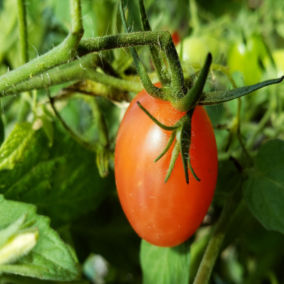
Pollinated flowers form cascades of small red juicy sweet fruit. First harvest generally begins around 60 days after transplanting. Maintain even moisture to limit cracking and pick frequently to prevent ripe fruit from dropping. Support the cluster with one hand so trailing stems are not pulled or twisted during harvest. Harvest cues should match small round cherry-type fruit, red at maturity, with a slight yield under gentle pressure but no soft or damaged areas.
Days to maturity
Approximately 60 days after transplanting
Harvest
Generally harvest around 60 days after transplanting once small fruit is uniformly red and slightly yielding to gentle pressure. Support the cluster with one hand and detach fruit without pulling trailing stems. Pick frequently to maintain a tidy display and reduce dropping of ripe fruit. Before frost bring developed fruit indoors to finish ripening. Do not eat leaves or stems and discard deeply split mouldy slimy or abnormal-smelling fruit.
Garden associations
In goodcompany.
Companion plants
Basil and early lettuce can occupy nearby space when light, water, air circulation, and root room remain sufficient. Use low companions near the tomato and place taller crops where they will not block afternoon light or harvesting access. Compatibility still depends on root space, irrigation, crop rotation, and regular pest identification. In a shared container, avoid adding another large feeder; use a separate pot when the tomato already fills the available root volume. Leave the trailing stems visible so routine picking does not crush basil or lettuce growing nearby.
Plants to avoid
Avoid waterlogged soil, overhead watering, crowding, and repeated rotations with tomatoes, peppers, eggplants, or potatoes.
Recipe idea
From the gardento your plate.
Edible parts
Ripe fruit
'Cherry Falls' tomato in the kitchen. Cold Cherry Falls tomato skewers — Rinse 350 g of sound, fully red cherry tomatoes, then dry them so the finished platter is not watery. On each short skewer, alternate whole tomatoes with mozzarella pearls or firm marinated tofu and a ribbon of cucumber folded back on itself. Stir 100 g plain yogurt with 10 mL lemon juice, chopped chives, black pepper, and a small pinch of salt for a cool dipping sauce. Arrange the skewers on a chilled plate, scatter torn basil around them, and keep the dip in a separate small bowl. Assemble shortly before eating so the tomatoes remain firm and the cucumber stays crisp. Use blunt-ended picks or slide the food off before serving young children. Keep dairy, tofu, and prepared skewers refrigerated until needed. Tomato leaves and stems do not belong in the dish. Set aside any fruit that is mouldy, leaking, slimy, deeply split, or abnormal-smelling. Work with a clean board and utensils, cover leftovers promptly, and refrigerate them within two hours. This fresh appetizer is not suitable for shelf-stable storage.
Frequently asked questions
Your questions,answered.
When should Cherry Falls be sown and transplanted in your region?
Begin Cherry Falls indoors about six to eight weeks before the transplant date suited to your local frost calendar. Sow seed 0.5 cm (¼ in) deep and maintain 21 to 27 °C (70 to 81 °F); seedlings normally emerge in 7 to 14 days. Give them strong light, pot them on before crowding, and harden them gradually. Set plants outside only after frost danger has passed and nights are mild. Cherry Falls is compact, determinate, and trailing, so plan for a basket, elevated container, or bed edge where stems can hang without lying in a walkway. It is not a tall indeterminate vine. The small round fruit turns red, with the first mature harvest listed near 60 days after transplanting. Pick ripe fruit regularly as the concentrated crop develops.
Is Cherry Falls determinate or indeterminate?
Cherry Falls is a compact determinate tomato with a trailing habit. Unlike an indeterminate vine, it concentrates growth in a limited framework and forms cascades that suit a securely hung basket. Let stems arch naturally over the edge instead of forcing them upright, but protect them from rubbing against a rough rim. Keep adequate clearance below and around the container for airflow, inspection, and harvest. The exact size can vary with growing conditions, so observe the actual plant rather than relying on a rigid dimension. Check the hanger and attachment points as fruit gains weight, rotate only if light is one-sided, and avoid severe pruning that would remove productive foliage from this determinate crop.
When should Cherry Falls tomatoes be harvested?
Generally harvest around 60 days after transplanting once fruit has developed red colour and yields slightly to gentle pressure. A green area may remain at the shoulders and colour varies with sunlight. Support each fruit and cut the stem with a clean tool. Pick progressively, bring developed fruit indoors before frost, and discard mouldy slimy or deeply split fruit. Lift trailing stems gently to inspect clusters hidden beneath the basket rather than pulling them upward by the tips. Harvest in several passes as individual tomatoes colour, keeping one hand under the cluster. Note the date and appearance of a fully ripe sample, since a hanging plant can expose opposite sides of the same cluster to different amounts of light.
What container should be used for Cherry Falls?
Use a hanging basket window box or stable container with several drainage holes; exact dimensions are variable by conditions. Fill with airy compost-enriched mix and place in full sun. Let stems trail without touching a hot surface, check moisture daily during hot weather, and water until it drains without leaving standing water. Also check hooks and support strength regularly. Because an exact vessel size is not confirmed here, choose enough root volume to keep moisture from changing abruptly and avoid a basket that becomes unsafe when saturated. Confirm the hook, chain, railing, or window-box brackets can carry the fully watered container. Keep the rim smooth where stems pass over it, and place the basket where runoff will not create a slipping hazard.
How should the trailing habit of Cherry Falls be maintained?
Let stems trail naturally instead of tying them to a tall stake. Hang the basket high enough that tips do not touch the ground but within reach for watering and harvesting. Rotate the container for balanced light, remove only diseased or damaged leaves, and pick red fruit often. After strong wind check hooks, reposition stems, and cleanly cut only genuinely broken growth. Guide new shoots over separate sections of the rim so they are not kinked or crushed in one crowded point. Do not weave tender stems tightly through hardware. Keep fruiting sections clear of the potting mix and hot pavement, and lift them with both hands when inspecting the underside. Replace a damaged hanger before attempting to rearrange the plant.
Wildlife and pets
Life,around your plants.
Supporting wildlife
Cherry Falls is self-fertile, and its hanging trusses can set fruit with wind or ordinary plant movement. Bumblebees and other buzz-pollinating bees may visit the yellow flowers and help release pollen. This can support even fruit set, but the tomato is not a major nectar plant. Keep open clusters free of sprays while visitors are active.
For a great start to your seeds
The right extras.Right here.
Seed Starting Soil
Shop the collectionSeed starting supplies
Shop the collection