Sale
Sold out

Organic seeds.
Solanaceae.
Organic 'Cuostralee' Tomato Seeds
Solanum lycopersicum.
Product code : GAIAS-0430
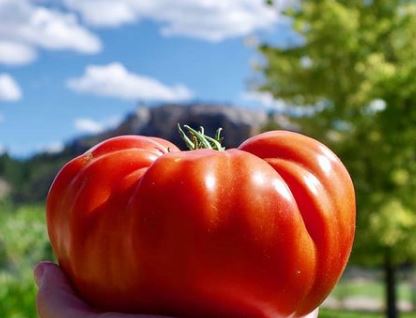
Cuostralee tomato is available as organic seed for Quebec vegetable gardens. A late French heirloom that produces large, irregular, ribbed orange-red fruit with smooth flesh and relatively few seeds. It prefers full sun and fertile, loose, moist, well-drained soil. Space plants 45 to 60 cm (18 to 24 in) apart. Harvest from summer until the first frost, once the fruit reaches its mature colour; the crop is well suited to thick slices, sandwiches and salads. Each packet contains 25 seeds. tomato seeds are presented here with Canadian seed starting and seasonal care guidance.
- Quantity
- 25 seeds
- Exposure
- Full sun.
- Life cycle
- Annual.
Discover the plant
Common nameCuostralee tomato.
FamilySolanaceae.
GenusSolanum
Specieslycopersicum.
CultivarCuostralee
TypeOrganic seeds.
Botanical nameSolanum lycopersicum.
Reproducible seedsYes
Heirloom varietyYes
Organic 'Cuostralee' Tomato Seeds (Solanum lycopersicum). Solanum lycopersicum, is a French heirloom with large, irregular, ribbed fruit. Its red to orange-red colour surrounds smooth flesh with small seed cavities and relatively few seeds. This beefsteak tomato is ideal for generous slices, with the fruit's ribs creating a different outline in every cut. The indeterminate plant needs sturdy support. These organic seeds suit a vegetable garden with a long warm season. Cuostralee is generally described as a late tomato, so give it a well-exposed location and monitor its growth throughout the season. For practical seed starting, growing from seed succeeds best when the verified product depth, moisture and temperature guidance is followed.
Start seeds indoors six to eight weeks before planting. Cover the seeds with about 3 to 6 mm of growing medium and maintain even moisture during emergence. Gaia recommends an optimal range of 23 to 29 °C for this stage. Provide abundant light as soon as seedlings emerge. Harden off young plants before setting them outdoors in full sun after the risk of frost has passed. Leave about 60 to 90 cm between plants and install supports at planting. Large fruit makes regular checks of ties and trellis stability especially useful. Use the product details as a clear guide on how to start seeds while keeping the growing medium evenly moist, never saturated. For indoor seed starting, count back from local conditions and frost dates to decide when to start indoor seeds. Starting tomato seeds with steady warmth supports even emergence; move each tomato seedling into bright light promptly.
At harvest, inspect the ribs and shoulders for areas that are still firm or not fully coloured. Once the tomato is ripe, support it with your hand instead of pulling on the stem. Large slices can top toast or form a plate on their own with a simple herb garnish. Reserve irregular pieces for a cooked preparation adjusted to the amount harvested. In Quebec, watch late-season weather closely: this variety's late maturity makes it useful to monitor fruit already ripening before the first cold nights.

Sowing guide
It all startswith a seed.
Sowing depth
6 mm (1/4 in).
Spacing / density
45 to 60 cm (18 to 24 in) between plants.
Germination temperature
21 to 29 °C (70 to 84 °F).
Germination time
5 to 10 days.
Propagation
Seed.
Growing method
For Cuostralee tomato, follow this schedule: Sow indoors 6 to 8 weeks before the last frost. Sow 6 mm (1/4 in) deep in a clean, well-drained seed-starting mix. Maintain 21 to 29 °C (70 to 84 °F) and even moisture without waterlogging; emergence normally takes 5 to 10 days. Before planting, harden plants off gradually for 7 to 10 days by increasing exposure to sun and wind. Set them in full sun and fertile, loose, moist, well-drained soil, spaced 45 to 60 cm (18 to 24 in) apart. Harvest from summer until the first frost, once the fruit reaches its mature colour. This seed starting sequence supports reliable growing from seed while preserving the product-specific depth and temperature facts.
Soil and care
The right care,at the right time.
Care level
Moderate.
Watering
Water Cuostralee tomato at the base when the soil surface begins to dry.
Soil type
Cuostralee tomato prefers fertile, loose, moist, well-drained soil.
Fertilization
Fertilize Cuostralee tomato moderately according to plant vigour, avoiding excess nitrogen.
Seasonal care
Sow 6 mm (1/4 in) deep at 21 to 29 °C (70 to 84 °F), keeping moisture steady during the 5 to 10 days usually needed for emergence. Thin or transplant carefully. Set plants in full sun and fertile, loose, moist, well-drained soil, spaced 45 to 60 cm (18 to 24 in) apart. Harvest from summer until the first frost, once the fruit reaches its mature colour, and remove damaged plant material.
Container growing
A garden,within reach.
Recommended pot size
A container of at least 20 L (5 US gal), with support and good drainage.
Cuostralee tomato can be grown in a container when its root volume and mature size are accommodated. Choose a container of at least 20 L (5 US gal); provide sturdy support and ensure free drainage.

Bloom and dimensions
Its place,in your garden.
Mature height
90 to 150 cm (3 to 5 ft).
Foliage type
Green foliage.
Growth rate
Fast.
Growth habit
Upright to bushy.
Bloom period
Cuostralee tomato flowers after establishment once warmth, light and plant maturity are sufficient.
Garden associations
In goodcompany.
Companion plants
Pair Cuostralee tomato with crops that have similar sun, fertility and moisture needs.
Recipe idea
From the gardento your plate.
Edible parts
Ripe fruit.
Prepare a simple recipe with the confirmed edible parts of Cuostralee tomato: ripe fruit. For four small servings, use about 500 mL (2 cups) of prepared produce, 15 mL (1 tbsp) of oil and 10 mL (2 tsp) of a seasoning suited to the dish. Wash the harvest thoroughly, remove damaged portions and prepare it according to the intended use: thick slices, sandwiches and salads. Eat only the parts identified as edible and only at the recommended stage of maturity.
Frequently asked questions
Your questions,answered.
How many 'Cuostralee' Tomato seeds are in the packet?
To sow Cuostralee tomato successfully, follow this schedule: Sow indoors 6 to 8 weeks before the last frost. Sow 6 mm (1/4 in) deep in a fine, well-drained seed-starting mix and maintain 21 to 29 °C (70 to 84 °F). Germination usually takes 5 to 10 days.
How should I start 'Cuostralee' Tomato seeds in Canada?
Cuostralee tomato prefers full sun and fertile, loose, moist, well-drained soil. Water at the base when the soil surface begins to dry, and fertilize moderately according to plant vigour without applying excess nitrogen. For seed starting, label the cultivar and use the stated sowing depth instead of a generic estimate.
How long do 'Cuostralee' Tomato seeds take to germinate?
For Cuostralee tomato, allow for a height of 90 to 150 cm (3 to 5 ft) and a spread of 90 to 150 cm (3 to 5 ft). In the garden, space plants 45 to 60 cm (18 to 24 in) apart for good light, airflow and harvest access. For container growing, use a container of at least 20 L (5 US gal), with support and good drainage. The tomato seed germination time for 'Cuostralee' Tomato should be judged against the verified range above rather than a fixed national calendar. When growing from seed, keep conditions stable for the full stated germination window before disturbing the mix.
Where should I grow 'Cuostralee' Tomato in the garden?
Harvest Cuostralee tomato from summer until the first frost, once the fruit reaches its mature colour. Confirmed edible parts include ripe fruit. The harvest is well suited to thick slices, sandwiches and salads.
When and how should I harvest 'Cuostralee' Tomato?
Cuostralee tomato is offered here as organic seed, with 25 seeds per packet. The supplied information does not make a separate open-pollination claim.
For a great start to your seeds
The right extras.Right here.
Seed Starting Soil
Shop the collectionSeed starting supplies
Shop the collection