Sale
Sold out

Open-pollinated indeterminate Russian commercial tomato with pear-shaped dark fruit
Solanaceae
Organic fruiting vegetable seeds
Organic 'Japanese Black Trifele' tomato
Solanum lycopersicum
Product code : BIOVO-0169
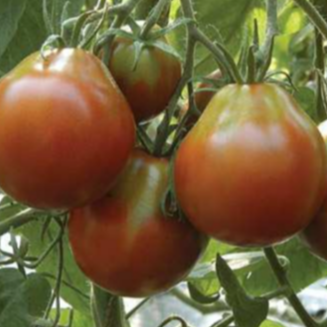
'Japanese Black Trifele' is an open-pollinated Russian commercial cultivar, also recorded as 'Japanese Trifele Black' or 'Yaponskiy Trufel Chernyi'. It should not be called an heirloom without documented age or lineage. Indeterminate potato-leaf vines carry prolific pear-shaped fruit that ripens brick red to mahogany brown. Dense, meaty flesh works for fresh slices, salads, sauce, and preserving. Start seed indoors six to eight weeks before the expected last frost, transplant into warm soil, and provide full sun, even moisture, and sturdy support. Cultivar references place the first harvest around 75–80 days after transplanting, when the fruit has developed its characteristic colour and yields slightly to gentle pressure.
- Exposure
- Full sun
- Life cycle
- Warm-season annual
Discover the plant
Common nameJapanese Black Trifele tomato
FamilySolanaceae
GenusSolanum
Specieslycopersicum
CultivarJapanese Black Trifele
TypeOpen-pollinated indeterminate Russian commercial tomato with pear-shaped dark fruit
Botanical nameSolanum lycopersicum
Heirloom varietyYes
Organic 'Japanese Black Trifele' tomato (Solanum lycopersicum) is an open-pollinated Russian commercial cultivar, also recorded as 'Japanese Trifele Black' or 'Yaponskiy Trufel Chernyi'. It should not be described as an heirloom without a documented age or lineage. Indeterminate potato-leaf vines produce prolific pear-shaped, brick-red to brown fruit with dense, meaty flesh. The medium fruit suits slicing, salads, sauce, and preserving. Cultivar references place maturity around 75–80 days from transplanting. Strong support and open access are needed for the continuing vines and heavily loaded fruit clusters throughout the season.
Start seed indoors six to eight weeks before the expected last frost, sowing about 5 mm deep in clean, lightly moist mix. Keep the medium warm, then provide strong light immediately after emergence. Pot seedlings on after true leaves develop and harden them gradually. Transplant only after frost danger has passed and the soil is warm. Choose deep, fertile, well-drained ground in full sun, space plants for airflow, and install a sturdy cage or stake at planting. A large stable container can work if it provides enough root volume, reliable drainage, and secure support.
Water deeply at soil level and keep moisture reasonably even while fruit sets and enlarges. Mulch after the ground has warmed, keep lower foliage away from soil, and tie lengthening stems with soft material. Begin checking fruit about 75–80 days after transplanting. Harvest when the pear-shaped tomato has developed a brick-red to mahogany-brown colour and yields slightly to gentle pressure. Pick progressively because the indeterminate plant continues producing. Bring sound, developed fruit indoors before frost. Do not eat tomato leaves or stems, and discard fruit that is deeply split, mouldy, slimy, or abnormal-smelling.

Sowing guide
It all startswith a seed.
Sowing depth
0.5 cm (1/4 in)
Spacing / density
Space plants approximately 90 to 120 cm (36 to 48 in) apart to accommodate indeterminate growth and air circulation.
Germination temperature
22 to 28 °C (72 to 82 °F)
Germination time
5 to 10 days
Sowing period
February through April indoors then transplant after frost Adjust these dates to your local frost dates and soil conditions; Canadian growing seasons vary by region.
Propagation
Seed
Growing method
Begin 'Japanese Black Trifele' indoors six to eight weeks ahead of the local average last frost. Sow indoors early enough for sturdy transplants, using the local last-frost date rather than a fixed national calendar. Place seed about 5 mm deep in clean, lightly moist starting mix, maintaining steady warmth until emergence. Move the tray under strong light immediately, pot seedlings on after true leaves form, and rotate containers to promote stocky growth. Harden plants gradually for about one week. Transplant only after frost danger has passed, the soil is warm, and nights are mild. Choose deep, fertile, well-drained soil in full sun and install a sturdy cage or stake at planting for the indeterminate potato-leaf vines. Water deeply at soil level, mulch after the ground warms, and secure stems with soft ties. Check the support after wind, remove only damaged or diseased foliage, and keep leaves off the soil. Allow roughly 75–80 days from transplanting before expecting the first ripe fruit, while treating weather and care as important modifiers. Pick pear-shaped tomatoes once their brick-red to mahogany colour is developed and the flesh yields slightly to pressure. Continue harvesting until cold weather, then bring sound, developed fruit indoors. A large stable container can work when root volume, drainage, and support are adequate.
Soil and care
The right care,at the right time.
Soil pH
Approximately 6.0 to 6.8
Care level
Moderate
Watering
Because 'Japanese Black Trifele' tomato continues growing and setting clusters, irrigation should remain consistent from transplanting through the final harvest. 'Japanese Black Trifele' tomato's pear-shaped reddish-brown to mahogany fruit is carried on indeterminate vigorous and climbing growth, so extend watering beyond the stem as the supported canopy enlarges. The harvest guide for 'Japanese Black Trifele' tomato is approximately 75 to 80 days after transplanting; maintain moisture while younger clusters continue filling. Water 'Japanese Black Trifele' tomato slowly at the base, soak its root zone, then wait until the upper soil begins to dry before irrigating again.
Soil type
Set 'Japanese Black Trifele' tomato in fertile, well-drained loam that warms readily and gives its roots room to follow the supported plant. Prepare 'Japanese Black Trifele' tomato's bed for indeterminate vigorous and climbing growth bearing pear-shaped reddish-brown to mahogany fruit, not only for the small spring transplant. Allow approximately 75 to 80 days after transplanting for 'Japanese Black Trifele' tomato to develop, providing soil volume that stays aerated after repeated watering. Before setting 'Japanese Black Trifele' tomato, mix mature compost through the area while preserving a crumbly structure rather than a dense amended pocket.
Fertilization
For 'Japanese Black Trifele', fruit development competes with foliage under excessive nitrogen. Use mature compost as a gentle fertility foundation. Once 'Japanese Black Trifele' tomato flowers, favour steady growth over leafy surges. Water granular amendments into the active root zone. Japanese Black Trifele tomato benefits from balanced fertility before its first trusses. Record plant response before repeating the treatment. Fertilizer cannot correct water-related disorders on 'Japanese Black Trifele'. Choose amendments from soil results and crop response. For 'Japanese Black Trifele' tomato, its root zone needs consistent moisture while fruit enlarges.
Moisture
Consistent soil moisture without saturation; good air circulation around the foliage.
Seasonal care
Seasonal care for 'Japanese Black Trifele' tomato. Start seed indoors six to eight weeks before the local average last frost, sowing approximately 0.5 cm deep at 22 to 28 °C. Keep the medium evenly moist and move seedlings into strong light after emergence, normally within 5 to 10 days. Pot on before roots crowd the cells, then harden the plants gradually. Transplant only after frost risk has passed, the soil has warmed, and nights are mild. Choose full sun and freely drained fertile soil, installing a strong cage or trellis at planting for the 1.8 to 2.1 m indeterminate vine. If container-grown, give one plant the documented 30 to 40 L volume and secure its support independently. Water deeply at soil level when the upper layer begins drying, then maintain clean mulch without trapping moisture against the stem. Guide new growth with soft ties, preserve airflow, and remove only diseased leaves or those touching soil. Inspect leaf undersides and developing fruit for pests, spotting, cracking, and blossom-end rot. Keep low clusters away from wet soil and remove damaged fruit before decay reaches neighbouring tomatoes. Begin judging the pear-shaped fruit near the stated 75 to 80 days after transplanting; harvest when reddish-brown to mahogany colour is developed and the tomato yields slightly. Before the first hard frost, bring sound developed fruit indoors, remove diseased residue, and clean supports and tools before storage.
Container growing
A garden,within reach.
Recommended pot size
30 to 40 L
Growing 'Japanese Black Trifele' tomato in containers. Choose a stable 30 to 40 L container with several unobstructed drainage holes. This vigorous indeterminate plant can reach 1.8 to 2.1 m, so install a tall cage or stout stake before the root system fills the pot. Use fresh, airy vegetable potting mix with a modest addition of mature compost, never dense garden soil. Set one hardened transplant, water the root ball thoroughly, and place the container in full sun with protection from severe wind. Guide climbing stems onto the support with soft ties, keeping the canopy open enough for inspection and harvest. Water slowly whenever the upper mix begins to dry, then let excess drain completely and empty the saucer. During heat, use pot weight and the root zone to decide when to water rather than following a fixed schedule. Apply fertilizer only at the labelled rate after watering; too much nitrogen can delay flowers and ripe fruit. Pear-shaped fruit matures from reddish brown toward mahogany, generally about 75 to 80 days after transplanting. Use colour, firmness, and full development together when judging harvest. Cut fruit with clean shears so loaded stems are not torn. Remove foliage touching wet mix, clean pruning tools between plants, and move sound developed fruit indoors before frost. Discard diseased residue and wash the empty container before another crop.
Bloom and dimensions
Its place,in your garden.
Mature height
1.8 to 2.1 m (6 to 7 ft)
Flower color
Yellow
Foliage color
Green
Foliage type
Compound, divided foliage with an aroma when bruised; grown as an annual in your region
Growth rate
Fast
Growth habit
Indeterminate vigorous and climbing
Bloom period
'Japanese Black Trifele' carries small yellow self-fertile flowers in clusters along its flowering stems. Breezes or bumblebee vibration normally release their pollen. Water at soil level so open blossoms remain dry. For 'Japanese Black Trifele', after successful set, each retained blossom begins developing the pear-shaped reddish-brown to mahogany fruit. Keep moisture even, avoid a nitrogen surge, and support the canopy before fruit adds weight. In the 'Japanese Black Trifele' tomato planting, heat, cold, or drought may cause temporary blossom drop; correct the environment before pruning or feeding heavily. Avoid treating every fallen flower as disease. Observe 'Japanese Black Trifele' tomato through several flower clusters before judging set.
Fruiting
Indeterminate potato-leaf vines form prolific clusters of pear-shaped, brick-red to mahogany-brown fruit with dense, meaty flesh. Cultivar references place maturity around 75–80 days after transplanting, not sowing. Support loaded stems and maintain reasonably even soil moisture as fruit enlarges. Harvest when the characteristic colour is fully developed and the tomato yields slightly to gentle pressure. Exact size and timing vary with warmth and care.
Days to maturity
Approximately 75 to 80 days after transplanting
Harvest
Begin checking fruit about 75–80 days after transplanting. Harvest when the pear-shaped tomato has developed its brick-red to mahogany-brown colour and yields slightly to gentle pressure. Colour may vary with light, so judge it together with texture. Cradle each cluster while clipping ripe fruit to avoid tearing a loaded stem, then return every few days for the next coloured tomatoes. Before the first forecast frost, bring indoors only firm, developed fruit. Keep foliage out of food baskets and compost or dispose of damaged material appropriately. Reject tomatoes with leaking cracks, visible mould, slimy tissue, or an unusual odour.
Garden associations
In goodcompany.
Companion plants
Position low neighbours outside the mature spread of the tomato plant. Low herbs and early lettuce can neighbour 'Japanese Black Trifele' without claiming to prevent tomato pests or disease. A companion does not guarantee control of insects or disease, so inspect every crop separately. Rotate 'Japanese Black Trifele' tomato away from tomatoes, peppers, eggplants, and potatoes rather than treating companionship as disease control. Match irrigation to each root zone instead of watering the entire combination by habit. When arranging neighbours for 'Japanese Black Trifele', preserve a clear route to the pear-shaped reddish-brown to mahogany fruit, and remove neighbours that begin shading fruit or trapping damp air. Reassess the arrangement around 'Japanese Black Trifele' as both crops approach mature size.
Plants to avoid
Avoid waterlogged soil, overhead watering, crowding, and repeated rotations with tomatoes, peppers, eggplants, or potatoes.
Recipe idea
From the gardento your plate.
Edible parts
Ripe fruit
Roasted 'Japanese Black Trifele' bruschetta. Heat the oven to 210°C. Cut 400 g of ripe pear-shaped tomatoes lengthwise and place them cut side up on a rimmed tray. Drizzle with 15 ml olive oil, add one finely sliced garlic clove, and season lightly with salt and black pepper. Roast for 18–22 minutes, until the fruit softens and the edges caramelize while some pieces retain their shape. Toast eight slices of baguette and rub them with the cut side of a second garlic clove. Spoon the warm tomatoes and their juices over the toast, then add 15 ml chopped basil and a few drops of balsamic vinegar. Finish with grated hard cheese or toasted walnuts if desired. The cultivar's dense, meaty flesh and pear shape suit roasting without immediately collapsing into liquid. Serve at once so the bread stays crisp. Use only sound, fully ripe fruit. Refrigerate leftover roasted tomatoes in a clean covered container within two hours and use within three days. This appetizer is a fresh preparation, not a tested shelf-stable canning recipe.
Frequently asked questions
Your questions,answered.
When should Japanese Black Trifele be sown and transplanted in your region?
Start 'Japanese Black Trifele' indoors six to eight weeks before the expected last frost. Sow about 5 mm deep in clean, lightly moist seed-starting mix and keep it warm until seedlings emerge. Give the potato-leaf seedlings strong light immediately, pot them on after true leaves form, and harden them gradually for about one week. Transplant only after frost danger has passed and both soil and nights are warm. Choose deep, fertile, freely draining soil in full sun and leave enough room for air to circulate around the vigorous foliage. Install a sturdy cage or stake at planting because this indeterminate cultivar continues forming loaded clusters. Water the root zone after planting, protect new transplants from strong wind, and add mulch only after the soil has warmed.
Is Japanese Black Trifele tomato determinate or indeterminate?
'Japanese Black Trifele' is indeterminate and potato-leafed. It continues extending its stems and forming fruit through the warm season rather than ripening one short, uniform crop. Install a tall cage, trellis, or strong stake at transplanting, then guide new growth with soft ties. The pear-shaped tomatoes form in productive clusters, so support loaded stems before they bend sharply. Keep the framework open for airflow, soil-level watering, and progressive harvest. Check ties after wind and loosen anything that begins to cut into a stem. This is documented as a Russian commercial open-pollinated cultivar; its lineage does not support a confident heirloom label. Before frost, gather sound, developed fruit and remove any diseased foliage with a clean tool.
When should Japanese Black Trifele tomatoes be harvested?
Begin checking clusters about 75–80 days after transplanting. Harvest when the pear-shaped fruit has developed a brick-red to mahogany-brown colour and yields slightly to gentle pressure while remaining sound. A green shoulder may persist, so judge colour together with texture rather than waiting for a uniformly red tomato. Support the cluster while detaching fruit and pick progressively because the indeterminate vine continues producing. Before the first forecast frost, bring sound, developed tomatoes indoors to finish colouring. Keep tomato foliage and stems away from food preparation. Reject any fruit that is leaking, mouldy, slimy, deeply split, or gives off an unusual odour. Weather, soil, and care can shift the calendar, so the range is a guide rather than a guarantee.
Can Japanese Black Trifele be grown in a container?
Yes. Use a large, deep, stable container with several clear drainage holes and fill it with airy vegetable potting mix. Install a tall cage or sturdy stake at planting because 'Japanese Black Trifele' is an indeterminate potato-leaf tomato with productive fruit clusters. Place the pot in full sun and protect it from severe wind where possible. Water deeply when the upper mix begins to dry, checking daily during heat, but never leave standing water in a saucer. Feed moderately according to label directions and add soft ties as stems lengthen. Support loaded clusters and harvest the pear-shaped fruit progressively. Recheck drainage, ties, and container stability after storms. A small pot is unsuitable because it dries rapidly and cannot reliably anchor a mature supported vine.
How should Japanese Black Trifele be supported through the season?
Support 'Japanese Black Trifele' from the day it is transplanted. The indeterminate potato-leaf vines continue lengthening and can carry several productive clusters of dense pear-shaped fruit. Use a tall cage, trellis, or sturdy stake, then guide stems with broad, soft ties that do not cut into expanding tissue. Place ties below strong branch junctions and add a separate sling beneath any heavily loaded cluster if needed. Keep the framework open enough to reach the soil for watering and to inspect the dense foliage. After wind or rain, straighten the support and replace damaged ties before stems crease. Avoid tying flower trusses directly. In containers, secure the support to a large stable pot and test the whole assembly for tipping as fruit gains weight.
Wildlife and pets
Life,around your plants.
Supporting wildlife
Japanese Black Trifele is self-fertile, with wind and insect vibration able to help move pollen. A second pear-shaped tomato is unnecessary for fruit set. In a sheltered patio or courtyard, maintain ventilation around the foliage and watch newly opened flowers rather than relying solely on the presence of bees elsewhere in the garden.
For a great start to your seeds
The right extras.Right here.
Seed Starting Soil
Shop the collectionSeed starting supplies
Shop the collection