


Sale
Sold out

Organic open-pollinated indeterminate dwarf tomato
Solanaceae
Organic fruiting vegetable seeds
Organic dwarf 'Tasmanian Chocolate' tomato
Solanum lycopersicum
Product code : BIOVO-0138
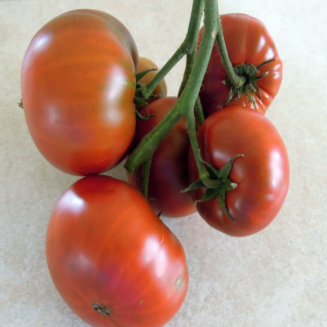
Tasmanian Chocolate is an open-pollinated organic dwarf tomato developed by the Dwarf Tomato Project. The compact stout plant generally reaches 90 to 120 cm and carries medium to large oblate slightly ribbed fruit weighing 140 to 340 g. Skin ripens to rich mahogany or chocolate brown, while dense, juicy, meaty flesh offers full, complex, balanced flavour. Harvest generally begins 80 to 85 days after transplanting. Grow it in full sun in fertile well-drained soil, using a compact sturdy cage to support branches as the heavy fruit develops. Regular soil-level watering and moderate feeding help the compact plant carry its generous harvest comfortably.
- Exposure
- Full sun
- Life cycle
- Warm-season annual
Discover the plant
Common nameTasmanian Chocolate dwarf tomato
FamilySolanaceae
GenusSolanum
Specieslycopersicum
CultivarTasmanian Chocolate
TypeOrganic open-pollinated indeterminate dwarf tomato
Botanical nameSolanum lycopersicum
Reproducible seedsYes
Organic dwarf 'Tasmanian Chocolate' tomato (Solanum lycopersicum) is an open-pollinated organic variety developed by the Dwarf Tomato Project. The stocky plant forms a stout central stem and dark green rugose foliage while generally remaining 90 to 120 cm tall. It bears medium to large oblate slightly ribbed tomatoes weighing 140 to 340 g that ripen to rich mahogany or chocolate brown. Dense, juicy, meaty flesh delivers full, complex, balanced flavour for slicing, sandwiches, salads, and fresh sauces. Its structured compact silhouette also brings strong ornamental interest to an edible container display.
Sow indoors six to eight weeks before the last frost, approximately 0.5 cm deep in warm evenly moist seed-starting mix. Provide strong light immediately after emergence, pot seedlings up after true leaves appear, and harden them gradually. Once frost risk has passed, transplant in full sun into fertile organic-rich well-drained soil. Despite its dwarf habit, Tasmanian Chocolate remains indeterminate and continues growing and fruiting. A compact sturdy cage installed at planting supports loaded branches efficiently and suits vegetable gardens, edible beds, and large containers. Use soft ties only where branches begin to bend under developing fruit.
Water slowly and deeply at soil level when the surface begins to dry, then mulch after the soil warms to stabilize moisture. Feed moderately according to label directions without excess nitrogen, and monitor loaded branches. Maturity generally occurs 80 to 85 days after transplanting. Harvest when the skin develops an even mahogany to chocolate-brown colour, shoulders are no longer green, and fruit yields slightly to gentle pressure. Clip the stem with clean pruners when needed, place tomatoes in a single layer, and discard any fruit that is mouldy, slimy, deeply split, or abnormal-smelling. Before frost, bring sound developed fruit indoors.

Sowing guide
It all startswith a seed.
Sowing depth
0.5 cm (1/4 in)
Spacing / density
Space plants approximately 90 to 120 cm (36 to 48 in) apart to accommodate growth and air circulation.
Germination temperature
21 to 27 °C (70 to 81 °F)
Germination time
7 to 14 days
Sowing period
March through April indoors Adjust these dates to your local frost dates and soil conditions; Canadian growing seasons vary by region.
Propagation
Seed
Growing method
When to start tomato seeds indoors: 'Tasmanian Chocolate' tomato. Sow Tasmanian Chocolate indoors six to eight weeks before the last frost, approximately 0.5 cm deep in clean moist seed-starting mix. Brush or gently move seedlings only as part of normal airflow, not as a substitute for adequate light. Place 'Tasmanian Chocolate' before late-season crowding develops, keeping its mature habit in mind: dwarf, compact, and stout, with a thick central stem and indeterminate growth. Maintain even root-zone moisture from flowering through fruit development, avoiding abrupt swings from dry to saturated mix. At final planting, follow this layout for the vine: approximately 90 to 120 cm (36 to 48 in) apart. Mark positions before roots are placed. Install the cage, stake, or trellis at planting when support is needed. Its mature habit is dwarf, compact, and stout, with a thick central stem and indeterminate growth. Give this tomato full sun. Choose the site before committing the final planting position. Transplant after local frost danger has passed into full sun and fertile, well-drained soil. For the tomato plant, watch for medium to large oblate slightly ribbed fruit weighing 140 to 340 g and confirm maturity from colour, firmness, or size as appropriate. Use moderate label-rate nutrition and avoid forcing leaves with excess nitrogen. Keep loaded clusters supported as frost approaches, and remove split or diseased fruit from the harvest area. Pick the crop at its intended colour and texture, supporting clusters so stems do not tear. Before frost, harvest sound developed fruit for indoor finishing, discard diseased material, and record transplant and first-pick dates for the next Canadian season.
Soil and care
The right care,at the right time.
Soil pH
Approximately 6.0 to 6.8
Care level
Moderate
Watering
Large fruit on dwarf 'Tasmanian Chocolate' tomato benefits from an even water supply while it expands, since abrupt drought-to-soaking cycles can split developing tomatoes. Dwarf 'Tasmanian Chocolate' tomato's medium to large oblate slightly ribbed fruit weighing 140 to 340 g is carried on dwarf, compact, and stout, with a thick central stem and indeterminate growth, so extend watering beyond the stem as the supported canopy enlarges. The harvest guide for dwarf 'Tasmanian Chocolate' tomato is approximately 80 to 85 days after transplanting; maintain moisture while younger clusters continue filling.
Soil type
Dwarf 'Tasmanian Chocolate' tomato needs generous, stable soil volume for its large fruit and sustained root activity. Prepare dwarf 'Tasmanian Chocolate' tomato's bed for dwarf, compact, and stout, with a thick central stem and indeterminate growth bearing medium to large oblate slightly ribbed fruit weighing 140 to 340 g, not only for the small spring transplant. Allow approximately 80 to 85 days after transplanting for dwarf 'Tasmanian Chocolate' tomato to develop, providing soil volume that stays aerated after repeated watering. Before setting dwarf 'Tasmanian Chocolate' tomato, mix mature compost through the area while preserving a crumbly structure rather than a dense amended pocket.
Fertilization
'Tasmanian Chocolate' benefits from balanced fertility before its first trusses. Apply every fertilizer at its labelled rate. For dwarf 'Tasmanian Chocolate' tomato, fruit development competes with foliage under excessive nitrogen. Water granular amendments into the active root zone. For Tasmanian Chocolate dwarf tomato, its root zone needs consistent moisture while fruit enlarges. Review growth stage before scheduling the next feeding. Fertilizer cannot correct water-related disorders on 'Tasmanian Chocolate'. Choose amendments from soil results and crop response. Once dwarf 'Tasmanian Chocolate' tomato flowers, favour steady growth over leafy surges.
Moisture
Consistent soil moisture without saturation; good air circulation around the foliage.
Seasonal care
Seasonal care for 'Tasmanian Chocolate' tomato. Plan dwarf 'Tasmanian Chocolate' tomato from local frost and soil conditions rather than a fixed calendar: indoor sowing six to eight weeks before last frost; transplant after frost. Label the tray or row after sowing 0.5 cm deep; seed generally emerges in 7 to 14 days at 21 to 27 °C (70 to 81 °F), and slower seeds should not be disturbed. Keep young seedlings close to strong light, rotate trays for balanced growth, and pot them on before roots become crowded. After several days of hardening, set 'Tasmanian Chocolate' plants outdoors only when frost danger has passed and nights have become reliably mild. Even with a compact habit, give the plant a short cage or stake before branches carry a full crop. Prepare a sunny, well-drained bed; mix mature compost through the root zone and keep the lower leaves clear of soil splash. Water slowly and deeply, allowing the surface to start drying before the next irrigation so medium to large oblate slightly ribbed fruit weighing 140 to 340 g develops under steady conditions. Where space is limited, give dwarf 'Tasmanian Chocolate' tomato a container large enough for its mature root system and keep every drainage opening clear. As yellow flowers open, preserve airflow around 'Tasmanian Chocolate', check ties and supports, and watch the undersides of leaves for early pest or disease signs. Use the supplied harvest guidance—approximately 80 to 85 days after transplanting—as a starting point; judge each fruit by developed colour, full size, and a slight yield under gentle pressure. Harvest 'Tasmanian Chocolate' regularly without pulling the vine, and bring sound, well-developed fruit indoors before the first hard frost.
Container growing
A garden,within reach.
Growing 'Tasmanian Chocolate' tomato in containers. Choose a stable container sized for the mature plant, with several unobstructed drainage holes. Fill the container with fresh, airy vegetable potting mix amended modestly with mature compost, never dense garden soil. Dwarf 'Tasmanian Chocolate' tomato produces the expected harvest form: medium to large oblate slightly ribbed fruit weighing 140 to 340 g. Protect the developing crop from soil splash and rough handling. Place the pot in full sun where heat reflected from pavement will not overheat the roots. Because its habit is dwarf, compact, and stout, with a thick central stem and indeterminate growth, 'Tasmanian Chocolate' needs enough room for routine care and neighbouring plants. Set one established this tomato plant at an appropriate depth and keep the stem clear of the rim and mulch. Choose a position for the vine with full sun without sacrificing airflow or watering access. Water slowly when the upper mix begins drying, continue until surplus drains, and empty the saucer. Keep approximately 90 to 120 cm (36 to 48 in) apart around the crop, especially where neighbouring foliage could shade or trap moisture. Guide stems through the support while they remain flexible, leaving enough room to water at soil level and reach every ripening cluster. As nights cool, check ties and actual root-zone moisture before deciding whether temporary shelter is worthwhile. Complete the harvest as cold nights approach, retaining only sound fruit. A container brought under cover needs useful light, warmth, and a short isolation period for pest inspection.
Bloom and dimensions
Its place,in your garden.
Mature height
Approximately 90 to 120 cm (3 to 4 ft)
Flower color
Yellow
Foliage color
Green
Foliage type
Compound, divided foliage with an aroma when bruised; grown as an annual in your region
Growth rate
Vigorous during the warm season
Growth habit
Dwarf, compact, and stout, with a thick central stem and indeterminate growth
Bloom period
'Tasmanian Chocolate' carries yellow, self-fertile flowers in small clusters. Keep the root zone evenly moist during bloom. For dwarf 'Tasmanian Chocolate' tomato, its flower clusters may drop blossoms during severe stress. Temperature extremes can temporarily interrupt successful set. For Tasmanian Chocolate dwarf tomato, successful vibration starts fruit development. Avoid strong nitrogen feeding once buds appear. Breezes and bumblebees can release 'Tasmanian Chocolate''s pollen. Water at soil level while flowers remain open. Keep dwarf 'Tasmanian Chocolate' tomato tied before fruit loads its trusses. For Tasmanian Chocolate dwarf tomato, another tomato variety is unnecessary for normal pollination.
Fruiting
Small yellow flowers form clusters of medium to large oblate slightly ribbed fruit. Each tomato weighs approximately 140 to 340 g and ripens to mahogany or chocolate brown. Production develops on a stout dwarf plant. Maintain consistent moisture, support loaded branches, and harvest when shoulders are no longer green and the fruit yields slightly. A compact cage prevents heavy fruit from pulling branches toward the soil.
Days to maturity
Approximately 80 to 85 days after transplanting
Harvest
Tasmanian Chocolate is ready about 80–85 days after transplanting when its mahogany-brown skin is fully developed, green shoulders have faded, and the fruit yields slightly. Support these heavier tomatoes and clip the stem rather than twisting loaded branches. Lay the harvest in one layer to prevent bruising. Bring mature fruit inside before frost and discard any that is leaking, mouldy, or deeply split.
Garden associations
In goodcompany.
Companion plants
Tasmanian Chocolate's dwarf structure can make a container garden more manageable, but the tomato still needs adequate root volume. Put herbs in separate pots rather than treating unused surface space as room for several more mature crops. Arrange those pots so leaves do not close around the tomato canopy. In beds, a low border can remain useful if harvest access is preserved. The dwarf label describes growth architecture, not an automatic exemption from spacing, support or the need to avoid competition with vigorous neighbours.
Plants to avoid
Avoid waterlogged soil, overhead watering, crowding, and repeated rotations with tomatoes, peppers, eggplants, or potatoes.
Recipe idea
From the gardento your plate.
Edible parts
Ripe fruit
'Tasmanian Chocolate' tomato in the kitchen. Tasmanian Chocolate tomato toast — Slice two ripe, firm tomatoes and place them on a clean towel for five minutes. Toast four thick slices of rye or sourdough. Stir 150 g soft goat cheese, ricotta, or mashed white beans with 10 mL olive oil, chopped parsley, and black pepper. Spread the mixture on the warm bread, then layer on the tomato. Top with thin cucumber ribbons, 10 mL red-wine vinegar, and a small pinch of salt. The creamy base and crisp cucumber balance the juicy fruit without hiding it. Serve immediately rather than letting the bread absorb the dressing. Wash tomatoes under running water before cutting and use a clean board, especially if the fruit came directly from the garden. Colour alone is not a spoilage test: use sound texture and a fresh smell, and discard fruit that is mouldy, leaking, or rotten. Refrigerate cut tomato and spread separately in covered containers. Assemble a new toast from chilled components instead of storing the finished one.
Frequently asked questions
Your questions,answered.
When should Tasmanian Chocolate be sown and transplanted in your region?
Sow Tasmanian Chocolate indoors six to eight weeks before you expect to transplant. Set seed 0.5 cm (¼ in) deep, maintain 21 to 27 °C (70 to 81 °F), and expect emergence within 7 to 14 days. After sprouting, provide bright light and pot seedlings on as needed. Harden them gradually, then plant outdoors after the final frost when soil and nights are warm. This is an indeterminate dwarf: the thick central stem and compact stature reach roughly 90 to 120 cm, but growth and fruiting continue. Install a sturdy short cage at transplanting to carry the 140 to 340 g fruit. Maturity is listed at approximately 80 to 85 days after transplanting. Use that window for planning, then judge individual fruit by mature colour and sound condition.
What support suits Tasmanian Chocolate?
Tasmanian Chocolate needs a sturdy short or medium cage rather than a very tall trellis. The plant is a dwarf indeterminate with a thick central stem, a compact 90 to 120 cm height, and continuing fruit production. Set the cage at transplanting and choose one wide enough to support side branches carrying 140 to 340 g fruit. Soft ties can keep loaded stems inside the frame without constricting them. Anchor the support firmly, especially in a container or exposed site, and check it after wind. The stout stem is helpful but does not eliminate the need for support once several large fruit develop together. Keep the centre accessible for airflow and picking. Because growth is indeterminate, continue guiding new shoots even after the first crop begins to colour.
When should Tasmanian Chocolate tomatoes be harvested?
Begin checking Tasmanian Chocolate fruit around 80 to 85 days after transplanting. The tomatoes are medium to large, oblate, slightly ribbed, and generally 140 to 340 g, so support each cluster while assessing it. Harvest individual fruit when it displays the cultivar's mature colour and yields slightly to gentle pressure without becoming soft. Days are an estimate, not a command to pick every tomato at once. This dwarf plant is indeterminate, so later flowers and green fruit can remain after the first harvest. Use clean hands or snips and avoid twisting a heavy cluster against the stout stem. Bring cracked or damaged fruit into prompt use rather than storage. Record the colour and feel of the first sound ripe tomato as a practical reference for later pickings.
What container should be used for Tasmanian Chocolate?
The current product facts do not give an exact container volume for Tasmanian Chocolate, so do not claim one as verified. Choose a large, deep, stable pot with free drainage and room for a dwarf indeterminate root system. Install a strong compact cage at planting. The plant reaches roughly 90 to 120 cm, but its thick central stem carries 140 to 340 g fruit and benefits from support around the side branches. Put the container outdoors after frost danger, water the whole root ball, and allow excess to drain. Check moisture frequently during warm weather and protect the pot from wind. Harvest begins around 80 to 85 days after transplanting. Keep fruiting branches inside the cage and pick mature tomatoes regularly to reduce weight on the framework.
Can Tasmanian Chocolate seed be saved?
Tasmanian Chocolate is open-pollinated, so seed from correctly selected and isolated plants can reproduce the cultivar. Choose fully ripe fruit from a healthy plant showing the thick-stemmed dwarf indeterminate habit and medium-to-large, slightly ribbed fruit. Clean seed by a recognized tomato-saving method, dry it thoroughly, and label the packet with the year. Although tomatoes usually self-pollinate, crossing remains possible when other varieties flower close by and insects visit them. Isolate blossoms when purity matters. Do not save seed from diseased fruit or a plant that differs from the expected 90- to 120-cm growth. If pollination was uncontrolled, sow a trial population and evaluate plant stature and fruit before using the seed for a full crop.
Wildlife and pets
Life,around your plants.
Supporting wildlife
Tasmanian Chocolate's dwarf growth does not change the basic self-fertile nature of tomato flowers. Bumblebees may visit the blooms for pollen. In a container setting, allow a gap between this plant and adjacent flowering pots so each receives light and ventilation, without treating shared root space as necessary for pollinator access.
For a great start to your seeds
The right extras.Right here.
Seed Starting Soil
Shop the collectionSeed starting supplies
Shop the collection





