Sale
Sold out

Fruiting vegetable
Solanaceae
Organic fruiting vegetable seeds
Organic 'Brandywine Black' tomato
Solanum lycopersicum
Product code : BIOVO-0194
Brandywine Black is an organic, open-pollinated, indeterminate potato-leaf heirloom tomato. This product contains approximately 30 organic seeds. Large black, dark-mahogany, or burgundy beefsteak fruit weighs approximately 454 g, while maturity commonly ranges from 80 to 95 days after transplanting. Sow 1 cm deep, transplant into full sun with 60 cm between plants, and install a tall cage. Maintain even moisture, then harvest fruit when uniformly dark, slightly yielding, and sound near the stem. Record transplant date and first ripe fruit to compare performance under your own garden conditions and improve next season's planning. Regular picking protects additional fruit as it ripens.
- Quantity
- Approximately 30 organic seeds
- Exposure
- Sun
- Life cycle
- Annual in Canadian gardens; frost-tender perennial where frost-free
Discover the plant
Common nameBrandywine Black tomato
FamilySolanaceae
GenusSolanum
Specieslycopersicum
CultivarBrandywine Black
TypeFruiting vegetable
Botanical nameSolanum lycopersicum
Reproducible seedsYes
Heirloom varietyYes
Organic 'Brandywine Black' tomato (Solanum lycopersicum) is an open-pollinated indeterminate heirloom with potato-leaf foliage. Large black, dark-mahogany, or burgundy beefsteak fruit reaches approximately 454 g. Abundant juicy, flavourful flesh suits thick slices, sandwiches, salads, and sauces. This product contains approximately 30 organic seeds. Maturity guidance ranges from 80 to 95 days after transplanting; use this window as a practical reference according to warmth, light, and planting date. Sow 1 cm deep, space plants 60 cm apart, and install a tall cage to support heavy fruit. Regular picking and even moisture help protect the crop as additional tomatoes continue ripening throughout the season.
Start seed indoors six to eight weeks before the last frost, 1 cm deep. Keep starting mix warm and moist without saturation, then provide intense light immediately after emergence. Pot on before roots become crowded and harden plants gradually. Transplant after frost into warmed, fertile, well-drained soil in full sun, spacing plants 60 cm apart. Install a tall cage or sturdy stake immediately because indeterminate vines continue growing and must support large fruit. Water deeply at soil level, mulch after soil warms, and maintain even moisture. Provide good airflow around foliage.
Begin watching for maturity around 80 days from transplanting, while allowing a later harvest under cool conditions. Pick when fruit reaches a black, dark-mahogany, or burgundy shade, yields slightly to gentle pressure, and remains sound near the stem. Support fruit with one hand and clip when needed with a clean tool. Fleshy interiors suit thick slices, sandwiches, salads, bruschetta, and sauces. Hold whole tomatoes at room temperature away from direct sun, then refrigerate every cut portion within two hours. For canning, follow a tested recipe with required acidification. Discard fruit showing mould, leaking tissue, or extensive decay.

Sowing guide
It all startswith a seed.
Sowing depth
1 cm (0.39 in)
Spacing / density
60 cm between plants
Germination temperature
Approximately 24 to 29 °C (75 to 85 °F)
Germination time
Approximately 7 to 14 days under steady indoor warmth; cool media can delay emergence.
Sowing period
Indoors, 6 to 8 weeks before the last frost
Propagation
Seed
Growing method
When to start tomato seeds indoors: 'Brandywine Black' tomato. Sow indoors six to eight weeks before the last frost, approximately 5 or 6 mm deep in clean moist starting mix without saturation. For 'Brandywine Black' indoor sowing, follow the frost-relative timing above. Use clean seed-starting mix, even warmth, and moisture that never leaves the cells waterlogged. Choose a position for 'Brandywine Black' with sun without sacrificing airflow or watering access. Harden plants in stages, increasing outdoor exposure while protecting them from frost and harsh wind. The spacing guidance for the crop is 60 cm between plants; use it when balancing airflow with the available growing area. Install the cage, stake, or trellis at planting when support is needed. Its mature habit is indeterminate, vigorous, generally potato-leaf. For the tomato plant, the expected harvest form—large fleshy beefsteak fruit, often ribbed—helps confirm crop identity, while local warmth and plant health still influence maturity. Guide stems with soft ties and remove only damaged foliage that restricts airflow. Leave this tomato open to light, airflow, and watering at soil level. Its growth is indeterminate, vigorous, generally potato-leaf. Move the vine into a larger cell after true leaves develop, preserving the root ball and product label. Keep loaded clusters supported as frost approaches, and remove split or diseased fruit from the harvest area. Pick the crop at its intended colour and texture, supporting clusters so stems do not tear. Before frost, harvest sound developed fruit for indoor finishing, discard diseased material, and record transplant and first-pick dates for the next Canadian season.
Soil and care
The right care,at the right time.
Soil pH
Approximately 6.0 to 6.8
Care level
Moderate
Watering
Large fruit on 'Brandywine Black' tomato benefits from an even water supply while it expands, since abrupt drought-to-soaking cycles can split developing tomatoes. 'Brandywine Black' tomato's large fleshy beefsteak fruit, often ribbed is carried on indeterminate, vigorous, generally potato-leaf growth, so extend watering beyond the stem as the supported canopy enlarges. The harvest guide for 'Brandywine Black' tomato is approximately 80 to 95 days after transplanting; maintain moisture while younger clusters continue filling. Water 'Brandywine Black' tomato slowly at the base, soak its root zone, then wait until the upper soil begins to dry before irrigating again.
Soil type
'Brandywine Black' tomato needs generous, stable soil volume for its large fruit and sustained root activity. Prepare 'Brandywine Black' tomato's bed for indeterminate, vigorous, generally potato-leaf growth bearing large fleshy beefsteak fruit, often ribbed, not only for the small spring transplant. Allow approximately 80 to 95 days after transplanting for 'Brandywine Black' tomato to develop, providing soil volume that stays aerated after repeated watering. Before setting 'Brandywine Black' tomato, mix mature compost through the area while preserving a crumbly structure rather than a dense amended pocket. For 'Brandywine Black' tomato, use the supplied pH range of approximately 6.0 to 6.8 as the soil-testing target.
Fertilization
'Brandywine Black' benefits from balanced fertility before its first trusses. Let a soil test guide any corrective amendment. For 'Brandywine Black' tomato, fruit development competes with foliage under excessive nitrogen. Measure label-rate feed rather than estimating a dose. For Brandywine Black tomato, its root zone needs consistent moisture while fruit enlarges. Inspect light, water, and roots before feeding again. Fertilizer cannot correct water-related disorders on 'Brandywine Black'. Build soil fertility gradually with finished compost. Once 'Brandywine Black' tomato flowers, favour steady growth over leafy surges.
Moisture
Consistent soil moisture without saturation; good air circulation around the foliage.
Seasonal care
Seasonal care for 'Brandywine Black' tomato. Use 'Brandywine Black' tomato’s stated sowing window as a frost-relative cue, not a universal date: indoors, 6 to 8 weeks before the last frost. Sow 1 cm deep at approximately 24 to 29 °C (75 to 85 °F); the working germination range is 7 to 14 days, with moisture held steady rather than saturated. Keep young seedlings close to strong light, rotate trays for balanced growth, and pot them on before roots become crowded. After several days of hardening, set 'Brandywine Black' plants outdoors only when frost danger has passed and nights have become reliably mild. Install a sturdy support at planting and guide new growth before stems become heavy or tangled. Prepare a sunny, well-drained bed; mix mature compost through the root zone and keep the lower leaves clear of soil splash. Maintain even root-zone moisture, because abrupt swings between dry soil and heavy watering can split expanding fruit. If potted, follow this provision for 'Brandywine Black' tomato: at least 45 to 60 L with a tall cage. Recheck root-zone moisture whenever heat or wind increases evaporation. As yellow flowers open, preserve airflow around 'Brandywine Black', check ties and supports, and watch the undersides of leaves for early pest or disease signs. Use the supplied harvest guidance—approximately 80 to 90 days from transplanting; harvest dark mahogany and slightly yielding—as a starting point; judge each fruit by developed colour, full size, and a slight yield under gentle pressure. Harvest 'Brandywine Black' regularly without pulling the vine, and bring sound, well-developed fruit indoors before the first hard frost.
Container growing
A garden,within reach.
Recommended pot size
At least 45 to 60 L with a tall cage
Growing 'Brandywine Black' tomato in containers. For 'Brandywine Black', choose a container matching this guide: at least 45 to 60 L with a tall cage. Keep several drainage holes unobstructed. Place the pot in full sun where heat reflected from pavement will not overheat the roots. At final planting, follow this layout for 'Brandywine Black': 60 cm between plants. Mark positions before roots are placed. Feed at a modest labelled rate after watering. Excess nitrogen can delay flowering and ripening while encouraging leafy growth. As the vine matures, use the expected harvest form—large fleshy beefsteak fruit, often ribbed—to guide support, inspection, and careful picking. Set one established this tomato plant at an appropriate depth and keep the stem clear of the rim and mulch. Good access around the tomato plant makes inspection and harvest easier, given its habit: indeterminate, vigorous, generally potato-leaf. Fill the container with fresh, airy vegetable potting mix amended modestly with mature compost, never dense garden soil. Give the crop sun. Choose the site before committing the final planting position. Check ties after wind, remove only damaged lower leaves, and preserve airflow through the supported canopy. As nights cool, check ties and actual root-zone moisture before deciding whether temporary shelter is worthwhile. Harvest the vine when colour and texture show the intended stage. Before frost, gather sound developed fruit; quarantine any plant moved under protection and inspect it for insects.

Bloom and dimensions
Its place,in your garden.
Flower color
Yellow
Foliage color
Green
Foliage type
Herbaceous
Growth rate
Fast
Growth habit
Indeterminate, vigorous, generally potato-leaf
Bloom period
'Brandywine Black' carries small yellow self-fertile flowers in clusters along its flowering stems. Breezes or bumblebee vibration normally release their pollen. Water at soil level so open blossoms remain dry. For 'Brandywine Black', after successful set, each retained blossom begins developing the large fleshy beefsteak fruit, often ribbed. Keep moisture even, avoid a nitrogen surge, and support the canopy before fruit adds weight. In the 'Brandywine Black' tomato planting, heat, cold, or drought may cause temporary blossom drop; correct the environment before pruning or feeding heavily. Avoid treating every fallen flower as disease. Observe 'Brandywine Black' tomato through several flower clusters before judging set.
Fruiting
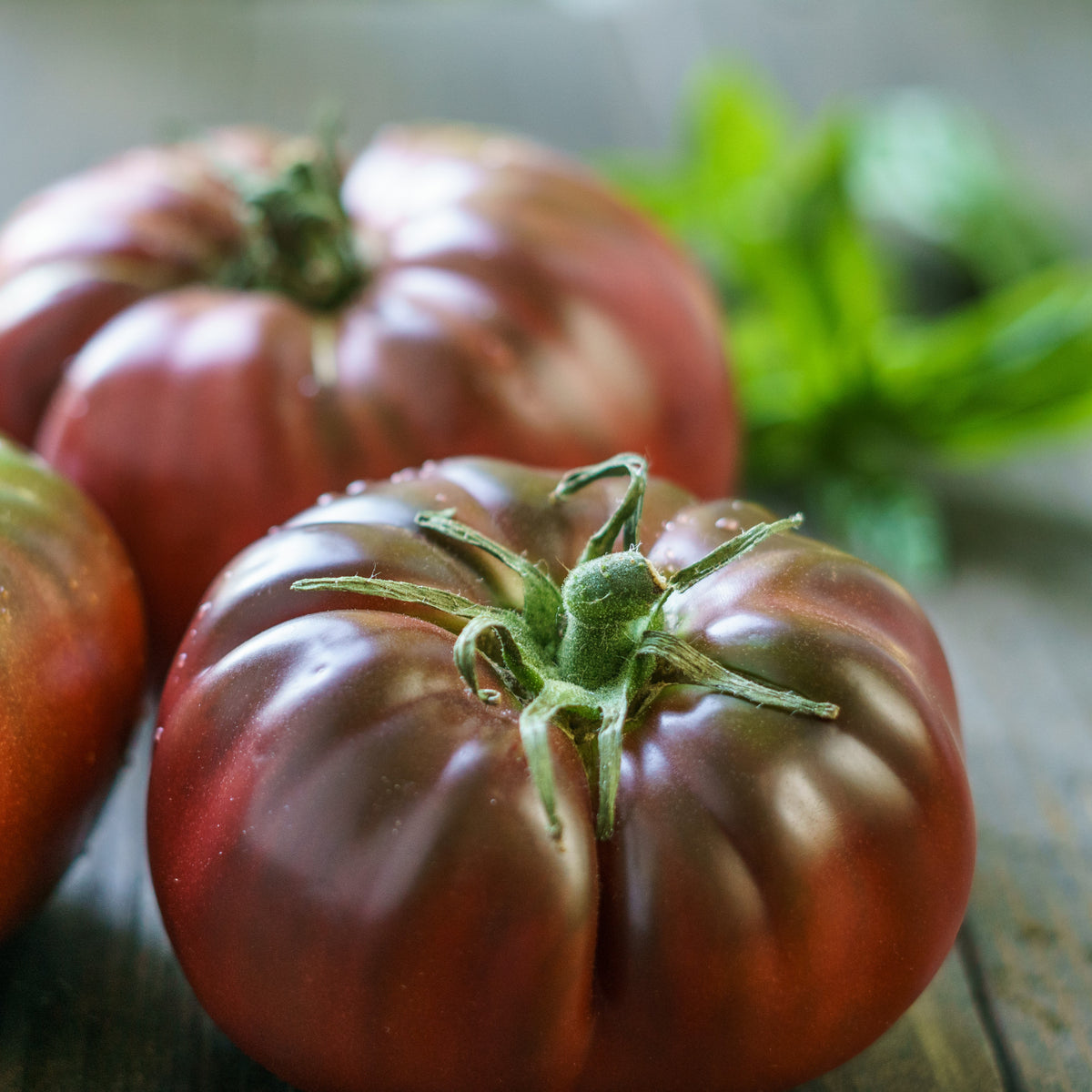
Large beefsteak fruit ripens to black, dark mahogany, or burgundy and reaches approximately 454 g. Maturity commonly ranges from 80 to 95 days after transplanting according to warmth, light, and growing conditions. Harvest tomatoes when uniformly dark, slightly yielding, and sound near the stem. Support them to avoid tearing clusters and promptly remove cracked, mouldy, or badly damaged fruit. Record first-colour and harvest dates for useful local comparison from one season to another.
Days to maturity
Approximately 80 to 95 days after transplanting
Harvest
Approximately 80 to 90 days from transplanting; harvest dark mahogany and slightly yielding
Garden associations
In goodcompany.
Companion plants
Place chives, parsley, or basil beside 'Brandywine Black' only where their watering and light needs remain compatible. Keep the supported tomato canopy north of shorter companions so it does not remove their midday light. When arranging neighbours for 'Brandywine Black', match irrigation to each root zone instead of watering the entire combination by habit. Remove any neighbour that begins competing for light, moisture, airflow, or harvest access. Rotate 'Brandywine Black' tomato away from tomatoes, peppers, eggplants, and potatoes rather than treating companionship as disease control. When arranging neighbours for 'Brandywine Black' tomato, preserve a clear route to the large fleshy beefsteak fruit, often ribbed, and remove neighbours that begin shading fruit or trapping damp air. Reassess the arrangement around 'Brandywine Black' as both crops approach mature size.
Recipe idea
From the gardento your plate.
Edible parts
Fresh or cooked fruit
'Brandywine Black' tomato in the kitchen. Brandywine Black toast — Toast four thick slices of country bread until crisp at the edges. Cut one or two ripe tomatoes into substantial slices and rest them on a clean towel for several minutes. Spread each toast with mashed white beans seasoned with 15 mL olive oil, 10 mL lemon juice, and black pepper. Layer on the tomato, then add thinly sliced shallot, torn basil, and a small pinch of flaky salt. Finish with another drizzle of oil and a few drops of balsamic vinegar. The bean layer catches the tomato juices and turns the toast into a light meal. Assemble just before eating so the bread remains crisp. Rinse fruit before cutting, use only firm sound tomatoes, and discard any with mould, leaking flesh, or a fermented odour. Keep the knife and board away from unwashed garden produce once they are cleaned. Refrigerate any cut tomato promptly in a covered container and store unused bean spread separately rather than saving fully assembled toast.
Frequently asked questions
Your questions,answered.
Why does Brandywine Black ripen dark mahogany?
Brandywine Black ripens dark mahogany to burgundy because red flesh is viewed through skin that retains green pigment. The result is dusky rather than a modern anthocyanin-purple trait. Look instead for dark-mahogany colour, large slicing fruit, and potato-leaf foliage when identifying the variety. Light and maturity may shift the shade slightly without making the fruit genuinely violet. Harvest when colour is uniform and the tomato yields slightly to very gentle pressure. Observe several fully ripe fruit before describing the cultivar's typical appearance, because light and growing conditions may slightly alter the shade. Compare foliage and fruit together rather than relying on the name alone. The mature shade may vary slightly among fruit, but healthy examples should remain within a dark-mahogany range.
Is Brandywine Black determinate or indeterminate?
Brandywine Black is indeterminate, vigorous, and generally potato-leaved. It continues making vine growth, flowers, and fruit through favourable weather rather than stopping after one compact crop. Install a tall cage at transplanting and guide stems with soft ties so the support can carry its large, often ribbed beefsteak fruit. The current record does not give a precise mature height, so plan from the growth habit instead of relying on an unsupported number. If container-grown, use at least 45–60 L and a tall cage, then stabilize the vessel against wind and crop weight. Allow about 60 cm between garden plants. Harvest is progressive, with maturity listed around 80 to 95 days after transplanting, so continued tying and inspection remain necessary after the first dark fruit ripens.
When should Brandywine Black be harvested?
Harvest when fruit is uniformly dark mahogany, yields slightly to very gentle pressure, and remains sound around the stem. Maturity commonly ranges from 80 to 95 days after transplanting, although timing varies with growing conditions. Light, warmth, watering, and transplant date change the schedule. Support fruit with one hand and cut the stem when a cluster resists. Hold whole tomatoes at room temperature away from direct sun to preserve texture. Refrigerate cut fruit within two hours. Discard any tomato showing mould, extensive leaking tissue, or widespread decay. Record first ripe fruit and growing conditions to improve the following season's local schedule. Separate cracked fruit from intact tomatoes and use it promptly when still sound.
Can Brandywine Black grow in a container?
Container culture is possible for Brandywine Black, but a vigorous potato-leaf beefsteak is not a patio-sized plant. Provide 45–60 L or more in a stable pot, multiple drainage openings, and a heavy cage fixed securely before transplanting. Fill with airy mix moderately enriched with compost and place the plant in uninterrupted sun. The large, often ribbed fruit develops over an estimated 80–95 days after transplanting, so maintain even root-zone moisture through a long season; inspect the pot daily in heat. Feed at the labelled rate for tomatoes and avoid excessive nitrogen. Add broad soft ties as vines climb, and cradle individual heavy clusters if needed. Pick with two hands rather than tugging the stem. Before frost, gather sound developed fruit, then clean both cage and container after diseased debris has been removed.
How long does harvest take?
Maturity commonly ranges from 80 to 95 days after transplanting. This range describes a late-season large heirloom but is not a fixed result. Start seed six to eight weeks before the last frost, transplant after cold weather, and select full sun. Record transplant date, first fruit set, and first uniformly dark-mahogany tomato. Cool nights, insufficient light, irregular moisture, or a heavily loaded plant may delay ripening. Before autumn frost, gather sound developed fruit and allow tomatoes that have begun changing colour to finish indoors. Keep them at room temperature away from direct sun, inspect them daily, and discard any showing mould or decay.
Wildlife and pets
Life,around your plants.
Supporting wildlife
Brandywine Black has self-fertile tomato flowers that respond well to movement and vibration. Bumblebees may visit and shake pollen onto the stigma, yet fruit can form without them. The short-lived yellow blossoms offer limited forage compared with purpose-grown flowers. Avoid treating open trusses during bee activity and maintain a varied floral border.
For a great start to your seeds
The right extras.Right here.
Seed Starting Soil
Shop the collectionSeed starting supplies
Shop the collection