Perennial herbs

‘Cliffs of Dover’ garlic chives (Allium tuberosum ‘Cliffs of Dover’)

Allium tuberosum ‘Cliffs of Dover’

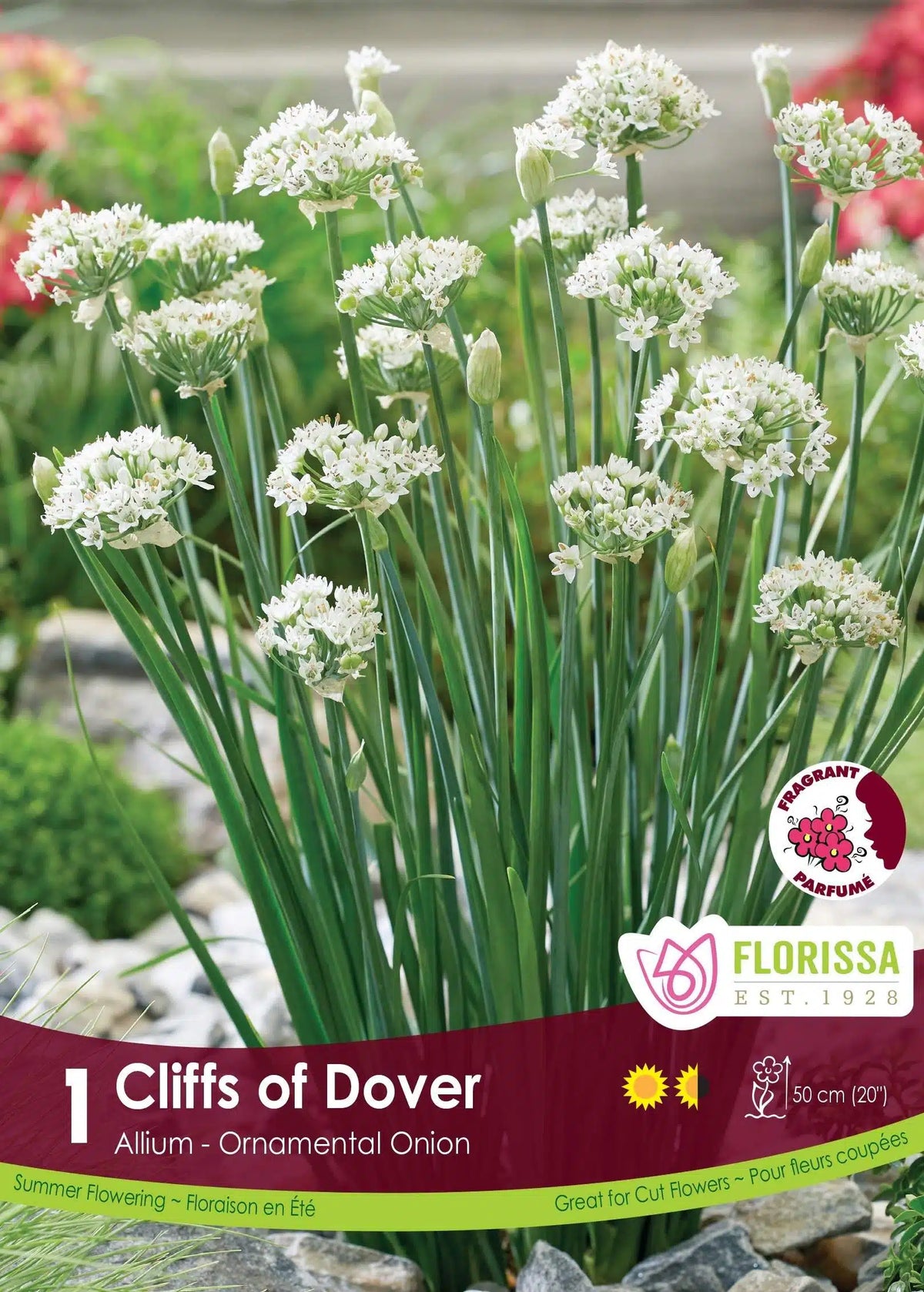
Cliffs of Dover is an edible Allium tuberosum selection forming an upright clump 50 cm tall and 30 cm wide. Its flat leaves offer a mild garlic flavour, while fragrant 5 cm umbels carry pure white star-shaped flowers from July through September. Supplied by Van Noort as a No1 bare root, it is planted in spring at a depth of 2.5 cm in sun or partial shade. This Zone 5 to 9 perennial prefers fertile, evenly moist, well-drained soil. Both foliage and flowers can be harvested for cooking, while the late bloom feeds bees, butterflies, and other beneficial insects. This selection forms a tidy clump that gradually broadens without becoming invasive.
8 49 $
Pay in 4 interest-free payments with Sezzle
Detailed plant guide
Advice adapted to Canada
Secure payment
2026 preorder for fall bulbs Shipping expected in October 2026.
Share
Quantity 1 bulb
Exposure Full sun to partial shade
Hardiness Zones 5 to 9
Difficulty level Easy

Discover the plant

Family Amaryllidaceae
Genus Allium
Species tuberosum
Cultivar Cliffs of Dover
Type Edible aromatic bare-root perennial
Cycle Deciduous herbaceous perennial

‘Cliffs of Dover’ garlic chives (Allium tuberosum ‘Cliffs of Dover’) is a fast-growing edible perennial that forms an upright clump about 50 cm tall and 30 cm wide. Its flat, linear mid-green leaves are aromatic and carry a mild garlic flavour. From July through September, sturdy stems hold rounded 5 cm umbels made of fragrant, pure white, star-shaped edible flowers. This late display brightens borders, attracts pollinating insects, and extends ornamental interest in an edible garden into early fall. This selection forms a tidy clump that gradually broadens without becoming invasive.

Van Noort supplies Cliffs of Dover as a No1 bare root for spring planting. Set the crown 2.5 cm deep and space plants 15 to 30 cm apart in full sun or partial shade. Choose fertile, humus-rich soil that stays evenly moist yet drains freely, then water deeply after planting. Maintain steady moisture while roots establish without saturating the ground. A thin spring layer of compost supports renewed foliage and flowering. Cut leaves as required for cooking, but always retain enough active growth to nourish the perennial crown. This selection forms a tidy clump that gradually broadens without becoming invasive.

Use Cliffs of Dover along a kitchen-garden edge, in an herb bed, a white border, or a generous container close to the kitchen. Fresh leaves season salads, potatoes, eggs, sauces, and compound butter; individual florets provide a decorative garnish with a delicate garlic taste. Remove spent stems if you want to limit volunteer seedlings, or retain a few for pollinators. The deciduous clump disappears for winter and returns in spring in Zone 5. Divide it every three or four years when the centre becomes crowded or loses vigour. This selection forms a tidy clump that gradually broadens without becoming invasive.

‘Cliffs of Dover’ garlic chives (<em>Allium tuberosum</em> ‘Cliffs of Dover’)

Planting guide

From planting to establishment.

Planting depth 25 mm
Spacing / density 15 to 30 cm (6 to 12 in) between plants
Establishment temperature 15 to 18°C (59 to 64°F)
Establishment time 21 to 35 days
Best planting time Spring
Propagation Division of clumps in early spring
Growing method
Plant the No1 bare root of Cliffs of Dover in spring as soon as the ground can be worked. Soak dry roots in cool water for one hour, then select a position in full sun or partial shade. Loosen fertile, humus-rich soil to 25 cm, incorporate mature compost, and ensure free drainage. Spread the roots without bending them, set the crown 2.5 cm below the surface, and space plants 15 to 30 cm apart. Backfill, firm gently, and water deeply. Keep the soil evenly moist during the first several weeks without waterlogging it. When new foliage appears, add a thin mulch that conserves moisture without touching the crown. Harvest only a few leaves at a time, cutting about 5 cm above the soil while always retaining active foliage. From July through September, leave white umbels for pollinators or pick them young for cooking. Remove spent stems to limit seedlings. In fall, allow foliage to yellow naturally; the following spring, clear dry leaves and divide crowded clumps. This selection forms a tidy clump that gradually broadens without becoming invasive. Its mild garlic scent is most noticeable when foliage is rubbed or cut.

Soil and care

The right conditions.

Exposure Full sun to partial shade
Soil pH Acid to alkaline
Hardiness zone Zones 5 to 9
Minimum temperature About -29°C (-20°F), Zone 5
Watering
Water deeply after planting, then keep the soil evenly moist while roots establish. Afterwards, irrigate whenever the top three centimetres become dry, particularly during hot weather and after a substantial foliage harvest. Direct water to the base early in the morning. Avoid shallow daily sprinkling, filled saucers, and standing moisture. Reduce irrigation in fall as the clump enters dormancy, but do not let a container dry completely during active growth.
Soil type
Cliffs of Dover prefers fertile, humus-rich, loose soil that retains steady moisture while draining excess water quickly. Compost-enriched loam is especially suitable. In sandy ground, add organic matter to slow drying; in clay, incorporate compost and plant slightly raised to protect the crown. Acidic, neutral, or alkaline pH is acceptable. Avoid only continuously waterlogged, compacted, or very poor soil, since these conditions restrict rooting and encourage crown disease. Established plants appreciate renewed organic matter each spring.
Fertilization
In spring, spread a thin layer of mature compost around the clump as the first leaves emerge. In poor soil or a container, use balanced slow-release fertilizer at the lowest labelled rate. After several harvests, a light dressing of screened compost supports regrowth. Avoid excess nitrogen, which produces soft foliage that is more susceptible to disease. Stop fertilizing in late summer so the plant can enter dormancy naturally and harden before winter.
Seasonal care
In spring, remove dry leaves, apply compost, and plant newly received bare roots immediately. Maintain moisture during establishment, then begin a light harvest once the clump is vigorous. In summer, water during drought, pick outer leaves, and watch for slugs, thrips, and downy mildew. From July through September, harvest a few flowers or leave them for pollinators. Cut spent stems before seeds develop if volunteers are unwanted. In fall, stop heavy harvesting and allow foliage to yellow so reserves return to the crown. Clean up only after it is completely dry. In cold Quebec zones, apply light mulch after the soil freezes and remove it early in spring. Every three or four years, divide dense clumps as growth begins, discard weak sections, and replant healthy divisions promptly. Refresh part of the container mix and make sure drainage holes remain open. This selection forms a tidy clump that gradually broadens without becoming invasive. Its mild garlic scent is most noticeable when foliage is rubbed or cut. Good air circulation and consistent drainage keep the crown healthy during wet periods. In Quebec, a light winter mulch protects the crown without holding excess water against it. Late flowers provide valuable forage for pollinators after many perennials have finished blooming. Divide crowded clumps in spring to maintain vigour and produce additional plants. Harvest moderately so enough foliage remains to feed the perennial crown.

Container growing

A controlled environment.

Recommended pot size
At least 30 cm (12 in) wide and deep
Choose a container at least 30 cm wide and 30 cm deep with several generous drainage holes. Fill it with fertile, airy potting mix amended with compost and a little perlite. Set the Cliffs of Dover crown 2.5 cm below the surface, spread the roots, backfill, and water thoroughly. Position the pot in sun or bright partial shade near the kitchen. Keep the mix evenly moist during growth, but always empty the saucer. Harvest outer leaves while preserving the centre, and provide a low dose of balanced fertilizer after several cuttings. White umbels may remain as decoration or be picked young as edible flowers. Remove spent stems when volunteer seedlings are unwanted. For a Quebec winter, move the pot to a sheltered position, insulate its sides, or temporarily bury the container because potted roots experience greater temperature fluctuations. Keep the dormant mix barely moist. In spring, replace the top layer of potting mix, add compost, and divide the clump if it completely fills its container. This selection forms a tidy clump that gradually broadens without becoming invasive. Its mild garlic scent is most noticeable when foliage is rubbed or cut.
‘Cliffs of Dover’ garlic chives (<em>Allium tuberosum</em> ‘Cliffs of Dover’)

Bloom and dimensions

The complete profile.

Flower color Pure white
Foliage color Mid-green
Foliage type Deciduous herbaceous, linear, flat foliage
Growth rate Fast
Bloom period
From July through September, Cliffs of Dover raises sturdy stems above its foliage, each carrying a rounded umbel about 5 cm across. Every head combines numerous fragrant, edible, pure white star-shaped flowers. Progressive opening extends the display for several weeks and attracts bees, bumblebees, hoverflies, and butterflies. Pick young umbels as garnishes or cut fully opened heads for small bouquets. Remove fading heads to limit volunteer seedlings, or retain a few until seed develops for wildlife interest.
Fruiting
None
Harvest
Harvest leaves from spring through fall and flowers from July through September, always leaving enough foliage to maintain vigour.
‘Cliffs of Dover’ garlic chives (<em>Allium tuberosum</em> ‘Cliffs of Dover’)

Garden associations

What to plant with it.

Good companions
Pair Cliffs of Dover with parsley, thyme, oregano, and strawberries in an ornamental kitchen garden while accounting for their different watering needs. In a flower border, combine its white blooms with purple salvias, blue catmint, pink coneflowers, yellow black-eyed Susans, and fine grasses. Lettuce can benefit from slight shade near the clump. Avoid crowding garlic chives against large moisture-demanding perennials or dense groundcovers that would smother the crown and restrict air circulation. This selection forms a tidy clump that gradually broadens without becoming invasive.
Avoid planting with
The principal problems are slugs and snails on young leaves, thrips during hot weather, allium leaf miner, and onion fly. Saturated soil may encourage white rot and crown rots, while foliage that remains wet for long periods increases the risk of downy mildew. Prevent difficulties through effective drainage, rotation away from other Allium crops, clean tools, and morning irrigation directed at the soil. Remove affected tissue promptly and do not compost diseased crowns. This selection forms a tidy clump that gradually broadens without becoming invasive.
Grow Cliffs of Dover as a perennial herb, edible edging, ornamental kitchen-garden plant, or white late-summer accent. Leaves season salads, eggs, potatoes, soups, and sauces, while the flowers separate into star-shaped garnishes. Its compact clump also suits containers and urban gardens. Place it near a path to appreciate its mild fragrance, or repeat several plants to create a low border visited by pollinators. It can also provide small fresh bouquets without sacrificing its culinary role. This selection forms a tidy clump that gradually broadens without becoming invasive.

From the garden to inspiration.

Prepare fresh Cliffs of Dover garlic-chive butter. Soften 125 g of unsalted butter, then blend in three tablespoons of finely sliced leaves, one teaspoon of lemon zest, a pinch of salt, and black pepper. Separate several pure white flowers and add only clean florets grown without pesticides. Mix, taste, and adjust the seasoning. Transfer the mixture to parchment paper, shape it into a log, and refrigerate for at least one hour. Slice rounds to serve with potatoes, grilled vegetables, fish, corn, or warm bread. Harvest leaves in the morning, rinse them briefly, and dry them thoroughly so water does not dilute the butter. Flowers contribute a delicate garlic note and an attractive visual contrast. Refrigerate the finished log for several days or freeze it in individual portions for later meals. This selection forms a tidy clump that gradually broadens without becoming invasive. Its mild garlic scent is most noticeable when foliage is rubbed or cut.

Frequently asked questions

Everything toknow.

Soak dry roots in cool water for about one hour. Dig a hole wide enough to spread them without bending, then set the crown 2.5 cm below the surface. Space plants 15 to 30 cm apart in fertile, evenly moist, well-drained soil in full sun or partial shade. Backfill, firm gently, and water deeply. Maintain steady moisture for several weeks without saturating the area. A thin mulch reduces drying, but keep it clear of the crown to prevent rot and allow new shoots to emerge freely. This selection forms a tidy clump that gradually broadens without becoming invasive. Its mild garlic scent is most noticeable when foliage is rubbed or cut.
Yes. Cliffs of Dover belongs to Allium tuberosum, commonly called garlic chives, whose flat leaves and flowers are used as herbs. Leaves have a mild garlic flavour and season salads, eggs, potatoes, soups, and sauces. Pure white florets provide a delicate garnish. Harvest only correctly identified plants grown without pesticides not approved for food crops. Rinse and dry picked portions, begin with a small serving, and always retain enough foliage on the clump to support continued vigour and future flowering. This selection forms a tidy clump that gradually broadens without becoming invasive. Its mild garlic scent is most noticeable when foliage is rubbed or cut.
A young bare root may devote its first season to establishment before flowering generously. Insufficient light, excessive foliage harvest, very poor soil, or a continuously waterlogged crown can also reduce bloom. Provide several hours of sun, spring compost, and even moisture with effective drainage. Leave enough foliage after every cutting to feed the roots. When an older crowded clump flowers less, divide it in early spring, discard the weakened centre, and replant vigorous outer sections at the recommended depth with enough spacing for air circulation. This selection forms a tidy clump that gradually broadens without becoming invasive. Its mild garlic scent is most noticeable when foliage is rubbed or cut.
Yes. Use a stable pot at least 30 cm wide and deep with several drainage holes. Set the crown 2.5 cm deep in fertile potting mix amended with compost and perlite. Position the container in sun or bright partial shade, water when the surface begins to dry, and always empty the saucer. Harvest moderately. For a Quebec winter, insulate the sides, group the pot in a sheltered position, or temporarily bury it. The plant should remain cold and dormant, but its root ball must never become completely dry or waterlogged through repeated freeze-and-thaw cycles. This selection forms a tidy clump that gradually broadens without becoming invasive.
Divide the clump in early spring as new shoots begin appearing, generally every three or four years. Water the previous day, lift the entire crown with a garden fork, and separate it into sections, each carrying healthy roots and several shoots. Discard woody or diseased central material. Replant divisions immediately 2.5 cm deep and 15 to 30 cm apart, then water thoroughly. Limit harvesting for several weeks so the divisions can rebuild their root systems before producing their late-season flowers. This selection forms a tidy clump that gradually broadens without becoming invasive. Its mild garlic scent is most noticeable when foliage is rubbed or cut.

Its strengths, naturally.

Not recommended for pets

Pets

Pollinators
Attracts or supports pollinating insects

Pollinators

Butterflies
Plants that attract butterflies

Butterflies

Repellent
Helps repel certain pests

Repellent

Deer
Less attractive or generally tolerated by deer

Deer