


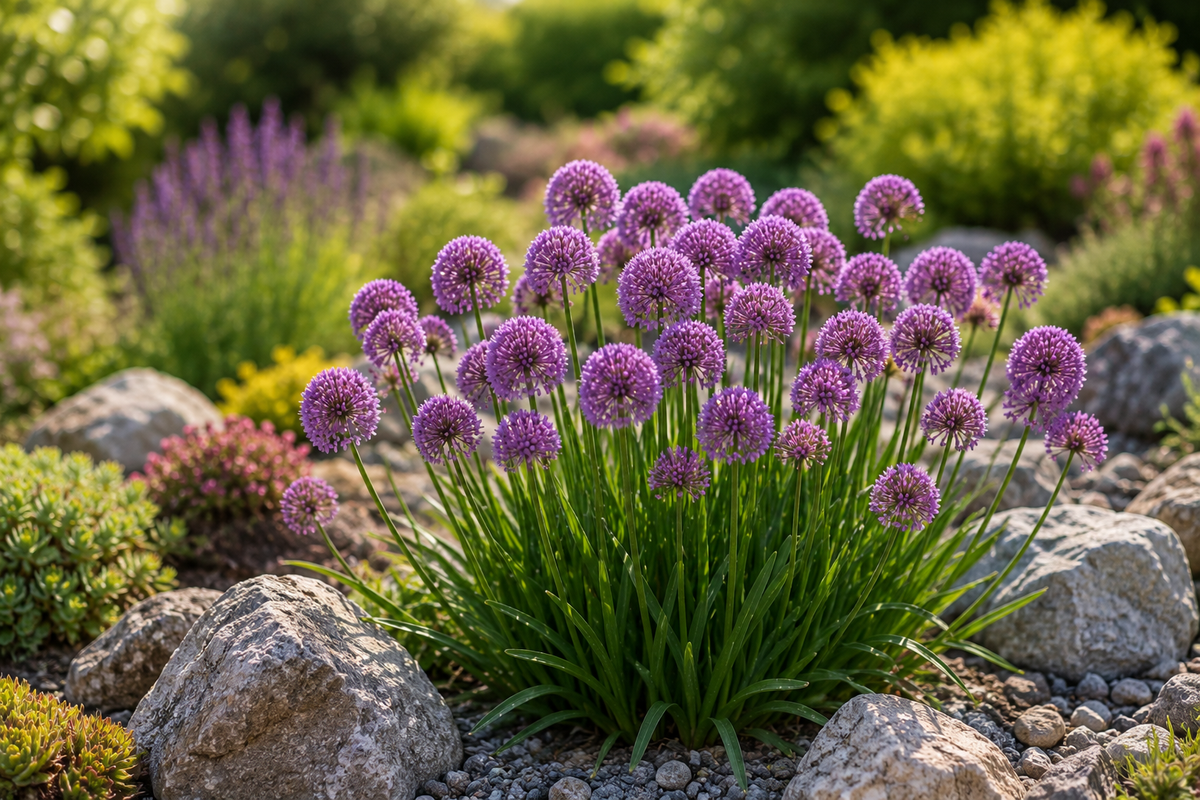
Multi-stem mauve-pink ornamental onion
‘Party Balloons’ Ornamental Allium
Product code : VAN-146-183-01
- Quantity
- 5 bulbs
- Exposure
- Full sun to partial shade
- Life cycle
- Naturalizing bulbous perennial
- Hardiness
- Zone 3 to 10
Discover the plant
Party Balloons ornamental allium (Allium). Party Balloons ornamental allium carries mauve-pink to soft violet spheres above broad grey-green leaves. A large bulb may send up several flower stems for a clustered, balloon-like display in late spring. Plants reach about 70 cm (28 in.) with a spread of about 30 cm (12 in.). The package contains 5 bulbs.
Plant in fall, four to six weeks before the ground freezes, in full sun or light partial shade. Set bulbs pointed end up, 15 cm (6 in.) deep and 30 cm (12 in.) apart. Use fertile, loose, very well-drained soil. Water after planting, then maintain moderate moisture through rooting and spring growth without allowing water to collect around the bulbs.
After flowering, keep healthy leaves until they yellow naturally, then reduce watering during dormancy. Leave flower heads for their sculptural shape or cut them for fresh and dried arrangements. Drainage during winter and snowmelt matters more than a heavy mulch. Protect container-grown bulbs from deep freezing and repeated freeze-thaw cycles. This ornamental allium is not edible; keep bulbs away from children and pets.

Planting guide
Plant well.Grow beautifully.
Planting depth
Spacing / density
Best planting time
Propagation
Growing method
Soil and care
The right care,at the right time.
Soil pH
Minimum temperature
Care level
Drought tolerance
Watering
Soil type
Fertilization
Moisture
Seasonal care
Container growing
A garden,within reach.
Recommended pot size

Bloom and dimensions
Its place,in your garden.
Mature height
Width / spread
Flower color
Foliage color
Foliage type
Growth rate
Growth habit
Fragrance
Bloom period
Harvest
Garden associations
In goodcompany.
Companion plants
Frequently asked questions
Your questions,answered.
When and how do I plant Party Balloons allium bulbs?
Does Party Balloons produce more than one flower stem per bulb?
Will Party Balloons allium return each year in my garden?
How do I use Party Balloons stems in bouquets?
Can I grow Party Balloons allium in a pot?
Wildlife and pets