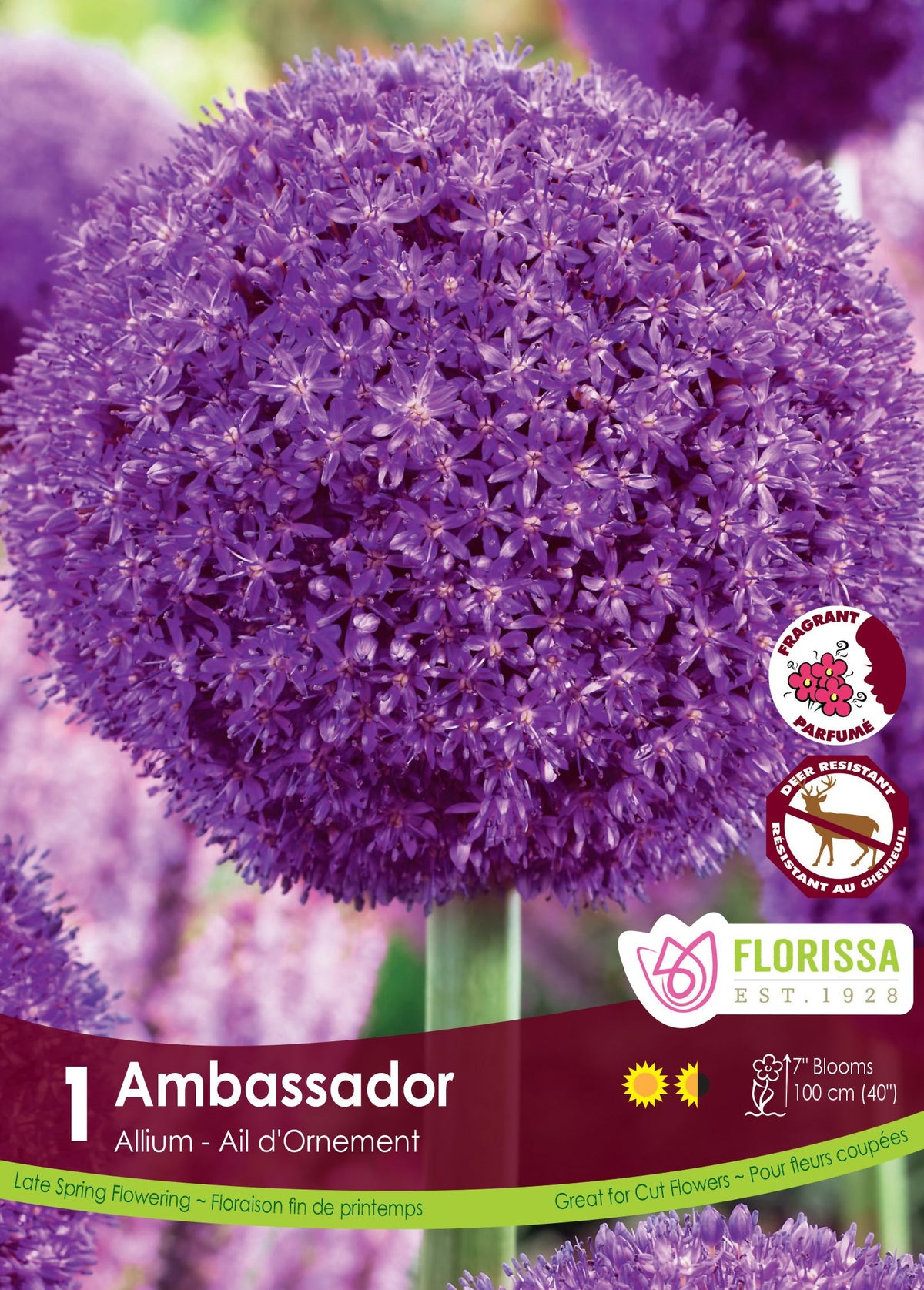
Giant purple ornamental onion · pollinator flower · Allium cut flower

‘Ambassador’ ornamental onion (Allium ‘Ambassador’)

Allium ‘Ambassador’

Allium Ambassador is a giant ornamental onion supplied as 1 size 20/+ bulb. Its sturdy stem reaches approximately 100 cm (40 in) and carries a deep-purple globe nearly 18 cm (7 in) across, composed of hundreds of starry florets. Bloom lasts about five weeks from late spring into early summer, attracts pollinators, and provides an excellent Allium cut flower. Hardy to Zone 4, deer resistant, and drought tolerant once established, it mainly requires exceptionally well-drained soil. Foliage declines naturally during flowering and can be concealed with low perennials. Dry heads then retain a striking graphic silhouette in the garden or arrangements long after their colour fades. Choose this purple Allium bulb to plant Allium in fall for lasting vertical structure.
11 99 $
Pay in 4 interest-free payments with Sezzle
Detailed plant guide
Advice adapted to Canada
Secure payment
2026 preorder for fall bulbs Shipping expected in October 2026.
Share
Quantity 2 bulbs
Exposure Full sun to light partial shade
Hardiness Zone 4 to 10
Difficulty level Easy

Discover the plant

Family Amaryllidaceae
Genus Allium
Cultivar Ambassador
Type Giant ornamental bulb, size 20/+
Cycle Naturalizing bulbous perennial

‘Ambassador’ ornamental onion (Allium ‘Ambassador’) is a giant bulb creating a spectacular vertical punctuation in late spring. The Van Noort package contains exactly 1 size 20/+ bulb. A rigid stem reaches approximately 100 cm (40 in) and carries a deep-purple globe nearly 18 cm (7 in) across, formed by hundreds of small flowers. Bloom can remain decorative for approximately five weeks and attracts bees, butterflies, and other insects. Hardy to Zone 4, deer resistant, and naturally undemanding, this cultivar suits contemporary borders, pollinator gardens, and fresh or dried bouquets alike.

Plant the bulb in fall, four to six weeks before lasting soil freeze, in full sun or light partial shade. Set it point upward at a depth of 15 cm (6 in) and allow approximately 30 cm (12 in) of space. Fertile, loose, exceptionally well-drained soil prevents rot during thaws. Water after planting, then allow winter precipitation to take over. In spring, maintain light moisture through active growth without saturating the ground. Conceal naturally yellowing foliage with low perennials, but never cut it before completely withered because leaves replenish the bulb for the following year.

Ambassador flowers from late spring into early summer above many perennials that are still low. Cut selected stems as the first florets open for lasting vase display, or allow globes to mature and dry in place for graphic structure. After bloom, reduce watering and respect summer dormancy. The bulb can naturalize slowly in undisturbed draining soil; divide a crowded clump after foliage fully yellows, every three to five years when needed. Wear gloves during handling and keep every part beyond the reach of dogs and cats because Alliums are toxic when ingested. Retain dry heads for arrangements without scattering them where pets forage.

‘Ambassador’ ornamental onion (<em>Allium</em> ‘Ambassador’)

Planting guide

From planting to establishment.

Planting depth 15 cm (6 in), point upward
Spacing / density 30 cm (12 in) between bulbs; groups spaced for a clear silhouette
Best planting time Fall, approximately four to six weeks before soil freeze
Propagation Size 20/+ bulbs; slow multiplication by offsets after establishment
Growing method
Plant the Ambassador bulb in fall, ideally four to six weeks before lasting soil freeze. Choose full sun or light partial shade away from depressions where water collects. Loosen 25 to 30 cm (10 to 12 in) of soil and incorporate mature compost without excessive enrichment. Dig a hole 15 cm (6 in) deep, position the size 20/+ bulb point upward, and keep approximately 30 cm (12 in) from neighbouring plants. Cover, firm lightly, and water deeply once to remove air pockets. In heavy soil, plant on a slight mound or raised bed; never place concentrated fertilizer beneath the bulb. In spring, remove debris, maintain lightly moist soil, and add a thin compost layer. Stake only in a very windy site because the stem is normally sturdy. Allow leaves to yellow fully after bloom, then cut at ground level. Reduce water during summer dormancy. Divide offsets after complete dieback when the clump becomes crowded, replanting immediately at the same depth. Mark the dormant location to prevent accidental digging later in summer or fall. Avoid deep cultivation around the dormant bulb and keep its location clearly marked. Remove only fully dry foliage and preserve nearby airflow.

Soil and care

The right conditions.

Exposure Full sun to light partial shade
Soil pH Acidic, neutral, or alkaline when drainage is excellent
Hardiness zone Zone 4 to 10
Minimum temperature Zone 4
Watering
Water deeply after fall planting, then allow seasonal precipitation to take over. In spring, keep soil lightly moist through growth and flowering, watering at the base only as the surface dries. Excess moisture causes bulb rot. Reduce irrigation after bloom as leaves yellow and stop almost completely during summer dormancy, except during extreme drought in a container. Resume only when fall or spring growth requires moisture.
Soil type
Ambassador requires exceptionally well-drained soil above all. Sandy or light fertile loam enriched with mature compost lets the large bulb root without remaining wet during thaws. In heavy clay, create a raised bed or slight mound and add structural mineral material. Avoid depressions, compaction, fresh manure, and persistent irrigation during summer dormancy. Neutral to slightly alkaline conditions are generally suitable, but drainage matters more than an exact pH.
Fertilization
Incorporate mature compost during soil preparation. In spring as shoots emerge, add a thin compost layer or balanced slow-release fertilizer at a low rate. Avoid excess nitrogen, which promotes soft foliage at the expense of a sturdy stem. Stop feeding after bloom as the bulb enters dormancy. A soil test remains preferable to repeated unnecessary applications, especially in established borders already receiving annual organic matter.
Seasonal care
In spring, locate emerging shoots and gently remove debris that traps moisture. Spread a thin compost layer, verify drainage after snowmelt, and water only when soil begins drying. Install supports for neighbouring perennials early so the bulb is not injured. Ambassador’s stem is sturdy, although a discreet stake can help in a very windy corridor. From late spring into early summer, watch the progressive opening. Cut selected stems at the first-floret stage for bouquets and leave the rest for pollinators. After bloom, retain heads when their architecture is wanted. Never remove green leaves; let them yellow and dry completely to rebuild bulb reserves. In summer, cut dead foliage, mark the location, and reduce irrigation sharply during dormancy. In fall, clear the area, correct only drainage problems, and add more bulbs when a stronger group is desired. Divide a crowded clump every three to five years after complete dieback. In winter, no heavy protection is required in Zone 4 in draining soil, but prevent water accumulation beneath ice. In containers, insulate the walls and protect them from rapid freeze-thaw cycles. Keep a durable label in place throughout dormancy so later planting never damages the bulb. Review flowering height, stem stability, drainage, and bloom duration before adding more specimens. Remove damaged dry heads when appearance declines, but retain sound globes for winter structure or indoor arrangements. Wear gloves during division and clean tools before moving between clumps to reduce accidental spread of rot.

Container growing

A controlled environment.

Recommended pot size
At least 40 cm (16 in) deep and 40 to 50 cm (16 to 20 in) wide, with generous drainage
Choose a frost-resistant container at least 40 cm (16 in) deep and 40 to 50 cm (16 to 20 in) wide for 1 Ambassador bulb. It needs several large holes, should rest on feet, and must never retain water in a saucer. Fill with a light blend of potting mix, mature compost, and a mineral drainage component. In fall, set the size 20/+ bulb point upward at a depth of 15 cm (6 in), water once, and place the pot in full sun. In cold Canadian regions, temporarily sink the container, insulate its walls, or group it in a sheltered outdoor location to limit freeze-thaw cycles; never bring it into a heated room. In spring, check holes, water when the upper 2 to 3 cm dries, and feed lightly. Stake if the balcony is windy. After bloom, let foliage yellow and reduce water through dormancy. Shelter the pot from excessive summer rain. Every two or three years, renew part of the mix and separate offsets only after complete dieback. Mark the bulb position throughout dormancy and keep pets from digging in the container. Remove only fully dry foliage. Label clearly.
‘Ambassador’ ornamental onion (<em>Allium</em> ‘Ambassador’)

Bloom and dimensions

The complete profile.

Flower color Deep purple
Foliage color Green to blue-green
Foliage type Summer-dormant deciduous; strap-shaped basal leaves
Growth rate Moderate
Bloom period
From late spring into early summer, Ambassador opens a deep-purple globe approximately 18 cm (7 in) across atop a 100 cm (40 in) stem. Hundreds of small florets open gradually and maintain the effect for about five weeks. Cut at early opening for fresh bouquets or allow maturity for a dried head. Bees and butterflies visit actively, making the bloom both architectural and ecologically useful.
Fruiting
After flowering, the umbel may produce some capsules and seed, but its principal value remains ornamental. The large spherical head dries gradually and preserves a graphic silhouette for several weeks. Remove it before maturity when seedlings are unwanted, or retain it in the garden and dried arrangements. To preserve the cultivar faithfully, propagate ‘Ambassador’ by separating offsets after dormancy rather than relying on seed.
‘Ambassador’ ornamental onion (<em>Allium</em> ‘Ambassador’)

Garden associations

What to plant with it.

Good companions
Pair Ambassador with low or medium perennials that conceal declining foliage without smothering the bulb. Peonies, hardy geraniums, catmint, salvias, lady’s mantle, and fine grasses extend colour and texture. Silver foliage highlights deep purple. Maintain approximately 30 cm (12 in) around the bulb and avoid plants requiring constantly wet summer soil. These combinations support design and pollinators without claiming to prevent disease. Keep aggressive spreaders away from the dormant bulb location. Keep the flower stem open so the globe retains a clear outline from every side.
Avoid planting with
Poorly drained soil is the principal enemy and can encourage onion white rot or general bulb decay. Also watch for downy mildew, slugs on young shoots, and, less commonly, allium leaf miner or onion fly. Space bulbs for air circulation, water at soil level in the morning, and promptly remove affected tissue. Clean tools after working in a diseased area and avoid immediately replanting another Allium in contaminated ground. Discard diseased debris instead of composting it. Purchase firm, healthy bulbs and keep dormant planting areas free of dense, wet mulch.
Ambassador serves as a vertical focal point in borders, contemporary beds, pollinator gardens, and naturalized compositions. Its deep-purple sphere stands above low perennials and creates spectacular repetition when additional bulbs are spaced through the design. The stem is an excellent cut flower: harvest as the first florets open for a fresh bouquet. A fully mature head can dry upright and enter fall or winter arrangements. This cultivar is ornamental and must not be presented as edible, especially where children or pets could access plant material.

Frequently asked questions

Everything toknow.

Plant the bulb in fall, approximately four to six weeks before lasting soil freeze. Choose full sun or light partial shade in loose, exceptionally well-drained soil. Dig 15 cm (6 in) deep, position the size 20/+ bulb point upward, and leave approximately 30 cm (12 in) from neighbouring plants. Cover, firm lightly, and water deeply once. In heavy clay, use a slight mound or raised bed rather than a pocket of potting mix that retains water. Mark the location after planting. In spring, maintain light moisture through growth without saturation, then reduce irrigation after flowering as foliage enters dormancy. Avoid cutting green leaves because they rebuild the bulb.
The stem reaches approximately 100 cm (40 in) and carries a deep-purple globe nearly 18 cm (7 in) across. Hundreds of small florets open progressively rather than on one day, maintaining colour and pollinator activity for about five weeks from late spring into early summer. Exact duration varies with heat, wind, moisture, and exposure. A bright but non-scorching location and lightly moist soil during growth generally extend the effect. After colour fades, the head retains its round form and remains decorative. Leave it in the border or cut it while firm for a dried arrangement. Fresh stems are best cut as the first florets open.
Yellowing is a normal stage in the cycle of large Alliums. The bulb uses reserves to produce its stem and globe, then leaves begin declining as bloom reaches its peak. Do not cut them while green: they continue photosynthesis and replenish the bulb for the following year. Wait until they are fully yellow and dry before removing them at ground level. To keep the border attractive, place Ambassador behind hardy geraniums, catmint, lady’s mantle, peonies, or low grasses. Their foliage hides the base without preventing spring sunlight from reaching the Allium. Very early yellowing combined with soft tissue may instead indicate insufficient drainage or bulb rot.
Yes. For a fresh bouquet, cut the stem early in the morning as the first small florets open, before the entire globe is expanded. Use a clean tool, place the stem immediately in water, and remove only leaves that would be submerged. The large deep-purple sphere gives strong presence to a simple arrangement. For drying, allow the head to mature further, then cut while it remains firm. Hang it upside down or keep it upright in a dark, dry, ventilated location. Colour softens, but the geometry persists for months. Wear gloves if skin is sensitive and keep arrangements beyond the reach of pets because Alliums are toxic when ingested.
Yes, in a frost-resistant pot at least 40 cm (16 in) deep, 40 to 50 cm (16 to 20 in) wide, and fitted with several holes. Plant the bulb at a depth of 15 cm (6 in) in light draining mix, then water once. In cold regions, temporarily sink the container, insulate its walls, or group it in a sheltered outdoor location to limit rapid freeze-thaw cycles. Do not bring it into a heated room. In spring, verify drainage and water when the surface dries. After flowering, let foliage yellow and keep the mix relatively dry during dormancy. A water-filled saucer is the principal risk. Stake discreetly if the container stands in strong wind.

Its strengths, naturally.

Not recommended for pets

Pets

Pollinators
Attracts or supports pollinating insects

Pollinators

Butterflies
Plants that attract butterflies

Butterflies

Repellent
Helps repel certain pests

Repellent

Deer
Less attractive or generally tolerated by deer

Deer