

Burgundy pollinator-friendly ornamental bulbs
Dark-purple ornamental onion
Allium atropurpureum
Product code : ALLIUM-ATROPURPUREUM-10-12
- Quantity
- 1 bulb
- Exposure
- Full sun or bright partial shade
- Life cycle
- Naturalizing perennial
- Hardiness
- Zones 4 to 10
Discover the plant
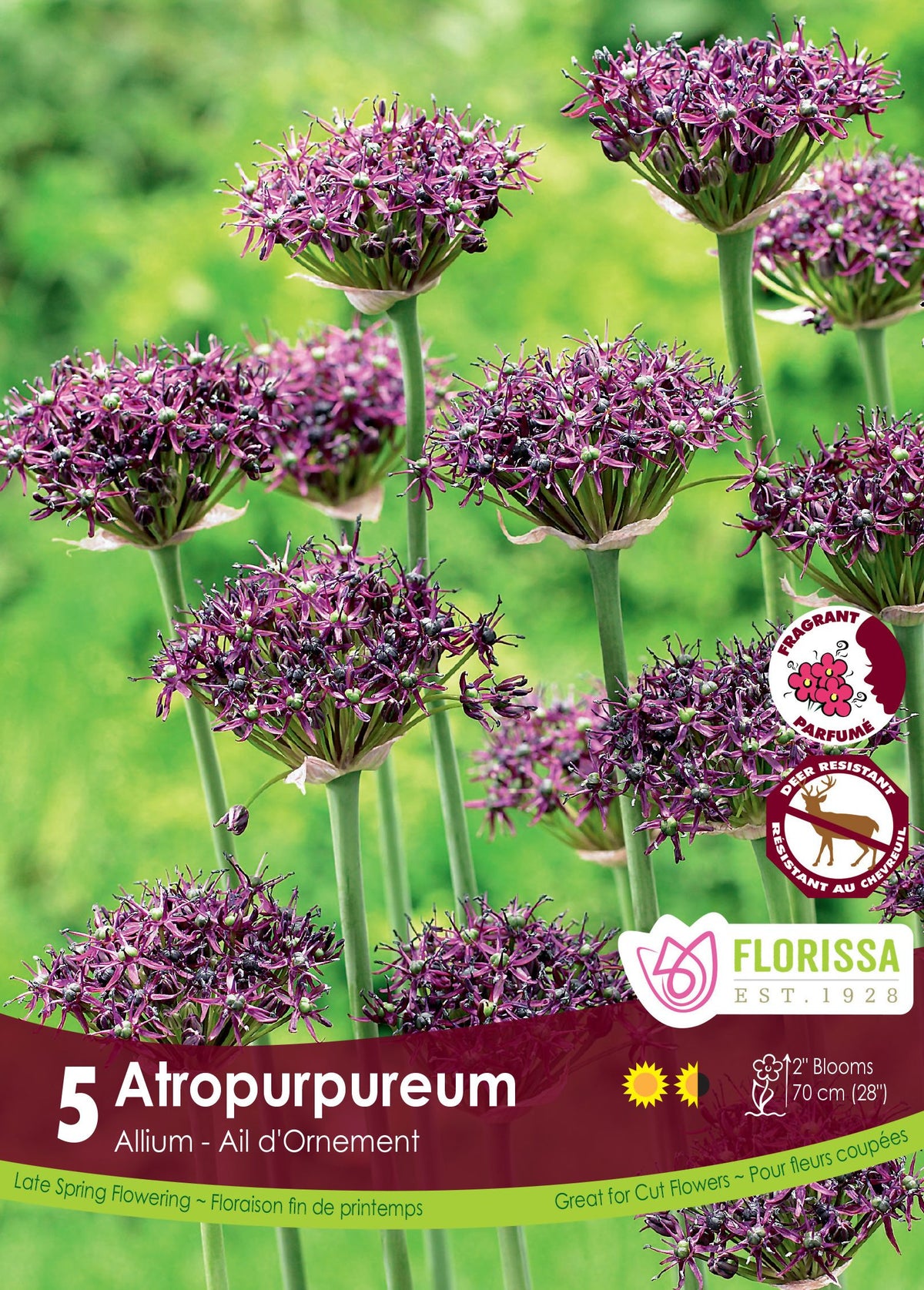
Dark-purple ornamental onion (Allium atropurpureum) supplies a rare colour between maroon-purple and burgundy in half-spherical umbels approximately 5 cm (2 in) across. The Van Noort package contains five size 10/12 bulbs. Each develops an upright stem about 70 cm (28 in) tall, light enough to mingle with perennials without overwhelming the border. Star-shaped flowers open from late spring into early summer and retain their dark colour for an extended period. Green basal, strap-like foliage naturally declines as the heads mature. Hardy in Zone 4 and suitable across Zones 4–10, this heirloom bulb gradually naturalizes in well-drained ground and returns reliably without becoming aggressive.
Plant all five bulbs in fall with their pointed ends upward, 15 cm (6 in) deep and 10 cm (4 in) apart. Choose full sun or bright partial shade in fertile, loose, exceptionally well-drained soil whose pH may be acidic, neutral, or alkaline. In clay, incorporate mature compost and fine grit or create a slight mound. Water deeply after planting, then let seasonal rainfall maintain moisture without saturating the soil. In spring, provide moderate water as stems extend. A thin compost layer is sufficient, since excessive nitrogen softens growth. Always retain leaves until they yellow completely so each bulb can rebuild its reserves for the following season.
Gather bulbs into small drifts to create burgundy punctuation among white peonies, salvias, catmints, cream yarrows, and fine grasses. Nectar- and pollen-rich umbels attract bees, bumblebees, butterflies, and hoverflies, while the allium scent generally discourages deer and rabbits. Cut stems when one-third to one-half of the florets have opened for fresh arrangements, or leave the heads to dry in the garden as graphic silhouettes. Reduce irrigation during dormancy after flowering. Every three to five years, lift crowded groups, separate offsets, and replant them in fall. This ornamental species is not intended for food and can be toxic to pets.

Planting guide
Plant well.Grow beautifully.
Planting depth
Spacing / density
Best planting time
Propagation
Growing method
Soil and care
The right care,at the right time.
Soil pH
Care level
Drought tolerance
Watering
Soil type
Fertilization
Moisture
Seasonal care
Container growing
A garden,within reach.
Recommended pot size

Bloom and dimensions
Its place,in your garden.
Mature height
Width / spread
Flower color
Foliage color
Foliage type
Growth rate
Growth habit
Fragrance
Bloom period
Fruiting
Garden associations
In goodcompany.
Companion plants
Frequently asked questions
Your questions,answered.
How should the five Allium atropurpureum bulbs be planted?
How large does Allium atropurpureum grow?
Why does the foliage yellow during flowering?
Can Allium atropurpureum be grown in a container?
Are Allium atropurpureum flowers suitable for arrangements?
Wildlife and pets