Fall bulbs · Ornamental alliums

Giant ornamental onion (Allium giganteum)

Allium giganteum

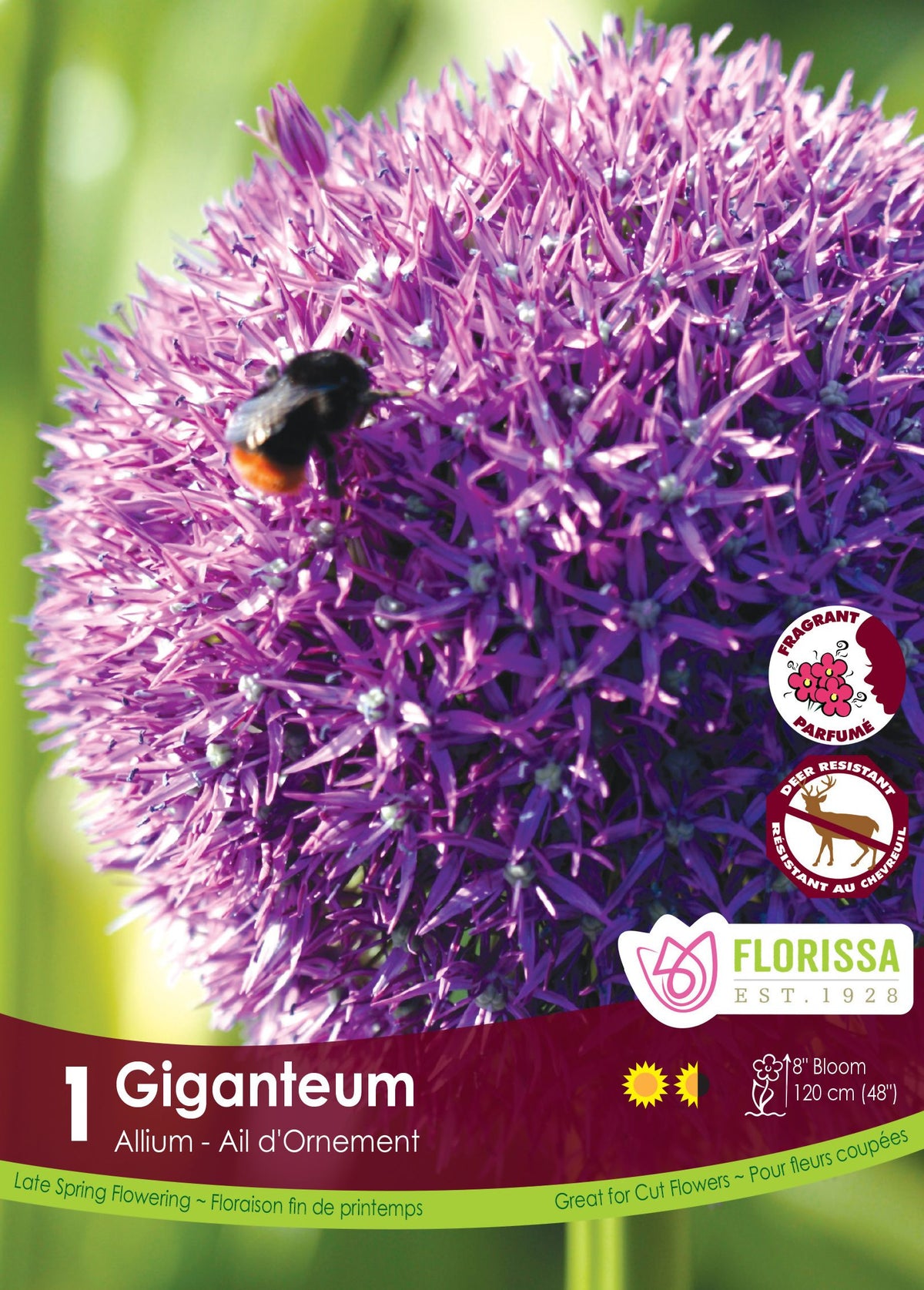
Giant ornamental onion (Allium giganteum) brings spectacular vertical architecture to late-spring borders. This Van Noort package contains one size 20/+ bulb. Its sturdy stem reaches about 120 cm (48 in) and carries a dense purple globe up to 20 cm (8 in) across. Lightly fragrant flowers feed bees and butterflies, while the dried head remains decorative afterward. Hardy in Zones 4 to 10, the bulb prefers sun, fertile soil and flawless drainage. Plant it 20 cm deep, allow 30 cm of space and let foliage yellow naturally. It suits large borders, structured gardens, fresh bouquets and dried arrangements.
10 99 $
Pay in 4 interest-free payments with Sezzle
Detailed plant guide
Advice adapted to Canada
Secure payment
2026 preorder for fall bulbs Shipping expected in October 2026.
Share
Quantity 1 bulb
Exposure Full sun or bright partial shade according to Van Noort
Hardiness Zones 4 to 10 according to Van Noort
Difficulty level Easy

Discover the plant

Family Amaryllidaceae
Genus Allium
Species giganteum
Type Ornamental bulb
Cycle Naturalizing bulbous perennial

Giant ornamental onion (Allium giganteum) creates a majestic silhouette in late spring and early summer. This Van Noort package contains one size 20/+ bulb. It produces a straight, sturdy stem about 120 cm (48 in) tall, topped by a dense purple globe reaching 20 cm (8 in) across. Numerous starry florets carry a sweet scent and create a focal point visible from a distance. Green basal foliage generally begins declining as bloom reaches its peak. Hardy in Zones 4 to 10, this naturalizing bulb returns yearly when grown in sun and fertile, perfectly drained soil.

Plant the bulb in fall, pointed end up, 20 cm (8 in) deep. Leave about 30 cm (12 in) around it, or group separately purchased bulbs at the same spacing. Choose full sun or bright partial shade and loosen the ground deeply. Water after planting to settle the soil, then allow autumn rainfall to provide most moisture. In spring, maintain moderate moisture while the stem elongates without saturating the bulb. A thin layer of compost is sufficient. After flowering, let foliage yellow completely so it can recharge reserves, then sharply reduce watering through summer dormancy.

Place Giganteum near the back or centre of a border among perennials that can hide aging foliage. Broad purple globes combine with peonies, salvias, catmint, foxgloves, yarrow and grasses. Nectar-rich flowers attract bees and butterflies, while the allium scent generally discourages deer and rabbits. Cut the stem when several florets are open for a dramatic bouquet, or leave the head to dry in place and become a lasting graphic structure. One bulb creates a vertical accent; three or five spaced bulbs produce a monumental effect. Divide offsets only when flowering declines or the group becomes congested.

Giant ornamental onion (<em>Allium giganteum</em>)

Planting guide

From planting to establishment.

Planting depth 20 cm (8 in)
Spacing / density 30 cm (12 in) between bulbs according to Van Noort
Best planting time Fall, before the ground freezes solid
Propagation Separate offsets after flowering or sow ripe seed
Growing method
In fall, choose full sun or very bright partial shade and loosen the soil to at least 30 cm. Drainage must be rapid, especially in winter; incorporate fine grit into heavy ground or create a slight mound. Set the large size 20/+ bulb pointed end up 20 cm (8 in) deep. If planting several specimens, keep 30 cm (12 in) between them so every stem develops freely. Backfill, firm gently and water deeply once. Autumn rainfall is generally sufficient afterward. In spring, maintain moderate moisture during emergence and stem extension, allowing the surface to dry between waterings. Spread a thin layer of compost or a small amount of balanced fertilizer at the start of growth. Avoid excess nitrogen, which produces abundant leaves and less sturdy stems. After flowering, let the head dry in place for graphic interest or remove it before seeds mature. Retain every leaf until it yellows completely so the bulb rebuilds its reserves. Then sharply reduce watering through summer dormancy. Leave the bulb undisturbed for years and separate offsets only when flowering declines or a group becomes too crowded. Mark the position before winter so the emerging shoot is not disturbed during spring cleanup or later cultivation. In an exposed location, install discreet support before the globe opens fully.

Soil and care

The right conditions.

Exposure Full sun or bright partial shade according to Van Noort
Soil pH Acidic, neutral or alkaline when drainage is excellent
Hardiness zone Zones 4 to 10 according to Van Noort
Minimum temperature Zone 4
Watering
Water deeply once after fall planting, then allow normal rainfall to take over. In spring, keep soil moderately moist through emergence, stem extension and flower-head formation, irrigating only when the surface begins to dry. Never saturate the bulb, and empty container saucers. As foliage yellows, gradually reduce watering. During summer dormancy, Giganteum prefers relatively dry soil; constant moisture increases the risk of rot. In exposed containers, inspect moisture more often during warm, windy weather, but always allow excess water to drain freely before watering again.
Soil type
Choose fertile, deep, loose and perfectly drained soil. Sandy loam amended with modest compost suits the large bulb very well. The plant tolerates acidic, neutral or alkaline conditions when the structure remains aerated. In clay, incorporate horticultural grit and slightly raise the planting area. Avoid fresh manure, compacted ground and hollows where winter water collects. A loose depth of at least 30 cm supports rooting and stabilizes the tall stem. A gravel mulch helps keep the surface open without holding unnecessary moisture against the bulb.
Fertilization
In early spring, spread a thin layer of mature compost or a small amount of balanced slow-release granular fertilizer. Work it gently into the surface without damaging the shoot or concentrating product around the bulb. One application is generally sufficient in fertile soil. Avoid high-nitrogen formulas that encourage soft foliage and a less stable stem at the expense of the flower head. In containers, use half the recommended rate and stop feeding when yellowing begins.
Seasonal care
In fall, plant the large bulb after the soil cools but before it freezes solid, then water deeply once. Mark its location so later garden work does not damage it. In winter, avoid compact mulch that traps moisture; instead, ensure melting snow drains rapidly. In spring, gently remove debris, add a thin layer of compost and water only when the surface begins to dry. Watch for slugs around emerging shoots, as well as allium leaf miner, onion fly and signs of downy mildew. The stem is naturally sturdy, but discreet staking may help in a very windy corridor before the heavy head opens fully. During bloom, leave most florets for pollinators and cut the stem only if you want a bouquet. After flowering, retain the dried head for structure or remove it before seed develops. Never cut green leaves. Wait until they yellow completely, then greatly reduce summer watering. Every three to five years, if flowering declines or several offsets become crowded, lift the group after foliage dries, discard soft bulbs, separate healthy specimens and keep them dry until fall replanting. Clean tools before working in another allium bed. Inspect containers after heavy rain, clear blocked drainage holes and replace any compact surface layer. Record weak-flowering positions before dormancy, because their location becomes difficult to identify once foliage disappears. If drainage has deteriorated, improve the bed during replanting rather than returning the bulb to the same wet pocket.

Container growing

A controlled environment.

Recommended pot size
Container at least 40 cm (16 in) wide and 40 cm (16 in) deep for one bulb
Giganteum can grow in a container, but its scale requires a very stable, deep and perfectly drained pot. For one bulb, choose a container at least 40 cm (16 in) wide and deep with several unobstructed holes. Use lightweight potting mix blended with mature compost and horticultural grit or perlite. Set the bulb pointed end up 20 cm (8 in) deep. Water after planting, then keep the mix only lightly moist and never saturated. Place the pot in full sun and shelter it from gusts that could topple the 120 cm stem; weight the base or add discreet support if needed. In cold regions, protect the sides from repeated freezing and thawing by insulating the container, moving it to a sheltered place or temporarily sinking it into the ground. Resume moderate watering in spring and apply half-strength balanced fertilizer. After flowering, let foliage yellow and gradually reduce water. Always empty the saucer after rain and keep the substrate relatively dry through dormancy. Retain the dried head outdoors or cut it for indoor use. Repot offsets when space becomes insufficient. Mark the bulb position after foliage disappears so seasonal companion planting does not damage it. Inspect drainage after heavy rain, remove any compacted surface crust and renew part of the potting mix before fall.
Giant ornamental onion (<em>Allium giganteum</em>)

Bloom and dimensions

The complete profile.

Flower color Purple to violet
Foliage color Green
Foliage type Deciduous, basal and strap-shaped
Growth rate Moderate; reaches mature flowering size in about 2 to 5 years
Bloom period
Flowering occurs from late spring into early summer. A sturdy 120 cm (48 in) stem carries a dense spherical head reaching 20 cm (8 in) across. Hundreds of small purple to violet starry florets create a uniform, lightly fragrant globe. The display is visible from afar, holds well in bouquets and offers abundant nectar to bees and butterflies. After pollination, florets become capsules and the dried head retains a lasting graphic form. Cool spring weather may extend the display, while unusual heat can shorten it; nearby perennials maintain colour afterward.
Fruiting
After flowering, every small floret forms a dry capsule containing black seeds. This fruiting stage is not intended for food, but the head becomes a large graphic structure that can remain outdoors through summer or serve in dried arrangements. Let it mature if you enjoy this effect. To limit self-sowing and direct more energy toward the bulb, remove the head before full maturity while always retaining green leaves until they yellow naturally.
Giant ornamental onion (<em>Allium giganteum</em>)

Garden associations

What to plant with it.

Good companions
Pair Giganteum with peonies, salvias, catmint, foxgloves, hardy geraniums, yarrow, artemisia and grasses. Their foliage gradually hides allium leaves as they yellow, while softer forms contrast with the broad globes. White, pale pink, blue, soft yellow and silver intensify the purple colour. Choose companions that enjoy sun and drainage. Avoid plants requiring heavy irrigation while the bulb is dormant in summer. Lower alliums can extend the theme, but leave enough visual space around the large globe so its outline remains clear.
Avoid planting with
The main risks come from compact or waterlogged soil, which encourages bulb rot and white rot. Persistent leaf moisture may favour downy mildew. Slugs sometimes nibble the emerging shoot, while allium leaf miner and onion fly remain possible. Inspect bulbs and discard soft or mouldy specimens. Prevent problems through excellent drainage, rotation away from other alliums, clean tools and good air circulation. Never compost seriously diseased material. Deer and rabbits generally avoid the aromatic foliage. Regular inspection helps greatly.
Use Giganteum as an architectural ornamental bulb for border backs, structured gardens, pollinator beds, cutting gardens and large containers. One bulb creates a vertical accent, while several spaced specimens produce a monumental rhythm. Purple globes feed bees and butterflies and make spectacular bouquets. Dried heads then extend summer structure and become excellent decorative elements, while the bulb can return and naturalize in drained soil. Its exceptional height is especially useful where a strong vertical line is needed without adding a wide shrub.

Frequently asked questions

Everything toknow.

Plant Giganteum in fall after the soil cools, ideally four to six weeks before it freezes solid. Choose full sun or very bright partial shade and loosen the soil to at least 30 cm. Set the large bulb pointed end up 20 cm (8 in) deep. Leave 30 cm (12 in) around it or between separately purchased bulbs. Water deeply once to settle the ground, then allow normal rainfall to provide most moisture. In heavy clay, incorporate grit or create a mound to prevent winter water from standing. Mark the location so the emerging shoot remains protected in spring. Label the position before winter so spring cleanup does not disturb the emerging shoot.
According to Van Noort, Giganteum reaches about 120 cm (48 in) tall and carries a purple globe up to 20 cm (8 in) across. This large proportion places bloom above many perennials and makes it visible from a distance. One bulb creates a strong vertical accent, while three or five specimens spaced 30 cm apart produce a monumental effect. Place them near the back or centre of a border and protect them from violent wind corridors. Full sun promotes a sturdy stem. If the site remains highly exposed, add discreet support before the heavy flower head opens fully. Allow enough surrounding space for the full globe to develop without rubbing against dense foliage.
Yes, but use a very stable, freely draining pot at least 40 cm (16 in) wide and deep. Plant the bulb 20 cm (8 in) deep in lightweight potting mix amended with compost and grit. Set the container in sun and shelter it from gusts; weight its base or provide discreet support. In cold regions, insulate the sides, move the pot to a sheltered place or temporarily sink it into the ground to reduce freezing and thawing cycles. After bloom, let foliage yellow, reduce watering and always empty the saucer during summer dormancy. Mark the position after foliage disappears so summer planting or cultivation does not damage the bulb.
The choice depends on the desired effect. Leave the head standing if you enjoy its graphic silhouette, want extended border interest or plan to harvest it later for a dried arrangement. Remove it before seeds mature if you want to limit self-sowing and direct more energy toward the bulb. In every case, never cut leaves that remain green. They must yellow completely to rebuild reserves needed for the next bloom. Gradually reduce watering during this stage. Once dry, cut the stem near ground level with a clean tool without damaging neighbouring plants. This patience keeps the bulb vigorous and supports reliable flowering in the following season.
Yes. The large globe contains hundreds of lightly fragrant, nectar-rich florets that attract honeybees, bumblebees, native bees and butterflies. Late-spring bloom provides a useful resource between early bulbs and summer perennials. Avoid insecticides and add nearby nectar plants to extend the feeding period. Deer and rabbits generally avoid the foliage and bulb because of their allium scent, although no plant is completely protected when food is scarce. Observe emerging shoots and temporarily use mesh protection if animal pressure becomes exceptionally strong. This dual function makes Giganteum valuable in a lively, low-maintenance garden. Let the globe remain fully open until flowering ends, provide nearby untreated plants for continuity and consider a shallow water source for beneficial insects. If browsing pressure is unusually intense, short-term mesh protection around the emerging shoot remains more reliable than scent alone.

Its strengths, naturally.

Not recommended for pets

Pets

Pollinators
Attracts or supports pollinating insects

Pollinators

Butterflies
Plants that attract butterflies

Butterflies

Repellent
Helps repel certain pests

Repellent

Deer
Less attractive or generally tolerated by deer

Deer