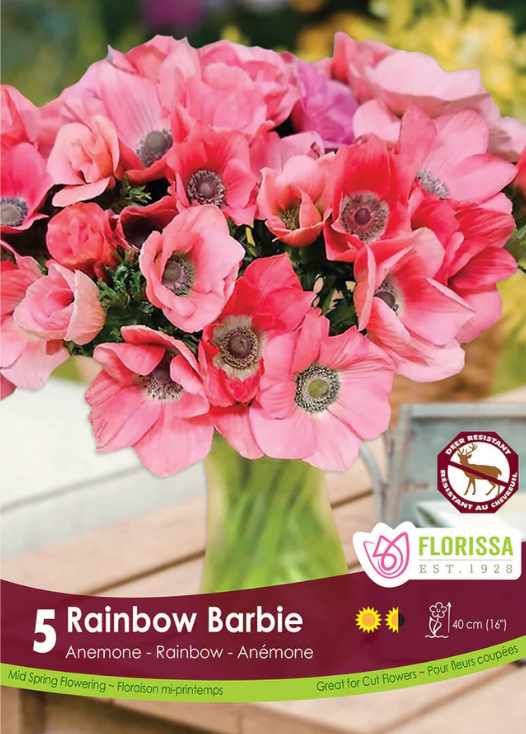
‘Rainbow Barbie’ Anemone

Anemone coronaria ‘Rainbow Barbie’

Product code : VAN-146-252-01

‘Rainbow Barbie’ anemone produces large, vivid pink flowers in mid-spring, with silky petals surrounding a strongly contrasting dark centre. The package contains 5 size 6/7 corms. Each corm can carry several flowers on upright stems approximately 40 cm tall, a useful height for borders, containers, and fresh bouquets. Plant the corms in fall in full sun or bright partial shade and rich, freely draining soil. Hardy from Zone 5 in a sheltered position, this anemone benefits from winter mulch near the cold edge of its range. Open flowers also attract visitors’ attention and may receive bees on mild days. Harvest coloured buds as they begin opening for good vase performance and continued production from the small planting.
9 99 $
Pay in 4 interest-free payments with Sezzle
Detailed plant guide
Advice adapted to Canada
Secure payment
Share
Quantity
5 size 6/7 corms
Exposure
Full sun to bright partial shade
Life cycle
Cormous perennial, often grown as a seasonal bulb

Discover the plant

Common namePink crown anemone with a dark centre
FamilyRanunculaceae
GenusAnemone
Speciescoronaria
CultivarRainbow Barbie
TypeCrown anemone corms
Botanical nameAnemone coronaria ‘Rainbow Barbie’
Reproducible seedsYes

‘Rainbow Barbie’ Anemone (Anemone coronaria ‘Rainbow Barbie’) produces large, vivid pink flowers in mid-spring, with silky petals surrounding a strongly contrasting dark centre. This package contains 5 size 6/7 corms. Each corm can produce several flowers on upright stems approximately 40 cm (16 in.) tall, useful both in the garden and in bouquets. Finely divided green foliage forms a light base that highlights the blooms. Its compact habit suits beds, borders, cutting gardens, and containers. Open flowers expose their stamens and can receive bee visits during mild spring days.

Plant the corms in fall approximately 5 cm (2 in.) deep and 10 cm (4 in.) apart. Soaking dry corms for three to four hours in room-temperature water can encourage faster rehydration. Choose full sun or bright partial shade and rich, loose, neutral to slightly alkaline soil that drains freely. Water after planting, then maintain even moisture during active growth without allowing water to stand. Grouping all five corms creates a fuller pink accent and a more productive small cutting patch. A location sheltered from strong wind helps the long stems remain upright after rain.

Remove faded flowers regularly to extend the display, or harvest stems when the bud is coloured and beginning to open. After flowering, allow the foliage to yellow and dry naturally so the corms can rebuild their reserves. ‘Rainbow Barbie’ is hardy from Zone 5 in a sheltered, very well-drained site; winter mulch is recommended near the cold edge of its range. In colder regions or wet winter soils, lift corms after the foliage dries and store them cool, dry, and frost-free. Every plant part is ornamental only and may be harmful if eaten.

Anémone ‘Rainbow Barbie’ ( Anemone coronaria ) : des anémones roses à cœur sombre présentées en bouquet. Le visuel Florissa présente la plante et son nom dans la partie inférieure de l’étiquette. La photographie occupe presque toute la surface, tandis que le bandeau du bas rassemble les indications du produit. Cette vue permet de reconnaître son apparence et de distinguer la variété présentée.

Sowing guide

It all startswith a seed.

Sowing depth

5 cm (2 in.) deep

Spacing / density

Space 10 cm (4 in.) apart

Sowing period

Fall; spring planting is possible after storage

Propagation

Division of corms and offsets during dormancy

Growing method

Choose a full-sun or bright-partial-shade site where water drains quickly. Soak dry corms for three to four hours in room-temperature water without extending the soak unnecessarily. Loosen the soil to approximately 20 cm and incorporate mature compost when fertility is low. Plant corms 5 cm deep and space them 10 cm apart; their irregular shape can make orientation unclear, but the flattest face can be set downward. Cover, firm gently, and water. Maintain light moisture during rooting and active growth without saturating the soil. In spring, harvest or remove faded flowers regularly to support additional buds. After flowering, allow foliage to yellow naturally, then reduce watering. In Zone 5, apply protective mulch after the soil cools. In colder regions or wet winter soil, lift dormant corms, let them dry, and store them cool, dry, and frost-free. Monitor young shoots while nights remain very cold and protect them temporarily if a severe freeze is forecast. During flowering, support only stems that lean after heavy rain. For cutting, use a clean tool, harvest in the morning, and place stems immediately in fresh water. In containers, rotate the pot weekly if light comes from only one direction. Inspect stored corms once during winter and remove any that become soft or mouldy. Wear gloves if your skin reacts to plant sap.

Soil and care

The right care,at the right time.

Soil pH

6.5 to 7.5

Minimum temperature

Approximately -29°C in a sheltered, well-drained site

Care level

Easy to moderate

Watering

Water after planting, then keep soil lightly moist through rooting and active growth. Allow the surface to dry slightly between waterings and avoid standing water. Gradually reduce irrigation as foliage yellows, then keep corms relatively dry during dormancy. Containers require more frequent checks because they dry faster but can also remain saturated after heavy rain. Water preferably in the morning and direct moisture toward the soil rather than over open flowers, especially during cool weather.

Soil type

Rich, loose, neutral to slightly alkaline, freely draining soil. Even moisture supports spring growth, but standing water can rot the corms. In heavy soil, incorporate mature compost and improve structure, or choose a raised bed. In containers, use a light potting mix and keep drainage holes clear. Avoid waterlogged depressions and sites where water collects through winter. A thin mineral mulch can reduce soil splash without keeping the crowns damp or slowing drainage around newly emerging shoots.

Fertilization

Incorporate mature compost before planting. At the start of growth, a balanced, low-nitrogen bulb fertilizer can be applied according to its label when soil fertility is low. Avoid excessive nitrogen, which promotes foliage at the expense of flowers. In containers, use a reduced rate and stop feeding when foliage begins to yellow. Occasional thorough watering that drains freely also limits fertilizer-salt buildup in containers and protects the small root system.

Moisture

Moderate during growth; low during dormancy

Seasonal care

In early spring, soak the corms for 3 to 4 hours and start them in a cool, protected place. Check regularly so the medium remains barely moist, never saturated. When the soil is workable and severe frost is no longer expected, acclimate the young shoots for several days before moving them outdoors. During active growth, water as needed for even moisture, weed carefully, and watch for slugs around emerging foliage. A bright location protected from intense heat and drying winds encourages a longer display. Cut flowers when the buds are well coloured and soft, or remove fading blooms to keep the planting tidy. After flowering, allow the foliage to yellow so the corms can complete their cycle. Gradually reduce watering at this stage. In Zone 8, a very well-drained site may support overwintering; in colder regions, lift the corms after the foliage dries. Cure them under cover, brush away loose soil, and store them in a cool, dry, dark, frost-free place. Before replanting, discard any corm that feels soft, mouldy, or badly shrivelled. Wear gloves if your skin is sensitive because anemone sap can cause irritation. If leaves develop persistent spotting or unusual distortion, remove badly affected tissue and improve air movement instead of increasing irrigation. Do not retain corms from a clearly diseased plant. Label the cultivar during storage so its exact colour remains identifiable the following year. In spring, replant only corms that remain firm and healthy. Clean containers before reuse and replace compacted growing medium to restore reliable drainage for the next cycle.

Container growing

A garden,within reach.

Recommended pot size

Container at least 25 to 30 cm wide and 20 cm deep
Choose a container at least 30 to 40 cm wide and 25 cm deep, with several unobstructed drainage holes, to group all five corms. Fill it with a light, free-draining container mix; a gravel layer is unnecessary because open holes and suitable growing medium move water more effectively. After soaking the corms for 3 to 4 hours, plant them 5 cm deep with the claws pointing downward, keeping approximately 10 cm between them. Water once, then wait until the surface begins to dry before watering again. Place the pot in full sun or light partial shade in a cool location sheltered from strong winds. In cold Canadian climates, protect young shoots from severe frost and prevent the container from overheating. A diluted flowering-plant fertilizer can be applied during active growth. Remove fading flowers or harvest coloured buds for bouquets. When the foliage yellows, reduce watering. Before winter frost, move the dry pot into frost-free storage or lift and store the corms separately. Raise the container slightly if water drains slowly after rainfall. Rotate it each week to keep the stems balanced, and check the growing medium before every watering. A pale-coloured pot heats more slowly than a very dark container placed in direct sun. Keep enough open space around the foliage for air movement and remove fallen petals from the surface.
Anémone ‘Rainbow Barbie’ ( Anemone coronaria ) : des anémones roses à cœur sombre présentées en bouquet. Le visuel Florissa présente la plante et son nom dans la partie inférieure de l’étiquette. La photographie occupe presque toute la surface, tandis que le bandeau du bas rassemble les indications du produit. Cette vue permet de reconnaître son apparence et de distinguer la variété présentée.

Bloom and dimensions

Its place,in your garden.

Mature height

Approximately 40 cm (16 in.)

Width / spread

Approximately 10 to 15 cm (4 to 6 in.)

Flower color

Vivid pink with an almost black centre

Foliage color

Green

Foliage type

Deciduous, finely divided foliage that becomes dormant after flowering

Growth rate

Fast in spring

Growth habit

Upright, compact, and clump-forming

Fragrance

Unscented or no notable fragrance

Bloom period

Flowering occurs in mid-spring. Large vivid-pink flowers with dark centres open on upright stems approximately 40 cm tall. Each corm can produce several stems, and regular removal of faded blooms helps extend the display. For bouquets, harvest when the bud is coloured and beginning to open. Cool weather and even moisture without saturation support longer-lasting flowers. A site sheltered from strong gusts reduces stems lodging after spring rain and keeps the flowers easier to harvest cleanly.

Harvest

After flowering, allow the foliage to dry naturally so the corms can replenish their reserves for the following season.
Anémone ‘Rainbow Barbie’ ( Anemone coronaria ) : des anémones roses à cœur sombre présentées en bouquet. Le visuel Florissa présente la plante et son nom dans la partie inférieure de l’étiquette. La photographie occupe presque toute la surface, tandis que le bandeau du bas rassemble les indications du produit. Cette vue permet de reconnaître son apparence et de distinguer la variété présentée.

Garden associations

In goodcompany.

Companion plants

Pair ‘Rainbow Barbie’ with white or purple tulips, daffodils, blue grape hyacinths, forget-me-nots, and pansies. These plants enjoy spring light and freely draining soil while highlighting the flowers’ pink-and-dark contrast. Later-emerging perennials can conceal yellowing foliage. Avoid invasive plants, overly dense groundcovers, and species that require constant moisture during summer dormancy. In containers, limit the number of companions so all five corms retain enough light, water, and root space. Choose plants with similar seasonal needs that tolerate a drier mix during dormancy. Compact silver foliage can also highlight the pink colour without competing with stems or restricting air circulation.

Plants to avoid

Invasive plants and species requiring constantly wet soil

Frequently asked questions

Your questions,answered.

When should ‘Rainbow Barbie’ anemone corms be planted?
Plant the corms in fall, generally from September through November, before the ground freezes. Soak them for three to four hours in room-temperature water to rehydrate them, then set them 5 cm deep and 10 cm apart. Water after planting and choose a freely draining site. In Zone 5, add protective mulch after the soil cools. In colder regions or very wet winter soil, spring planting after frost-free storage is a safer option. Choose full sun or bright partial shade and avoid depressions where water collects. A location sheltered from cold wind improves reliability near the hardiness limit. Label the group after foliage yellows to avoid damaging dormant corms during summer work. In containers, protect the pot from repeated freeze-and-thaw cycles while preserving the cold period needed for flowering.
Which way up should ‘Rainbow Barbie’ anemone corms be planted?
Anemone corms are small, dry, and irregular, so the top and bottom can be difficult to distinguish. After soaking, place the flattest face downward and any points or depressions upward when visible. If orientation remains uncertain, plant the corm on its side; emerging shoots will naturally turn upward. The most important points are a depth of approximately 5 cm, spacing of 10 cm, and fast drainage. Do not force small fragile points or place freshly soaked corms into saturated soil. Group all five corms without letting them touch to create a full display while preserving air circulation. Roots and shoots will find the correct direction as growth begins. Mark the planting area so early shoots are not disturbed during spring maintenance.
Can ‘Rainbow Barbie’ anemone grow in a container?
Yes. Choose a pot at least 25 to 30 cm wide and 20 cm deep with several drainage holes. Plant all five corms 5 cm deep and approximately 10 cm apart in a light potting mix. Place the container in full sun or bright partial shade, water when the surface begins to dry, and never leave standing water in the saucer. In cold climates, protect the pot from deep freezing and repeated freeze-and-thaw cycles. Rotate the pot weekly if light comes from only one direction so stems remain balanced. During flowering, harvest or remove faded blooms and support only stems that lean. After foliage yellows, reduce watering and keep the potting mix relatively dry during dormancy. Refresh compacted mix before the next planting cycle and remove any soft corms.
How should ‘Rainbow Barbie’ anemone be harvested for bouquets?
Cut stems when the buds show full colour and are just beginning to open. Use a clean tool and harvest preferably in the morning while plants are well hydrated. Place stems immediately in fresh water, remove foliage that would sit below the waterline, and change the water regularly. Leave enough foliage on the plant to feed the corms. Frequent harvesting of ready flowers can encourage the following buds to develop and open. Keep the bouquet in a cool location away from direct sunlight and heat sources. Recut stems lightly when needed and clean the vase at every water change. To preserve garden interest, do not harvest every bud at once; leave several flowers to open and receive insect visits. Handle stems gently because their hollow tissues can crease if compressed.
Can the corms remain in the ground over winter?
In a sheltered, very well-drained site in Zone 5 or warmer, corms can remain in the ground with winter mulch. Survival decreases in waterlogged soil or exceptionally severe winters. In colder regions, let foliage yellow, lift the corms, allow them to dry, and store them in a cool, dry, ventilated, frost-free place. Inspect them before replanting and discard any corms that are soft or mouldy. Label stored corms by cultivar and keep them away from children and pets because they are not edible. Check them once during storage and promptly remove any affected specimen to protect the others. Replant when the soil is cool and workable, using a depth of 5 cm and spacing of 10 cm. Soak dry, healthy corms briefly before planting to encourage rehydration.

Wildlife and pets

Life,around your plants.

Reported toxicity

Yes

Supporting wildlife

Open flowers can attract bees and other pollinating insects in spring. For a more continuous resource, combine them with crocuses, grape hyacinths, and other simple flowers that bloom in sequence. Avoid insecticides during flowering and retain a few sheltered areas nearby. Exposed stamens make the flower centres readily accessible to small visitors that become active during mild spring weather.