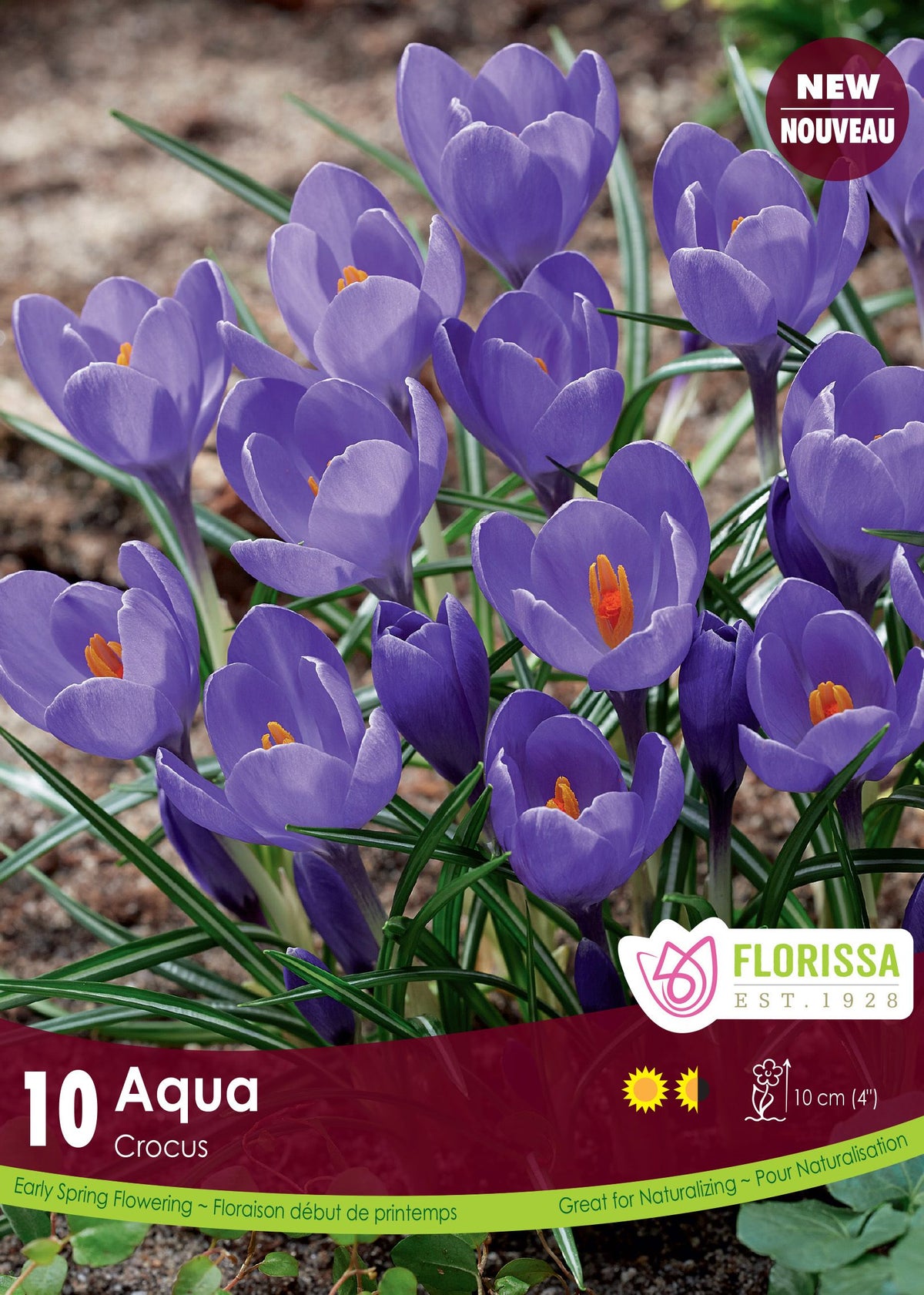
Naturalizing blue crocus for early-spring bloom

Aqua Crocus (Crocus vernus)

Crocus vernus ‘Aqua’

Aqua crocus is a hardy 10 cm spring crocus supplied as 10 size 9/10 corms. Its cobalt-blue to blue-violet flowers, accented by orange stamens, open very early in sunshine. Plant corms in fall, 5 cm deep and 5 cm apart, in loose, freely drained soil. Suitable for Zones 4 to 10, it thrives in rock gardens, borders, lawns, and open woodland. Let the narrow foliage yellow after flowering so it can replenish the corms. Where winter drainage is reliable and the soil never remains waterlogged, it returns and gradually develops into a natural-looking colony that becomes more generous over time.
7 99 $
Pay in 4 interest-free payments with Sezzle
Detailed plant guide
Advice adapted to Canada
Secure payment
2026 preorder for fall bulbs Shipping expected in October 2026.
Share
Quantity 10 corms
Exposure Full sun to partial sun
Hardiness Zones 4 to 10
Difficulty level Moderate

Discover the plant

Family Iridaceae
Genus Crocus
Species vernus
Cultivar Aqua
Type Hardy spring-flowering corm
Cycle Naturalizing perennial

Aqua crocus (Crocus vernus) stands out through cobalt-blue to blue-violet flowers illuminated by bright orange stamens. Cup-shaped blooms open in sunshine during early spring above narrow green leaves marked by a pale stripe. At about 10 cm tall, this crocus creates intense colour without hiding neighbouring plants. The Van Noort package contains 10 size 9/10 corms. Hardy in Zones 4 to 10, it returns reliably, naturalizes where conditions suit it, and provides pollen and nectar to the first active insects of the season. Plant generous groups for the strongest blue carpet.

Plant the 10 corms in fall from September through November before the ground freezes. Set them 5 cm deep and 5 cm apart with pointed ends upward in loose, humus-rich, freely drained soil. Choose full sun or partial sun; bright spring light opens flowers and replenishes corms before deciduous trees leaf out. Water after planting, then let seasonal precipitation maintain moisture. Avoid waterlogged hollows and winter irrigation. A light application of mature compost is sufficient while preparing the site. Mark the group so later bulb planting or fall cleanup never disturbs the resting corms.

Aqua crocus suits borders, rock gardens, lawns, open woodland, and fall containers. Group this cobalt blue crocus by the dozen for a visible drift, then pair it with snowdrops, dwarf iris, squill, and early daffodils. After flowering, let foliage yellow completely before cutting it or mowing the lawn; this period replenishes corms for the following year. Avoid disturbing established colonies and divide only groups that have become crowded. This Zone 4 naturalizing crocus is generally deer resistant and serves as an early pollinator flower in a pesticide-free garden. Replant divisions promptly at their original depth.

Aqua Crocus (<em>Crocus vernus</em>)

Planting guide

From planting to establishment.

Planting depth 5 cm (2 in)
Spacing / density 5 cm (2 in)
Establishment temperature 10 to 15°C (50 to 59°F)
Establishment time 21 to 42 days
Best planting time September to November, before the ground freezes
Propagation Corms and separation of cormlets during dormancy
Growing method
Plant Aqua crocus in fall from September through November before the ground freezes. Choose full sun or partial sun, including beneath deciduous trees that remain open in early spring. Loosen soil to 15 cm and incorporate a small amount of mature compost; add fine gravel where drainage is slow. Set corms 5 cm deep with pointed ends upward and leave 5 cm between them. Group all 10 corms for a visible drift. Water once after planting to settle the soil, then allow normal fall and spring precipitation to provide moisture. Avoid hollows where water collects during thaw periods. In spring, do not tread on emerging shoots and use only a gentle bulb fertilizer if soil is poor. After flowering, let the narrow leaves yellow completely because they rebuild corm reserves. In lawns, delay mowing until foliage disappears. Divide only colonies that have become crowded, after leaves are dry and the corms are dormant. This practice respects the natural cycle of spring crocus keeps corms healthy in drained soil and encourages reliable cobalt blue flowers as the first mild days return without requiring complicated care This practice respects the natural cycle.

Soil and care

The right conditions.

Exposure Full sun to partial sun
Soil pH 6.0 to 7.0
Hardiness zone Zones 4 to 10
Minimum temperature Approximately −34°C in freely drained soil, corresponding to Zone 4
Watering
Water once after fall planting to settle soil around the corms. Normal precipitation is generally sufficient until spring. During flowering and leaf growth, maintain light moisture if weather is unusually dry without saturating the ground. Reduce irrigation as foliage yellows and keep the area relatively dry through summer dormancy. Check containers more often while always allowing excess water to drain freely. This practice respects the natural cycle of spring crocus keeps corms healthy in.
Soil type
Light, humus-rich, freely drained soil is ideal, especially sandy loam amended with a little mature compost. The ground must release fall rain and spring meltwater quickly to prevent corm rot. In clay, create a slight mound and incorporate fine gravel. Avoid fresh manure, waterlogged hollows, and thick mulch that keeps the emerging crowns wet. This practice respects the natural cycle of.
Fertilization
Incorporate mature compost before planting. When shoots reach 5 cm (2 in), apply balanced slow-release fertilizer or a half-strength liquid feed. Repeat once as buds begin forming. Avoid excess nitrogen, which promotes foliage and weak flowers at the expense of flowers and the corm’s stored energy. Stop feeding after bloom so foliage can mature naturally and corms can enter dormancy with firm, well-ripened tissues.
Seasonal care
In fall, loosen and drain the site before setting corms 5 cm deep. Water after planting and mark the group to prevent disturbance. In winter, do not let a saturated container or accumulated meltwater create prolonged waterlogging; garden corms nevertheless remain in place throughout Zones 4 to 10. In early spring, gently remove debris covering new shoots and watch for slugs. Water only when spring is unusually dry. During flowering, avoid pesticides to protect the first visiting insects. After bloom, leave every leaf in place until it becomes yellow and dry. Do not tie foliage or mow a lawn too early. As dormancy begins, remove dead leaves. Every three to five years, if flowering declines, lift the dormant colony, separate firm cormlets, and replant them promptly at the recommended depth. Finish with a thin surface layer of compost without digging deeply around established corms. This practice respects the natural cycle of spring crocus keeps corms healthy in drained soil and encourages reliable cobalt blue flowers as the first mild days return without requiring complicated care This practice respects the natural cycle of spring crocus keeps corms healthy in drained soil and encourages reliable cobalt blue flowers as the first mild days return without requiring complicated care This practice respects the natural cycle of spring crocus keeps corms healthy in drained.

Container growing

A controlled environment.

Recommended pot size
35 to 10 cm (14 to 16 in) wide and at least 5 cm (2 in) deep for 10 corms
For 10 corms, choose a container at least 25 cm wide and 20 cm deep with several drainage holes. Fill it with container mix loosened with perlite or fine gravel. In fall, set corms 5 cm deep and about 5 cm apart, then water once. Keep the pot outdoors in a cold, bright position protected from excessive rain; corms require winter chilling to flower. In very exposed areas, place the container against a wall or inside an unheated cold frame and insulate its sides, without moving it into a warm room. In early spring, return it to full light and keep the mix lightly moist, never saturated. After flowering, continue moderate watering until leaves have yellowed completely. Then stop watering during summer dormancy. Corms may remain in the pot while drainage stays open; repot and separate crowded groups the following fall. This practice respects the natural cycle of spring crocus keeps corms healthy in drained soil and encourages reliable cobalt blue flowers as the first mild days return without requiring complicated care This practice respects the natural cycle of spring crocus keeps corms healthy in drained soil and encourages reliable.
Aqua Crocus (<em>Crocus vernus</em>)

Bloom and dimensions

The complete profile.

Flower color Cobalt blue to blue-violet with orange stamens
Foliage color Green
Foliage type Deciduous, strap-like, and sword-shaped
Growth rate Moderate
Bloom period
In early spring, cobalt-blue to blue-violet cup-shaped flowers open in sunshine and reveal bright orange stamens. Each plant remains low at about 10 cm and gives its strongest display in compact groups. Blooms often close during dull weather and reopen when sunlight returns. Fall planting in drained soil encourages reliable flowering and gradual naturalizing. This practice respects the natural cycle of spring crocus keeps corms healthy in drained.
Fruiting
None
Harvest
None
Aqua Crocus (<em>Crocus vernus</em>)

Garden associations

What to plant with it.

Good companions
Snowdrops, reticulata iris, squill, glory-of-the-snow, and small daffodils share early bloom and a preference for drained soil. Hellebores add volume behind crocuses without hiding them in early spring. Later, hostas, ferns, and hardy geraniums can conceal yellowing foliage. Avoid bog plants, smothering groundcovers, and perennials that require constant summer irrigation in the same position. This practice respects the natural cycle of spring crocus keeps corms healthy in drained soil and encourages reliable cobalt blue flowers as the first mild days.
Avoid planting with
Poor drainage may cause corm rot, while squirrels and rodents may occasionally dig up newly planted corms.
Aqua crocus suits low borders, rock gardens, lawns, naturalized gardens, open woodland, and spring containers prepared in fall. Its cobalt-blue flowers stand out beside entrances and paths when few other plants are blooming. Group the 10 corms and repeat several islands for a natural effect. Let foliage mature after flowering and pair the group with later perennials that conceal it afterward. Avoid waterlogged positions or ground that is cultivated regularly. This practice respects the natural cycle of spring crocus keeps.

From the garden to inspiration.

Aqua Crocus is grown exclusively for its ornamental value and is not intended for culinary use. Its brilliant cobalt-blue flowers create spectacular spring displays and are highly appreciated for naturalizing in gardens and lawns.

Frequently asked questions

Everything toknow.

Plant corms from September through November before the ground freezes. Choose a full-sun or partial-sun position where soil drains rapidly. Set each corm 5 cm deep and 5 cm from the next, with the pointed end upward. If orientation is unclear, place it on its side and the shoot will find the light. Group all 10 corms for a visible drift rather than scattering them. Water once after planting, mark the position, and avoid excessive irrigation afterward. Roots develop in fall and flowers appear in early spring following the natural winter chilling period. This practice respects the natural cycle of spring crocus keeps corms healthy in drained soil and encourages.
Poor flowering can result from dense shade, waterlogged soil, corms planted too shallowly, or foliage removed before maturity. Give the group several hours of early-spring light and make sure meltwater never remains around it. Let every leaf yellow completely after flowering because it replenishes the corm. Avoid high-nitrogen fertilizers that mainly promote leaves. If an old colony becomes very crowded, lift it during summer dormancy, separate firm cormlets, and replant them 5 cm deep in refreshed, drained soil. This practice respects the natural cycle of spring crocus keeps corms healthy in drained soil and encourages reliable cobalt blue flowers as.
No. Aqua crocus is intended to remain in the ground through winter in Zones 4 to 10 where drainage is good. Plant it at the recommended depth and avoid hollows where water collects during thaws. A thin mulch layer can moderate temperature in an exposed site, but remove it gradually as shoots emerge. Containers freeze more deeply, so place the pot against a wall, insulate its sides, or use an unheated cold frame. Do not move corms into a warm room because they need a cold period. Lift them only to divide a crowded colony or correct poor drainage. This practice respects the natural cycle of spring.
Wait until flowers have faded and every leaf has turned yellow and dry, usually several weeks after flowering. Green foliage manufactures the reserves needed for crocuses to return the following spring, so early mowing gradually reduces bloom. Set the first cut fairly high and avoid scalping the soil. In a heavily used lawn, mark groups or position them near edges to limit trampling. Do not apply herbicide to active leaves. Once dormancy begins, the lawn can resume normal maintenance until the next emergence. This practice respects the natural cycle of spring crocus keeps corms healthy in drained soil and encourages.
No. Crocus vernus Aqua is grown solely as an ornamental and must not be confused with saffron crocus, Crocus sativus. Corms, leaves, and flowers are not intended for consumption. Keep packages and corms beyond the reach of children and digging pets. Wear gloves if your skin is sensitive and wash tools after planting. If a person or animal swallows any part and develops drooling, vomiting, diarrhea, or discomfort, promptly contact a poison centre, medical professional, or veterinarian and provide the name Crocus vernus. Never use ornamental crocus flowers as a garnish or attempt to harvest their stamens for food, tea, seasoning, or decoration.

Its strengths, naturally.

Not recommended for pets

Pets

Pollinators
Attracts or supports pollinating insects

Pollinators

Butterflies
Plants that attract butterflies

Butterflies

Deer
Less attractive or generally tolerated by deer

Deer