Ornamental bulbs

Anemone 'Sylphide' (Anemone coronaria)

Anemone coronaria ‘Sylphide’

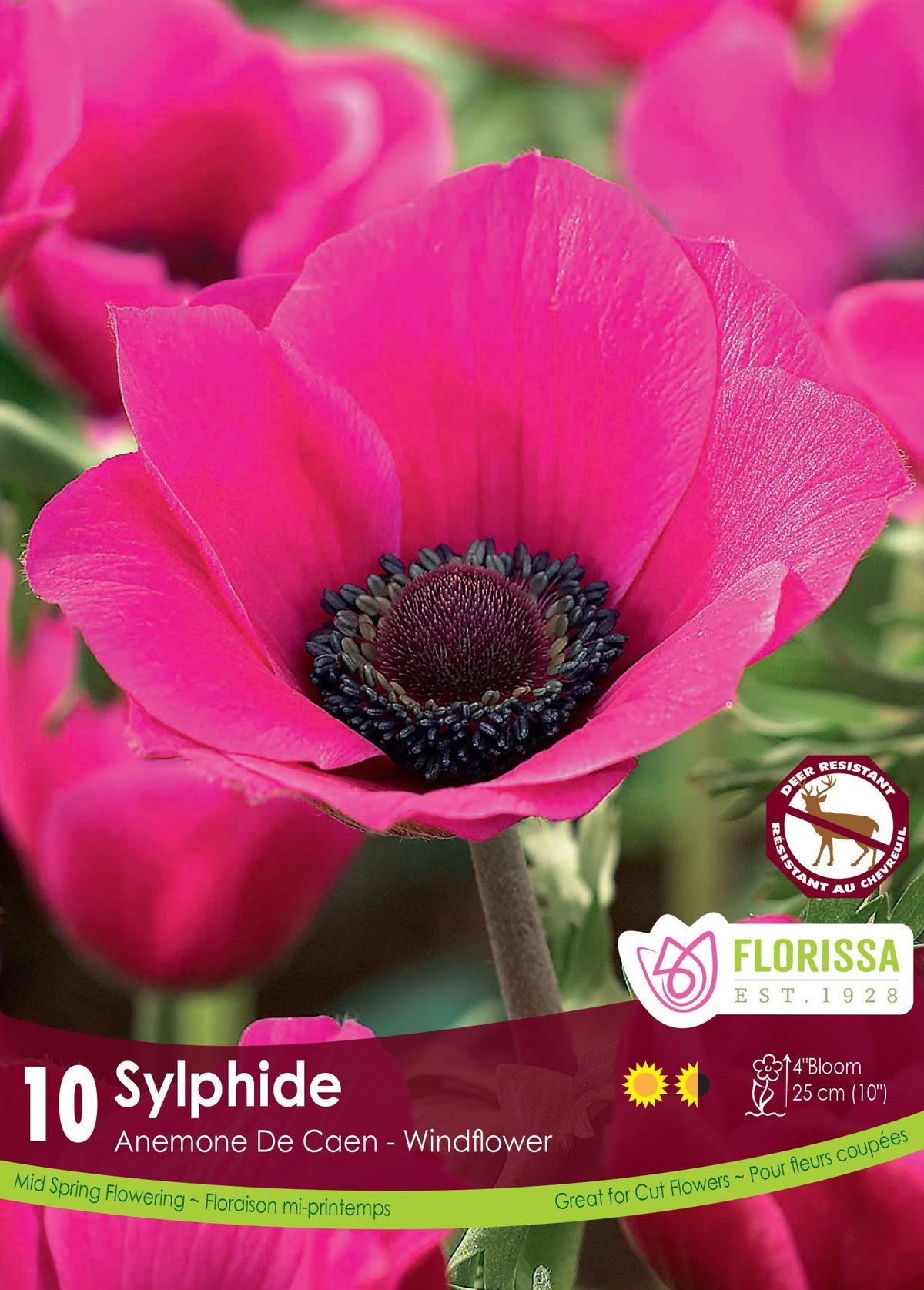
Sylphide anemone produces large, single bright purplish-pink flowers with deep black centres. Its finely divided foliage beautifully complements the refined blooms.
5 99 $
Pay in 4 interest-free payments with Sezzle
Detailed plant guide
Advice adapted to Canada
Secure payment
Share
Quantity 10 tubers
Exposure Full sun
Hardiness Zone 7
Difficulty level Easy

Discover the plant

Family Ranunculaceae
Genus Anemone
Species coronaria
Cultivar Sylphide
Type Tuber
Cycle Perennial

Sylphide Anemone (Anemone coronaria ‘Sylphide’) stands out with its large, single bright purplish-pink flowers, dramatically highlighted by deep black centres. Blooming from April to June, it brings brilliance, elegance, and freshness to spring flower beds, while its finely divided, soft green foliage adds a light, graceful texture. Reaching 25 to 30 cm in height, this tuberous perennial forms beautiful colourful groups in borders and containers. Hardy to Zone 7, it requires frost protection in Quebec but remains highly valued for its ornamental appeal and exceptional cut flower quality.

Soak the tubers in lukewarm water for several hours before planting to encourage rapid establishment. In Quebec, plant them in spring after the last frost, approximately 5 cm (2 in) deep and 10 to 15 cm (4 to 6 in) apart. This anemone prefers full sun and light, fertile, perfectly drained soil with a neutral to slightly alkaline pH. Water regularly to keep the soil lightly moist without allowing it to become waterlogged. A light application of compost or balanced fertilizer at the beginning of active growth is generally sufficient. Remove faded flowers to prolong blooming, then allow the foliage to yellow naturally.

Ideal for spring flower beds, borders, large containers, and cutting gardens, this anemone creates a spectacular effect when planted in groups. Its vivid purplish-pink flowers pair beautifully with tulips, daffodils, grape hyacinths, forget-me-nots, and ranunculus. They also attract bees and many other pollinating insects in spring. Their long, sturdy stems are perfect for creating elegant, long-lasting fresh bouquets. In colder regions, lift the tubers after the foliage has yellowed and store them in a cool, dry place until the next planting season.

Anemone 'Sylphide' (<em>Anemone coronaria</em>)

Planting guide

From planting to establishment.

Planting depth 5 cm (2 in)
Spacing / density Space plants or bulbs 10 to 15 cm apart.
Establishment temperature 15 to 18°C (59 to 64°F)
Establishment time 14 to 21 days
Best planting time Fall or spring
Propagation Divide the tubers as the plants become more vigorous. This method faithfully preserves the characteristics of the variety.
Growing method
Soak the tubers in lukewarm water for several hours before planting to encourage rapid establishment. Plant them approximately 5 cm (2 in) deep in light, fertile, perfectly drained soil. Space the tubers 10 to 15 cm (4 to 6 in) apart. Choose a location in full sun and water lightly after planting. Remove spent flowers to prolong blooming. In colder regions, lift the tubers after the foliage has yellowed.

Soil and care

The right conditions.

Exposure Full sun
Soil pH Neutral to slightly alkaline
Hardiness zone Zone 7
Minimum temperature -18°C (0°F)
Watering
Water regularly to keep the soil lightly moist without excess moisture. Reduce watering as the foliage begins to yellow.
Soil type
Light, fertile, and perfectly drained soil. Avoid heavy or waterlogged soils.
Fertilization
Apply a light application of compost or a balanced fertilizer at the beginning of active growth. Avoid excessive fertilization, which encourages foliage rather than flowers.
Seasonal care
Water moderately during active growth and remove faded flowers regularly. Allow the foliage to yellow naturally before cutting it back. In colder regions, lift the tubers after the season and store them in a cool, dry place.

Container growing

A controlled environment.

Recommended pot size
25 cm (10 in)
Suitable for containers in a free-draining mix; protect from frost when hardiness requires it.
Anemone 'Sylphide' (<em>Anemone coronaria</em>)

Bloom and dimensions

The complete profile.

Flower color Purplish pink
Foliage color Fresh green
Foliage type Deciduous
Growth rate Moderate
Bloom period
Large single purplish-pink flowers appear throughout spring and attract pollinating insects. They are outstanding as cut flowers.
Fruiting
None
Harvest
None
Anemone 'Sylphide' (<em>Anemone coronaria</em>)

Garden associations

What to plant with it.

Good companions
Tulips, daffodils, grape hyacinths, forget-me-nots, and ranunculus make excellent companion plants. Together they extend the beauty of spring flower beds.
Avoid planting with
The main problems are slugs on young shoots and poorly drained soils that encourage tuber rot. Good air circulation helps reduce disease.
Ideal for spring flower beds, borders, containers, and cutting gardens. Its purplish-pink blooms bring elegance and vivid colour to the landscape.

From the garden to inspiration.

The flowers are not intended for consumption. They are grown primarily for their exceptional ornamental value and excellent vase life. The long stems produce magnificent spring bouquets, while their purplish-pink colour adds elegance and refinement to floral arrangements.

Frequently asked questions

Everything toknow.

Tubers may be planted in fall in mild climates or in spring after the last frost in Quebec. Soaking them beforehand improves establishment.
Yes. Soaking the tubers in lukewarm water for a few hours rehydrates them and encourages faster sprouting and stronger growth.
Yes. This anemone performs exceptionally well in deep containers filled with rich, well-drained soil. Containers also make winter protection easier.
Yes. The long, sturdy stems provide excellent vase life. They are highly valued for spring bouquets and floral arrangements.
Remove faded flowers regularly and keep the soil lightly moist. A light application of fertilizer at the beginning of active growth also encourages abundant blooming.

Its strengths, naturally.

Not recommended for pets

Pets

Butterflies
Plants that attract butterflies

Butterflies