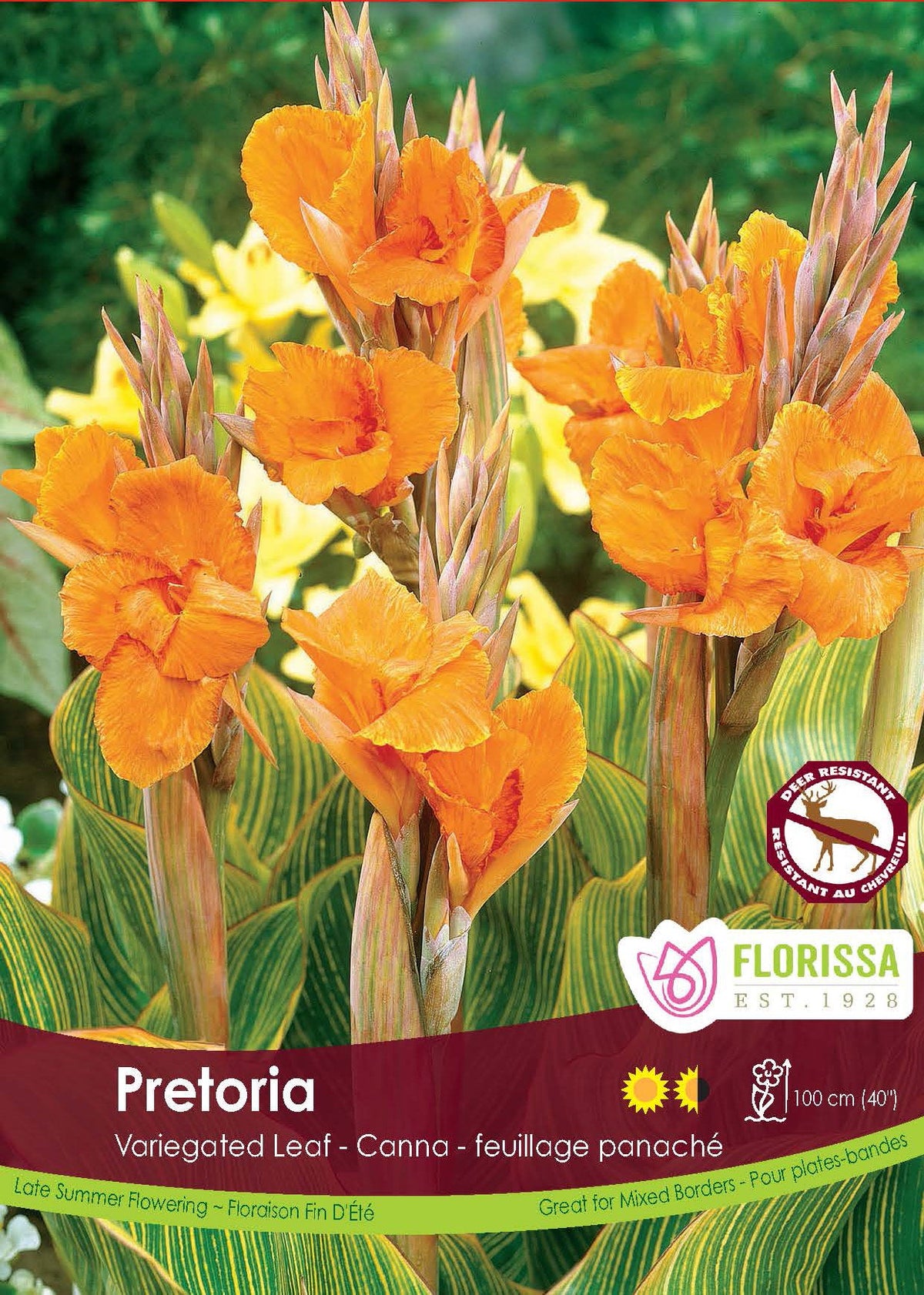
Canna 'Variegata Pretoria' (1 rhizome)

Canna × generalis ‘Pretoria’

Canna ‘Variegata Pretoria’ produces dramatic green foliage boldly striped with golden yellow and topped with elegant orange flowers. This striking variety delivers exceptional visual impact throughout the summer.
11 99 $
Pay in 4 interest-free payments with Sezzle
Detailed plant guide
Advice adapted to Canada
Secure payment
Share
Quantity 1 rhizome
Exposure Full sun
Hardiness Zone 10
Difficulty level Easy

Discover the plant

Family Cannaceae
Type Rhizome
Cycle Perennial

Variegata Pretoria Canna Lily (Canna × generalis ‘Pretoria’) is a spectacular rhizomatous perennial prized primarily for its bold green foliage broadly striped with golden yellow. Its large, glossy leaves create a striking graphic and tropical effect even before flowering begins. From July to September, orange flowers rise above the foliage on slender stems, enhancing the warm colour palette of the plant. Reaching approximately 150 cm (60 in) in height, it forms a sculptural presence that immediately draws attention. Hardy only to Zone 10, it must be protected from frost in Quebec.

Plant the rhizomes in spring after all danger of frost has passed and the soil has warmed thoroughly. Position them horizontally, approximately 10 cm (4 in) deep, and space them 40 to 50 cm (16 to 20 in) apart. Choose a location in full sun with rich, fertile, organic, evenly moist, and well-drained soil. Water generously throughout active growth to maintain consistent moisture without allowing standing water. Regular applications of compost and a balanced fertilizer every two weeks encourage vigorous growth and intensely coloured foliage. Before the first frost, lift the rhizomes and store them in a cool, dry place.

‘Variegata Pretoria’ canna lily is ideal for tropical flower beds, patios, borders, large containers, and contemporary gardens. For container growing, choose a pot at least 45 cm (18 in) in diameter with excellent drainage. Its variegated foliage pairs beautifully with caladiums, alocasias, coleus, begonias, and ornamental grasses to create lush, high-contrast plantings. The orange flowers attract a variety of pollinators and may also be used in summer floral arrangements. However, they are grown exclusively for ornamental purposes and are not intended for consumption.

Planting guide

From planting to establishment.

Planting depth 10 cm (4 in)
Establishment temperature 20 to 25°C (68 to 77°F)
Establishment time 14 to 28 days
Best planting time Spring
Propagation Propagate by dividing the rhizomes in spring once they have several growing buds. This ensures plants remain true to the variety.
Growing method
Plant the rhizomes in spring after all danger of frost has passed, approximately 10 cm (4 in) deep in rich, fertile, well-drained soil. Position the rhizome horizontally before covering it with soil. Space plants 40 to 50 cm (16 to 20 in) apart. Choose a location in full sun. Water thoroughly after planting, then keep the soil consistently moist throughout the growing season. Lift the rhizomes before the first frost and store them in a dry place until spring.

Soil and care

The right conditions.

Exposure Full sun
Soil pH Neutral to slightly acidic
Hardiness zone Zone 10
Minimum temperature 5°C (41°F)
Watering
Water generously throughout the growing season to keep the soil consistently moist without allowing standing water.
Soil type
Rich in organic matter, fertile, evenly moist, and perfectly drained soil.
Fertilization
Apply a balanced fertilizer every two weeks during the growing season. Regular applications of compost also improve plant vigour and foliage colour.
Seasonal care
Remove spent flowers regularly to extend blooming. Keep the soil consistently moist throughout the growing season. Feed every two weeks. Lift the rhizomes before the first frost and store them in a cool, dry place.

Container growing

A controlled environment.

Recommended pot size
45 cm (18 in)
Container growing is excellent in a large pot at least 45 cm (18 in) in diameter with excellent drainage. Use a rich, organic potting mix that retains moisture while draining well. Place the container in full sun for vigorous growth and intensely coloured foliage. Water generously throughout the growing season and fertilize regularly. Lift or bring the rhizomes indoors before the first frost and store them in a cool, dry place until spring.

Bloom and dimensions

The complete profile.

Flower color Orange
Foliage color Green striped with golden yellow
Foliage type Deciduous
Growth rate Fast
Bloom period
Bright orange flowers bloom abundantly from mid-summer until the first frost, attracting a variety of pollinators.
Fruiting
None
Harvest
None

Garden associations

What to plant with it.

Good companions
Caladiums, alocasias, coleus, begonias, and ornamental grasses make excellent companion plants.
Avoid planting with
Young shoots may be damaged by slugs, while aphids and excessive winter moisture can contribute to rhizome rot.
Ideal for tropical flower beds, large containers, borders, and exotic gardens where its spectacular foliage becomes an eye-catching focal point.

From the garden to inspiration.

The flowers are not intended for consumption. This variety is grown primarily for its spectacular variegated foliage and exotic blooms. It makes an outstanding focal point in flower beds and large containers. The flowers are also appreciated in summer floral arrangements.

Frequently asked questions

Everything toknow.

Plant the rhizomes in spring after all danger of frost has passed. Warm soil encourages rapid growth and abundant flowering.
Yes. This variety performs exceptionally well in large containers with rich soil and regular watering. Container growing also makes overwintering the rhizomes easier.
This variety is not hardy in cold climates. The rhizomes should be stored in a cool, dry place until the following spring.
Provide generous watering, fertilize regularly, and grow the plant in full sun. These conditions encourage spectacular foliage and abundant flowering.
Yes. The broad golden-yellow stripes across the green leaves are one of this variety's most striking features throughout the season.