


‘Alida’ Dwarf Iris (Iris reticulata ‘Alida’)
Product code : 146 458 01
- Quantity
- 10 bulbs
- Exposure
- Full sun to light partial shade
- Life cycle
- Spring-flowering bulbous perennial
- Hardiness
- Zones 5 to 9
Discover the plant
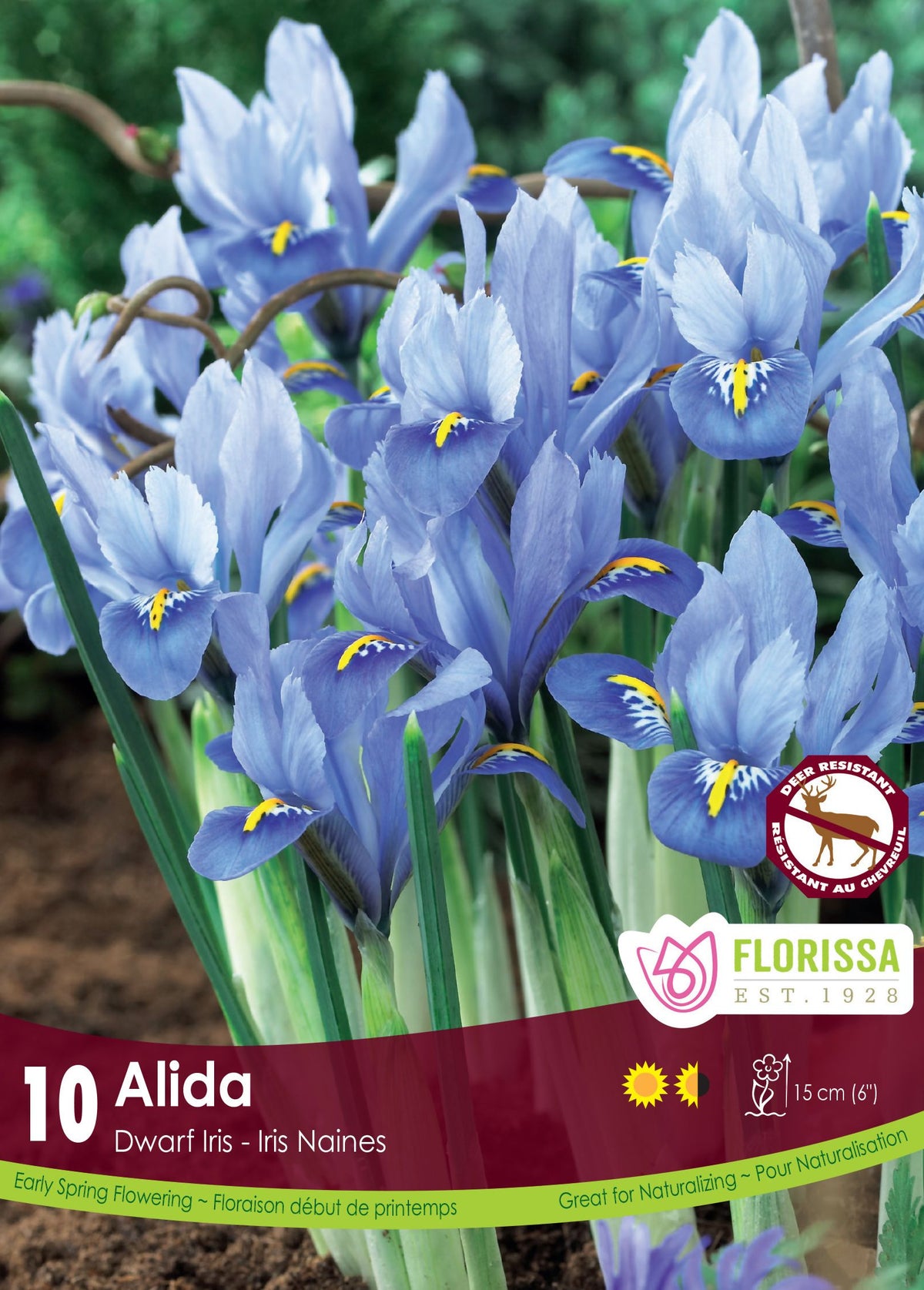
‘Alida’ Dwarf Iris (Iris reticulata ‘Alida’) produces a solitary flower displaying pale blue to lavender with white, dark-blue, and yellow markings from late winter to early spring. The 10 bulbs in the package reach 10 to 15 cm (4 to 6 in.). Narrow green to grey-green foliage accompanies the flowers without making the planting appear heavy. Hardy in Zones 5 to 9, this bulbous perennial suits rock gardens, low borders, open woodland, and containers. Its pale blue to lavender with white, dark-blue, and yellow markings colouring provides a distinct accent in the spring garden. Group planting creates a fuller presentation during the first season. Freely drained soil supports repeat flowering over successive years.
Plant bulbs in fall with the pointed end up, 8 cm (3 in.) deep and 8 cm (3 in.) apart. Choose full sun or light partial shade and loose soil that drains quickly. Water deeply after planting to settle the soil, then maintain light moisture in spring when rainfall is insufficient. Avoid saturated hollows, especially during thaw and summer dormancy. A thin layer of mature compost supports growth without encouraging excessive foliage. In containers, use a deep pot with unobstructed drainage holes and protect it from repeated freeze-and-thaw cycles. Check moisture before watering again and keep dense mulch away from emerging shoots.
After flowering, remove spent stems when seed capsules are not wanted, but allow every leaf to yellow completely. Foliage captures light and rebuilds reserves required for the following display. Reduce watering afterward and mark the position so dormant bulbs are not disturbed. Offsets may be separated and replanted in fall when the clump becomes crowded. Watch for slugs, leaf spots, and signs of rot, then improve drainage before considering treatment. Irises are harmful if eaten, so store unplanted bulbs beyond the reach of children and pets and wear gloves if handling bulbs irritates sensitive skin. Wash hands after planting and discard damaged bulbs safely.

Planting guide
Plant well.Grow beautifully.
Planting depth
Spacing / density
Best planting time
Propagation
Growing method
Soil and care
The right care,at the right time.
Soil pH
Minimum temperature
Care level
Watering
Soil type
Fertilization
Moisture
Seasonal care
Container growing
A garden,within reach.
Recommended pot size

Bloom and dimensions
Its place,in your garden.
Mature height
Width / spread
Flower color
Foliage color
Foliage type
Growth rate
Growth habit
Fragrance
Bloom period
Garden associations
In goodcompany.
Companion plants
Plants to avoid
Frequently asked questions
Your questions,answered.
When should these dwarf iris bulbs be planted?
What light does this dwarf iris need?
How should dwarf iris bulbs be watered?
Can this dwarf iris grow in a container?
Is this dwarf iris safe for pets?
Wildlife and pets